
The 1990s were a groundbreaking decade in cinematic history that spawned some of the greatest films of all-time. In addition to a rise in independent filmmaking that resulted from the growth of the Sundance Film Festival, Hollywood made many audacious choices with the types of studio pictures that were being greenlit. Although there were still a lot of sequels and franchise films, they adhered to a greater quality than what the industry has experienced today.
The ‘90s will eventually be seen in the same way that the “Golden Age of Hollywood” was, as it represented a peak in cultural prominence of cinema before television, streaming, and other short-form digital media content began to take up more space within the public consciousness. Although there are innumerable classics from each year in the decade, her is the best movie of every individual year of the 1990s.
10
‘Goodfellas’ (1990)
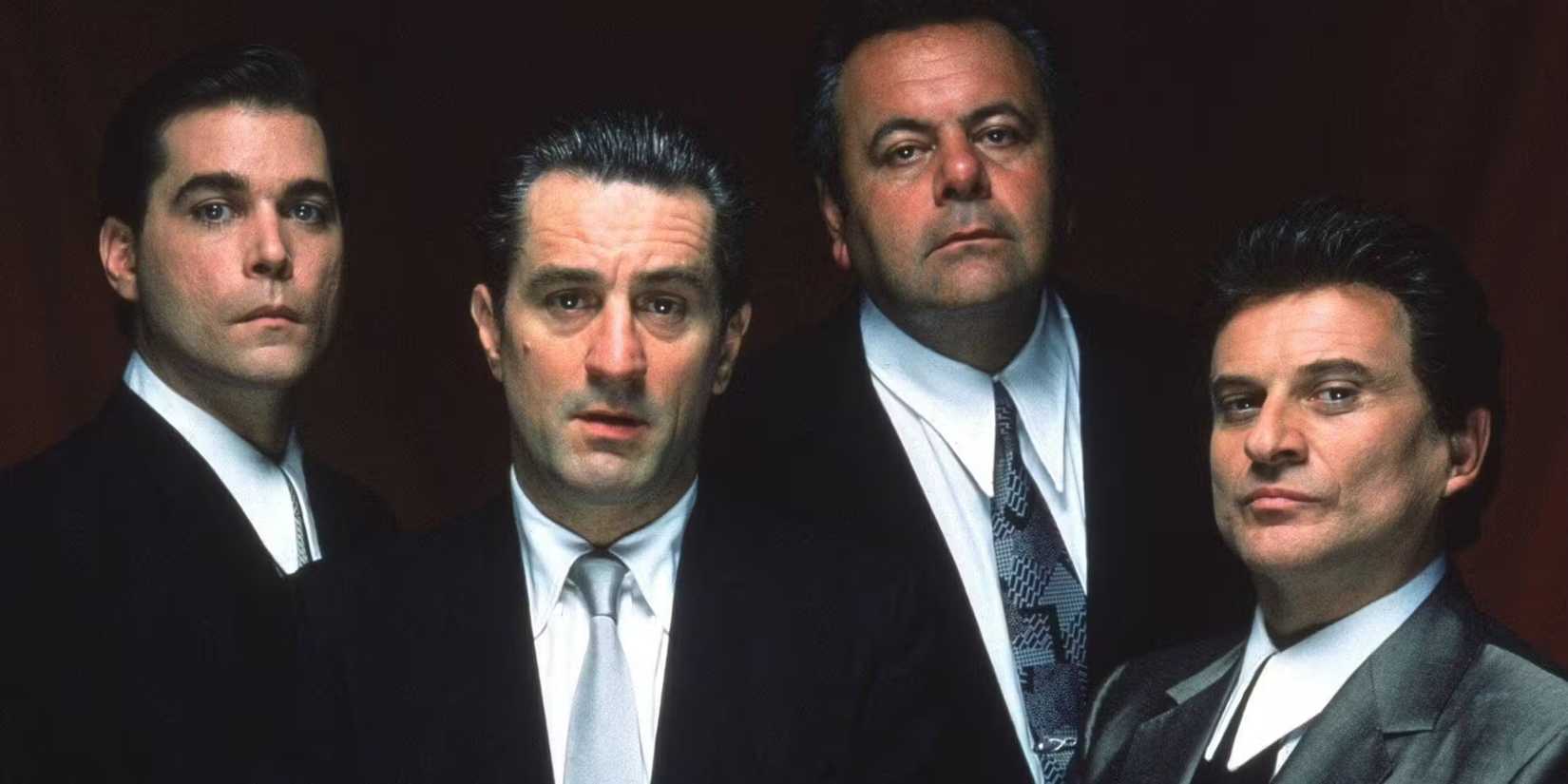
Image via Warner Bros. Pictures
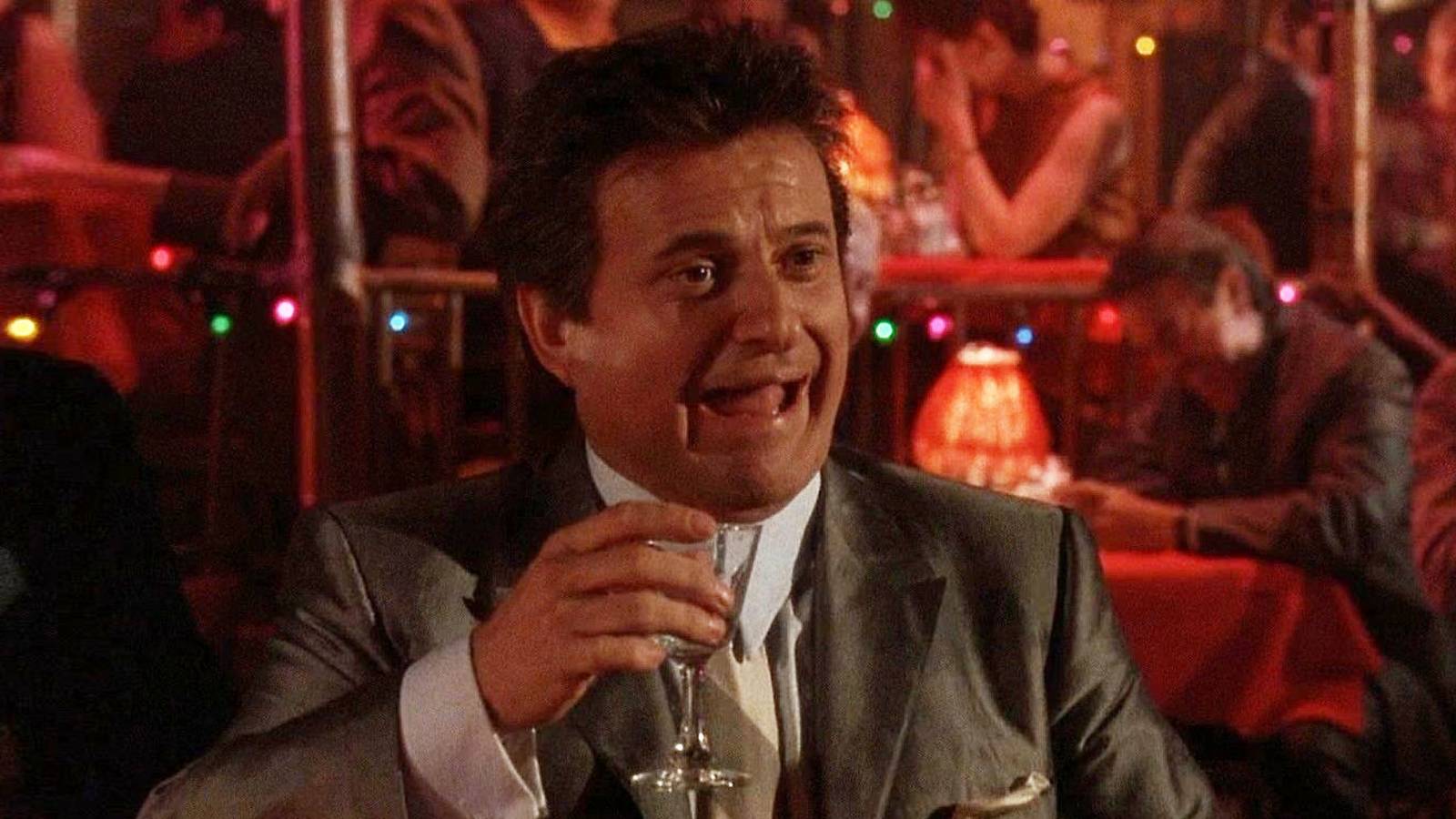
Goodfellas became the most popular and influential mob movie since The Godfather, and showed just how brilliant Martin Scorsese was in exploring the criminal lifestyle. Although it was loosely based on the story of Henry Hill, Goodfellas explored the dramatic rise-and-fall of a man who saw being a “made man” as the ultimate success, even if he ended up ratting on his friends and going into witness protection.
Goodfellas features one of the best ensemble casts of any Scorsese movie, as Joe Pesci rightfully earned the Academy Award for Best Supporting Actor. However, the film would not work without the late great Ray Liotta, whose off-kilter energy was perfect to play an anti-hero who was both a caring family man and a sociopathic killer. Scorsese has rarely disappointed within his legendary career, but Goodfellas created a formula that would inspire the work he would go on to do in Casino, The Departed, The Wolf of Wall Street, and The Irishman.
9
‘The Silence of the Lambs’ (1991)
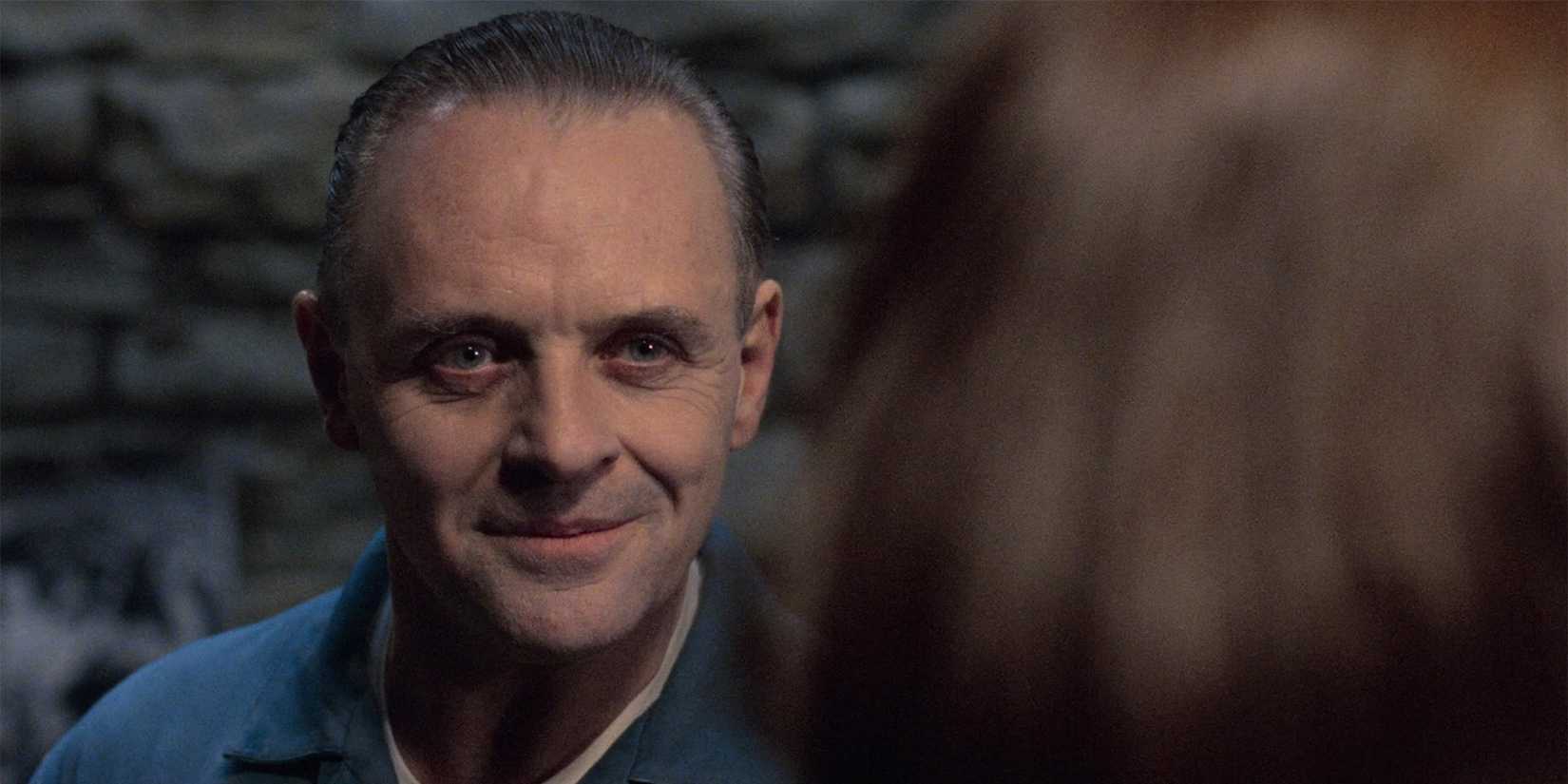
Anthony Hopkins as Hannibal Lecter smiling sinisterly in The Silence of the Lambs (1991)Image via Orion Pictures
The Silence of the Lambs is one of the scariest movies ever made, which is all the more surprising considering that director Jonathan Demme wasn’t traditionally known for making horror films. Although Demme had proven to be a perceptive analyst of human emotion with Something Wild and Married to the Mob, his ability to get deep within the psychology of his characters made him the perfect person to conduct the complex game of cat-and-mouse played by Clarice Starling (Jodie Foster) and Hannibal Lector (Anthony Hopkins) from behind bars.
The Silence of the Lambs is quite violent and disturbing, but it’s also a film that succeeds because of the restraint Demme showed. Although it would inspire the sequel Hannibal and the prequel Red Dragon, the cinematic magic that Demme crafted when working with Hopkins and Foster proved to be impossible to replicate.
8
‘Unforgiven’ (1992)
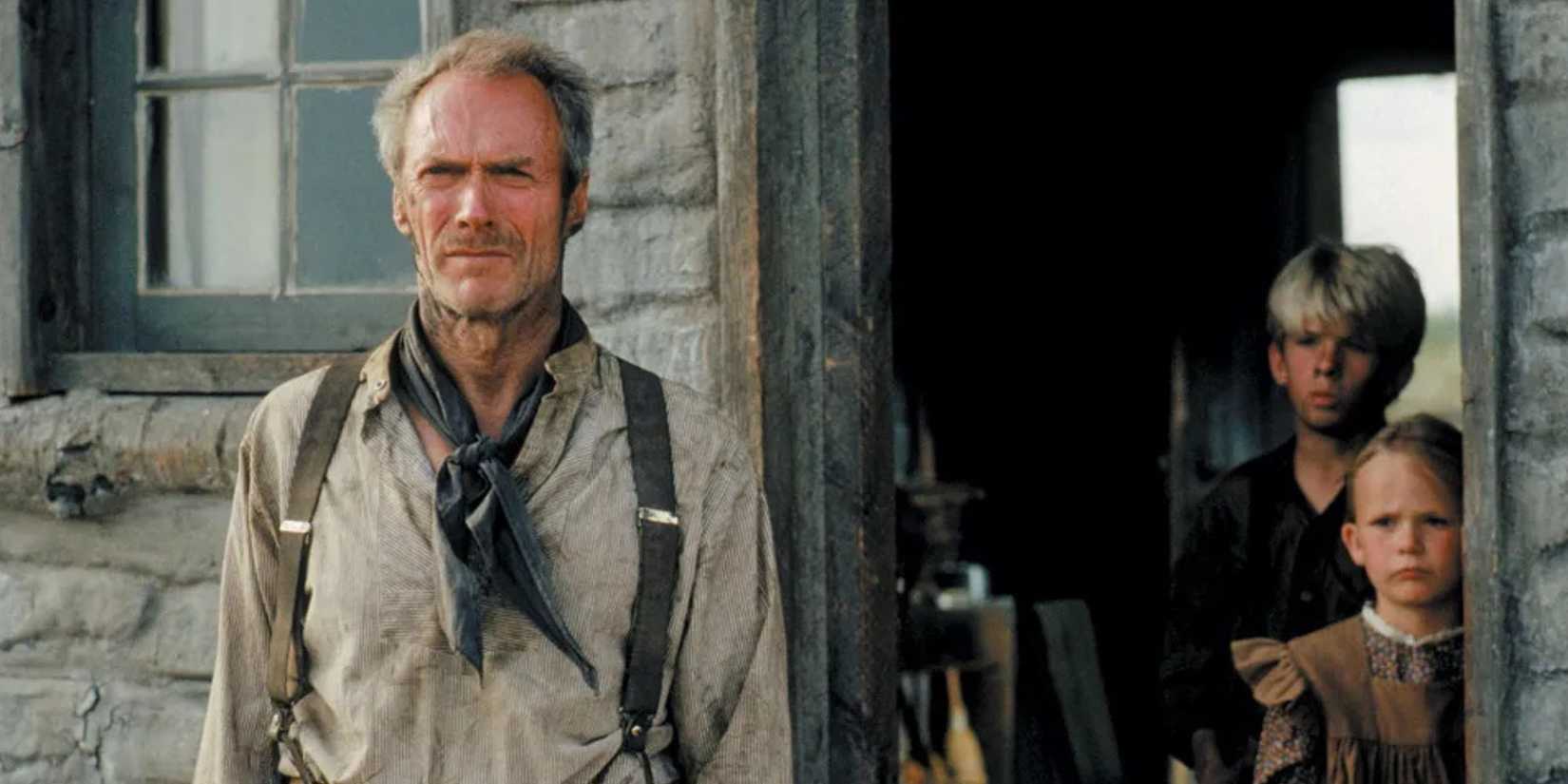
Clint Eastwood in front with Aline Levasseur and Shane Thomas Meier behind in the doorway in Unforgiven.Image via Warner Bros.
Unforgiven isn’t only one of the greatest westerns ever made, but a reflective work from Clint Eastwood that allowed him to look back at the legacy of his career. Since Eastwood had been playing gruff, non-nonsense gunslingers and bounty hunters ever since his breakout role in Sergio Leone’s spaghetti western A Fistful of Dollars, Unforgiven gave him the opportunity to play what an older, embittered version of that type of character would look like when faced with his final adventure.
Unforgiven features one of the greatest villains in western history thanks to Gene Hackman’s role as the ruthless Sheriff Little Bill, who employs sadistic and cruel techniques to take down his enemies. The brutal, shockingly disturbing ending battle scene of Unforgiven is as bleak as movies can get, as it offers some insightful commentary on the endless cycle of revenge.
7
‘Schindler’s List’ (1993)
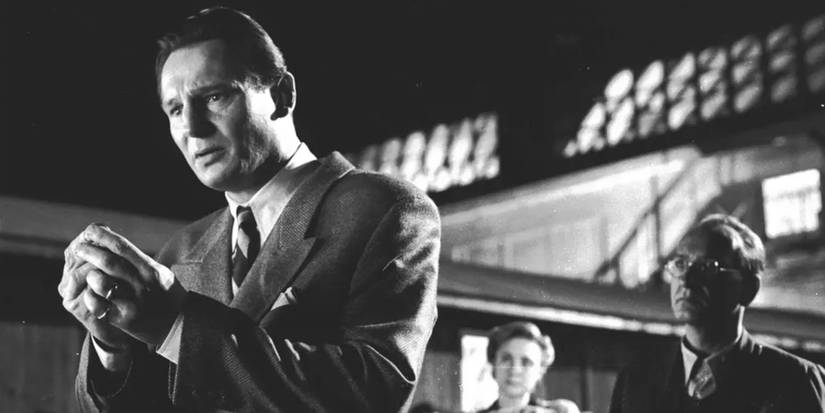
Image via Universal Pictures
Schindler’s List is one of the most important films ever made, and sadly, one that has proven to be more relevant than ever before. Steven Spielberg had been wrestling with how to represent his Jewish faith on screen throughout his career, and chose Schindler’s List because of the interesting story of Oskar Schindler (Liam Neeson), a German businessman who used his labor factories to transport thousands of Jewish workers to safety during the height of the Holocaust during World War II.
Schindler’s List is a tough film to watch more than once because of how heavy the subject material is, but it’s one that any cinephile needs to experience at least once in their lifetime. Spielberg is a brilliant entertainer responsible for many classic blockbusters that helped entice young moviegoers, but this is his artistic peak and his most historically important work.
6
‘The Shawshank Redemption’ (1994)
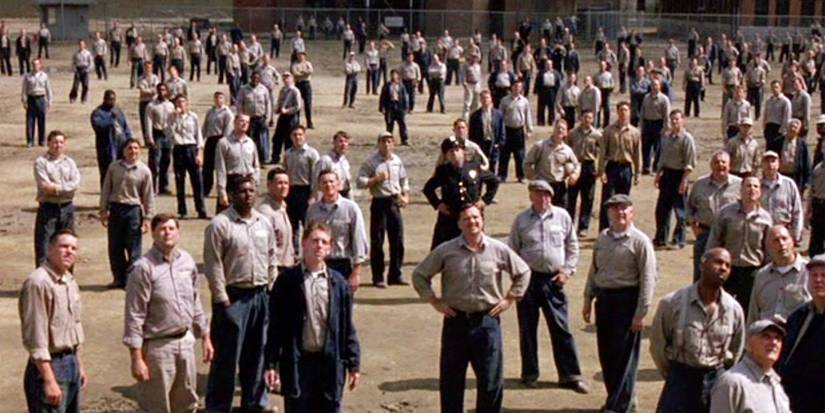
A courtyard full of prisoners looks up in The Shawshank Redemption.Image via Columbia Pictures
The Shawshank Redemption is strangely a film that was not very successful upon its initial release, as it was based on a relatively obscure Stephen King short story and did not become a box office success. However, home video markets and the strong word-of-mouth eventually lead the film to being a heartwarming favorite, as the relationship between Andy (Tim Robbins) and Red (Morgan Freeman) is one of the best depictions of friendship in cinematic history.
The Shawshank Redemption is not a typical prison film, as it celebrates the idea of hope in an earnest, powerful way that leads to a gripping ending that is bound to leave even the most stone-hearted viewers in a fit of tears. Although King’s work is often associated with supernatural and horror stories, The Shawshank Redemption is the best adaptation of his work because it finds a serenity within the goodness of human nature.
5
‘Heat’ (1995)
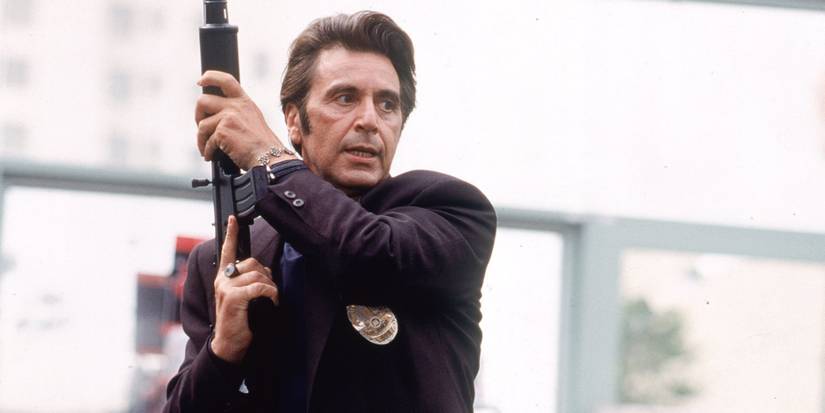
Al Pacino holding a rifle in ‘Heat’Image via Warner Bros.
Heat was the film that Michael Mann had been preparing to make for his entire career, as the hypnotic action and suspense he’d mastered in Thief and Manhunter properly gave him the skills to make this immersive game of cat-and-mouse. Al Pacino and Robert De Niro were considered to be the two greatest actors of the moment, but they had never been in a scene together before, as they had appeared in different segments of The Godfather: Part II.
Heat delivered on the promise of seeing De Niro and Pacino face off, as the now iconic diner scene is recognized as one of the most memorable moments in both of their careers. That being said, Heat wouldn’t have earned its reputation if it wasn’t for its robust supporting cast, including the late great Val Kilmer in one of his best roles ever.
4
‘Trainspotting’ (1996)
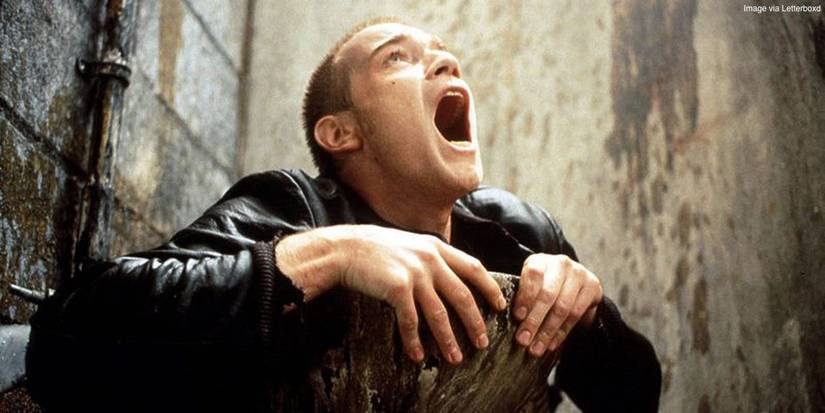
Ewan McGregor as Mark Renton, emerging from a toilet in the original ‘Trainspotting’Image via Miramax Films
Trainspotting is in many ways the ultimate “Gen X” film, as it explored the dissatisfaction and rebelliousness of a group of young people who had grown exasperated with the empty rhetoric of their parents’ generation. Although the “drug movie” genre had already existed, Danny Boyle took an extreme approach to Irvine Walsh’s supposedly “unadaptable” novel by using immersive techniques to get into the minds of its characters.
Trainspotting is a coming-of-age adventure, an anti-authrotarian statement, an epic tragedy, and a farcical comedy all at once, and it finds nimble ways to switch between genres. In addition to providing Ewan McGregor with the breakout role that would turn him into a star, Trainspotting has one of the most eclectic and exciting soundtracks of any ‘90s movie, with the use of Lou Reed’s “Perfect Day” being one of the most significant needle drops.
3
‘Good Will Hunting’ (1997)
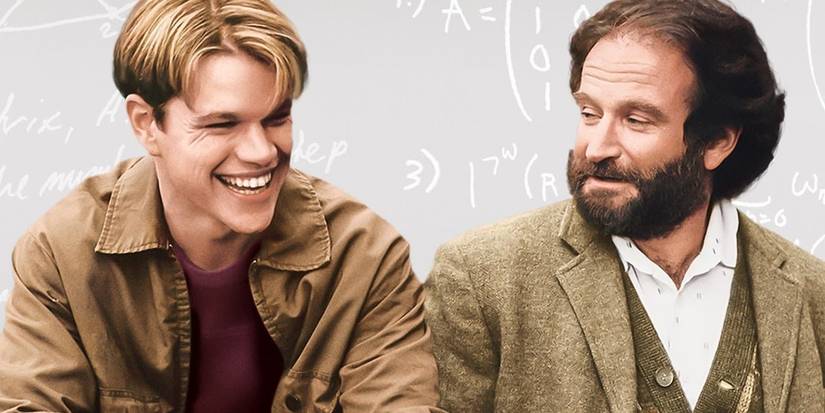
Robin Williams as Sean Maguire and Matt Damon as Will Hunting in Good Will HuntingImage via Miramax Films
Good Will Hunting is an underdog film in more ways than one, as it was written as an aspirational star vehicle by childhood friends Matt Damon and Ben Affleck, who would go on to star in the leading roles. Gus Van Sant had made a splash in the independent film world with his bleak crime thriller Drugstore Cowboy, but Good Will Hunting allowed him to make a hopeful, heartwarming campus drama about the pressures experienced by a young genius.
Damon’s casting was a stroke of genius that solidified him as one of the definitive stars of all-time, as he is still making great films today (especially with The Odyssey coming out next summer). However, Good Will Hunting is often remembered for the amazing dramatic turn from Robin Williams as a wholesome mentor, which won him the Academy Award for Best Supporting Actor.
2
‘Saving Private Ryan’ (1998)
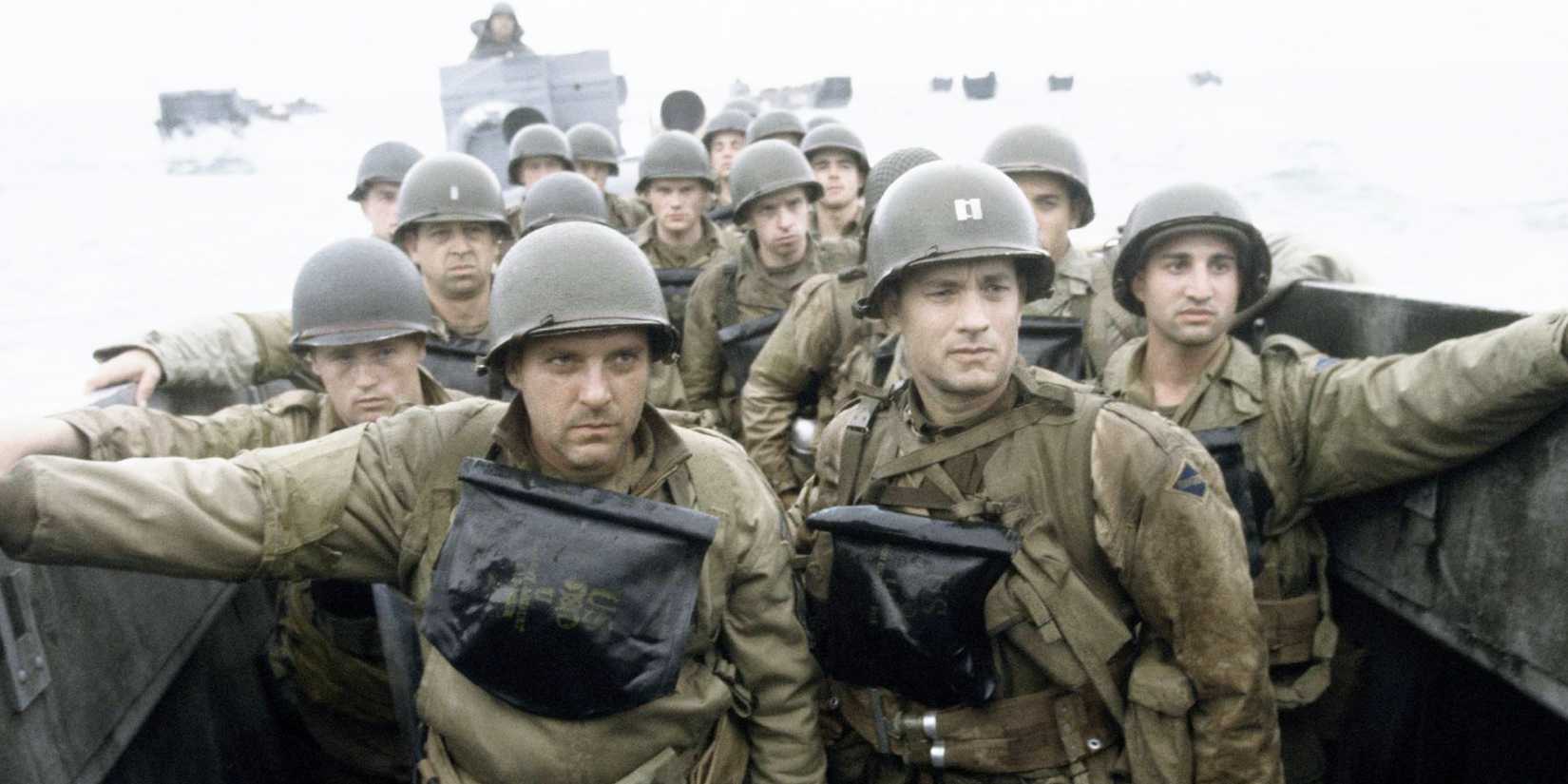
Soldiers in the lead-up to the Normandy invasion during World War II in Saving Private Ryan (1998)Image via DreamWorks Pictures
Saving Private Ryan is another highly personal World War II drama from Steven Spielberg that was inspired by the experiences his father had serving the Allies during the war. Although it is often that war films can seemingly lionize the art of combat itself, Saving Private Ryan walked a fine line of celebrating the heroism of men like Captain Hiller (Tom Hanks) whilst acknowledging the war is a cruel, unforgiving thing.
Saving Private Ryan is often remembered for its amazing opening scene, which recaptured the storming of Normandy beach on D-Day in meticulous detail, but the rest of the film is just as sobering and enthralling. Although the final moments are remembered as being somewhat divisive, Saving Private Ryan created a realistic depiction of World War II that inspired countless imitators, including the work Hanks and Spielberg did on Band of Brothers.
1
‘Eyes Wide Shut’ (1999)
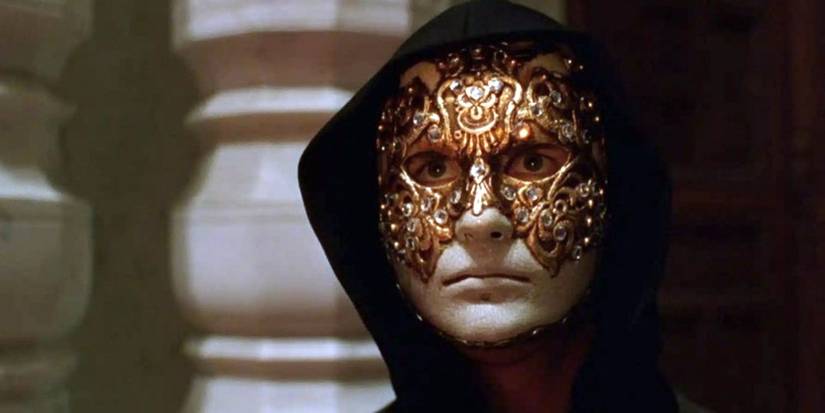
An individual in a gold face mask and hooded cloak stares ahead in a scene from ‘Eyes Wide Shut’ (1999).Image via Warner Bros.
Eyes Wide Shut was the final film by Stanley Kubrick, a director who is considered by many to be the greatest of all-time. Although it may have initially been perceived to be an erotic thriller, Eyes Wide Shut proved to be a terrifying conspiracy epic that examined how guilt, jealousy, and emasculation could have devastating and paranoia-inducing consequences.
Eyes Wide Shut is made all the more fascinating because it starred Tom Cruise and Nicole Kidman, an actual married couple, as bickering partners who begin to doubt each other’s loyalty. Although Kubrick sadly died of a heart attack only a few weeks before the film was released in theaters, the fact that he was not around to explain it has only fueled speculation and theorizing among cinephiles who have meticulously rewatched Eyes Wide Shut in order to unlock is hidden meaning.
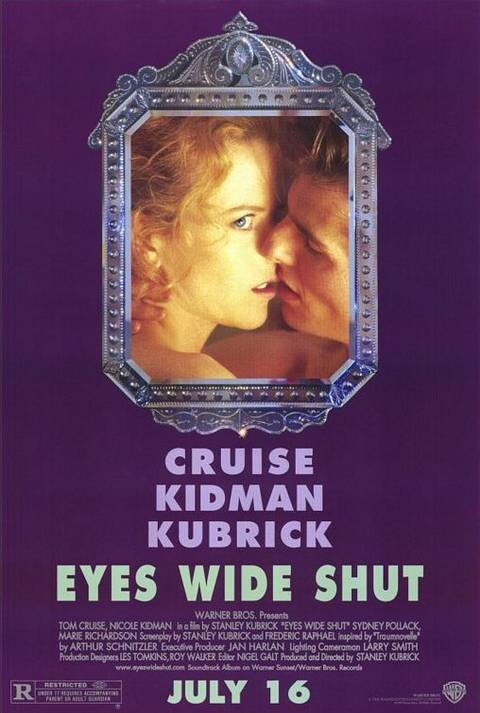
eyes-wide-shut-movie-poster.jpg
Release Date
July 16, 1999
Runtime
159 minutes