
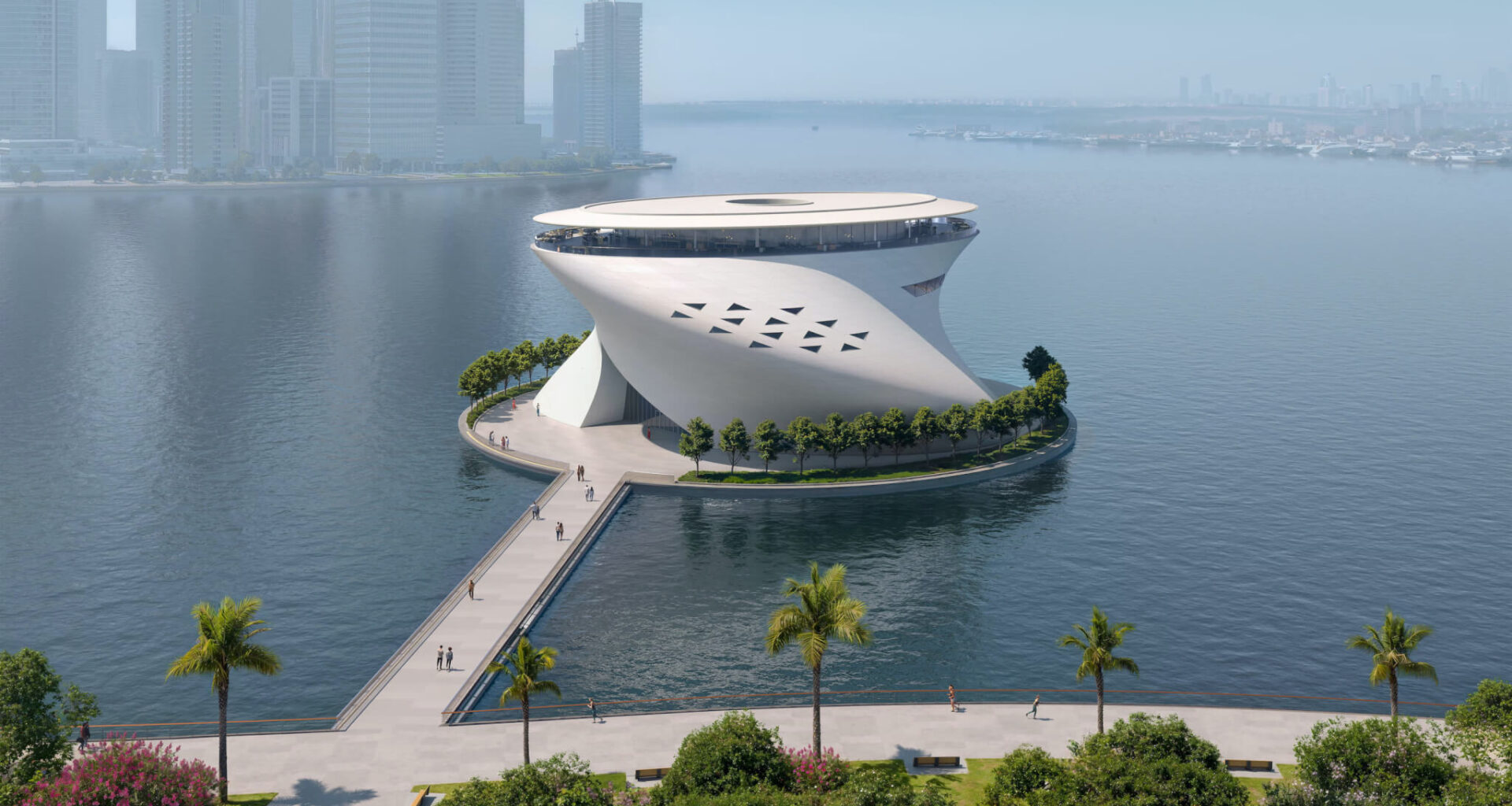
Dubai has unveiled plans for a new cultural institution, The Dubai Museum of Art (DUMA), to be designed by Japanese architect Tadao Ando. The project, announced in the presence of Sheikh Mohammed bin Rashid Al Maktoum, is set to rise on the waters of Dubai Creek as part of the city’s broader ambition to strengthen its creative and cultural infrastructure.
Ando, the1995 Pritzker Architecture Prize laureate, known for his serene concrete buildings, drew from Dubai’s maritime and pearl-diving history. The museum’s curved concrete shell, enclosing a circular exhibition hall, was influenced by the form of a pearl. A cylindrical skylight at its center filters daylight into the galleries.
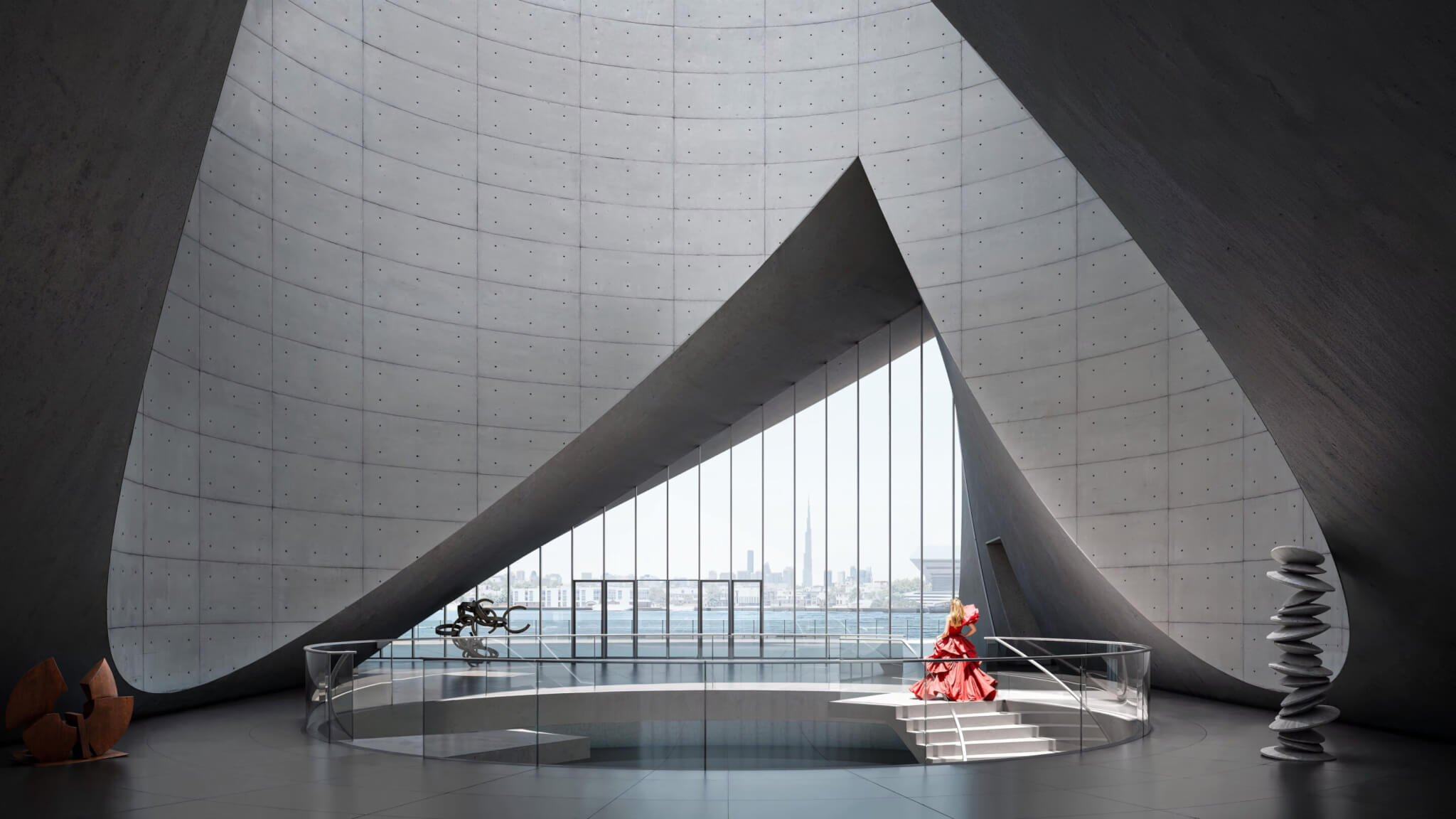 A cylindrical skylight at the center filters daylight into the galleries. (Courtesy Government of Dubai)
“I don’t believe architecture has to speak too much,” said Ando. “It should remain silent and let nature in the guise of sunlight and wind.”
In renderings the circular building is located on a plaza out on the water. It is accessible via a linear pathway that will seamlessly extend from a waterfront promenade.
Rising five stories above the creek, the museum will contain adaptable exhibition galleries, a restaurant and lounge overlooking the water, and a library and study center. In visuals the interiors appear cavernous with light entering the space from the skylight and triangular cutouts. To supplement, artificial lighting will line the perimeter of the gallery ceilings and walls.
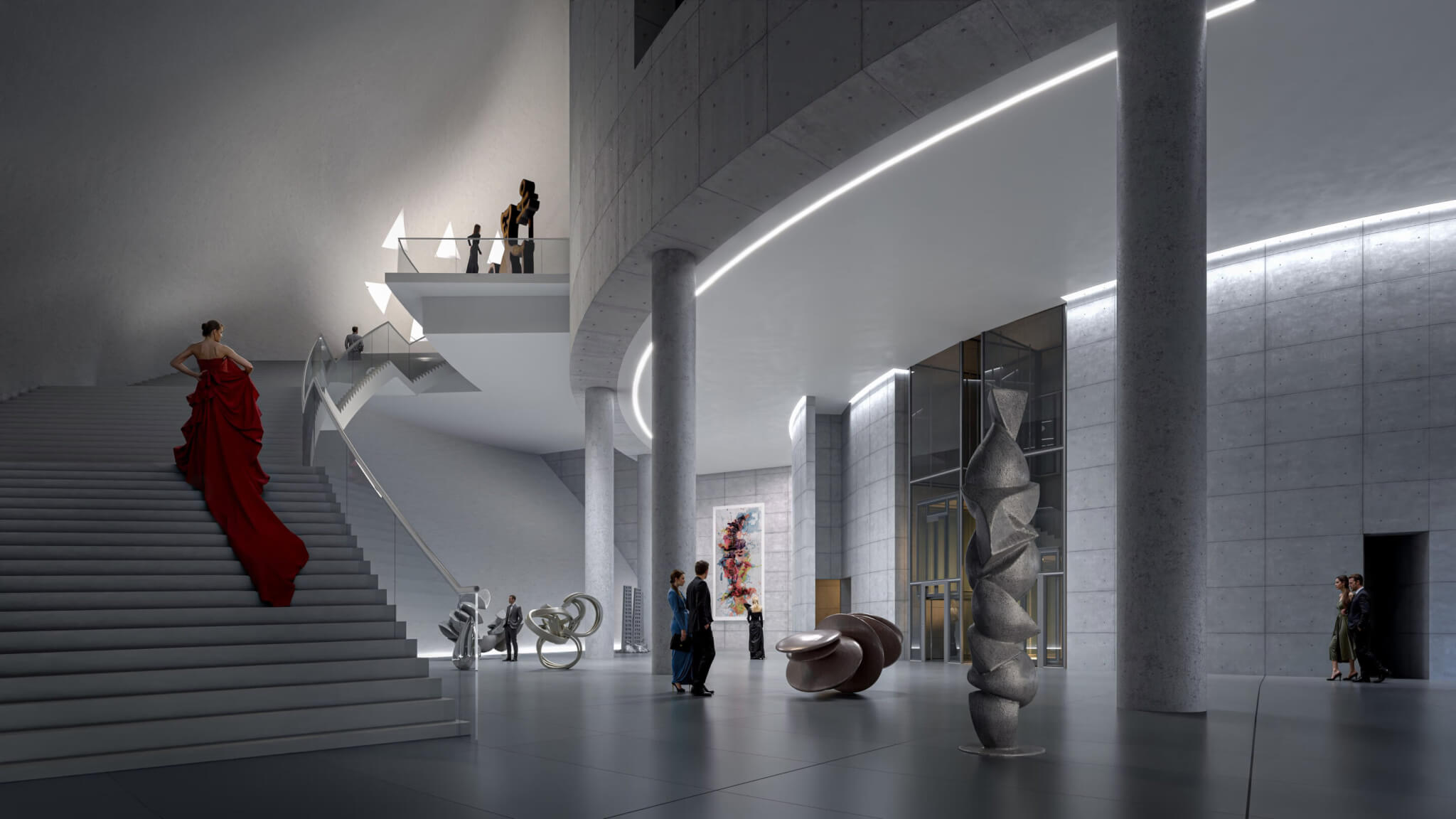 DUMA is part of a growing constellation of cultural projects, signaling Dubai’s investment in creative infrastructure and its desire to be seen as an international hub for art and innovation. (Courtesy Government of Dubai)
Developed by the Al-Futtaim Group, the museum is intended to serve as a platform for contemporary art from around the world, offering space for exhibitions, residencies, and educational programs meant to foster a cross-cultural dialogue. Beyond its architecture, DUMA is part of a growing constellation of cultural projects in Dubai that include the Museum of the Future and the Jameel Arts Centre, signaling the city’s investment in creative infrastructure and its desire to be seen as an international hub for art and innovation.
For Ando, whose past museum commissions include Japan’s Chichu Art Museum and the Bourse de Commerce in Paris, DUMA presents another exploration of how architecture can frame human experience through light, space, and reflection.
DUMA’s construction date has not yet been announced.