
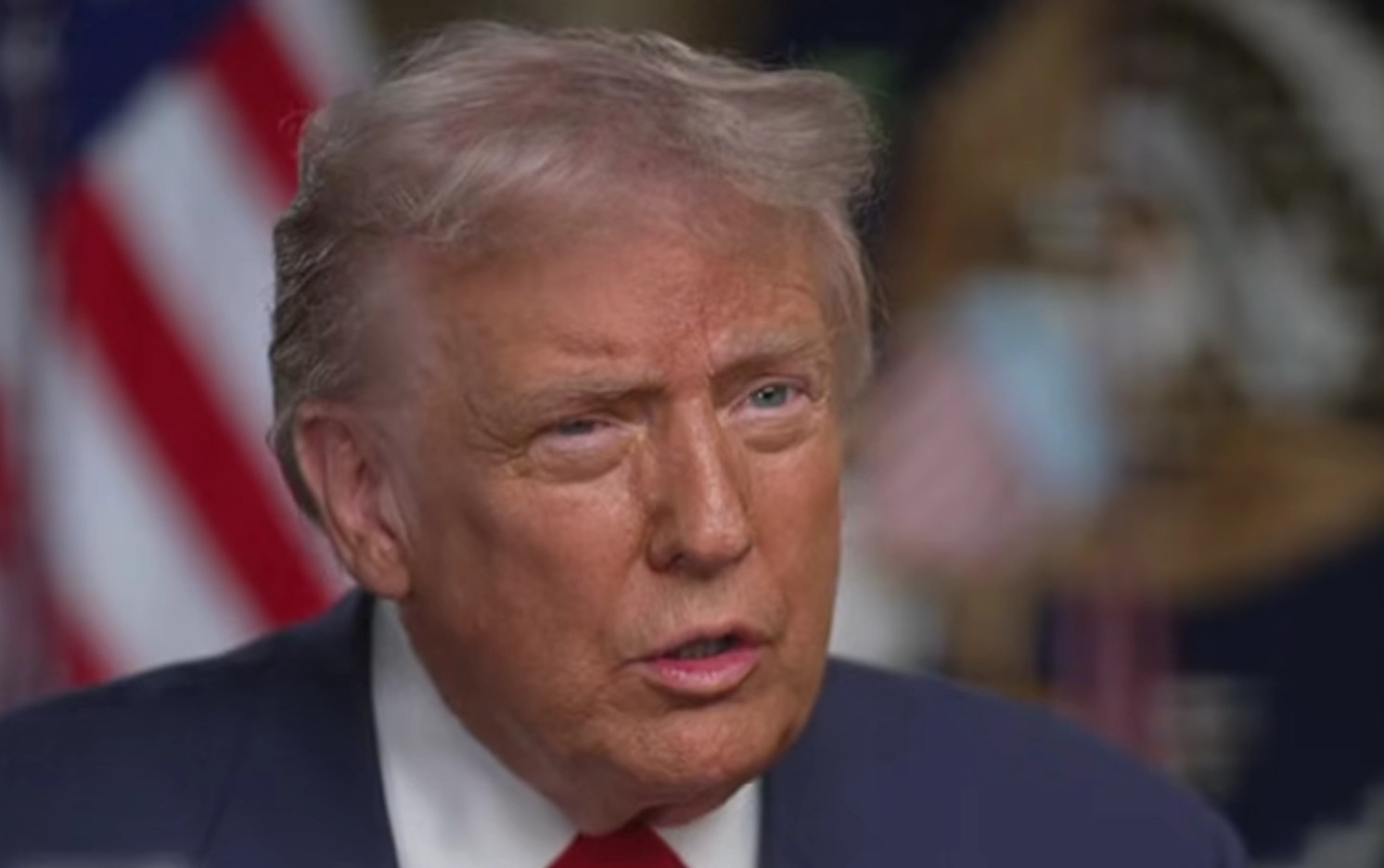
US President Donald Trump declared Sunday that Washington will “be involved” in Prime Minister Benjamin Netanyahu’s criminal trial, arguing that the Israeli premier has been mistreated by the law enforcement apparatus.
In a lengthy interview on CBS’s “60 Minutes,” Trump reiterated his belief that Netanyahu was being treated unfairly by being put through his corruption trial.
Trump has weighed in on the matter several times in recent months, dismissing the charges against Netanyahu, who was indicted for bribery, fraud and breach of trust. While speaking in front of the Knesset last month, Trump called on President Isaac Herzog to pardon Netanyahu.
The US president has himself issued 59 pardons since returning to the White House in January, including for people who were convicted of taking part in the January 6 Capitol riots in 2021 after Trump lost that election.
“We’ll be involved in that to help him out a little bit because I think it’s very unfair,” Trump told “60 Minutes” about Netanyahu’s trial, revealing that additional US intervention in the Israeli criminal case is in store.
Get The Times of Israel’s Daily Edition
by email and never miss our top stories
By signing up, you agree to the terms
The interviewer noted that Trump had pushed Netanyahu to apologize to Qatar following the botched strike on Hamas leaders in Doha, as well as to agree to a ceasefire in Gaza, and asked whether the US president could push the prime minister to recognize a Palestinian state.
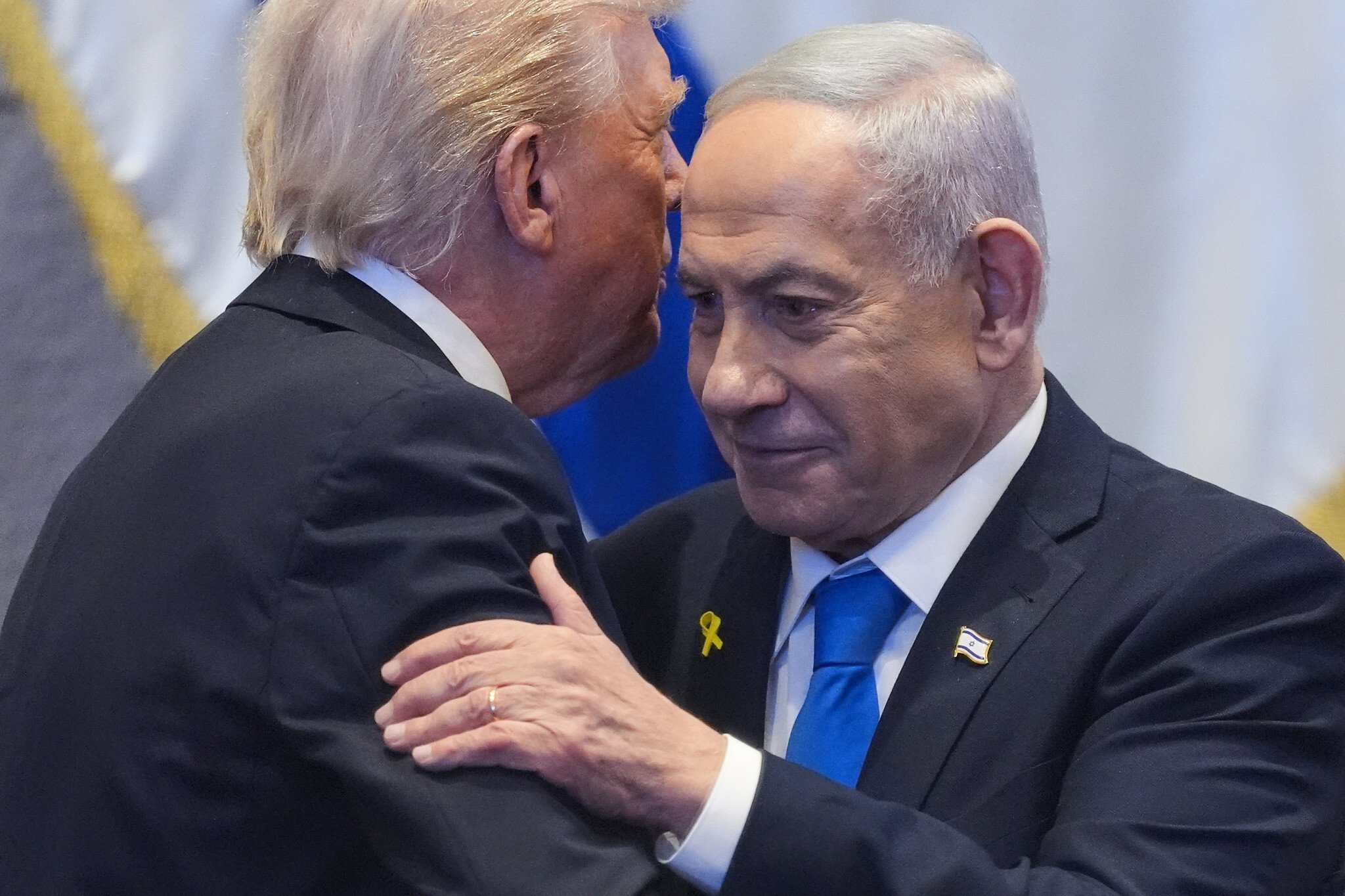
US President Donald Trump talks with Israel’s Prime Minister Benjamin Netanyahu in the Knesset, October 13, 2025. (AP Photo/Evan Vucci, Pool)
Trump dodged the question and reiterated that he has worked well with the “wartime prime minister,” adding: “That’s the kind of person you needed in Israel at the time.”
Still, Trump did not deny having pressured Netanyahu.
“I had to push him a little bit one way or the other. I did a great job in pushing,” Trump said, adding that Netanyahu is a “very talented guy… [who has] never been pushed before.”
“I didn’t like certain things that he did, and you saw what I did about that,” he added, possibly referring to the strike on Qatar.
Trump was publicly critical of the strike that killed six people, including one Qatari security officer, but failed to hit its intended targets.
Trump also asserted that the ceasefire he brokered in Gaza is “not fragile” and reiterated that Hamas would be “eliminated” if it did not disarm.
The ceasefire has largely held for weeks despite occasional attacks from both sides. Hamas has also yet to return eight slain hostages, which it says it is struggling to reach as they are buried under rubble and can only be reached by special equipment.
“It’s not fragile. It’s a very solid,” Trump said of the ceasefire. “Hamas could be taken out immediately if they don’t behave.”
Asked how he can get Hamas to disarm, the president responded: “If I want them to disarm, I’ll get them to disarm very quickly. They’ll be eliminated.”
He did not, however, elaborate on how he would achieve this.
While Trump’s 20-point plan does envision Hamas disarming, the actual ceasefire agreement signed by Israel and Hamas in Egypt on October 9 only focused on the initial IDF withdrawal, the hostage-prisoner swap, and humanitarian aid provisions.
Trump also again asserted that Saudi Arabia’s Crown Prince Mohammed bin Salman, known as MBS, is not serious when publicly conditioning normalizing relations with Israel on the eventual establishment of a Palestinian state.
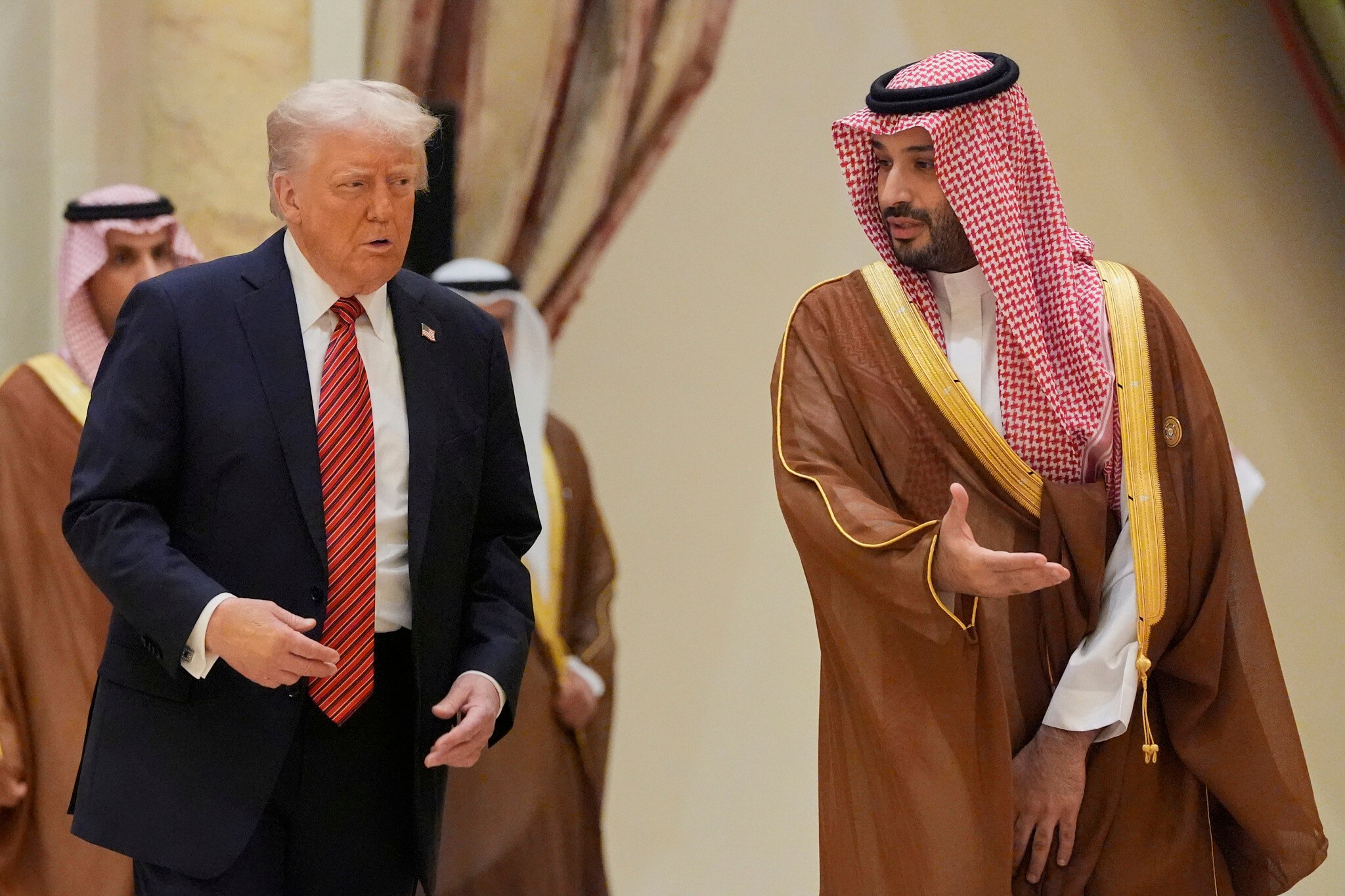
US President Donald Trump arrives with Saudi Crown Prince Mohammed bin Salman for the group photo with Gulf Cooperation Council leaders during the GCC Summit in Riyadh, Saudi Arabia, May 14, 2025. (Alex Brandon/AP)
Trump was asked whether he believes the de facto Saudi leader’s recent assertion that he wouldn’t join the Abraham Accords without a two-state solution.
“No,” he responded. “I think he’s going to join [the Abraham Accords].”
The last time Trump asserted that MBS is not sincere about his public demand for a pathway to a future Palestinian state, the Saudi Foreign Ministry issued a statement at 4 a.m. refuting the US president’s claim.
“We will have a solution. I don’t know if it’s going to be two-state. That’s gonna be up to Israel and other people, and me,” Trump said.
He went on to reiterate his belief that the threat of a nuclear Iran is what has held countries back from joining the Abraham Accords and that those agreements will now be able to expand, thanks to the US strikes on Tehran’s nuclear program in June.
“We knocked the hell out of Iran, and then it was time to stop, and we stopped,” Trump said.
Watch DocuNation Season 3: The Heart of Israel
when you join the ToI Community
Support The Times of Israel’s independent journalism and receive access to our documentary series, DocuNation: The Heart of Israel.
In this season of DocuNation, you can stream eight outstanding Israeli documentaries with English subtitles and then join a live online discussion with the filmmakers. The selected films show Israel beyond the conflict: a place of storytellers and musicians, of dreamers, makers, and communities rooted in meaning and trust.
When you watch DocuNation, you’re also supporting Israeli creators at a time when it’s increasingly difficult for them to share their work globally.
To learn more about DocuNation: The Heart of Israel, click here.
Support ToI and get DocuNation
Support ToI and get DocuNation
Already a member? Sign in to stop seeing this
You appreciate our journalism

You clearly find our careful reporting valuable, in a time when facts are often distorted and news coverage often lacks context.
Your support is essential to continue our work. We want to continue delivering the professional journalism you value, even as the demands on our newsroom have grown dramatically since October 7.
So today, please consider joining our reader support group, The Times of Israel Community. For as little as $6 a month you’ll become our partners while enjoying The Times of Israel AD-FREE, as well as accessing exclusive content available only to Times of Israel Community members.
Thank you,
David Horovitz, Founding Editor of The Times of Israel