
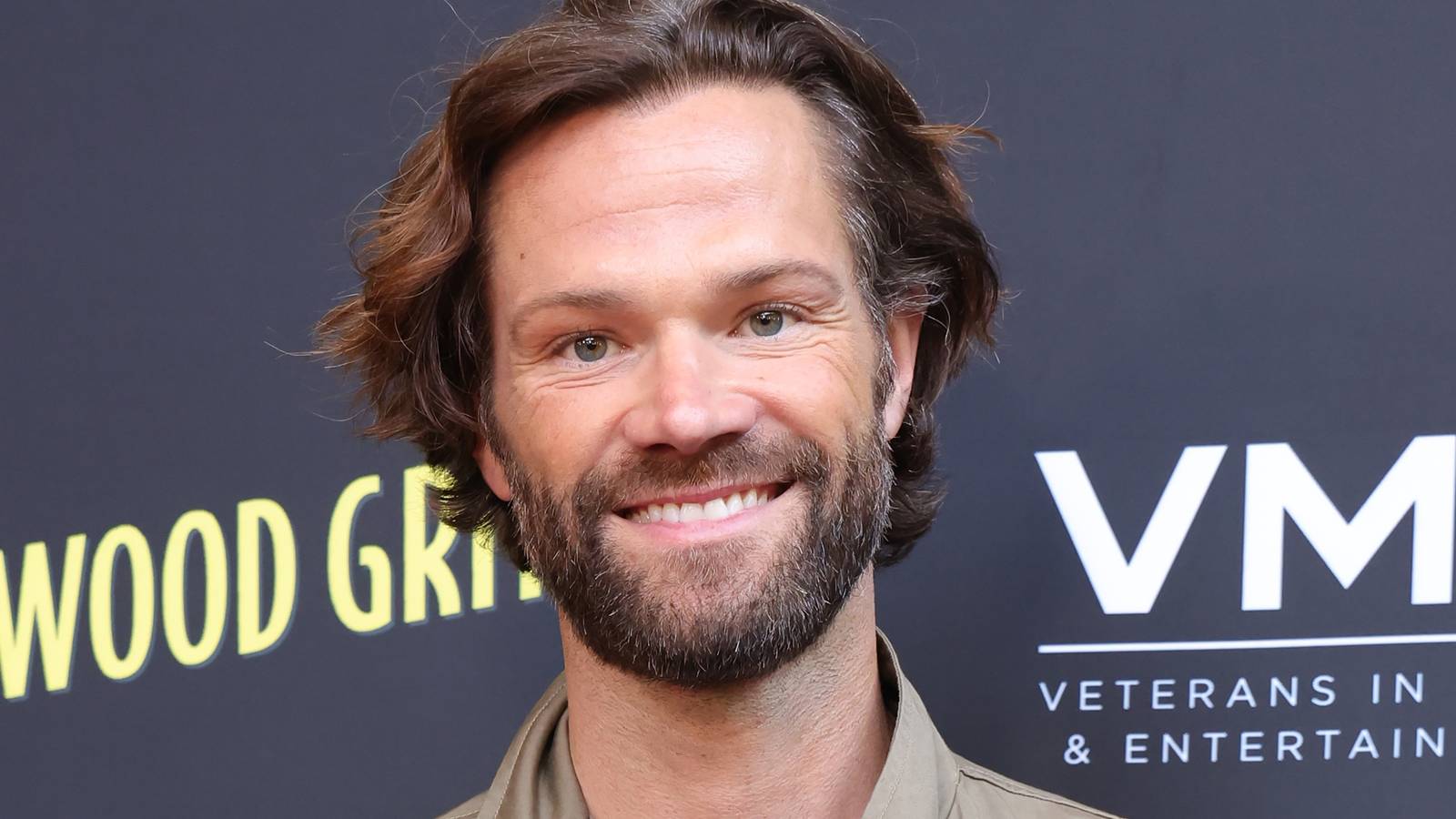
Jared Padalecki and Timothy Olyphant come riding into the new West of TV on divergent paths but to a shared horizon. Olyphant’s Raylan Givens is the clean-cut, tight-lipped U.S. Marshal of Justified and Justified: City Primeval. On the other hand, Padalecki’s Cordell Walker in Walker. He is a Texas Ranger whose badge carries empathy rather than menace, whose battles are fought as much within the heart as in the field. Separated by tone, style, and network, both actors carry the Western archetype forward, embodying two halves of the same American myth: justice and redemption, silence and vulnerability.
When Justified premiered in 2010, it revived a genre many consider extinct. Produced in modern-day Kentucky, the show recasts the classic cowboy as a code-ridden man tormented by his own nature. Raylan Givens wears his Stetson as a helmet, a stoic lawman always on the verge of violence. Olyphant’s performance distills the Western hero down to its simplest elements: a lesson in restraint, quick wit, and inner conflict. Padalecki’s Walker takes the opposite path. Where Justified surpasses the Western, Walker redefines it with emotion. His Cordell Walker is not stoic of yesterday but a grieving widower trying to rebuild his life after devastation. The bloodshed and brutality of the Chuck Norris days give way to introspection, therapy, and family healing. Together, Raylan and Cordell chart the evolution of the TV Western from grit to grace.
The Western Continues to be An Evolving Genre
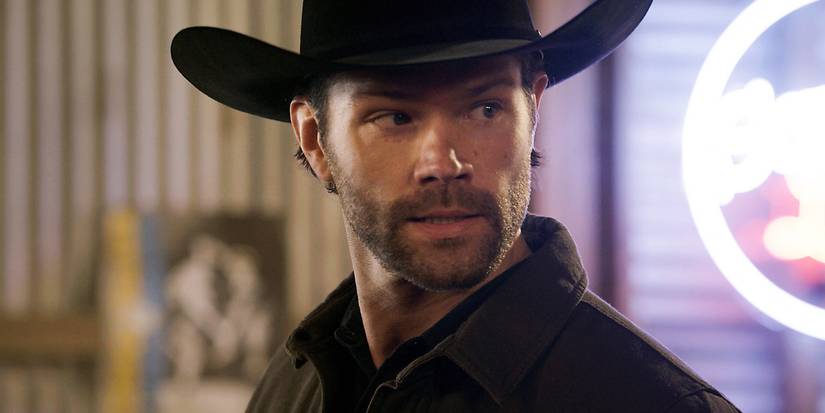
Cordell Walker (Jared Padalecki) looks to the side in with a concerned expression in Walker.Image via The CW
The Western is television’s most enduring myth, capable of reproducing each era’s anxieties without losing its symbolic imagery: the wide-brimmed hat, the solitary road, the tension between order and chaos. From Gunsmoke and Bonanza to Deadwood and Yellowstone, the Western redeploys its moral vocabulary for the time. Where formerly it was an issue of frontier expansion, now it is an issue of pushing against the cost of justice and what community is. In the 1950s, heroes like Marshal Matt Dillon brought order through restraint and authority. The West is untamed, and justice requires a strong hand. In the 2000s, series such as Deadwood and Justified complicate that notion. Olyphant’s Raylan Givens, born of the pages of Elmore Leonard, is a contemporary intelligent gunslinger. Justified redescribes Kentucky as a frontier of decadence and moral fatigue, where every criminal is an extension of some corner of Raylan’s own brain. Meanwhile, the geography of the West is as vast as any classic desert.
Longmire, Hell on Wheels, and Yellowstone trace the mythic West’s life in modern law enforcement and corporate corruption; then there’s family legacy. The gun is a cowboy’s heritage and tool of domination; the badge is a marker of moral duplicity. Walker enters this new world, not nostalgia, but revival. By reanimating a network action genre with emotional verisimilitude, Padalecki demonstrates that the Western is no longer exclusive to the stoic and outlaw’s purview but now has something to say to fathers, sons, and daughters, struggling with bereavement, identity, and the seriousness of intergenerational trauma.
The genius of Justified and Walker is that they achieve evolution, not reinvention. Both shows preserve the Western essence but run it through different lenses. They take their time: Walker explores individualism and post-recession cynicism, and Justified examines moral optimism and desire for human connection in the face of fragmentation in society. The Western persists because it captures the deepest paradoxes of the American soul: the need to be independent and the need to belong. Whether in the precision of Raylan or in the insight of Cordell, the genre persists because it articulates the evolving ideals of the country.
Justified’s Raylan Givens Proved the Western Was Still Alive
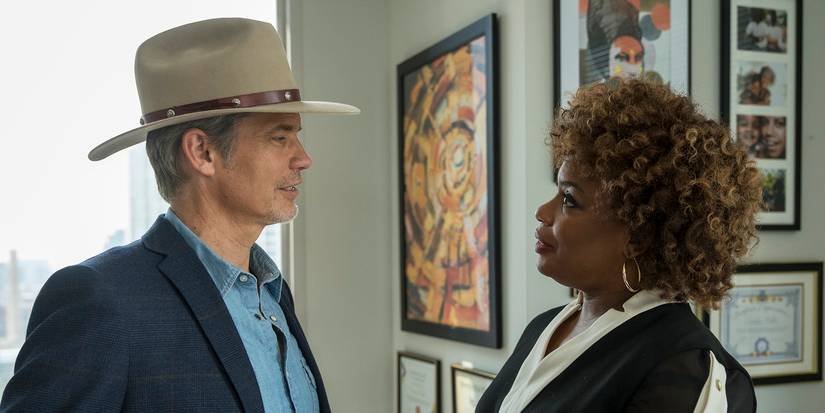
Justified City Primeval’s Raylan Givens visits Carolyn Wilder in her officeImage via FX
Olyphant portrays Raylan Givens with studied restraint, blending charm and menace. On Justified, he is the television equivalent of the classic Western lawman: a man of black-and-white moralities adrift in a world of grays. The show portrays Raylan as a hero and a warning. He is the Westerner ideal, silent, with reason and a gun buckled on his hip, but Justified won’t mythologize him. His violence has a price tag. Every shot he takes resonates in Harlan County, and every fight wears down his conscience. The show’s brilliance is to see that justice, if pursued by men like Raylan, will often look almost identical to revenge. Olyphant’s performance on Justified quietly raises the Western hero to almost meditative levels. He never shrieks. His power is restrained, to be able to command without anger.
When he comes back in Justified: City Primeval, wiser and more melancholic, that restraint has been converted into sadness. As a result, it becomes more of a crime show about the impossibility of civilizing anarchy. Detroit replaces Kentucky, but Raylan is haunted by the same ghosts: his criminal daughter, his own career path, and his own potential for violence within himself. Both in City Primeval and Justified, Olyphant builds a hero who recognizes that winning is not right. His stoic commanding presence evokes Gary Cooper in High Noon or Clint Eastwood in Unforgiven, but fills the icon only halfway. Instead, he’s the genre revised; he is a man defined by intelligence, irony, and self-restraint. In him, Justified reminds viewers that authentic power is not authority but authority.
Jared Padalecki’s Cordell Walker Is the Emotional Cowboy for a New Generation
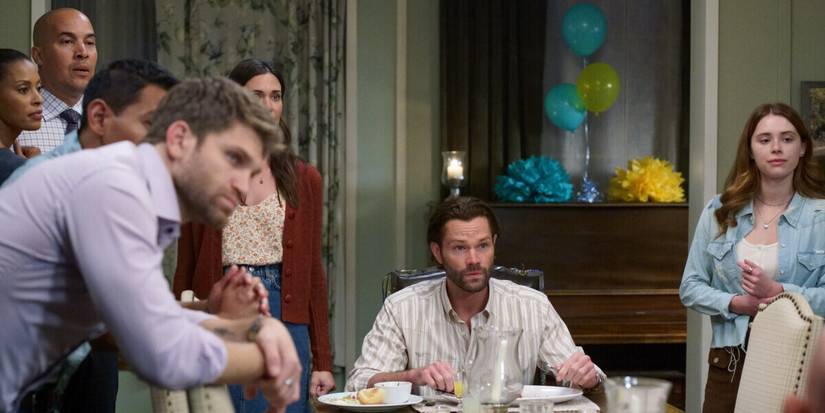
For Padalecki, the cowboy stands for emotion, not terror. Walker starts with Cordell mourning the murder of his wife. This event leads to an examination of family, weakness, and forgiveness. The show eschews the lone-wolf ideal in favor of exploring how masculinity changes through intimacy. Padalecki defines Cordell less as a tough-line lawman and more as a man being consumed by himself. He falls, fails, and rises. His courage is not in being able to command but in being able to hear, heal, and expand. Walker thus reverses the Western moral spin: while old-style cowboys suppress feeling, Cordell uses feeling as a tool.
The television network deepens the transition. Walker’s strongly neo-noir appearance is a disorienting contrast. Its edge is emotional, interior. However, its mandate is no less urgent. The show addresses issues of generational trauma, criminal justice reform, and strength in the face of adversity through the eyes of a man who learns that compassion can be as powerful as the gun he wears. In doing so, Walker broadens the Western archetype to include vulnerability as strength. Padalecki’s performance modernizes the cowboy without discarding his integrity. He is still a man of action, but his greatest weapon is empathy. It is a quality that redefines what Western masculinity can mean in the 21st century.
Justified and Walker Are Two Different Versions of Modern Westerns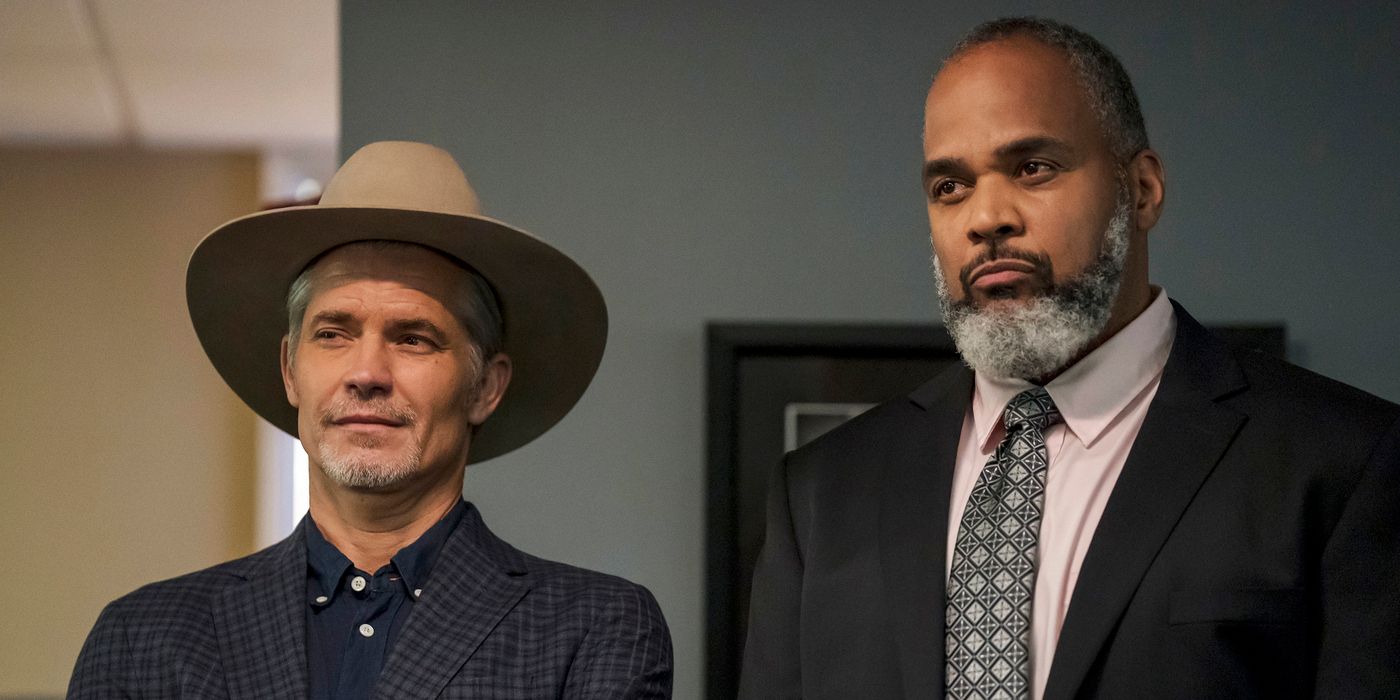
Taken together, Justified and Walker reveal how the Western continues to evolve without losing its identity. Olyphant’s Raylan speaks to audiences drawn to ambiguity, isolation, and moral reckoning. Padalecki’s Cordell resonates with viewers who crave restoration and emotional depth. Both embody different eras of the same myth: the lawman navigating a landscape that mirrors his own contradictions. Justified plays out in light and dark, law and crime blurring into the same color. Its tension lies in what is not said: Raylan’s silence, his gaze, his refusal to say what he does.
Walker performs in confession and speech, healing as a process initiated through words. Its essence is community and emotional vulnerability. These opposites chart two trajectories of contemporary Western narrative: one philosophical, the other empathetic. The Western’s flexibility guarantees its survival. It exhibits the American contradiction between isolated power and communal regrouping. With Justified, the solitary marshal has to face it alone. With Walker, it is shared with loved ones and friends. Both remind fans that the frontier is not a location, but it is a condition of moral and emotional accounting.
Jared Padalecki and Timothy Olyphant are two faces of the 21st-century Western. One struggles with silence and the other with empathy. Both of them show an example that the Western doesn’t endure by remaining within nostalgia but by growing with its heroes. Raylan Givens represents the Western’s past, with a man full of cool authority and moral complexity. However, Cordell Walker embodies the Western’s emotional future. He is a man who leads with compassion and vulnerability.
Both approach the archetype differently, yet their characters share the same foundation: an unwavering belief in justice, however imperfectly achieved. Finally, the West’s perpetuity is its ability to embody the soul of its time. Now, its conscience demands responsibility and mercy, justice and forgiveness. Hiding his gun with Raylan Givens and opening his heart with Cordell Walker, the genre achieves an equilibrium between restraint and redemption.