
Before the age of formalised focus groups and regular opinion polling, the Enlightenment Irish philosopher and politician Edmund Burke delivered a bracingly anti-populist statement to his electors: “Your representative owes you, not his industry only, but his judgment; and he betrays, instead of serving you, if he sacrifices it to your opinion.”
The most generous interpretation of the Coalition’s ongoing debate over Australia’s commitment to net zero by 2050 is that the remaining representatives of Liberal and Nationals-held electorates are trying to live up to the ambition of the great Irishman. Despite polls showing that voters want their representatives to promise to meet the 2050 target, these politicians are trying to exercise their best judgment on the feasibility of the emissions-reduction road map and its effect on Australia’s prosperity.
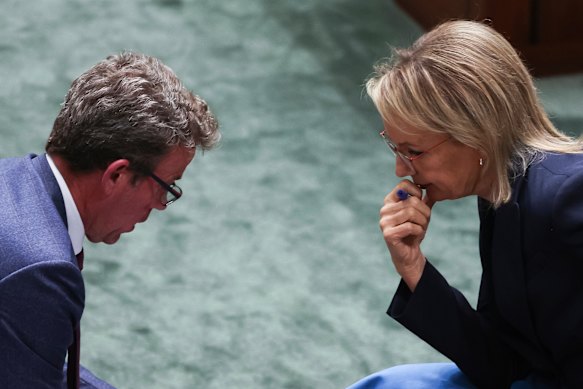
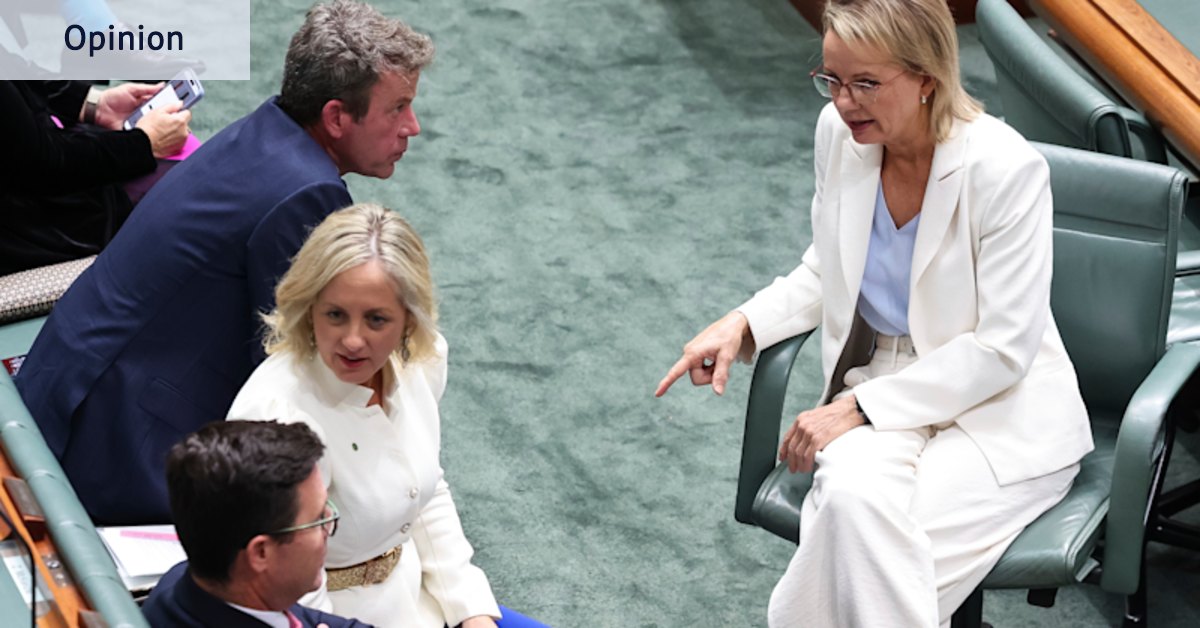
Where should Liberals be focused? Opposition Leader Sussan Ley this week with opposition energy and emissions reduction spokesman Dan Tehan.Credit: Alex Ellinghausen
There’s bad news and ambivalent news on how that’s going for them. Voters judge the squabbling Coalition to be increasingly unelectable. On the other hand, airing the arguments does seem to be shifting attitudes to the 2050 ambition.
A poll taken in July this year by the pro-renewables, Liberal-aligned Blueprint Institute found that 49 per cent of voters believed the Liberal-National Coalition should keep the emissions-reduction target, while only 21 per cent were unsure. By October, attitudes had become more fluid. Essential found that 44 per cent of voters somewhat or strongly supported Australia’s target to reach net zero emissions by 2050, while 29 per cent were unsure. According to a Redbridge poll for The Australian Financial Review, 37 per cent of voters wanted the Coalition to retain a commitment to net zero by 2050, with 26 per cent unsure.
That’s a drop of between 5 and 12 per cent in the number of voters who want Australia or the Coalition committed to the 2050 target, and an increase of between 5 and 8 per cent of those who are now less confident. This could be read as good news for the Coalition – progress towards persuading voters that the Labor government is writing cheques it can’t cash. But here’s why it’s ambivalent.
Loading
Previously unpublished research undertaken by Spectre Strategy in July shows the net zero debate, which seems so urgent to the Liberals and Nationals now, is far from a priority for most voters. Director Morgan James warns that focusing on this issue is a high-stakes gamble for the Liberal Party.
“Soft voters, those who could be engaged and persuaded to vote for the Liberal Party, are desperate for a discussion that reflects what they view as the real issues and priorities,” James warns. “If anything, they’re more likely to break against the Liberals, who haven’t done the work to connect their concerns over the 2050 target to the issues voters care about.”
If Dan Tehan, who has been leading the energy review for the Liberals, is somehow able to lay out and communicate an inspiring plan for energy abundance directly connected to voter aspirations between now and the next parliamentary year – in the attention dead-zone of Christmas – there may be a chance of winning over soft voters. In this scenario, the gamble would have paid off. Edmund Burke could be rightly invoked by the conservative heirs. The Coalition could finally move on to other matters.