
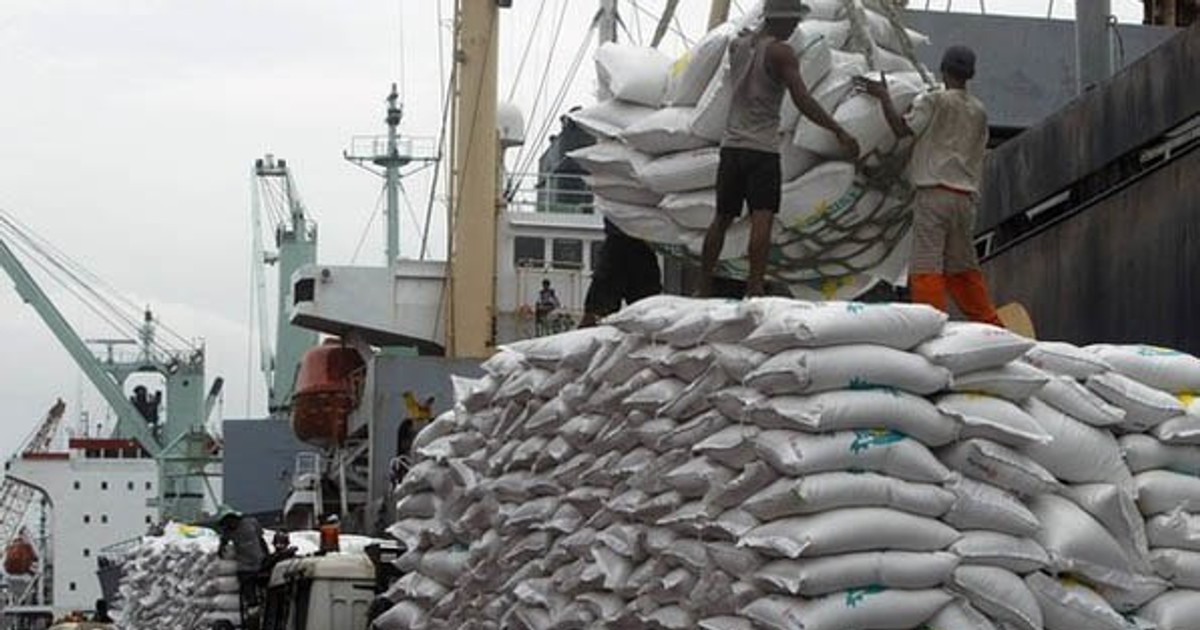
With rising demand fueled by population growth, urbanization, and changing dietary patterns, rice producers in Africa stand to capture a larger share of a market that has long relied on imports.
The African Export-Import Bank (Afreximbank) projects that the continent’s rice market will expand from an estimated $24 billion in 2024 to $29.2 billion by 2030, reflecting a compound annual growth rate (CAGR) of 4 percent, according to the Afreximbank Commodity Bulletin Number 1 – 2025.
Over the past year, the global rice market has experienced significant shifts. In the 2024/25 season, global production reached a record 533.8 million tonnes (milled basis), up 11.6 million tonnes from the previous year.
This increase was driven by bumper harvests in India, Cambodia, and Pakistan, while adverse weather in countries like Bangladesh and Nigeria limited output.
Despite this growth, the continent remains a net importer, relying on imports for roughly 40 percent of consumption. Major suppliers such as India, Thailand, and Vietnam continue to fill the gap.
Rising urban populations, changing dietary habits favoring convenient staples, and AfCFTA initiatives to reduce transport costs and promote regional trade are expected to further drive demand across the continent.

Afreximbank also identified challenges that hamper self-sufficiency. Inadequate rural infrastructure, limited access to quality seeds and mechanisation, and exposure to climate change impacts such as droughts and flooding constrain productivity and reduce competitiveness compared with imported rice.
Top African Rice Producers Stand to Gain
The projected market growth presents a significant opportunity for Africa’s leading rice producers.
As of 2024, the top producers – Nigeria, Egypt, Madagascar and Tanzania- recorded production volumes of approximately 8.7 million tonnes, 5 million tonnes, 5 million tonnes, and 1.8 million tonnes, respectively.
Increased investment in production capacity, mechanisation, and agritech solutions could enable them to capture a larger share of the projected $5 billion market expansion.
For private investors, agritech firms, and development finance institutions, the forecast underscores the potential for profitable engagement in Africa’s rice sector.
Strengthening domestic production not only promises economic returns but also addresses critical food security concerns, reduces reliance on imports, and enhances resilience against global market fluctuations.
As Africa’s population grows and urbanisation accelerates, pressure on rice supply will only increase. The coming years are shaping up to be a pivotal period for the continent’s rice industry, offering opportunities for both producers and investors to reap substantial gains while boosting local food systems.