
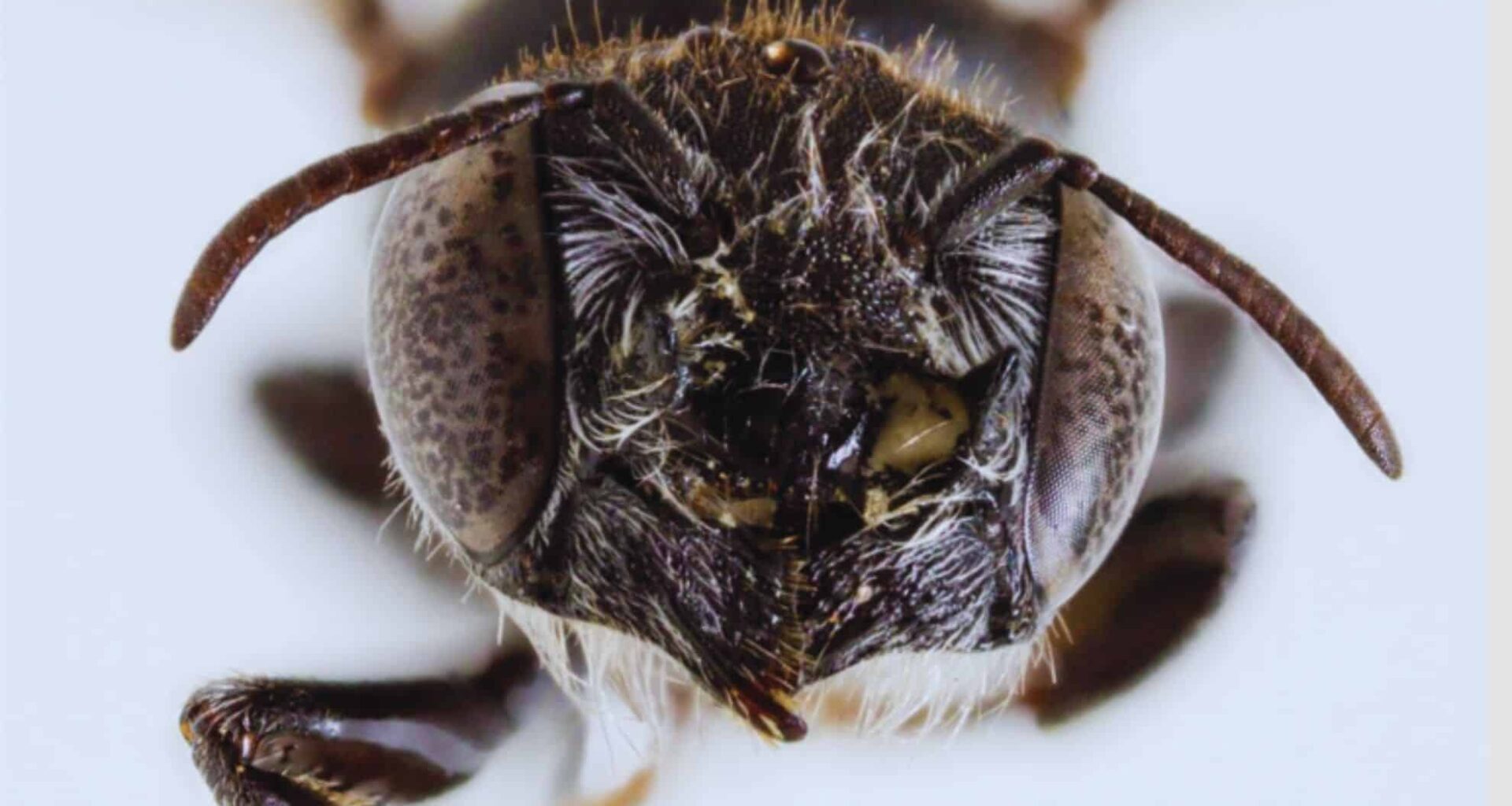
In a fascinating turn of events, Megachile lucifer has joined the ranks of Australia’s unique native bees. Discovered during a 2019 survey led by Kit Prendergast from Curtin University, the female bee was immediately noted for its remarkable horned face, which inspired the species’ name.
The bee’s distinctive features are not only a biological curiosity but also a stark reminder of the unknown species still waiting to be documented. With bees playing a crucial role in pollination, the conservation of this species is vital, as its habitat, alongside the endangered wildflower, is threatened by mining and climate change.
A Horned Marvel of the Insect World
The newly discovered Megachile lucifer stands out not just because of its rare species status, but because of its horn-like projections on the female’s clypeus (the front part of the head). These horns, which curve outward and upward, are almost half the length of the bee’s head.
According to Curtin University’s Kit Prendergast, the unusual feature immediately caught her attention during fieldwork in 2019. “The female had these incredible little horns on her face,” Prendergast explained. The name “Lucifer,” inspired by the Netflix character, was a perfect fit for the devilish appearance of the bee.
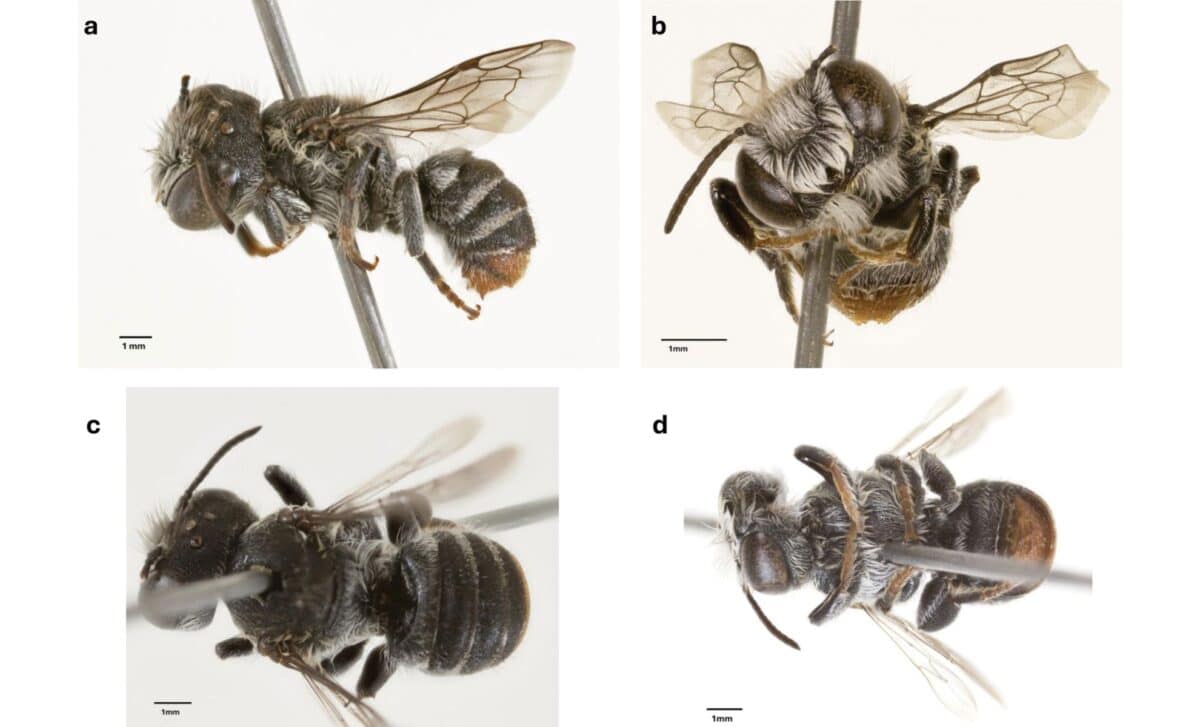 Megachile lucifer sp. nov. male, a lateral view b head, frontal view c dorsal view d ventral view. © Journal of Hymenoptera Research.
This species is unique within the Hackeriapis subgenus, marking the first new discovery in over two decades. The last time a new species of this group was described was in 2004, which highlights just how much life remains to be discovered in Australia’s wild landscapes. As researchers work to decode the ecological functions of these horns, potentially for nest construction or competition, Megachile lucifer continues to intrigue scientists.
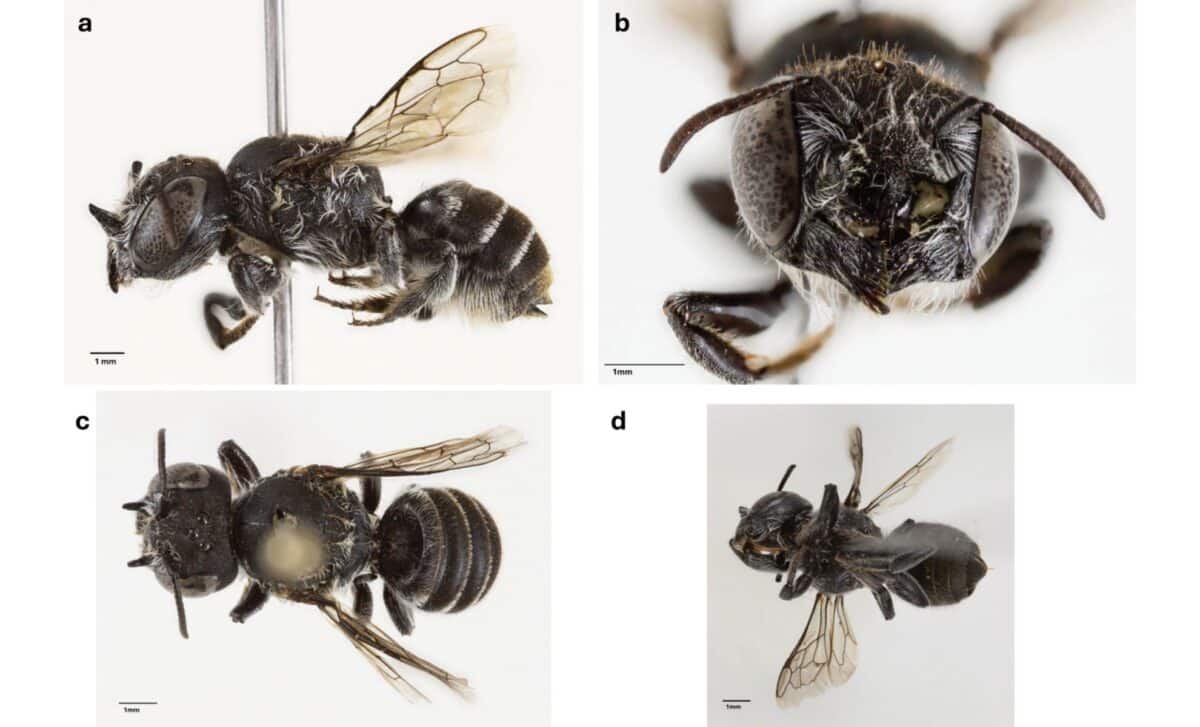 Megachile lucifer sp. nov. female, a lateral view b head, frontal view c dorsal view d ventral view. © Journal of Hymenoptera Research.
A Critical Pollinator at Risk
The discovery of Megachile lucifer is not only about the bee itself but also about the environment it inhabits. Found in the Bremer Ranges, the bee was recorded visiting the critically endangered Marianthus aquilonaris, a rare wildflower restricted to this specific region in Western Australia. The survival of both the bee and the flower is now at risk due to human activities such as mining, which threaten their delicate habitat.
Mining operations in the area have not yet adequately surveyed the biodiversity of the region, which means many native species, like the lucifer bee, could be overlooked or destroyed before they are properly studied or protected. The plant and its pollinators, including Megachile lucifer, could face extinction if conservation measures are not taken swiftly.
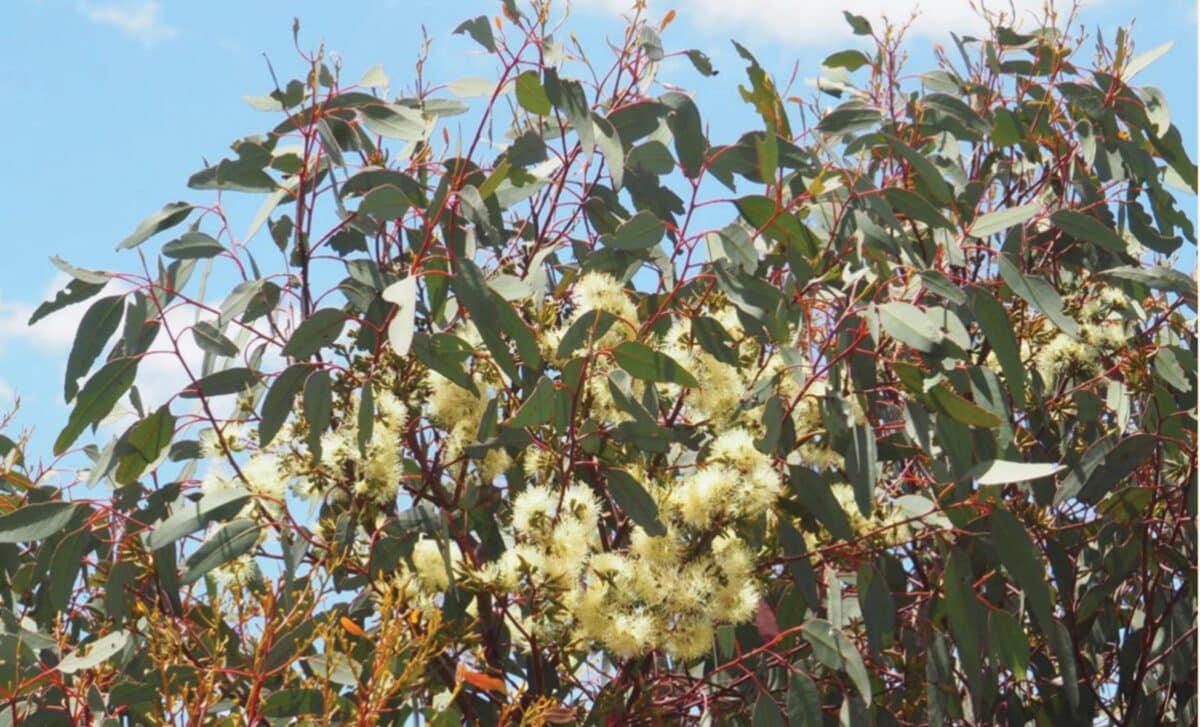 Eucalyptus livida, one of the two host plant species of Megachile lucifer sp. nov. © Journal of Hymenoptera Research.
Why Conservation Matters for Pollinators
The Megachile lucifer discovery sheds light on the broader challenges facing Australia’s ecosystems. Almost all flowering plants depend on wild pollinators, especially bees, for survival. However, habitat loss and climate change are pushing many of these essential creatures to the brink.
According to Dr. Prendergast, “Many mining companies still don’t survey for native bees, so we may be missing undescribed species, including those that play crucial roles in supporting threatened plants and ecosystems.” The protection of these pollinators is essential not just for the preservation of individual species like Megachile lucifer, but also for the health of broader ecosystems.
As Australia faces a pollination crisis, the need for more thorough research and conservation efforts has never been more pressing. Ongoing studies of Megachile lucifer and other native bees will be crucial in determining their role in maintaining biodiversity. Without the necessary action, we risk losing these insects before we even fully understand their contributions to the environment.