
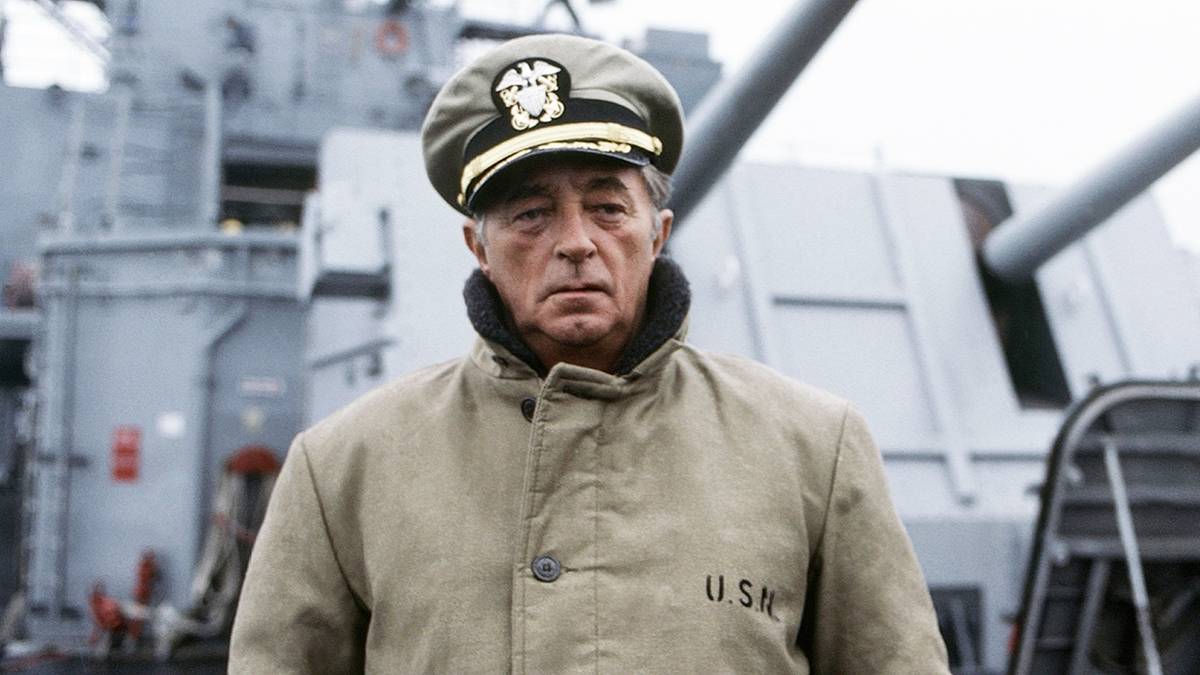
By the time its eight episodes concluded in early 1977, Roots, a revelatory cultural phenomenon and seminal media achievement, had rewritten television’s rules. Overnight, the event miniseries‘ unique format — tightly compact and emotionally profound narratives, staggering production value, star-studded ensembles — became nationwide appointment viewing. Determined to outdo its own success, ABC poured $40 million into a high-concept adaptation of Herman Wouk’s massive historical tome, The Winds of War. The Pulitzer Prize-winning author strove to encapsulate World War II from beginning to end, detailing every major event’s catalysts and consequences through the eyes of one fictional family. In early ’80s television terms, ABC emulated this approach. The Winds of War was the most expensive miniseries ever made at the time, the longest at 16 hours, and “shot in 267 locations, in six countries and on two continents, and […] took 13 months to film and 12 more to edit,” according to Time. Even its Sunday night premiere was heralded by an aggressive year-long advertising campaign.
The network’s costly risk paid off. Approximately 140 million screens devoured those 16 hours, a record-breaker surpassing both Roots and the original Shōgun‘s records. Following the pattern laid by these predecessors, and years before sobering film masterpieces like Schindler’s List or cable channels’ uncensored grit (Band of Brothers), Wouk and director-producer Dan Curtis’ (the creator of the hit horror soap Dark Shadows) meticulously researched war as our world’s worst horror, not a romanticized genre to trivialize. While many sagas come close to matching this landmark achievement’s specific alchemy — pre-prestige TV maturity, precise historical accuracy, and an unflinching front-row presentation of an atrocity that haunts the global consciousness — few have surpassed its immersive scope, technical mastery, or visceral heft.
What Is ‘The Winds of War’ About?
Six months before Nazi Germany invades Poland, Victor “Pug” Henry (Robert Mitchum) and his wife, Rhoda (Polly Bergen), sail to Berlin for Pug’s new assignment as a naval attaché at the U.S. Embassy. A seafaring commander accustomed to navigating storms, his honed instincts are attuned to the imminent threat that is Adolf Hitler (Günter Meisner) before Pug’s feet land on German soil. Bureaucratsunderestimate Hitler’s dictatorial menace, but Pug observes too much evidence to ignore the steel trap slowly clenching its jaws shut around Europe. The strategic pomp and circumstance, disquieting conversations, and disarmingly lavish parties can’t conceal the regime’s insatiable appetite for conquest.
Meanwhile, the Henrys’ eldest son, Warren (Ben Murphy), follows in his dad’s naval footsteps. Madeline (Lisa Eilbacher), their semi-rebellious daughter, partakes in unlady-like behavior like smoking cigarettes and scoping out job opportunities. As for middle child Byron (Jan-Michael Vincent), he’s artistically inclined and directionless — much like the infamous English poet after whom he’s named. While touring Italy, Byron accepts a research job with Aaron Jastrow (John Houseman), an author, historian, and Jewish expat, and works alongside Aaron’s niece and secretary, Natalie (Ali MacGraw). A smitten Byron silently pines after the assured, assertive, and active woman, but she’s one proposal away from marrying foreign service diplomat Leslie Slote (David Dukes).
The Winds of War’s literal clock ticks down to an inevitable and apocalyptic conflict, its tension conveyed through the Henrys and their various connections. Wouk places each character in key locations to reflect specific viewpoints and serve as proxies for larger groups. Both the novelist and Curtis as the adapter use their sprawling time wisely, humanizing the upcoming devastation through personal stakes as well as an international tableau contextualizing the fraught sociopolitical conditions that fueled the Nazis’ rise. In the simplest terms, the Treaty of Versailles’ conditions against Germany and the country’s economic strain post-World War I created a breeding ground for fascism, genocide, weaponized propaganda, and a path for resentful military and government officials to reclaim power for themselves.
‘The Winds of War’ Humanizes History Through Compelling Characters and Brutal Accuracy
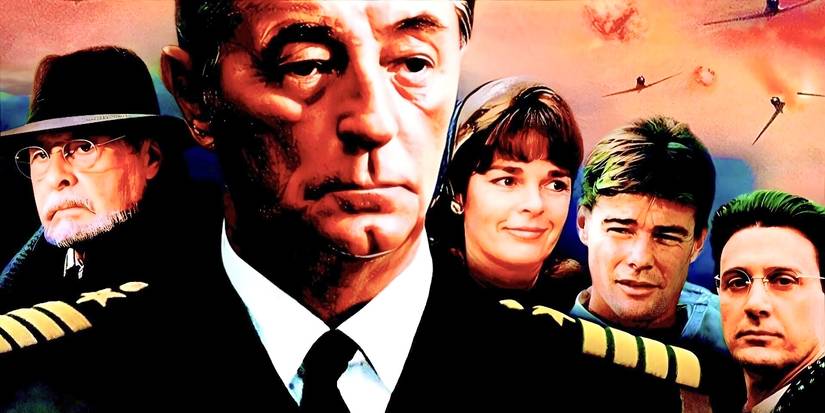
Aaron Jastrow, Pug Henry, Natalie Jastrow, Byron Henry, and Leslie Slote in The Winds of WarImage via ABC
Despite multiple warning signs, the Jastrows refuse to panic. Aaron knows persecution well, but he believes his people will, to paraphrase his words, experience nothing worse at Hitler’s hands than reverting “back” to “second-class” citizens. (Conversely, the German Jewish couple who rent their house to Pug and Rhoda sense the future, but won’t abandon everything their families spent generations building by hand and willpower.) Untouched by antisemetic violence and similarly disconnected from her ancestry, Natalie can’t fathom a reality where the world she freely strides through ceases to operate like normal. The day before Germany strikes Poland, her desire to finally see her family’s hometown of Medzice propels her to visit the thriving community — one rich with Jewish culture, traditions, history, and love.
As Medzice’s joyous wedding celebration rolls into the night, Hitler’s bombs rain down on Polish territory. The next morning, lines of refugees stretch as far as the eye can see. From the elderly to newborn babies, their only evacuation recourse is slowly walking and driving, carrying whatever sparse possessions their two hands can hold. Yet there’s no way to outrun state-of-the-art machines designed for a singular, horrendous purpose. Soon, the Luftwaffe strafes the defenseless masses. Bullets shred bodies, orphaned children weep over their parents, and plumes of black smoke pollute the air. During later episodes, Allied troops somberly watch as the Axis armies approach, and Russian Jewish captives scream their anguished rage while awaiting execution in an unmarked grave. But for a wealthy-looking white woman who chats with Madeline at a newspaper stand: “As long as we keep out of [the war], who cares?”
Curtis and Wouk were both Jewish. The latter, who adapted his doorstopper book for the small-screen, was even a naval officer during World War II. Together, the pair approached their monumental task with the proper severity. The Winds of War’s commitment to excruciatingly documenting the unfathomable but undeniable truth is as necessary and laudable as the way it demonstrates reverent respect for the millions of lives lost. As the seven episodes cover the major historical beats between 1939 and 1941 (the follow-up, War and Remembrance, completes the timeline), Curtis and Wouk avoid exploitation and prize the utmost possible accuracy. Combined with the miniseries’ runtime, The Winds of War breathes blood, texture, and resonance into lived antiquity, forcing viewers to directly observe and sit with such abhorrence — and when Aaron’s cousin Berel Jastrow (Topol) provides first-hand evidence of the Holocaust and pleads for aid, American officials exert their privileged freedom to look away. Leaving few stones unturned, The Winds of War interrogates the ethics of the United States’ reluctance to intervene and the insidious strain of antisemitism within the country’s State Department.
‘The Winds of War’ Is a Monumental Television Achievement
Wouk effortlessly weaves his sprawling fiction into fact, and the result both documents and dissects a wide spectrum of human nature. A pallor of constant doom and inescapable terror suffocates each waking moment, yet for some, their wildly uprooted lives continue through what, in the moment, can only seem like the end of the world. They grow accustomed to air raid sirens interrupting dinner. They devour food and drink; they dance, sing, and flirt like it’s their last night alive. For many, it is, their bodies annihilated by artillery rounds or prolonged torture. Even Pug, a steadfast man accustomed to commands and regulations, floats emotionally adrift. As The Winds of War’s leading man, he refuses to surrender the fight or his capacity to love, even if the “vicious cycle” of “[digging] iron from the ground and [working] it into vast, grotesque engines for blowing each other up” never ends — a simple sentiment bordering on trite, but in cases like these, a relevant one. Amongst a strong cast, dual stand-outs Topol and Mitchell are as impeccable and heart-shattering as expected, providing the anchoring gravitas, wisdom, sensitivity, and integrity this tragedy needs.
Airing 38 years after World War II ended, survivors recalled The Winds of War’s replicated events with firsthand clarity; younger generations were raised in its all-encompassing shadow. After 42 years, The Winds of War’s towering accomplishment remains both timeless and, once again, altogether too timely. A towering feat of production, it doesn’t matter that audiences have consumed more modernized, violent, and action-heavy depictions of this era. When it comes to emotional investment, the series’ framework ensures everything is exactly as harrowing and haunting as it must be. From a financial and logistical standpoint, The Winds of War should have collapsed in on itself like a house of cards. (When the structure does wobble, it’s because of scattered moments of jingoism and uncomfortable racial dynamics.) Monumental determination prevailed, leaving a miniseries that advanced the invigorating art form its predecessors invented and paved the way for modern masterpieces.
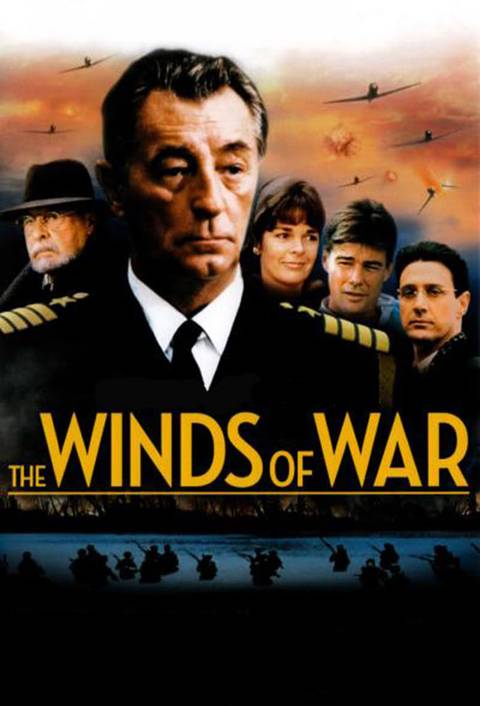
Release Date
1983 – 1983-00-00

Robert Mitchum
Victor ‘Pug’ Henry

Ali MacGraw
Natalie Jastrow