
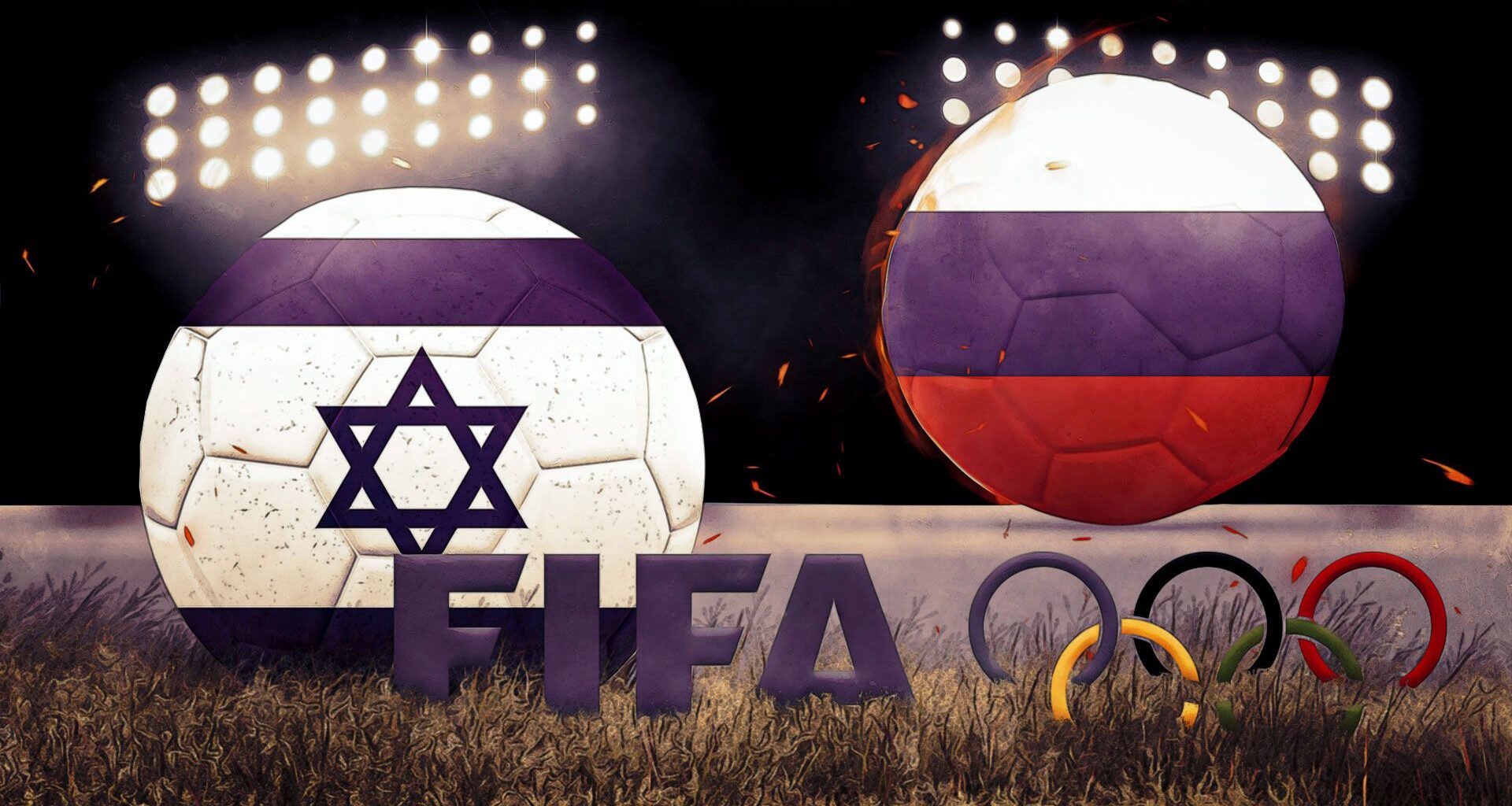
Back in September, Kremlin spokesman Dmitry Peskov demanded Russia’s reinstatement in the Olympic Games, pointing to the International Olympic Committee’s refusal to suspend Israel.
“We are against the politicization of sports,” he declared before accusing the IOC of operating with “double standards.”
It’s a line heard often since Hamas’ October 7, 2023, massacre triggered the two-year war in Gaza.
Why, anti-Israel voices have asked, is Israel allowed to compete in events from which Russia has been banned – the Olympics, the FIFA World Cup, even Eurovision – when both are “at war”?
The argument usually runs like this: Israel entered a territory and civilians were killed. Russia entered a territory and civilians were killed.
Russia was banned. Therefore, Israel should also be banned.
It’s simplistic, wrong, and easily debunked.
Consider this your cheat sheet for answering anyone claiming Israel should be barred from international sport.
The Olympics: “Faster, Higher… Fairer?”
1. The IOC doesn’t sanction governments or armies
The starting point is simple: the IOC deals with National Olympic Committees (NOCs), not states or armies. Christophe Dubi, the Games’ executive director, was clear when asked about Israel’s status. “Israel respects the Olympic Charter,” he said, adding that Israel and Palestine represent “a special case” because both have separate Olympic committees that meet all IOC requirements.
This distinction is the foundation of Olympic participation. Israel and Palestine each have an autonomous NOC that complies fully with Olympic regulations. Russia and Belarus, on the other hand, were sanctioned because their NOCs were found to have violated the Olympic Charter by integrating sports institutions into the war effort, breaching political neutrality, discriminating against Ukrainian athletes, and directly undermining the ability of the Ukrainian NOC to function. The IOC did not suspend Russia because of the war in the abstract, but because Russia’s sports institutions violated Olympic rules.
2. Russia’s invasion directly compromised the Olympic Movement
While the war in Gaza has caused severe destruction, including to sporting infrastructure in the Strip, it has not displaced or disabled the Palestinian National Olympic Committee, which is the body the IOC formally assesses. The Palestinian NOC operates from Ramallah in the West Bank, not Gaza, and continues to function, communicate with the IOC, and send athletes to competitions.
Ukraine’s situation was fundamentally different. Russia’s invasion struck at the heart of the Ukrainian NOC itself. National training centers, Olympic facilities, and administrative structures across the country were disrupted or destroyed, and athletes and officials were drafted, displaced or killed. For the IOC, this amounted to an attack on another NOC’s ability to participate in the Olympic Movement. No such determination has been made regarding the Palestinian NOC. The Palestinian committee continues to function and remains fully recognized; the IOC has repeatedly affirmed that both the Israeli and Palestinian committees meet all Charter obligations. Israel’s military operations have not been deemed an attack on the Palestinian NOC or its ability to take part in the Games. The “Russia precedent” simply does not apply.
3. The IOC punishes sports-specific violations, not war
History reinforces this point. Countries have been suspended when their sporting systems violated IOC rules. South Africa was sanctioned for discriminatory sports structures under apartheid. Kuwait was suspended for government interference. Russia was previously punished for state-run doping programs. These were not geopolitical judgments but governance decisions.
In Israel’s case, the IOC has found no interference in its NOC’s autonomy, no discriminatory sports policy, no breach of neutrality within its Olympic institutions, and no attempt to politicize the committee. There is, in IOC terms, no legal basis for suspension.
4. Israel and Palestine are a “special case”, and both comply
Dubi stressed that the IOC treats Israel and Palestine as a special case precisely because both have functional, rule-abiding NOCs. The IOC’s job is to regulate sport, not geopolitics. When two committees independently respect the Charter, both remain eligible. If either were to violate the rules, the IOC would act, as it has many times before with other NOCs.
5. Russia’s suspension reflects years of misconduct
Russia did not arrive at suspension through a single event. The ban was the culmination of years of state-run doping, political interference in sports institutions and, finally, a war that directly impaired another NOC. That is why Russian athletes may now participate only under neutral status, without a flag, anthem or official delegation.
Nothing in Israel’s conduct triggered any equivalent sanction under IOC rules.
FIFA World Cup: “For the Game. For the Rules – Not the Wars.”
1. FIFA bans Football Associations for governance violations, not for warfare
Similar principles apply in soccer. FIFA deals with national Football Associations (FAs), not governments. Countries are sanctioned when their FAs breach FIFA statutes – through political interference, discriminatory practices, corruption, or by obstructing another FA’s ability to participate. Military conflict alone has never been grounds for suspension. That is why the United States, Turkey, Azerbaijan, Saudi Arabia, and Iran all remained in FIFA during major conflicts.
2. Russia was suspended because its war made football competition impossible
Russia’s invasion caused Ukraine’s soccer system to collapse. Matches could not be hosted or safely played. Multiple members of the Union of European Football Associations (UEFA) and FIFA refused to take the field against Russia. Travel, security, and scheduling became unworkable. Therefore, the war directly disrupted the sport itself, including by violating FIFA’s core principles on safety, integrity, and non-discrimination.
Nothing similar has occurred with Israel. Both the Israeli FA and the Palestinian FA remain fully recognized and functional. No UEFA member refuses to play Israel. International competitions continue as normal.
3. Russia’s UEFA membership made the disruption immediate and unmanageable
Because Russia plays in UEFA, its invasion destabilized multiple competitions, including the Nations League, the Champions League, the Europa League, as well as all Euro and World Cup qualifiers. UEFA and FIFA concluded that Russian participation had become operationally unworkable and suspended Russia accordingly.
Israel also plays in UEFA. But UEFA competitions continue without disruption. No team refuses to compete against Israel. Security and scheduling remain manageable. There is no UEFA-level basis for suspension.
4. Israel’s FA has not violated any FIFA rule
Israel’s Football Association is independent, compliant with FIFA standards, non-discriminatory, and capable of fulfilling competition obligations. Russia’s FA, by contrast, was judged to be tied with state actions that harmed another member FA’s ability to function. FIFA sanctions associations that violate governance rules, which Israel’s FA has not.
5. The Gaza war has not impaired the Palestinian FA
The Palestinian Football Association continues to compete in Asian Football Confederation tournaments, file complaints, and operate as a recognized FIFA member. FIFA has never determined that Israel obstructed its functioning, which was the basis for Russia’s suspension regarding its actions in Ukraine.
Blowing the Final Whistle on the Russia Comparison
Russia was banned from international sport because its sports institutions violated the rules. The result of Russia’s invasion was the destruction of another IOC and FIFA member’s capacity to compete, in addition to years of state-driven misconduct in Russian sport.
Israel is not banned because the Israeli and Palestinian Olympic Committees both comply with the Olympic Charter, the Israeli and Palestinian FAs both comply with FIFA regulations, and the Gaza war has not produced the kind of collapse in sporting governance that triggered Russia’s suspension.
International sport punishes violations of sporting integrity – not wars.
So all is fair in love, war and sport – and Russia and Israel were never playing the same ballgame.
Liked this article? Follow HonestReporting on Twitter, Facebook, Instagram and TikTok to see even more posts and videos debunking news bias and smears, as well as other content explaining what’s really going on in Israel and the region. Get updates direct to your phone. Join our WhatsApp and Telegram channels!