
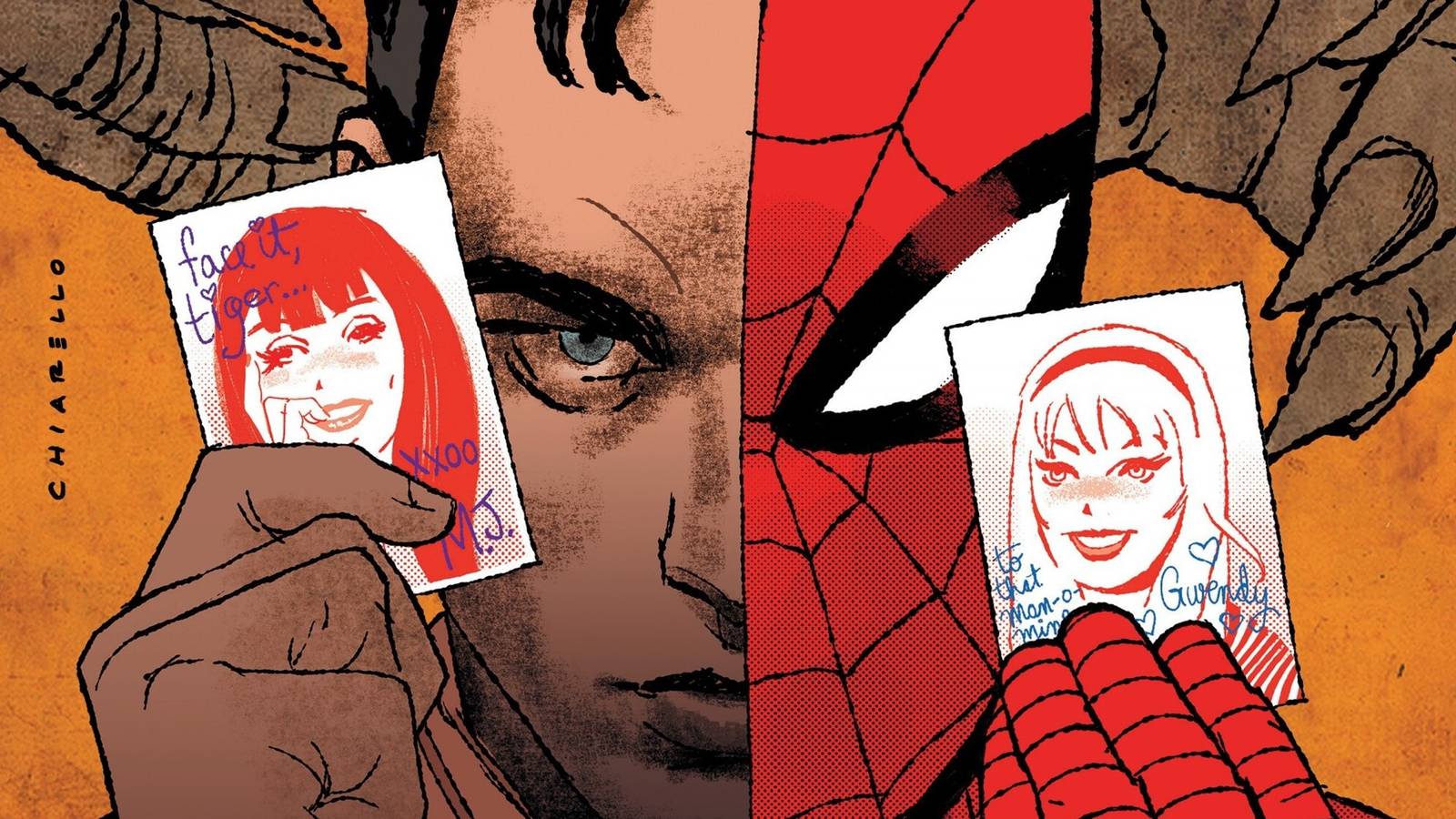
During his time writing Untold Tales of Spider-Man, Kurt Busiek had an unusual test. The series that he was writing was set specifically between panels of Steve Ditko and Stan Lee’s iconic Amazing Spider-Man series, and specifically, during the time that Peter Parker was in high school. Well, guess who he didn’t KNOW in high school? Neither Mary Jane Watson nor Gwen Stacy.
So Busiek cleverly did one issue where he had Mary Jane Watson star in the issue, but never actually interacted with Peter Parker the whole issue, so that Busiek could use a fan favorite character and not mess with his premise (as an aside, it was Untold Tales of Spider-Man #16, which I only want to mention because I remembered the issue number off the top of my head, and that just really impressed me)
Busiek used the retcon, though, that Mary Jane Watson had learned Spider-Man’s secret identity during that period. That, of course, made her a very fascinating character to examine, to see how Mary Jane saw those high school adventures knowing that Peter Parker was behind the mask the whole time.
That was a great issue, but I almost think that the use of Mary Jane Watson in Amazing Spider-Man: Torn #2 is even better, because it works whether the retcon is in place or not, and I think that’s just a remarkable piece of writing.
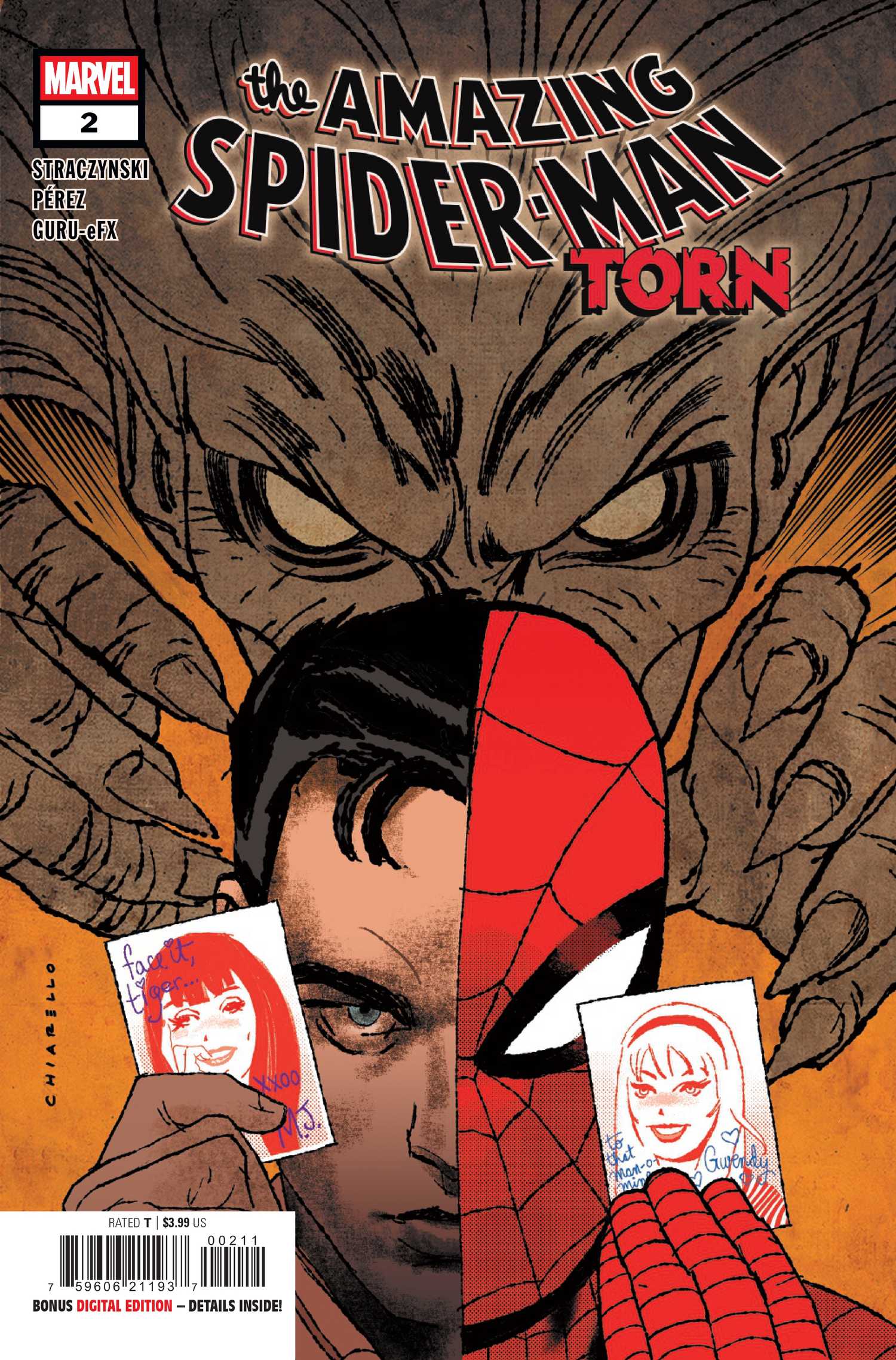
Image via Marvel
Amazing Spider-Man: Torn #2 is from writer J. Michael Straczynski, artist Pere Pérez, colorist Guru-eFX, and letterer Joe Caramagna, and is set during Spider-Man’s college years, and deals with a brand-new villain who was turned into a demonic creature after being exposed to a magical book. Now Spider-Man has to stop her, while also dealing with some issues in his private life.
How does Amazing Spider-Man color in around the margins so wonderfully?
As I mentioned a few times in my review of Amazing Spider-Man: Torn #1, where I think J. Michael Straczynski really hits the highest notes in this series is when he delves deeper into the human elements of Spider-Man’s world. As you likely know, one of the things that made Marvel Comics stand out so much during the 1960s was the fact that they really tried to feel more like “real life” than, say, every other comic book series out there at the time.
However, I think it is fair to say that while Steve Ditko, Stan Lee, and John Romita certainly showed us a lot of “man on the street” reactions to Spider-Man’s existence (the whole “Friendly Neighborhood Spider-Man” bit is really based on that concept, that Spider-Man is very much a man of the people), they really didn’t spend that much time with any one given character. Spider-Man himself got a LOT of character development, but outside the occasional J. Jonah Jameson monologue, the other characters didn’t get as much time really digging into their lives.
Therefore, what Straczynski does here that is so cool is that he takes a very minor character, a guy who runs a local deli, and we have a nice look at the relationship people like that have with Spider-Man. There’s always been lip service to the idea of him being “Your Friendly Neighborhood Spider-Man,” but then there’s actually showing the neighborhood being friendly right back to him, and I think it works really nicely in this comic book.
It also allows us to see how good of a job Pere Pérez can do on character work. He’s plainly an excellent action artist, but it is cool to see how well he does the character work, as well. The colors from Guru-eFX also fit beautifully in these scenes. They’re bright, and that just speaks to the brightness of some of Spider-Man’s interactions. He’s not a guy who should be having DARK interactions with people in the neighborhood, ya know?

Amazing Spider-Man: Torn Plays Off the Promise of 1960s Spider-Man Comics
Image via Marvel
In September 1966, Esquire magazine had an article about Marvel Comics, and specifically the popularity the comics had with college kids. It read (courtesy of Barry Pearl transcribing it):
Early this year, the author of Marvel Comics received a letter from William David Sherman, an English teacher at State University of New York at Buffalo. “Enclosed you will find a money order for three dollars,” he wrote. “Please send me twenty-five copies of issue number 46 (`Those Who Would Destroy Us’); I wish to use them in my course on contemporary American Literature….I know the class will dig them, and I hope that in them they will see various archetypal and mythological patterns at work which would give them better insight to where things are today.” There is evidence that college students are already digging them.
How did a magical book lead to a major character moment for Spider-Man?
We see our new demonic villain (and Pere Pérez gets to go the extra mile and actually give us CAT facial expressions, which are hilarious), and it’s always nice to see a villain who has been sort of hoisted by her own petard. She has never had a problem with killing in the past, but now that the blood from her killing has activated the magical book she was hired to steal, the result has turned her into a demonic creature (instant karma’s gonna get ya).
That leads us to the first of two MAJOR character interactions in the series. Spider-Man needs help with deciphering the book, so he goes to Peter Parker’s German professor, and here is where Spidey runs afoul of the fact that he is dealing with a TRUE expert here, and just like how Daredevil can pinpoint someone from their heartbeat, so can a languages expert pick someone by their dialect and/or affectations (there’s a reason why those quizzes that ask what you call certain things are so good at nailing where you grew up).
Spider-Man clearly didn’t take that into consideration, and now he might have been violating his own secret identity! Speaking of his “secret identity,” Mary Jane confronts Peter about how he treats her in front of Gwen Stacy (who is nominally dating Harry Osborn at this point). It is important to remember that, after she debuted, Stan Lee clearly had little idea of what to do with Mary Jane Watson.
As a result, she got sidelined a LOT after her debut (I wrote about it in my recurring feature spotlighting Mary Jane’s evolution as a character, If Her Hair Was Still Red, in a piece I called “The Mary Jane Love Interest Phaseout Begins”), and what I love about this issue’s Peter/Mary Jane scene is that it sort of serves as an apology to Mary Jane to how she was treated at the time in the comics.
And as I noted earlier, the scene works PARTICULARLY well because it works if Mary Jane knows Peter’s secret (and that he is, effectively, lying to her every day about what he gets up to as Spider-Man), and it works if she DOESN’T know Peter’s secret (and just knows that Peter is acting distant to her).
Both of those scene speak so well to how “torn” Spider-Man is between his various roles as a boyfriend, a student, a nephew, and a superhero, and it all collides together in a wonderful mixture. Like Untold Tales of Spider-Man, there is so much good material for a good writer to work with in this era of Spider-Man comics that I hope we get to see many more stories by Straczynski set in this time period.
Source: Marvel