
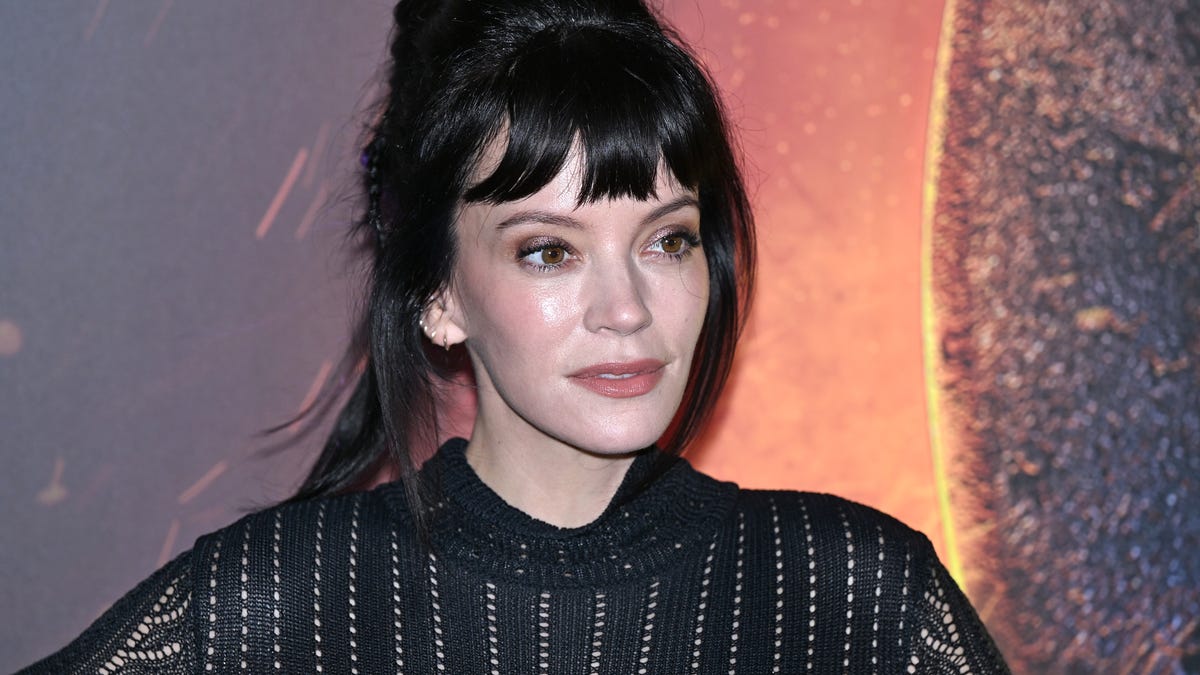
From the West End to the world, Lily Allen has struck a chord with her brutally honest album.
The Grammy-nominated singer-songwriter, whose breakup album “West End Girl” floored fans with its frank lyrics, opened up about the revealing project and its public response in a “CBS Mornings” interview aired Thursday, Nov. 20.
“At the time, I wasn’t even really thinking about it as a commercial endeavor,” Allen, 40, told CBS News special correspondent Anthony Mason. “It was an act of desperation, actually. While I was writing it, I wasn’t really sure it was going to see the light of day. Up until relatively close to its release, I was always thinking: ‘Is this something that I want to share with the world?'”
Released on Oct. 24, “West End Girl,” Allen’s first album in seven years, reportedly marks her split from “Stranger Things” actor David Harbour after five years of marriage.
Written during 10 days in December 2024, the raw, vulnerable project reveals in explicit detail the end of a relationship with an unnamed man, including allegations of infidelity and dishonesty in an open marriage, exploring the betrayal and isolation she felt during its unraveling.
“I think it sort of stunted my healing process somewhat,” said Allen of the 10-month waiting period for the album’s release. “And actually, since I’ve put it out, it’s felt completely and utterly liberating. It was kind of hellish having it in the background.”
Lily Allen feels ‘affirmed’ after enthusiastic album reception
The bulk of “West End Girl” details Allen suspecting her partner of cheating, including outside of their open relationship “arrangement,” leading her to feel guilty and unwanted.
In the album’s most revealing track, “P—- Palace,” Allen accuses her partner of being a “sex addict” after finding sex toys, letters from “brokenhearted” women and hundreds of condoms at his place, calling it his “double life.”
Upon its release, “West End Girl” earned critical and commercial acclaim. The album peaked at No. 2 on the Official U.K. Albums chart, while “P—- Palace” hit No. 8 on the Official U.K. Singles chart, which reportedly scored Allen her first top 10 hit since 2014.
“I mean, it’s amazing,” Allen said. “I write music for myself and to make myself feel more normal. And when something connects with people, it’s affirming, right? It’s validating. And the things that I was experiencing in my life at the time, I wasn’t really getting that validation for whatever reason.”
She added: “So, to now have people listen to this record and to go, ‘Yeah, that’s really messed up, that’s really painful. I can’t imagine what it would be like to go through something like that,’ is like, ‘OK, now I know why I had to drag myself into a treatment center!'” (Allen checked herself into a residential facility earlier this year following her separation from Harbour.)
Lily Allen on ‘disruptive’ David Harbour marriage
Allen and Habour married in 2020 in Las Vegas, in a ceremony officiated by an Elvis Presley impersonator and featuring In-N-Out Burger. From 2011 to 2018, the “Smile” singer was married to Sam Cooper, with whom she shares two children.
On “West End Girl,” Allen discusses her move to New York with her daughters Ethel and Marnie, where she is pushed by her partner to buy a brownstone (Allen and Harbour shared a home in Brooklyn). She details his lack of support when she is offered the lead in a play in London, but makes the move anyway.
In 2021, when the singer-songwriter starred in the West End play “2:22: A Ghost Story,” Allen reportedly posted a card given to her along with flowers from Harbour, who wrote, “My ambitious wife, these are bad luck flowers, ’cause if you get reviewed well in this play you will get all kinds of awards and I’ll be miserable. Your loving husband.”
During her “CBS Mornings” interview, Allen, who did not name Harbour, reflected on her marital hopes and the challenges of relocating to the U.S.
“Ultimately, what I wanted to do was just to create a solid and stable and consistent environment for my kids to grow up in,” Allen said. “I uprooted my kids, and we moved across the world to start a life somewhere else, and that was disruptive and that was not really what I had hoped for.”
Contributing: Taijuan Moorman, USA TODAY