
This article is an on-site version of our Europe Express newsletter. Premium subscribers can sign up here to get the newsletter delivered every weekday and fortnightly on Saturday morning. Standard subscribers can upgrade to Premium here, or explore all FT newsletters
Good morning. Two scoops to start: First, the EU is today set to issue a formal warning to Rome that Italy’s far-reaching “golden power” rules to block mergers may breach EU law. Plus, Donald Trump only agreed to return to the Davos meetings after organisers gave assurances that “woke” topics that could upset his Maga supporters would not feature prominently on the agenda at the January Alpine gathering.
Today, Trump’s agriculture envoy tells our trade correspondent that tariff relief could be coming for some EU food products, and I report on the minerals, energy and investment deals struck by Brussels and South Africa.
Expensive taste
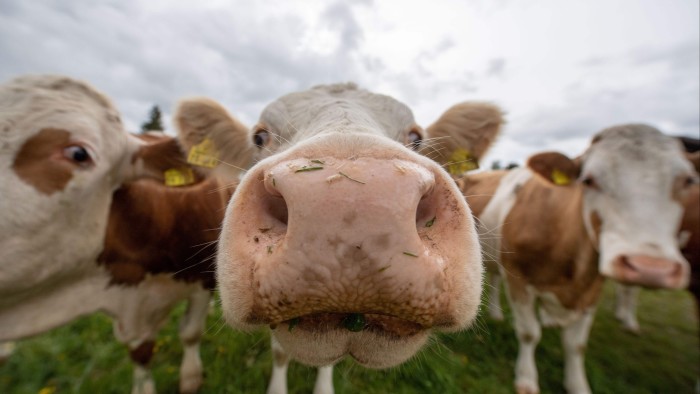
The US is prepared to consider dropping import tariffs from the EU on beef and some other foodstuffs as it wakes up to the negative domestic effects of the measure and tries to lower consumer prices, writes Andy Bounds.
Context: The EU-US trade deal sealed in July allowed the US to levy 15 per cent “reciprocal” tariffs on many EU goods including foodstuffs, while the bloc dropped its tariffs on many American agricultural products.
Luke Lindberg, US under-secretary of agriculture, told the Financial Times that Washington was now open to removing those tariffs on beef, lemons and other foods. President Donald Trump recently attacked the US cattle industry for its high prices and dropped duties on Argentine imports.
“I’m sure there could be others,” Lindberg said. “We do import certain proteins, maybe some beef from the EU that would fit into that category as well. Or some citruses.”
“The president’s committed to making sure that the grocery prices in America are affordable,” Lindberg added.
Lindberg visited Rome and Brussels this week with agricultural representatives to promote sales to the EU in the wake of the trade deal. He has launched a series of trips known as T.R.U.M.P. missions (Trade Reciprocity for US Manufacturers and Producers).
Jamieson Greer, the US trade representative, told the FT earlier this month that he was growing impatient that the EU had yet to reduce its tariffs.
It is awaiting approval by the European parliament. The parliament’s green light is unlikely before February, according to European officials. MEPs will also vote on amendments that would postpone tariff cuts on steel and aluminium until Washington reduces its 50 per cent levies on the metals.
Lindberg said he was also “focused” on getting the EU to change some health standards that ban certain US products, such as chicken cleaned with chemicals that can’t be sold in the bloc.
“We’ve had a $23.6bn [annual] trade deficit in agriculture goods here and so our farmers oftentimes feel disadvantaged and this new framework that the president has negotiated changes and fixes a lot of the challenges there,” said Lindberg.
Greer is meeting Maroš Šefčovič, the EU commissioner for trade, on Sunday while US commerce secretary Howard Lutnick will meet Šefčovič and EU trade ministers on a visit to Brussels on November 24.
Chart du jour: Steeling yourself

Western governments are accelerating moves to build a joint defence against a glut of cheap steel from China and other Asian countries.
Minerals marriage
The EU has struck a metal and minerals deal with South Africa as part of a rush by Brussels to snap up critical raw material contracts in a market rapidly being dominated by the US and China.
Context: Supplies of rare earths, metals and other minerals have become a critical national security issue given their importance to manufacturing, defence and emerging technologies. The EU lags behind China, the US and other major global players.
In response, the EU is scrambling to sign supply deals and create a central body to co-ordinate the purchasing and stockpiling of critical minerals.
Yesterday the European Commission struck such a deal with South Africa, whereby both sides agreed a plan to jointly develop exploration, mining, refining and recycling projects.
“We need these inputs to power the clean energy transition, both here and in Europe,” commission president Ursula von der Leyen said announcing the deal in Johannesburg.
“The future of our economies depends on fair and reliable supply chains. My emphasis is on ‘reliable supply chains’. This is the reason why we strengthen and diversify our supplies among trusted partners,” she added.
Cyril Ramaphosa, South Africa’s president, said they were “signing an unprecedented agreement”.
The deal was struck alongside infrastructure investment agreements and a so-called Clean Trade and Investment Partnership for joint clean tech projects.
“The EU is a reliable, predictable, and trustworthy partner,” EU Council president António Costa said, describing the partnership as “robust . . . dynamic and looking to the future.”
What to watch today
European Commission president Ursula von der Leyen and European Council chief António Costa hold a press conference in Johannesburg ahead of the G20 leaders’ summit.
EU-Indo-Pacific ministerial forum takes place in Brussels.
Now read theseRecommended newsletters for you
Free Lunch — Your guide to the global economic policy debate. Sign up here
The AI Shift — John Burn-Murdoch and Sarah O’Connor dive into how AI is transforming the world of work. Sign up here
Are you enjoying Europe Express? Sign up here to have it delivered straight to your inbox every workday at 7am CET and on Saturdays at noon CET. Do tell us what you think, we love to hear from you: europe.express@ft.com. Keep up with the latest European stories @FT Europe