

Leonardo DiCaprio once placed a 1968 sci-fi masterpiece in his “Mount Rushmore of movies.” When asked to name the films he’d etch into the side of a mountain to celebrate their greatness, DiCaprio exclusively listed classics of cinema: East of Eden, Taxi Driver, and Stanley Kubrick’s epic sci-fi film 2001: A Space Odyssey.
2001: A Space Odyssey is the kind of iconic film that has been referenced and parodied enough that even those who haven’t actually watched the movie are probably familiar with some of its iconic scenes, such as the ape-like hominins reacting to the appearance of a mysterious alien monolith, and the showdown between astronauts and their rogue computer, HAL 9000.
Related
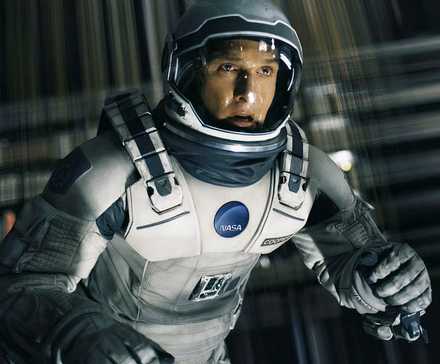
One of Christopher Nolan’s best movies was made in honor of his favorite film, and he fixes a 57-year-old mistake.
2001: A Space Odyssey, broadly speaking, follows the mission of a group of astronauts to explore the appearance of a monolith on Jupiter. The film is noted for its accurate depiction of space travel, avoiding typical Hollywood workarounds. It also has sparse dialogue and sequences of only music playing over events, another contrast with typical Hollywood filmmaking. Many fans see it more as a film you experience than watch, with DiCaprio describing 2001: A Space Odyssey as a “spiritual experience” in an interview with Esquire.
“It’s beyond a movie—it’s a spiritual experience,” DiCaprio said. “You have to submerge yourself in it with the idea that Kubrick intended to make us understand our relationship with the universe. The more you watch it, the more questions it asks.”
Related
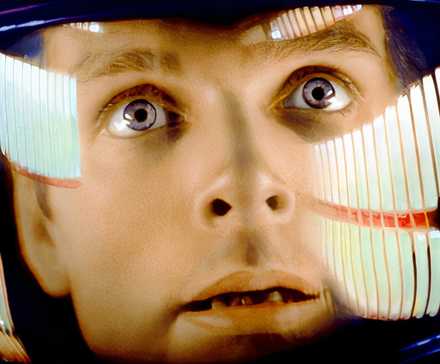
7 Sci-Fi Movies So Good You Need to Watch Them Twice
The sci-fi genre can go in many different directions, and that can raise big questions in great movies that only rewatches can help solve.
As DiCaprio alluded to, while 2001: A Space Odyssey is broadly about the evolution of man and the ways technology has affected our collective development, the message has been interpreted in a variety of ways, from optimistic to apocalyptic. It’s the kind of film you watch a dozen times and come away from feeling differently after each watch.
2001: A Space Odyssey Is Stanley Kubrick’s Sci-Fi Masterpiece
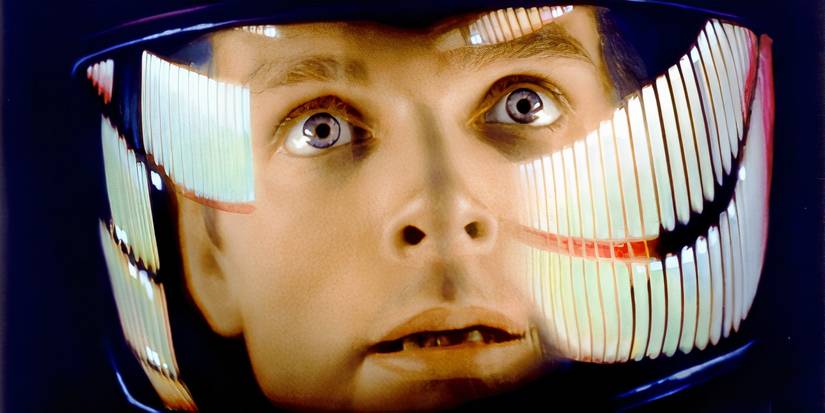
Dave goes through the Stargate in 2001: A Space Odyssey.Image via MGM
Kubrick directed 2001: A Space Odyssey and co-wrote its screenplay with sci-fi author Arthur C. Clarke, whose work — particularly the short stories “The Sentinel” and “Encounter at Dawn” — served as the basis of the film. The movie stars Keir Dullea, Gary Lockwood, and William Sylvester as the astronauts embarking on their mission to Jupiter, and Douglas Rain as the voice of HAL 9000.
2001: A Space Odyssey wasn’t initially praised by critics, with such legendary voices in the field as Pauline Kael calling it “a monumentally unimaginative movie” (though Roger Ebert considered 2001: A Space Odyssey to be a perfect movie). The film’s 139-minute runtime and often long sequences didn’t help endear it to the mainstream viewer either.
However, once it became clear that 2001: A Space Odyssey was more appreciated among the counterculture crowd, the studio began marketing it as “the ultimate trip.” It then began to find an audience and, over the years, would become a seminal touchstone for a generation of sci-fi writers and filmmakers like Martin Scorsese and Ridley Scott.
These days, 2001: A Space Odyssey is often listed as one of the best films in Kubrick’s storied filmography, and is held up as required viewing for serious film lovers. A sequel, made without Kubrick’s involvement and titled 2010: The Year We Make Contact, was released in 1984, but failed to make the same impression as the original. You can experience 2001: A Space Odyssey for yourself, as the film is streaming now on HBO Max.
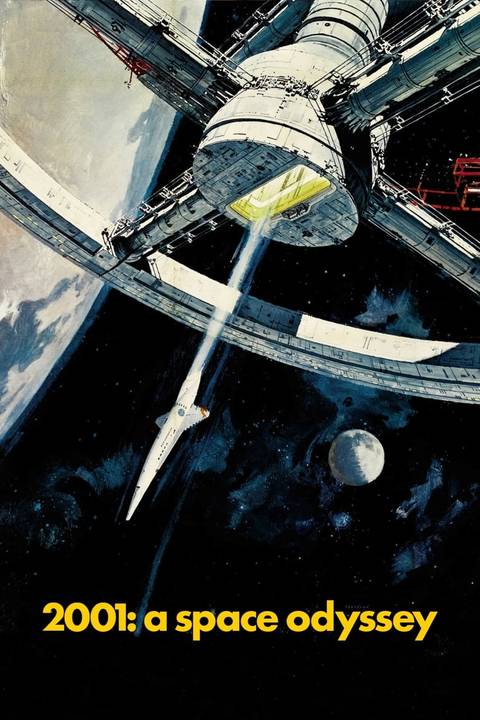
Release Date
April 10, 1968
Runtime
149 minutes
Director
Stanley Kubrick

Keir Dullea
Dr. David Bowman
Gary Lockwood
Dr. Frank Poole