
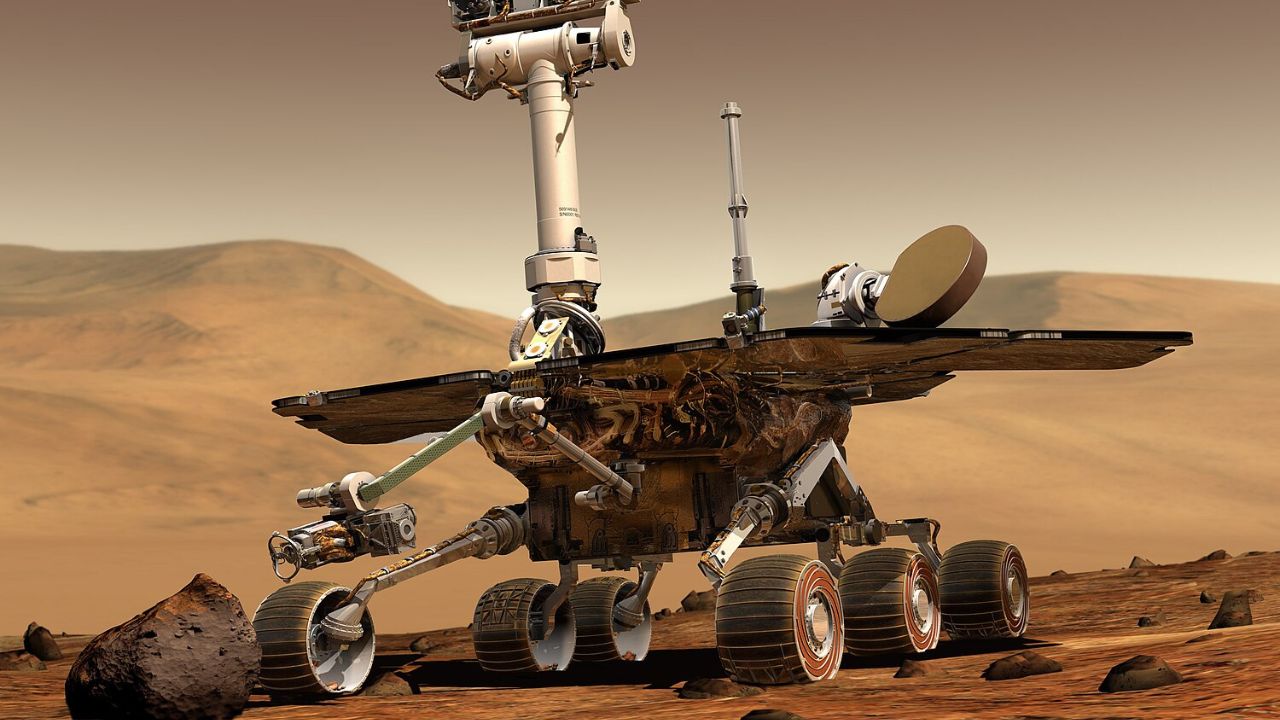
Planet exploration would be shaped by ingenious robotic rovers that have ventured across the Moon, Mars, and even asteroids. These vehicles represent humanity’s determination to explore distant worlds and answer fundamental questions about our universe.
From the Soviet Union’s pioneering Lunokhod rovers to NASA’s sophisticated Perseverance rover, each mission has made significant contributions to space exploration science.
That said, let’s take a look at the 15 most iconic space rovers, detailing their specifications, achievements, and contributions to space exploration.
1. Lunokhod 1
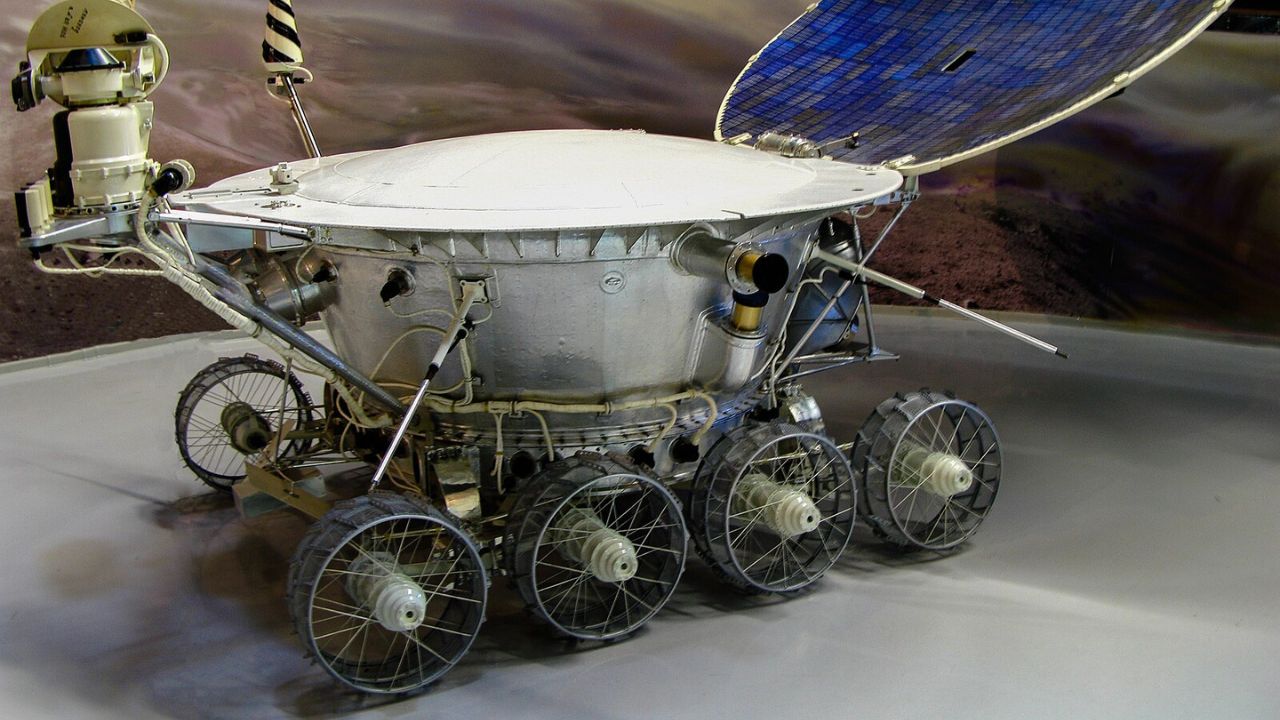
Lunokhod 1 was the first rover to operate on another celestial body successfully. It was launched by the Soviet Union aboard the Luna 17 mission and landed on the Moon on November 17, 1970. The rover touched down in the Mare Imbrium region, also known as the Sea of Rains.
This eight-wheeled vehicle weighed 756 kilograms and was remotely driven from Earth. It carried two forward-facing television cameras with a 50-degree field of view. It also included four high-resolution telephotometers capable of capturing long panoramic images.
Over its 11-month mission, Lunokhod 1 traveled 6 miles (10.5 km) across the lunar surface, it examined 80,000 square meters of terrain, and conducted hundreds of soil-measurement experiments.
The rover returned 20,000 photographs, including 200 panoramas, dramatically advancing humanity’s understanding of the Moon.
2. Apollo Lunar Roving Vehicle
The Apollo Lunar Roving Vehicle, often called the “Moon Buggy”, was humanity’s first crewed rover designed for lunar exploration. Built by Boeing, it weighed 463 lbs (210 kgs) empty but could carry 970 lbs (440 kgs) of astronauts, tools, and samples.
Its aluminium wheels gave it a top design speed of 6 mph (7 kph), but Apollo 17 pushed it to 18 kph (11 mph). NASA deployed LRVs on three missions: Apollo 15, Apollo 16, and Apollo 17. These vehicles enabled astronauts to travel much farther than they could on foot.
Despite only about 11 hours of driving time per mission, the LRVs significantly increased the Apollo program’s scientific output.
3. Lunokhod 2
The Soviet Union launched Lunokhod 2 aboard the Luna 21 spacecraft and became the second remote-controlled rover to land on the Moon on January 15, 1973.
It surpassed its predecessor by covering an impressive 39 kilometers across the lunar surface in about five months. Like Lunokhod 1, the rover had eight wheels, each equipped with a two-speed electric motor and independent suspension.
It survived four extremely cold lunar nights, where temperatures dropped as low as –150°C (–240°F). The mission team in Simferopol, Crimea, controlled it using mast-mounted cameras and joystick-based inputs.
4. Sojourner (First Mars Rover)
Sojourner marked a major turning point in robotic planetary exploration as the first rover to operate successfully on Mars. It was part of NASA’s Mars Pathfinder mission, launched on December 4, 1996.
Despite weighing only 24 lbs (10.6 kgs), it carried all the necessary instruments for scientific exploration. Its design proved that small, lightweight rovers could survive and operate on the Martian surface.
Sojourner operated for 83 sols, exceeding its planned one-week lifespan by a factor of twelve. It traveled 100 meters while staying within 12 meters of the lander due to communication limits.
5. Perseverance
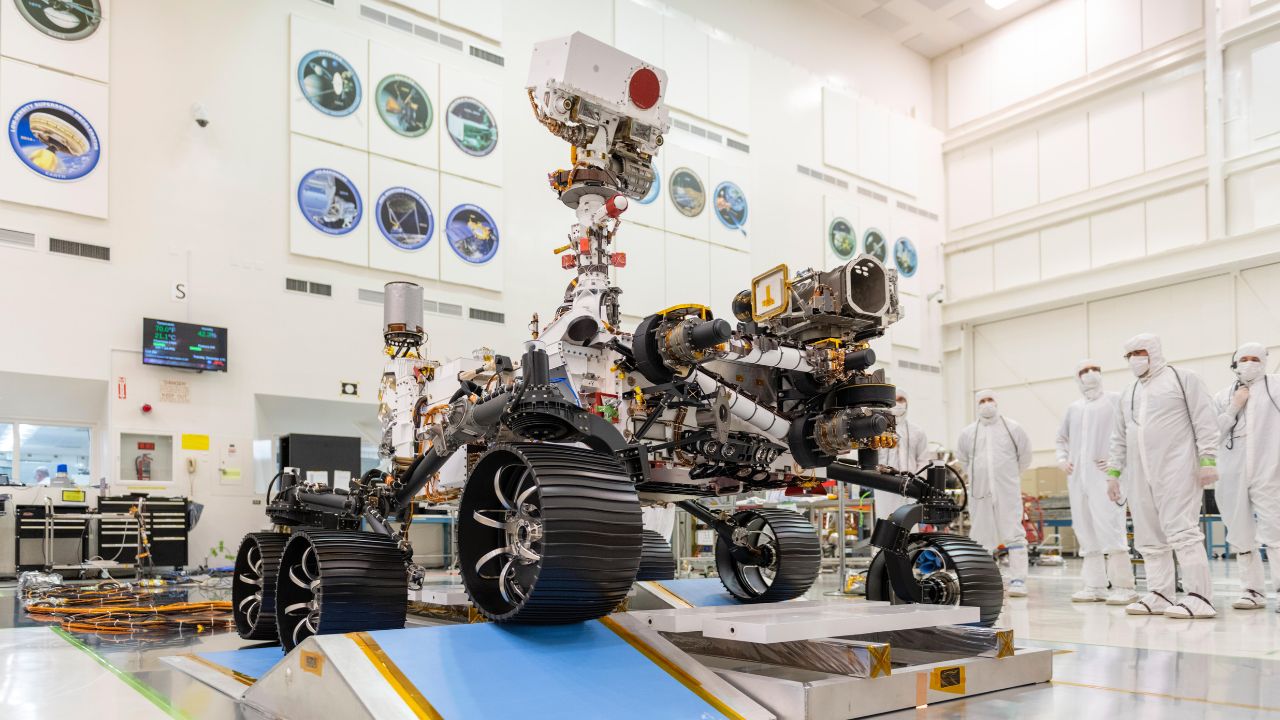
Perseverance is NASA’s most advanced rover, landing in February 2021, in Jezero Crater. It weighs 2,260 lbs (1,025 kgs) and is similar in size to Curiosity but features major upgrades.
One standout feature of Perseverance is its 2.1-meter robotic arm equipped with high-precision scientific instruments. As of September 2024, the rover had traveled 18 mph (29.06 kph) across Mars using its robust rocker-bogie suspension.
Perseverance also carries the Ingenuity helicopter, the first aircraft to fly on another planet. Though designed for only five flights, Ingenuity completed 72 flights over nearly three years.
6. Spirit
Spirit landed on Mars on January 4, 2004, in Gusev Crater as part of NASA’s Mars Exploration Rover mission. The rover and its twin, Opportunity, were nearly identical in design, weighing 384 lbs (174 kgs) each. Although planned for only a 90-sol mission, Spirit ultimately operated for an astonishing 2,208 sols.
Over the course of its mission, Spirit traveled 5 mph (7.7 kph) before becoming stuck in soft sand in May 2009. NASA officially ended the mission on May 25, 2011, after numerous unsuccessful recovery attempts.
Spirit discovered evidence of ancient hydrothermal activity and hot springs on Mars. The rover also identified soil samples containing about 90% pure silica near the region known as “Home Plate.”
7. Opportunity
Opportunity, often called “Oppy”, stands as one of the most successful planetary rovers ever deployed. It landed on January 25, 2004, in the Meridiani Planum region of Mars. Over its mission, it traveled an astonishing 28 miles across the Martian surface.
In 2015, Opportunity became the first interplanetary rover to complete a marathon distance of 42.5 kilometers. This achievement highlighted not only the rover’s durability but also its exceptional engineering.
The Opportunity was remarkable not just for its distance but also for scientific discovery. It found immediate evidence of ancient water upon landing, unlike its twin Spirit, which took far longer.
8. Curiosity
Curiosity arrived on Mars on August 6, 2012, marking a major technological leap in rover engineering. At roughly 1,984 lbs (900 kgs), it outweighed all previous Mars rovers combined. Its landing required the innovative sky crane system, which lowered the rover gently to the surface.
It is powered by a radioisotope generator that produces around 100 watts of continuous energy. By September 2024, Curiosity had traveled 20 mph (32.4 kph) across Gale Crater. Its SAM instrument detected organic molecules in martian rocks, offering clues about potential ancient habitability.
9. Yutu
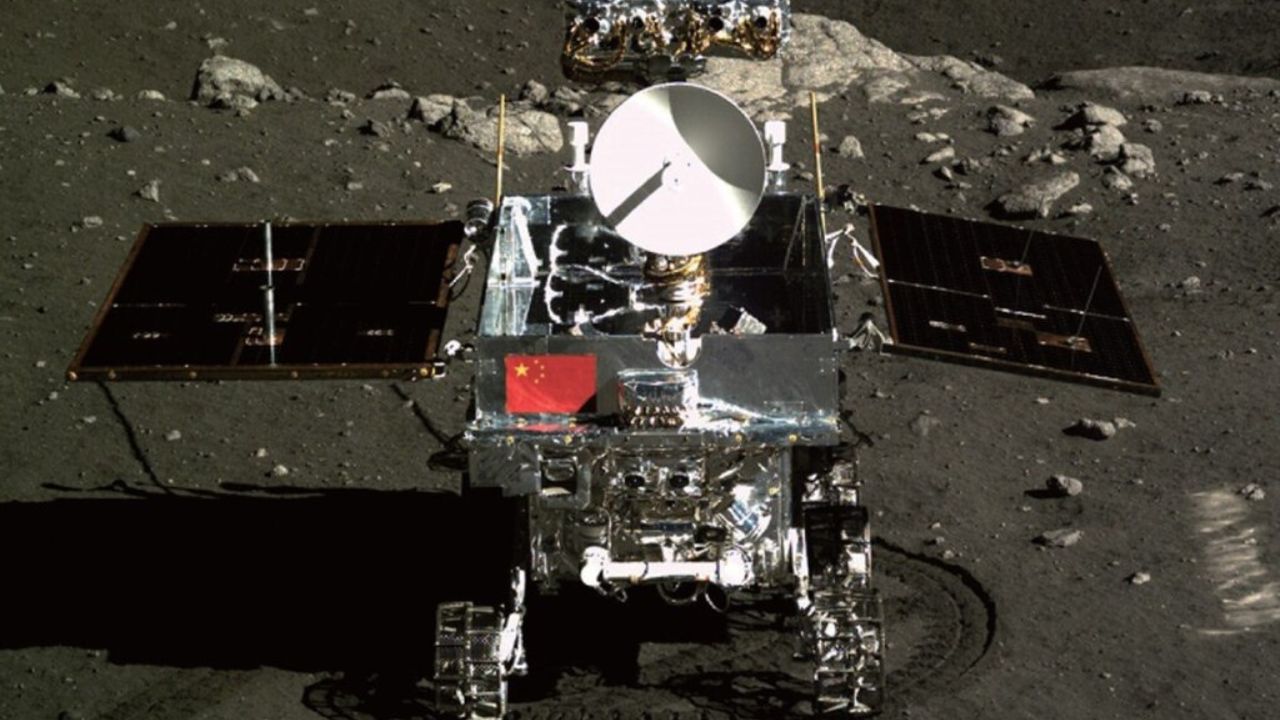
Yutu became the first lunar rover to land successfully since 1976, ending a 40-year pause in lunar surface exploration. It was launched as part of China’s Chang’e-3 mission and touched down on December 14, 2013, in Mare Imbrium.
As China’s first extraterrestrial rover, it marked a major milestone in the nation’s rapidly advancing lunar program. Although originally planned for a three-month mission, Yutu exceeded expectations by operating for 973 days.
The rover became immobile after its second lunar night but continued collecting important scientific data with its instruments. Its ground-penetrating radar provided valuable insights even while the rover remained stationary.
10. Pragyan
Chandrayaan-3’s Pragyan rover marks India’s successful entry into the realm of active lunar rovers. It landed on August 23, 2023, becoming the first rover to operate near the Moon’s south pole. This region is scientifically important because of the possibility of water ice hidden within permanently shadowed craters.
The rover weighed 60 lbs (26 kgs) and operated for 12 days on the lunar surface. During this time, it traveled 101.3 meters before shutting down due to the harsh lunar environment.
Even with a short lifespan, Pragyan gathered valuable scientific data using its X-ray spectrometer and the other instruments.
Conclusion
As technology advances, future rovers will explore deeper, travel farther, and operate more autonomously than ever before. New missions to the Moon, Mars, and beyond will likely include flying vehicles, sample-return systems, and multi-agent robotic teams.