
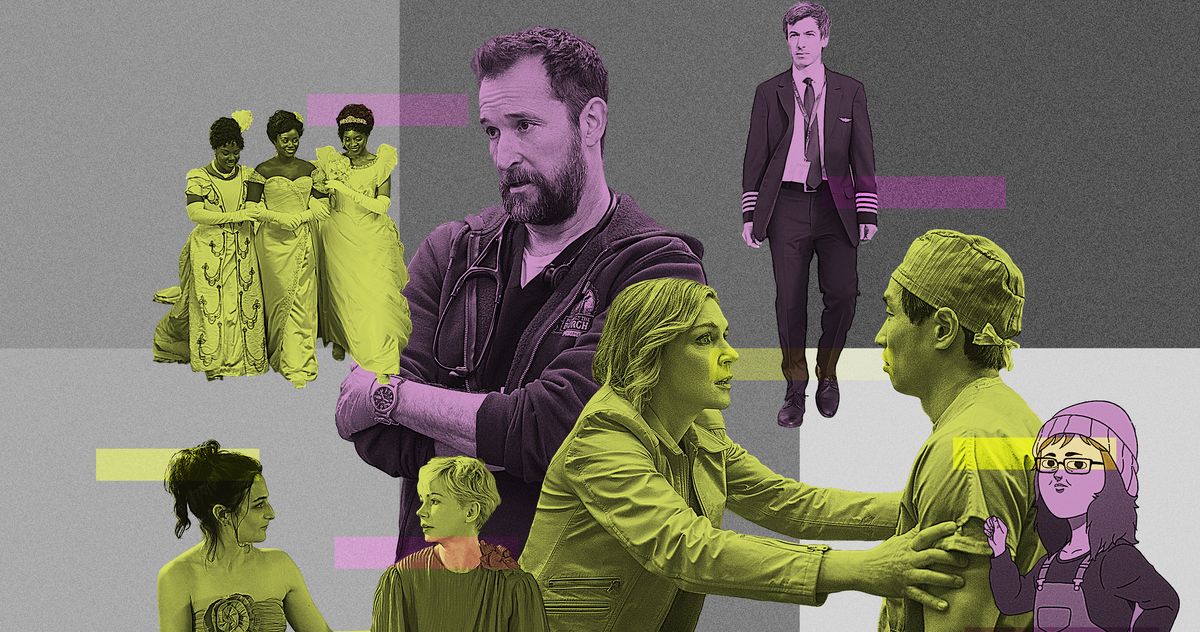
Photo-Illustration: Vulture; Photos: HBO (Karolina Wojtasik, John P. Johnson), Warrick Page/MAX, Apple TV+, Adult Swim, Sarah Shatz/FX
It’s that time of year again, when Vulture’s critics embark on our messiest annual tradition: the finalization of our Top 10 lists. Here are the best shows of 2025, according to critics Roxana Hadadi, Jackson McHenry, Nicholas Quah, and Kathryn VanArendonk.
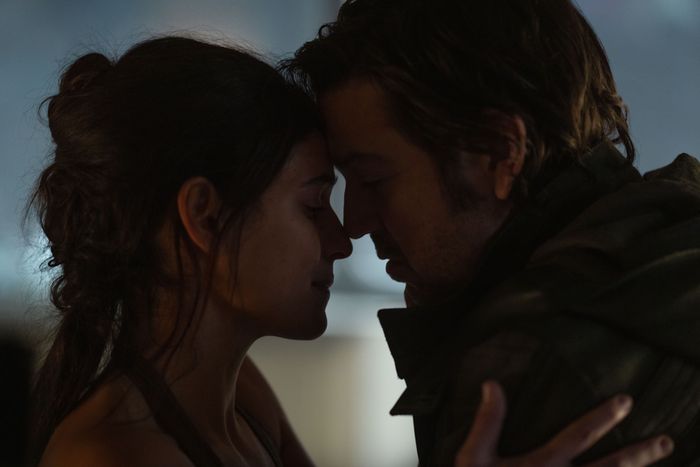
Photo: Des Willie/Lucasfilm Ltd.
It was a weird year for TV. The 2023 writers’ and actors’ strikes, coupled with the 2024 California wildfires, froze the production pipeline and reduced the number of industry jobs, while Warner Bros. Discovery’s cost cutting, the steady deterioration of Paramount, and Disney’s announcement that Hulu will disappear as a standalone service by the end of 2026 added to a blanket unease. Amid all this uncertainty about what the future of TV holds, these series demonstrated the medium’s possibility. The year’s best shows told stories that felt like they were reaching through our screens, pointing at the world and urging us to open our eyes to the fraught moment. One even has Malin Åkerman finding novel ways to say the word “cunt.” That’s the potential of the small screen.
Director Justin Kurzel’s interests lie in outlaws, mass murderers, white separatists, and doomed leaders like Macbeth. But instead of glorifying or condemning them, Kurzel and his frequent collaborator, writer Shaun Grant, interrogate the weaknesses and traumas that push them into aggression. The pair’s first TV project, an adaptation of Richard Flanagan’s Booker Prize-winning 2013 novel The Narrow Road to the Deep North, follows surgeon Dorrigo Evans, a Japanese POW (played as younger and older versions by Jacob Elordi and Ciarán Hinds) forced to tend to his fellow soldiers as they toil and starve while building the Burma Railway during World War II. The miniseries is brutal, gory, and bleak; there’s no romanticizing combat here, and the five episodes cannot be binged if you care about your emotional equilibrium. The Narrow Road to the Deep North suggests its characters are motivated less by logic and more by primal instinct and refuses to overdo dialogue as narrative connective tissue, so that the actors’ physicality — the way they coil their bodies around each other in ecstasy or grow brittle and weak in captivity — drives the action.
Yes, you’ll be the Leo-pointing-at-the-screen meme when President James Garfield (Michael Shannon) says that being assassinated is about as likely as being struck by lightning; Garfield would die six months and two weeks into his presidency from complications after being shot by former supporter Charles J. Guiteau (Matthew Macfadyen). Death by Lightning, adapted by Mike Makowsky from Candice Millard’s 2011 nonfiction book and directed by Matt Ross, hums with the strength of these performances, particularly Shannon’s quiet composure and Macfadyen mining new depths of buffoonery. Its four episodes both contextualize Garfield’s his murder as a byproduct of the divisive politics of the time (sound familiar?) and gives voice to a question that’s haunted America since its founding: What is this country supposed to stand for? In 1880s Washington, everyone’s trying to define what America means to them, and their different answers signal the near-impossibility of nation-building. We still haven’t figured it out, Death by Lightning suggests, but giving up isn’t an option.
➼ Read our recaps, interview with director Matt Ross, and essay on Matthew MacFadyen’s performance.
For four seasons, HBO execs let Danny McBride and his creative team cook, and in the parlance of The Righteous Gemstones’s titular family, bless them for doing so. McBride has a flair for unfurling the oddness at the core of various American subcultures and phenomena, and through the infighting and exploits of the Gemstones, a family of famous televangelists, he attempted to understand why American Christianity holds so many in its thrall. No matter what absurdities the Gemstones perpetrated or endured, the series always offered them second chances — and opportunities for performers like Edi Patterson, Walton Goggins, and McBride himself to go berserk. This time around, Gemstones was never as cutting or caustic as its excellent first season, but it was always stupid as all get out and hilarious as hell. We’ll miss the Gemstones misbehaving.
➼ Read our review on the finale and interviews with Danny McBride, Edi Patterson, and Adam DeVine and Seann William Scott. Catch up on the rest of Vulture’s in-depth coverage of The Righteous Gemstones.
One of the best things a TV show can have is self-awareness. The Hunting Wives is a soapy pulp that knows exactly what it’s doing, and that confidence is inherent to the show’s infectious charm, no matter how ludicrous the narrative gets. And man, does it get ludicrous! The Hunting Wives plays out like a “Yes, and?” improv reply, following a liberal transplant (Brittany Snow) from New England who ends up entangled in a toxic affair with the queen bee (Malin Åkerman) of a conservative Texas town. The series consistently dared itself to get wilder and goofier in its relationship pairings, political ambitions, and bloodshed, and thanks to a Netflix pickup (it was originally made for Starz), its binge release combined with all those cliffhangers for a word-of-mouth popularity that spread like wildfire. Rare this year were shows that felt like actual phenomena, but in that regard, The Hunting Wives can’t be beat.
➼ Read our essay on the finale of The Hunting Wives and interview with Malin Åkerman.
The bickering family dynamics of The Bear meeting the manic pacing of Martin Scorsese’s After Hours isn’t a combination that’ll work for everyone: the yelling, the running, the gambling, the one-crazy-night plotting. But for those willing to sprint alongside Jake and Vince Friedkin as they move between locations like their restaurant-slash-nightclub, private poker games, and the offices of a bookie to whom Vince is deep in debt, Black Rabbit is a hell of a ride. Shot gorgeously and scored with ’90s and early-aughts alt-rock bangers that capture the characters’ frenetic race through New York City, Black Rabbit is the rare show whose flashy execution is matched by the strength of its emotional core, with fantastic performances from Jude Law and Jason Bateman.
One of the most exceptionally crafted series of the year was also one of the most stomach-churning, a descent into the natural bloody endpoint of strongman political ideology. Luca Marinelli — all sneers, boasts, and “Make Italy great again” bombast as Benito Mussolini, offers a villain performance for the ages — so captivating and so repellent that Mussolini becomes impossible to binge, though it requires patience for its boldest swings. I’ll never listen to Elvis Presley’s “Can’t Help Falling in Love” the same way again after this series’ use of it in one of the most harrowing montages I’ve ever seen. Director Joe Wright was wild for this one.
➼ Read our review and interview with director Joe Wright.
Trust in John Wells. The man’s decades of work on series like ER, The West Wing, Shameless, and Animal Kingdom transformed TV, taking familiar concepts in unfamiliar directions and trusting viewers to go along with the ride. The Pitt creator R. Scott Gemmill recruited Wells and Noah Wyle for his Pittsburgh-set medical drama, and together, the three ER alumni made a procedural that emphasizes the technical rigor, endless pressure, and roller coaster of emotion that occurs over a single emergency-room shift. Watching smart people doing smart things is a long-running TV tradition, but where The Pitt differs from other offerings is its intentionality, parceling out information about its ensemble of characters and their complicated lives while depicting how practicing this kind of medicine is its own addiction. At the center is Wyle as Dr. Robby, giving a career-best performance that vibrates with empathy for his patients and anger at anyone who gets in the way of his care. Plus, a second season arriving within a year of the first? What a concept.
➼ Read our review, profile of Noah Wyle, interviews with Emmy winner Katherine LaNasa and creator R. Scott Gemmill, and analysis of the series’ big Emmy wins. Catch up on the rest of Vulture’s in-depth coverage of The Pitt.
The three-episode docuseries merits high placement on this list for all the obvious reasons: Filmmaker Rebecca Miller traces the story of Martin Scorsese’s life alongside the religious and moral themes embedded in his work, delineating his techniques and tactics with imaginative split-screen and tracking-shot visuals. Interviews with longtime Scorsese collaborators, including editor Thelma Schoonmaker, writer Jay Cocks, and actor Robert De Niro, add another dimension to viewers’ understanding of the legendary director. But also, Scorsese rails against Harvey Weinstein’s complete misunderstanding of Gangs of New York and his endless complaints about the movie’s hats, and knowing that Scorsese pinches his fingers when tearing someone a new one is a gift I’ll never take for granted.
An iridescent blue mushroom that can cure any illness and even bring people back from the dead — sure, why not? Common Side Effects’ arresting visuals — multicolored fauna, fantastical psychedelic sequences, and mind-bending dimensions — match the series’ ambitious critiques of American health care, the wellness industry, and Big Pharma. Co-created by Joe Bennett (of Scavengers Reign) and Steve Hely, Common Side Effects sends its characters chasing after that miraculous fungi, exploring their motivations (altruism, profit, power), while questioning what happens after one heals. What are the costs of putting our own health over the well-being of others or that of the planet? The Common Side Effects’ attempts at offering answers makes it one of the best series Cartoon Network put out in years.
➼ Read our essay on the “world of hurt” contained in Common Side Effects’ tiny blue mushroom and our interview with creators Joe Bennett and Steve Hely.
There will never be another series like Andor. Not only because the television arm of the Star Wars machine seems to be dying down, or because few series will get $650 million for two seasons, or even because prequels are notoriously difficult to pull off — especially prequels with a main character’s death as a predetermined endpoint. It’s because Andor rose to the occasion, then blasted past it. Writer Tony Gilroy and his team of collaborators, including star and executive producer Diego Luna, took all that funding and prestige and plot constraints and delivered a series that both spoke to the current moment and reaffirmed Star Wars’ political and historical themes. In 24 episodes, the series toggled effortlessly between sci-fi, action, and thriller, delivering a rousing message about the effort required to build a community and wage a rebellion while still indulging in the pew-pew laser-gunning Star Wars stuff that hardcore franchise fans want. Some might think it’s corny to see lines like “Remember this: Try” and similar Andor dialogue on posters at No Kings rallies, but these messages prove how simultaneously timely and timeless the series felt in its asking of viewers what we, as individuals, are willing to put on the line for a better world. Maybe one day another TV show will dare to articulate what we owe each other, but it probably won’t be as good as Andor.
➼ Read our review of season two; profile of Diego Luna; interviews with Genevieve O’Reilly and Tony Gilroy; and essay on the finale. Catch up on the rest of Vulture’s in-depth coverage of Andor.
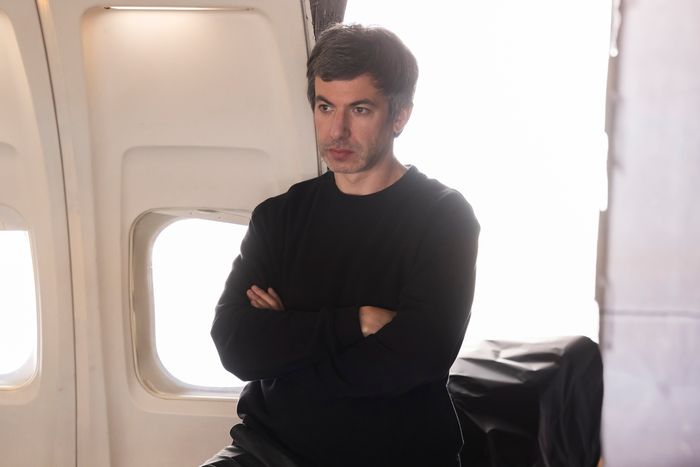
Photo: John P. Johnson/HBO
We’re well past the era of peak TV and glossy dreams of “prestige television,” whatever that was, attempting to compete on the same artistic terms as cinema. That was always a red herring; they’re different mediums and one shouldn’t try to be the other. As the bubble popped, the best television of the year pursued things on truly, well, televisual terms: We saw the great genre inventions of Andor, which is Star Wars as a political thriller without abandoning the tactile pleasure of galactic world-building, and the hardworking medical staff of The Pitt, which harnesses all the tropes of medical dramas alongside metaphorical and literal viscera. This is not a retreat. The best shows of the year looked back on TV’s classic forms and then spun them out in new ways. Turns out, there’s joy and discovery to be found in TV being TV again.
Repose en paix, Étoile, a folly made to delight about a dozen people. Amy Sherman-Palladino followed up the incredibly successful Marvelous Mrs. Maisel with a niche transatlantic drama about New York and Paris ballet companies who trade talent, led by the sparkling chemistry of Luke Kirby and Charlotte Gainsbourg. Étoile has many of the classic Palladino flourishes, from allegrissimo dialogue to highly specific cultural references, but it was all anchored in a love of dance and great enthusiasm for the hard work that goes into producing it. After season one premiered, Amazon reneged on its two-season pickup for reasons that are financially understandable but a terrible blow to the making of art. If we can’t use rich people’s money to pursue our preoccupations to the fullest, what’s the point?
➼ Read our review, interview with Lou de Laâge, and recaps.
The Morning Show is not a good or even well-made series, but that doesn’t stop it from being one of the best things on television. A fever dream of someone’s idea of prestige drama, The Morning Show features an incredibly expensive cast, green-screen-heavy recreation of a midtown Manhattan that is clearly shot in Los Angeles, and some of the strangest plotting you will ever have the delight of witnessing. Though set in the recent past — in season four, everyone keeps yelling about the Paris Olympics — it’s the only series that captures just how insane 2025 feels. Reese Witherspoon tries to investigate a chemical plant cover-up and gets detained in Belarus, Jennifer Aniston has oil thrown on her during an environmental protest while deep-fake porn of her face proliferates on the internet, and Marion Cotillard tries to scheme her way into running a television network by being very French and vaguely anti-woke. Parfait!
➼ Read our review, recaps, and essays about the season’s Iran storyline and Marion Cotillard’s character.
The wildest trick The Gilded Age pulled in season three was that it became … quite good? Julian Fellowes’s Downton-esque fantasia on American themes was always watchable, with its cast of theater heavyweights and a proclivity for treating the mundane as melodrama. But the series locked in for its most recent season. The Russells married off their daughter, Gladys, to a British duke and drove their marriage apart in the process; Cynthia Nixon’s Ada asserted more of her authority at home; and Denée Benton’s Peggy got a more substantial plotline as she found her way among Newport’s Black elite. Given stakes higher than “Will this party go off okay?” the cast had much more meat to dig into, and even as the show sharpened its sense of American social politics, it, thankfully, never gave up its bonkers side. Gay men of New York, watch out for stray carriages on the street.
➼ Read our review of season three, essay on the finale, “Backstories” on Gladys’s wedding and the finale’s two balls, and profile of Ben Ahlers. Catch up on the rest of Vulture’s in-depth coverage of The Gilded Age.
On a personal and professional level, I need to make sure Elsbeth stays on the air and continues to employ half the actors in New York so our theater industry can stay alive. But I’m also consistently delighted by how Elsbeth finds new ways to use its performers. In the latest season, the procedural continues its march through the city’s many subcommunities, finding new ways to insert a murder into late-night television (with Stephen Colbert as the corpse), a suburban Halloween decorating contest (with Annaleigh Ashford as an uptight housewife) and a Soho doll shop that resembles an American Girl store (with David Cross as an enraged dad). Elsbeth is a love letter to New York at its strangest, featuring many of the people who actually make it great.
➼ Read our recaps.
This year, everyone tried their hand at writing a new comedy about young people: Amazon had Overcompensating, HBO had I Love LA, and Netflix had Too Much. But none had better pound-for-pound joke-writing than Adults, an FX half hour that lives very much in the genealogy of New Girl. The series trods on the footsteps of many comedies about young people in the city, but it got gonzo fast — a standout episode involves Julia Fox coming to a dinner party — and found a warm rapport among its genial starring cast. Thank the TV executive gods that, after a long delay, it got a second season. I’d happily watch these characters stumble around Queens for as many seasons as they want to make.
➼ Read our essay on the series’ tone and a taxonomy of this year’s zillennial comedies.
Certainly the grodiest show on TV this year, Death by Lightning revels in the thrill of watching scraggly bearded dudes duke it out over 19th-century American politics, with a sharp eye to the way those disputes linger 150 years later. Matthew Macfadyen pulls off yet another strange and compelling performance as the presidential assassin Charles Guiteau, Michael Shannon was born to play a grumbly James Garfield, and none of it would work without Betty Gilpin as the president’s furious and flinty wife, annoyed she has to be involved in any of this.
What exactly is going on in Vince Gilligan’s all-too-happy dystopia (or maybe utopia)? I’m not sure, but I’m happy to be along for the ride of well-crafted sci-fi television that’s high-minded enough to ask big questions — What do we want out of a social structure? How much do we value individual freedom? — while amusing its audience with small ones too. I love any scene where the narrative momentum pauses as Rhea Seehorn’s extremely angry odd-woman-out tries to figure out how to bury a body all by herself before succumbing to the unwanted help of the hive mind. Pluribus has the pulpy pleasures of a mid-aughts network drama with a production budget you can only get on Apple TV. I just wish it ran for 22 episodes a season.
➼ Read our nonspoilery and spoilery reviews, interviews with Miriam Shor and Karolina Wydra, and recaps.
Thank God people in Hollywood still remember how to make a great down-the-middle medical drama, the people in question being ER’s R. Scott Gemmill, John Wells, and Noah Wyle, who updated the formula for their procedural set in a Pittsburgh emergency room with a ticking clock that keeps you bound up in the characters’ exhaustion during a single shift. The Pitt is deftly realist, with its vérité hospital dialogue, and subtly immersive — you sink into its rhythms like you’re settling into a comfortable worn-leather couch — but it’s got bite too. It doesn’t brush aside the strain of working in an underfunded field, and there’s a thrumming rage under the craftsmanship.
What a surprise: The cure for franchise fatigue is using your franchise budget for more than regurgitated nostalgia. In the second season of Andor, Tony Gilroy continued his indictment of rising fascism, sprinkling the sci-fi tropes with grandstanding political drama, the impending doom of an action thriller, and a helping of French-resistance imagery, then tossing it all in a blender. In addition to thrilling writing and inventive production design (I’m still hurting from the loss of the French-Swiss-ish planet of Gohr), season two also boasted the best performances on television, sadly overlooked in awards discussion due to the fact that they lived inside genre programming. A loss! You won’t see better than what Diego Luna and his compatriots pulled off anywhere.
Nathan Fielder projects tend to appear like odd larks, then wind back to reveal themselves as extremely personal inquiries. The second season of The Rehearsal starts off with Fielder launching into a somewhat random inquiry: How can airlines reduce the number of plane crashes? It then cycles through several of his signature oddball solutions, including making pilots judge a singing competition and play improv games, before eddying toward televisual autofiction. Fielder, playing a character but still very much himself, really wants to be a pilot, only to be held back by personal hang-ups. The question of whether this season is more of a confession or a performance is up in the air, but by the end of the series, it’s puckishly rendered moot: The guy really did get HBO to let him fly a 737.
➼ Read our analysis of episode three, “Pilot’s Code”; interview with Nathan Fielder about the season-two finale; and recaps.
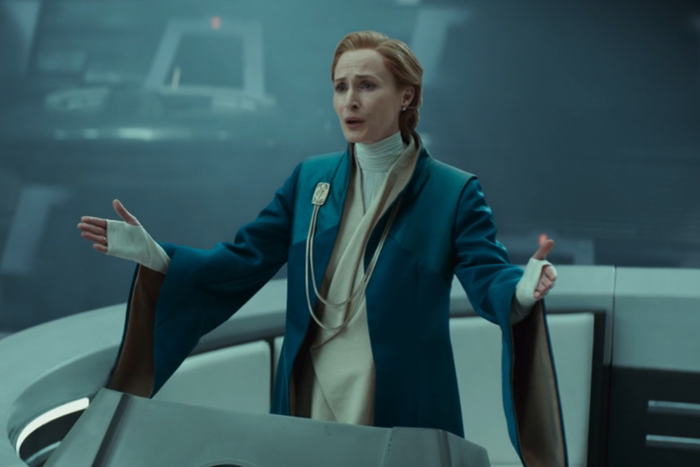
Photo: Disney+
I’m still thinking about Alien: Earth. Noah Hawley’s hallucinatory spin on the Alien franchise was way too enamored with its big ideas to land as a satisfying narrative, but credit where it’s due: Hawley had a vision and went for it. By most accounts, the prestige-television era drew its last breath in 2024, and in the austerity-minded post–Peak TV environment that followed we’ve seen an even bigger swerve into franchise projects. This trend produced plenty of clunkers this year (It: Welcome to Derry, Chad Powers), but Alien: Earth stands as a model for how to do IP right even when it doesn’t quite work. And when it does work? You get Andor. Tony Gilroy’s now-completed Star Wars series tops my list of the year’s best, a rare instance of perfectly executed vision within a massive franchise. The best shows this year were driven by creators given the keys to follow an itch: comedy weirdos Tim Robinson and Nathan Fielder, niche players Rachel Sennott and Jared Keeso, and even veteran showrunners Vince Gilligan and Sterlin Harjo. Things remain uneasy in Hollywood, especially in TV, but as long as there’s still a pipeline for distinct points of view, we might just be okay.
Being eager, hungry, and at least a bit of a mess is the universal condition of the young, but how that actually feels differs based on the particulars of its moment. This year produced several contenders for the Gen-Z-to-zillennial comedy crown (FX’s Adults explores these dynamics via the traditional hangout structure), but I Love LA is tangibly specific in how it sees its slice of young Los Angeles life right now, from the tenuous hunt for influencer glory to the absurdly long lines for *checks notes* … matcha? The strong ensemble includes Odessa A’zion, Jordan Firstman, True Whitaker, and a revelatory straight-man turn from Josh Hutcherson, but its undeniable center is star and series creator Rachel Sennott, whose performance as the blinkered, ambitious Maia holds these spiraling players together.
➼ Read our review, profile of True Whitaker, and recaps.
I’m always chasing the high of Le Bureau des Légendes: That grounded, steely, oh-so-very-French spy drama set in a nation trying not to get crushed beneath the feet of global superpowers concluded in 2016. (The Agency, its American remake, was good, but it’s still the CIA, you know?) Enter The Eastern Gate, a Polish series that stepped in from the cold early in the year and hit every single mark. Lena Góra gives a star-making performance as a weary spy pulled back into the field after her lover disappears just as a very real-world threat from Russia announces itself. The series is smart and disorienting in the way great spy dramas are, technical and wonky to a degree where you’re not entirely sure what’s going on, perhaps because international politics are complicated or maybe because everything’s in Polish — until, suddenly, the whole thing snaps into a clear picture. Shout-out to HBO Max for bringing this to American viewers; I eagerly await future seasons.
Who would’ve guessed Tim Robinson would make such a natural heir to David Lynch? With The Chair Company, Robinson and his longtime partner in crime, Zach Kanin, take the motifs that long peppered their work (drab offices, social faux pas, screaming men, sweaty entitlement) and stretch them into a fever dream of horror in the banality. The Chair Company’s protagonist, Ron Trosper, is a loud midwestern corporate drone somewhat incompatible with polite society and not so different from Robinson’s usual characters. But when given the opportunity to spend a lot of time with him, you find yourself asking strange questions: Why is he like this, what does he mean, and how does he relate to the universe around him? The Chair Company is pure Robinson, a mesmerizing, if occasionally maddening, act of self-expression that could come from no one else.
The Lowdown’s delights come from surrendering the need to figure out where the story’s going and allowing yourself to be changed by the ride. Sterlin Harjo follows Reservation Dogs with this shaggy-dog noir depicting a Tulsa alive with character, mystery, and danger with Ethan Hawke’s scruffy citizen-journalist-slash-rare-books dealer, Lee Raybon, as our flawed, intrepid guide. Harjo and his team communicate a deep affection for this place and its people (I could live in the coffee-and-pancakes aroma of Sweet Emily’s) while maintaining a clear-eyed awareness of its shadows, and the conspiracy culminates in a sincere expression of belief in giving oneself to community. Shows this loose and so confident in their own rhythm don’t come around very often, and The Lowdown deserves to be stumbled upon.
➼ Read our review, interview with Ethan Hawke, essay on the finale, and recaps.
By some witchcraft, The Gilded Age’s third season managed the unthinkable, crossing over from “bad show, great time” guilty pleasure into “actually great show, even better television” territory. Sure, Julian Fellowes’s rose-tinted prestige soap about the travails of New York City’s robber barons remains all over the place and makes no damn sense as a story ostensibly about class. But this season, the interpersonal conflicts are deeper, sharper, and way more interesting (mostly — Marian Brook is still just … there) and the finale ends on a note that left me pining for more, not merely content. It’s the best the show has ever been; just try not to think too hard about the fact that, in modern terms, rooting for the Russells is like rooting for the Zuckerberg-Chan family.
Vince Gilligan’s first post-Breaking Bad-verse project is so totally built around Rhea Seehorn’s performance as grouchy misanthropic romantasy author Carol Sturka that the show feels weird whenever the camera’s not on her. By the end, you’re acquainted with every corner of her face, and for good reason: Seehorn radiates magnetism every time she’s onscreen, whether she’s waiting for a voice message to finish, drinking by herself in the middle of a cul-de-sac, or sitting impatiently on a flight to god knows where. Like all great science fiction, Pluribus isn’t simply about one person but the larger questions she embodies, and Gilligan presents massive ideas about what makes us human and what we actually want from being alive, filtered through the delirious premise of Carol as one of the last people on Earth. Gilligan is using that blank Apple check very, very well.
Nathan Fielder is a sweet boy. All he seems to want to be is helpful, and in the second season of his grand experiment to test drive life, that impulse takes the form of wanting to prevent another plane crash due to a breakdown in pilots’ social dynamics. The capacity to communicate, or lack thereof, continues to preoccupy Fielder, but in this season, it’s sitting on top of something more personal. Beneath what turns out to be a fascinating ethnographic study of pilots, dotted with the classic Fielder oddities — an American Idol riff, the Sullenberger biopic-eposide, an unexpected Evanescence needledrop, and the genuinely insane reveal that Fielder is now a licensed pilot — is something more elemental: an exploration of anxiety, control, and the aching desire to be taken seriously. That final scene, with Fielder piloting an aircraft over gorgeous terrain, is poking at some kind of transcendence, both beautiful and free. I’m still not entirely sure what he’s driving at with all the artifice, but he’s definitely chasing something real.
Shoresy is an odd thing to love. A spinoff of the Canadian cult comedy Letterkenny, it follows an aging semi-pro hockey player (creator Jared Keeso) clinging to the sport he loves and engaging with the quirks of industrial small-town Ontario. It’s so juvenile, so raunchy, and so “dudes rock” that I tend to feel bashful watching if there’s another person in the room, yet Shoresy also manages to be one of the sweetest shows on television. Its bro-y surface, packed to the brim with dick jokes and jock humor, conceals an unexpectedly delicate sensibility: the fading grace of watching burly men fumble toward aging in a changing world. There’s a Sondheimian rhythm to its profanities, and its exorbitantly long music montages swell with unguarded feeling. There’s also an unshowy pride in its subtly diverse, distinctly Canadian cast of characters. May this team never lose again.
➼ Read our list of essential episodes.
The Hill family is back after 15 years, and what a welcome return it is. With new showrunner Saladin K. Patterson taking the reins from creators Mike Judge and Greg Daniels, the revival feels exactly like its old self while gracefully adapting to the modern world. Hank has retired from his cherished propane business but is still endearingly out of step with the times; Peggy, now lined with a few wrinkles, remains relentlessly competitive; and Bobby, running a German-Japanese fusion restaurant, is the curious, openhearted man we always knew he’d grow up to be. Arlen, meanwhile, has caught up to the techno-dystopian present (gig economy, manosphere, and all). Yet the show’s gentle sweetness endures as a portrait of ordinary weirdos reaching for decency. It’s King of the Hill as we’ve always known it, a balance of absurdity and emotional realism that’s both timeless and perfectly timed.
➼ Read our review, essay on Bobby’s character development, and recaps.
It feels a little daft to be this head over heels over the political realism of a Star Wars show, but that’s the scale of what Tony Gilroy and Diego Luna & Co. have pulled off. They’ve taken a franchise so massive, so fought over, and so ubiquitous that the Walt Disney Company, under the increasing conservativeness of modern corporate stewardship, has grown skittish to the point of paralysis over doing anything interesting with the property, and used it to tell a precise story of how revolutions are not only started but felt. Season one was already a stunner, but season two turned the whole enterprise into a striking diptych, inverting Cassian’s original arc of awakening by reframing him as one small part in a larger collective struggle. This is a show I’ll be revisiting over and over for the rest of my life.
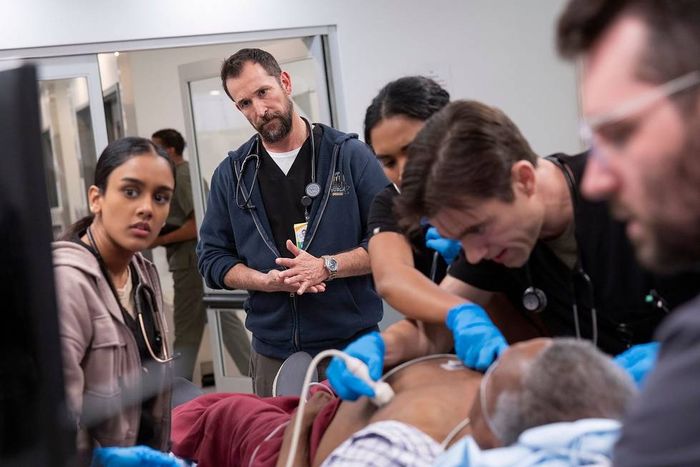
Photo: Warrick Page/Max
The best TV of 2025 feels weirdly familiar. There are some outliers — Pluribus and The Rehearsal would be oddballs in any year. But some of the most remarkable series this year are purposely, even sometimes stubbornly, refusing to reinvent any wheels. Death by Lightning is a fantastic historical drama with really great actors, damn it. That’s enough! Likewise, The Hunting Wives and The Lowdown are built on formulas that make sense: One is a sexy thriller about ladies; one is a classic noir. They both slot into comfortable, well-established categories. Andor is a Star Wars show. The Gilded Age is another Julian Fellowes joint. The most obvious is The Pitt: There’s nothing revolutionary about a straight-down-the-middle medical drama.
In every case, though, the pleasure and surprise of these shows is in how much immense joy can come from taking well-known models and genres and using them as the springboard for something new. Andor uses Star Wars to tell a bracing, hopeful, radical story of political uprising, utterly unlike anything else in that universe. The Hunting Wives strips away any coyness about sexuality in the first three minutes of episode one. In a glut of documentaries about children in the public eye, Devil in the Family offers a sensitive model for telling those stories in a responsible way. And then there’s The Pitt: The most retro form of TV feels entirely new when it’s made with the resources and creative flexibility of the streaming era.
TV is full of shows that wish they were The Hunting Wives. There’s a small mountain of mom thrillers (Sirens, The Girlfriend, The Better Sister), shows with bizarre wigs, absurd dialogue, vague intimations of queer undercurrents (welcome, All’s Fair), and plots full of murder and twisty reveals and inescapable forward momentum. Hunting Wives, though, is the high water mark of what those shows could look like with snappier scripting and a willingness to commit. The pacing doesn’t flag halfway through, the plot builds out of characterization rather than the other way around, and Hunting Wives is not interested in flashing some leg before stringing viewers along. It’s the rare streaming series racing to get to the good stuff because it has more, and even more, to offer all the way to the end.
Devil in the Family is a captivating account of the horrific story of Ruby Franke, a family vlogger whose slow dissociation from reality ended in nightmarish child abuse. But it is most notable as a model for how to make documentaries about sensitive topics without unintentionally reinforcing the same exploitative patterns these projects are trying to dismantle. Although Devil in the Family includes the voices of its story’s victims, it was produced only after those participants became legal adults and every child not yet old enough to consent has their identity obscured. It’s thoroughly, thoughtfully reported, and there’s significant new evidence rather than a regurgitation of previous public accounts. The result is a series that understands how to balance its story’s inevitable grotesqueries so that they fall squarely on the shoulders of the perpetrators, rather than being re-created by filmmakers who want to expose them.
The easy praise for Death by Lightning goes to Michael Shannon and Matthew Macfadyen, who are excellent as President James Garfield and Garfield’s unmoored, overexuberant assassin, Charles Guiteau, respectively. Macfadyen especially allows Guiteau to walk a challenging tightrope, discomfiting and intensely unlikable but never exactly unmoored from reality, never too far gone into easy, inhuman evil. As Lucretia Garfield, though, Betty Gilpin’s performance is the show’s secret weapon. While the men around careen about their lives, barely able to see three feet in front of them, Gilpin is a powerful counterweight against all the masculine posturing, an anchor of pragmatism and insight and human emotion. Her performance — furious, calm, grieving, calculated — is the only real connection between the assassin and his victim, and the last scene between Guiteau and Mrs. Garfield turns what seems to be a fluke of history into a form of justice.
Very little about The Gilded Age makes sense from one scene to the next. Much of the action happens off-screen with the drama of each episode stemming from characters describing all the important things that apparently weren’t worth depicting. None of the plot adds up the way it should: Dark overtones of a doomed marriage fizzle into quiet content, and important emotional stakes crumble into a return to the status quo, the Russell and van Rhijn coffers happily full once again. And yet, what on TV is more fun than watching Carrie Coon’s Bertha Russell go steaming headlong into a ballroom full of fury and vengeance for some infinitesimal slight? Or Phylicia Rashad’s Elizabeth Kirkland challenging Audra McDonald’s Dorothy Scott in a battle for social propriety? Nothing — except, perhaps, for watching a perfectly nice love interest in a top hat get blown to smithereens by an out-of-control carriage.
Michelle Williams’s poignant performance as Molly, a woman trying to reinvigorate her life while dying of breast cancer, anchors this FX limited series, but Dying for Sex’s most impressive asset is its kaleidoscope of supporting roles. As Molly’s best friend, Nikki, Jenny Slate balances Williams’s restraint with energy and personality to spare, and the show’s best insights are those about the dynamic of intimate female friendship. Molly’s world comes to life in performances from Rob Delaney, Robby Hoffman, Esco Jouléy, Paula Pell, and David Rasche, who turn a show that could come off as cramped and maudlin into a story that feels expansive, joyful, illuminating.
➼ Read our cover story with Michelle Williams, interview with Jenny Slate, analysis of Slate’s performance, and recaps.
Has anyone ever committed to a bit harder than Nathan Fielder? Season two of The Rehearsal improves on many of the missteps and underconsidered elements of the first, specifically as related to theme — Fielder is more willing to accept that this is a project largely about himself, and the show is weirder and freer because of that. But The Rehearsal also serves as an empty arena for Fielder’s greatest weapon as a filmmaker and comedian: He doubles down, and then quadruples, always finding ways to go further than would ever seem to be practical (or polite). By the end of The Rehearsal’s second season, Fielder has suckled milk from an enormous puppet of Sully Sullenberger’s mother, trained cloned dogs, staged an entire reality-competition singing show, and, most impressively, developed a yearslong side hustle as a private freelance pilot for 737 planes. No other TV series is anything like this one but, at the same time, no other series should be.
A show trying to be about everything could easily become a show about nothing in particular, which is why Pluribus is such an impressive accomplishment. There are many metaphors for its plot, a world taken over by a singular alien hivemind with one unhappy woman left out all on her own: grief, depression, artificial intelligence, social media, depersonalized automation, the nichification of mass culture. None of these interpretive possibilities cancel each other out but instead resonate against one another, various iterations of the same shared fears and frustrations. Rhea Seehorn’s incredible performance as Carol underscores how all these issues boil down to the same thing: She is lonely. She is sad. Yet she is suspicious that those are exactly the things that make her her. Pluribus’s endlessly weird, remarkably flexible conceit makes it one of the bedrock texts of 2025.
Shaggy and full of swagger, The Lowdown is an Oklahoma noir packed full of everything a good noir should be. Its land-corruption mystery, that classic noir trope, comes from an Indigenous American perspective that connects The Lowdown to creator Sterlin Harjo’s previous series Reservation Dogs. Its hero, Lee Raybon, played by Ethan Hawke, is a The Dude–esque detective-journalist, its baddies (played by Kyle MacLachlan, Paul Sparks, and Tracy Letts) glower and preen, and Keith David’s uneasy sidekick swings between humor and gravitas. The central mystery eventually takes over, but The Lowdown is most interested in leaning on its protagonist, poking at Raybon’s blindspots and his quixotic pursuits for truth. The Lowdown takes these well-worn noir tropes and shapes them around less-familiar scenes and perspectives, making it feel both old school and contemporary.
There are so many reasons Andor should never have worked, chief among them that it is burdened by a thousand tons of existing canon and hemmed in by lore on all sides. Instead it’s the pinnacle of bounded by a nutshell, king of infinite space, turning the Star Wars universe’s decades of dark-side/light-side mythology into an exploration of the real human faces of evil, cruelty, heroism, and sacrifice. There’s a miraculous quality to how expansive it feels: Cassian Andor’s struggle to get one little piece of evidence and help one woman escape the Empire is ultimately a tiny piece of the larger story, but the show makes it painfully clear that revolution happens as the result of a million individual choices. Andor is the kind of Star Wars experiment it’s unlikely we’ll ever get again: huge resources and incredible artistry invested in making what is ultimately a very personal, very political story.
Why reinvent the wheel when you can just make a really, really good version of the wheel? The Pitt’s 15-episode season, simple premise, empathetic performances, and weekly release schedule, combined with a focus on ruthlessly realistic competence, erects a new benchmark for what good TV looks like in the streaming era. Those elements alone would’ve made The Pitt standout television, but the other inarguable draw is Noah Wyle’s lead performance as Dr. Robby, the show’s beleaguered ER physician. Wyle’s face — rueful, furious, gentle, world weary — looks like this year has felt.
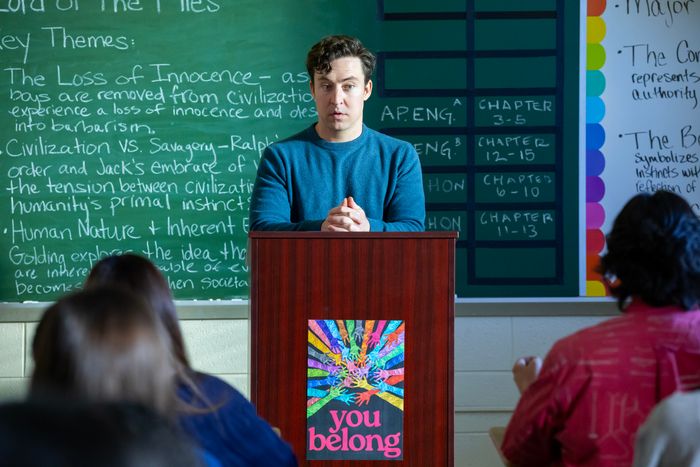
Photo: Steve Swisher/FX
The allegations against Brian Jordan Alvarez complicate the experience of enjoying English Teacher, especially in the moments when the show’s breezy tone hardens into dismissiveness. At the same time, the jokes are better crafted than any other comedy on TV. Writing that captures the hallucinatory quality of being stuck online all the time while still actually managing to be funny is no small achievement, and English Teacher does just that, tossing Jordan Alvarez’s well-meaning Evan and his colleagues into a maelstrom of hot topics, then swerving in unexpected directions: His students rewrite Angels in America about COVID, a tech company gives the school a smart trash can, the college-application process resembles a sports draft day. The show’s writers have also built on the strengths of their cast, and the series’ ensemble gets more developed in season two, giving characters like the great Enrico Colantoni’s principal his own showcase episode. —J.M.
➼ Read Kathryn VanArendonk’s review of English Teacher season two.
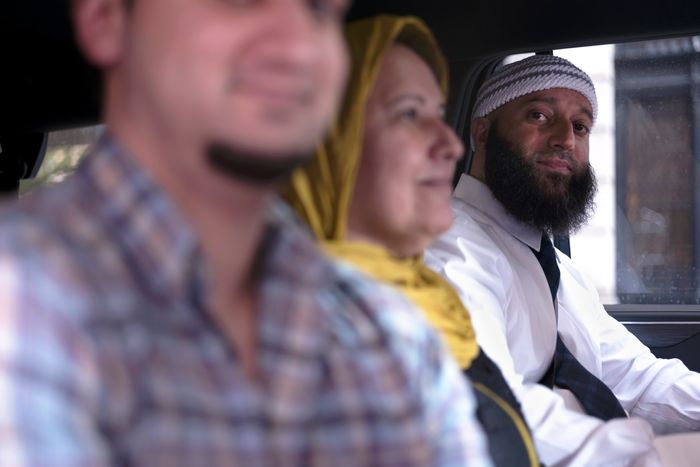
Photo: Olivia Fougeirol/HBO
Six years ago, The Case Against Adnan Syed picked up where the podcast Serial’s megapopular first season left off. The HBO series amplified the doubts Serial raised about whether the imprisoned Adnan Syed killed his ex-girlfriend Hae Min Lee, further poking at holes the podcast found in the Baltimore Police Department’s handling of the case. Director Amy J. Berg had widespread access to Syed and his family, and the result was a four-episode series that dove deep into the particulars of the case but also sketched out, in heartbreaking detail, exactly how it ruined Syed’s family’s lives. His father essentially became a hermit. His mother developed leukemia. The family struggled with ostracism and loneliness. None of this is to diminish the gargantuan pain Lee’s family went through but to emphasize that The Case Against Adnan Syed identified the Islamophobia and sloppy policework surrounding the case and kept prodding at it to understand exactly why Syed was convicted and what might happen next. With Part Five: The Tree Grew, we get the answer.
The episode summarizes what happened in the case from 2021 to May 2025, in particular the legal maneuvering by Syed’s new lawyer, Erica J. Suter, who believes she’s identified another suspect in Lee’s death. The actions of then–state attorney of Baltimore Marilyn Mosby, who decided to take another look at Syed’s case before leaving office in 2023, make up the other bulk of the episode. People who are already invested in this case — especially those who live in Maryland — are probably aware of a good amount of this already, given its heavy presence in local news. But what makes this episode so meaningful, and so profoundly moving, is the connection Berg has with Syed and his family. They open up to her about their fears, their heartache, and the reality of their lives. Every second with Syed is particularly gutting, from how he’s at first resigned to spending the rest of his life in prison, given that he’s already spent two decades there, and then later, once he’s released, his bemusement at being out. A scene where he marvels at how much the trees in his parents’ neighborhood have grown is gut-wrenching. A teary admission, in his childhood bedroom, that he misses the routine of saying “good night” to his fellow inmates, hearing their voices and knowing he’ll see them the next morning, is unforgettable. — R.H.
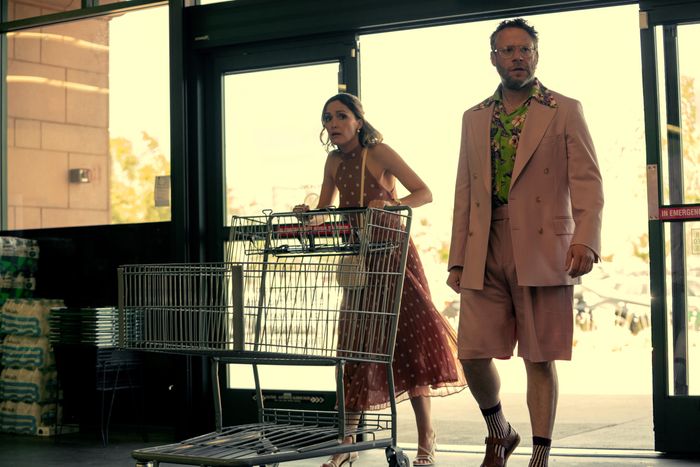
Photo: Apple TV+
Few settings are more soothing than the lives of white, upper-middle-class Angelenos, but that’s only one of Platonic’s many charms. Rose Byrne and Seth Rogen, reunited after playing a married couple at war with Greek Life in Neighbors and its sequel (both directed by Nicholas Stoller, who co-created this show with his wife, Francesca Delbanco), star as two estranged college friends who reconnect in the midst of their respective midlife crises. Zany yet surprisingly grounded, the first season offered plenty of delights, though it was weighed down by the conventional will-they-won’t-they expectations baked into its premise. The second season, freed from those constraints, takes a real leap, letting the show settle into being a splendid hangout comedy that gently layers in the quiet existential desperations of growing older. It also showcases some truly tremendous face acting by Byrne — among her generation’s most versatile performers — and equally tremendous choices by Rogen’s stylist, who dresses his character in outfits so comically loud it’s hard not to smirk at them. But even this feels like another expression of Platonic’s appeal: The show is assembled with such intentionality you can’t help but be pulled in. — N.Q.
➼ Read Nicholas Quah’s review of Platonic season two .
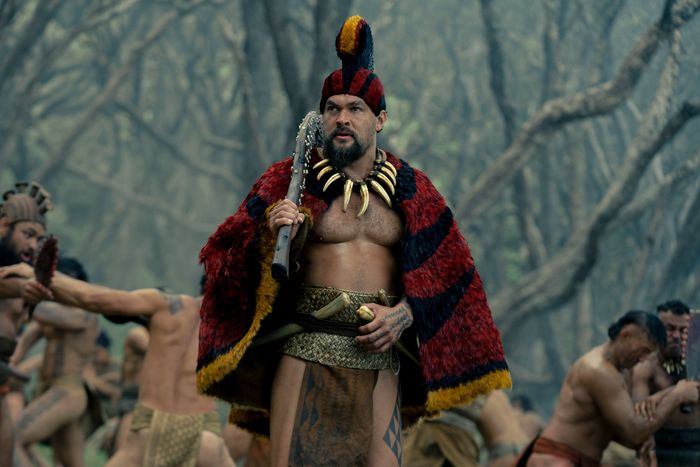
Photo: Apple TV+
The easy way to sell you on Chief of War would be to emphasize that Jason Momoa runs around pantsless a lot. The thoughtful way would be to say it’s like a Game of Thrones–Shōgun hybrid, both an action-packed and fantastical epic and a reframe of Hawaiian history told by the descendants of people who lived through it. Whatever argument is more persuasive for you, go with it! Chief of War is a fascinating star vehicle for Momoa, who co-created it with his recurring collaborator Thomas Paʻa Sibbett and also writes and directs. Set in the late 18th century and loosely based on history, Chief of War follows feuding Hawaiian tribes as they attempt to unify against the threat of colonization. Momoa plays Kaʻiana, a general who travels outside of the Hawaiian islands and realizing that capitalism and international trade will eventually come for his home. The series is bloody, brutal, and sentimental, with an absolutely bonkers final battle set against an exploding volcano. And although the dialogue can be corny and the narrative threads feel a little too diffuse, Chief of War is a bold undertaking that challenges viewers’ assumptions about Hawaiian culture and asks challenging questions about whether outside influence on the islands were beneficial. Plus, scene-stealer Cliff Curtis! My captain, my king! — R.H.
➼ Read Roxana Hadadi’s review of Chief of War.
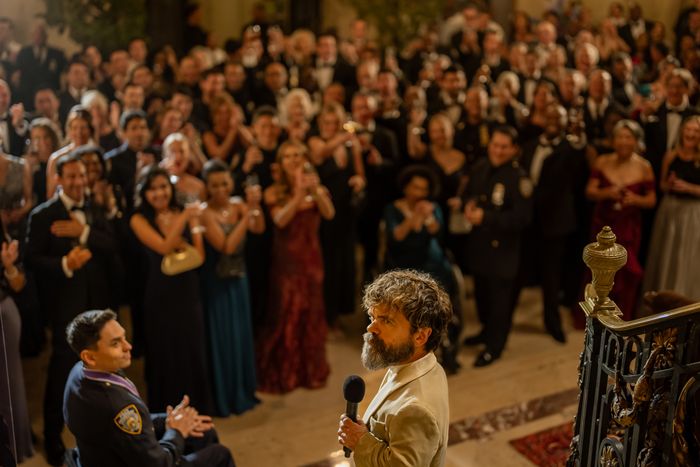
Photo: Zach Dilgard/Paramount+ with SHOWTIME
Michael C. Hall is just so damn good at this. Even when the Dexter franchise felt aimless — New Blood and Original Sin were very much in that category — Hall has always been 100 percent committed to playing Dexter Morgan, serial killer of serial killers, with as much verve or nuance as required. He can go big and campy, he can go precise and vulnerable; he’s so tuned into the emotional requirements of this character after playing him for nearly 20 years that you know, even as ludicrous as these plots get, Hall will be able to ground them. That’s exactly what he does in Dexter: Resurrection, the writing of which finally matches his freak after many wayward years. Picking up where New Blood left off, and with some retconning provided by Original Sin, Resurrection brings Dexter back from the near-dead and sends him to New York City, where he tries to reconnect with his estranged-again son Harrison (Jack Alcott) and entangles with a secret society of murderers funded by a venture-capitalist billionaire (Peter Dinklage, amazing). It’s an exceptionally cast season — Uma Thurman, Krysten Ritter, David Dastmalchian! — that knows what we want from this universe is less existential malaise, more stabby-stabby fun, and it delivers wonderfully. Plus, finally reuniting, in affection and enmity, Dexter and his onetime friend Angel Batista (David Zayas) gave Resurrection serious stakes. Bring on season two. — R.H.
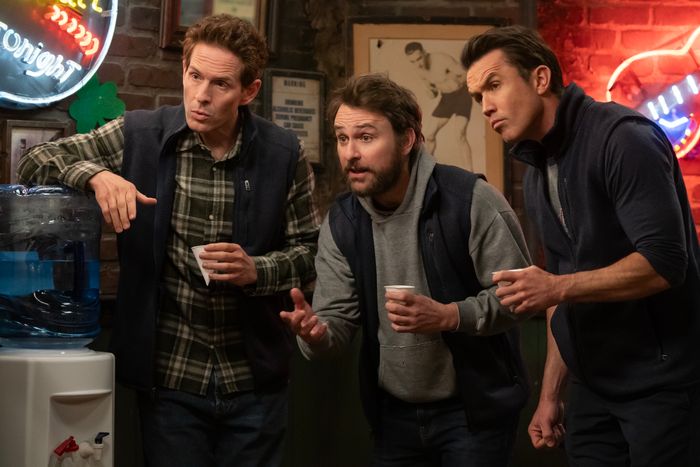
Photo: Patrick McElhenney/FX
The longest-running live-action comedy on TV could have run out of gas — and to be fair, some of its prior seasons have felt like the gang was cycling through the same beats and story lines. But this season, It’s Always Sunny feels creatively rejuvenated by its longevity. That lifespan gives it the freedom to consider its own place in the TV landscape; the crossover episodes with Abbott Elementary were basically brand management for the gang’s awfulness, while spoofs of The Bear, Succession, Is It Cake?, and The Rehearsal show how well Dennis, Dee, Mac, Charlie, and Frank adapt to different genres and formats. The indignities they’re put through during “The Gang Goes to a Dog Track” makes for the most upsetting episode of It’s Always Sunny in years, and the crossover with The Golden Bachelor is a wonderful showcase for Danny DeVito. The series got a season-18 order all the way back in 2020, and hopefully it can keep this playfulness going. (Although, on the record: Seeing the unnecessary “Rob Mac” name change in the series’ credits is a real vibe killer.) — R.H
➼ Read the backstory of how the It’s Always Sunny and Abbott Elementary crossover came to be; Roxana Hadadi’s chat with star Glenn Howerton; and Rachel Simon’s list of essential episodes.
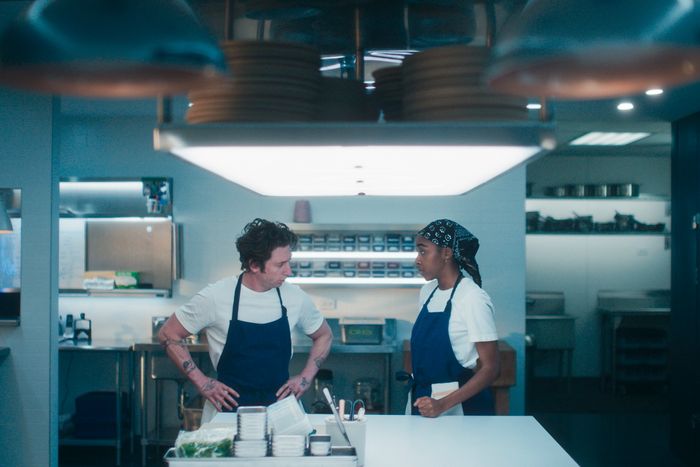
Photo: FX
Though it still falls short of the cohesion (and heights) of its first two seasons, The Bear’s fourth outing marks a clear improvement over last year’s batch of episodes. We rejoin the gang in the wake of a lukewarm Chicago Tribune review, which kicks off a ticking-clock scenario: Turn things around before Cicero runs out of money and pulls the plug. But before you start expecting a sports movie-style comeback tale — this is The Bear we’re talking about — what follows is a series of detours and departure episodes, as Carmy and company wrestle with questions of who they are and what they want. The season still indulges in the usual excesses (Faks, needle drops, more cameos), but it also has some truly standout set pieces, like a notably restrained episode, written by Ayo Edebiri and Lionel Boyce and directed by Janicza Bravo, that trails Sydney on an unexpected babysitting gig where she gets the chance to work out her feelings about the restaurant. The Bear might have its rocky moments, but if you’ve grown attached to this world, there’s a lot to love here. —N.Q.
➼ Read Kathryn VanArendonk’s review, Nicholas Quah on the finale, Marah Eakin’s recaps of the season, and Eakin’s ranking of every episode.
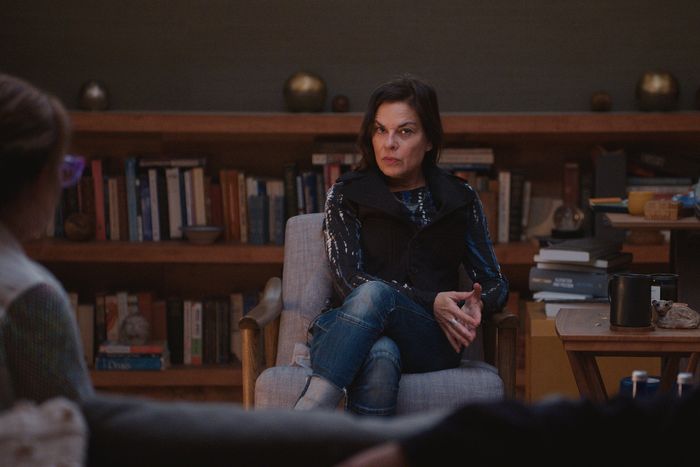
Photo: Paramount+ with SHOWTIME
At this point, calling out Couples Therapy as one of the best shows on TV has begun to feel rote, but the truth is still the truth: Few docuseries operate on its level, because almost no one else is even trying. Season four continues to lean on the show’s biggest and most apparent strengths, selecting interesting couples and creating a platform for the show’s breakout star, Dr. Orna Guralnik. But the sneaky secret to Couples Therapy is and has always been in the edit — it crafts remarkably clear narratives out of hundreds of hours of footage without ever feeling reductive. —K.V.A.
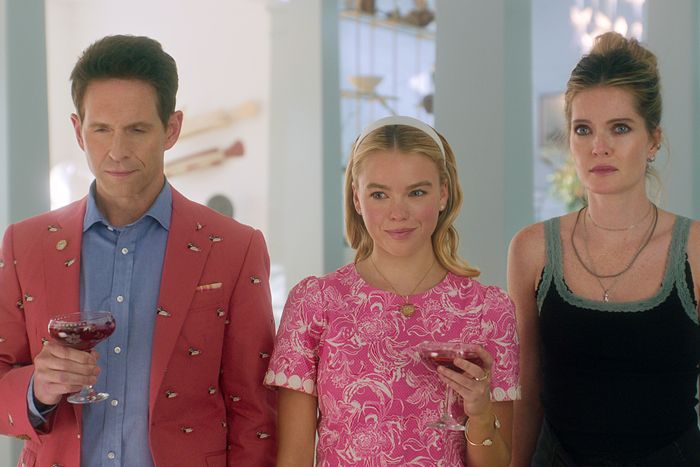
Photo: Netflix
There are too many shows in the Sirens model (wealthy people in mysterious enclave led by charismatic woman), and too many of them also star Meghann Fahy, but the upside is that when one of them is actually fun and bizarre and well acted, it’s easy for it to stand out from the bunch. That is the case with Sirens, which rarely makes sense and often collapses under its own weight, and yet is so full of strong chemistry between its leads (Fahy, Milly Alcock, and Julianne Moore in what is traditionally the Nicole Kidman role) that it surpasses all the usual expectations. Kevin Bacon is occasionally there, too. —K.V.A.
➼ Roxana Hadadi’s review of Sirens and Caroline Framke’s recaps of the series.
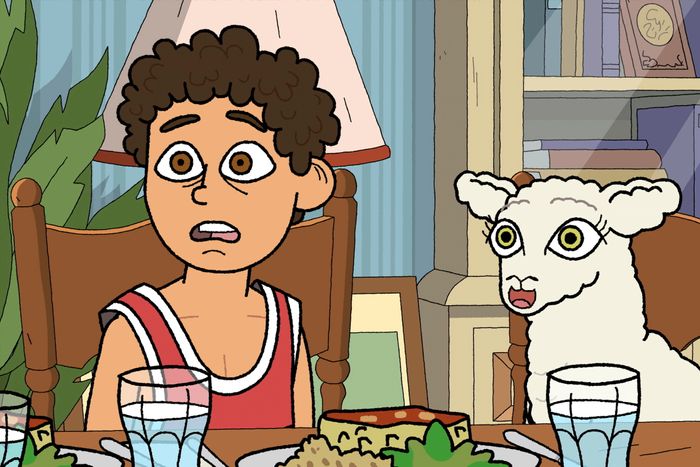
Photo: Prime
This animated series from Ramy Youssef and Pam Brady follows the Husseins, an Egyptian and Muslim family living in New Jersey, and how their conceptions of themselves change after September 11, 2001, thanks to increasingly racist neighbors, media, and politicians. It’s a dark subject, but one that #1 Happy Family USA lightens up with original songs (including a quite catchy one about “Spies in the Mosque”), absurd voice performances (including Youssef as both family patriarch Hussein Hussein and teen son Rumi Hussein), and a thrilling through-line of anger at how easily America slid into its current atmosphere of paranoia and bloodthirstiness. Maybe the season is too frenetically paced and too overstuffed with ideas, but there’s a devil-may-care quality to #1 Happy Family USA, like no one involved can believe they’re getting away with portraying former president George W. Bush as a lizardlike kidnapper, the FBI like a bunch of maladjusted adrenaline junkies, and a hijab-wearing male dentist who possesses beaverlike teeth that can gnaw through trees. (The level of absurdity varies.) The elasticity of the medium allows for the series to stretch to accommodate all of its provocative and insightful ideas, until it ends on a cliffhanger that will forever change the way you think about the term “spy kids.” Another season is already on the way, which means you have no excuse not to watch. —R.H.
➼ Read Roxana Hadadi’s review of #1 Happy Family USA.
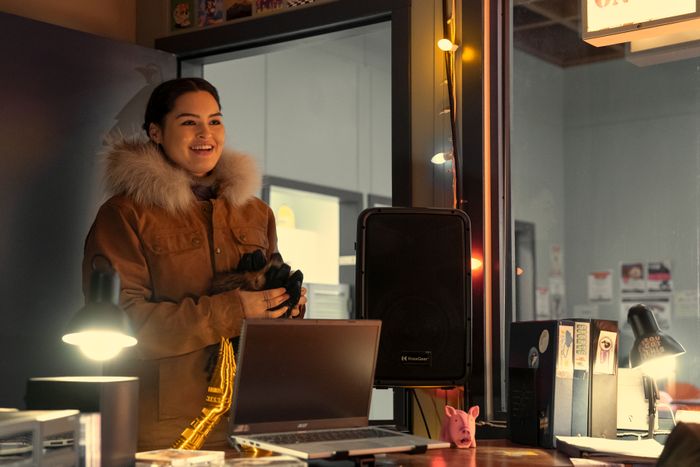
Photo: Jasper Savage/Netflix
The equivalent of a warm bowl of soup on a cold day, North of North reminds you what a comedy can provide — laughs, obviously, but comfort, too. With Iqaluit, Canada’s northernmost city, standing in for the fictional Indigenous community of Ice Cove, North of North’s eight-episode first season focuses on 20-something Siaja (an extremely winning Anna Lambe). She’s outgoing, cheery, and determined to make something of herself after separating from her overbearing and emotionally abusive husband, Ting (Kelly William). There’s just one problem: Ting is beloved by the townspeople, and they immediately turn on Siaja for leaving him. The plot pushes Siaja toward ambition both professional (can she hold down a new job at the community center; can she serve as a resource for a visiting polar research team?) and personal (can she take a chance on herself; can she avoid being pulled back under Ting’s sway?), and Lambe handles it with all relatable charm. The cast surrounding her has great comedic timing, and the subplot involving Siaja’s mother Neevee (Maika Harper) and a returning flame from her past (Jay Ryan) is one of the season’s most moving. An episode about a baseball-game rivalry between Ice Cove and its nemesis town that’s packed with Indigenous in-jokes suggests that North of North could have Parks and Recreation–style legs, too, if Netflix were to go ahead and renew it already. —R.H.
➼ Read Roxana Hadadi’s review of North of North.
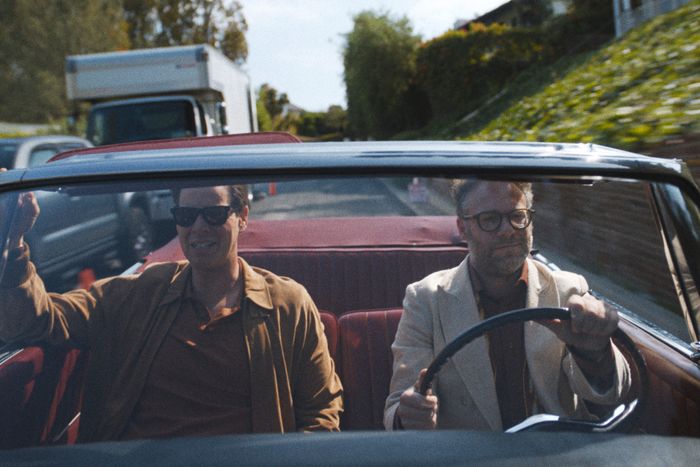
Photo: Apple TV+
Pity the … studio chief? Seth Rogen anchors this Apple TV comedy that follows the newly elevated head of a fictional film studio as he tries (and fails) to realize his dream of making great movies in an IP-fixated Hollywood. Rogen does impressive work performing multiple duties: In addition to starring in the lead role, he writes, produces, and directs all episodes with frequent collaborator Evan Goldberg. The result is both an electrifying farce about the insipidity of the movie business and a loving testament to its enduring magic. It also looks incredible and features an absurdly extensive list of high-wattage cameos from the likes of Martin Scorsese, Charlize Theron, Ron Howard, Olivia Wilde, Anthony Mackie, and, shockingly, Netflix CEO Ted Sarandos. —N.Q.
➼ Read Nicholas Quah’s review of The Studio and Keith Phipp’s recaps of the season.
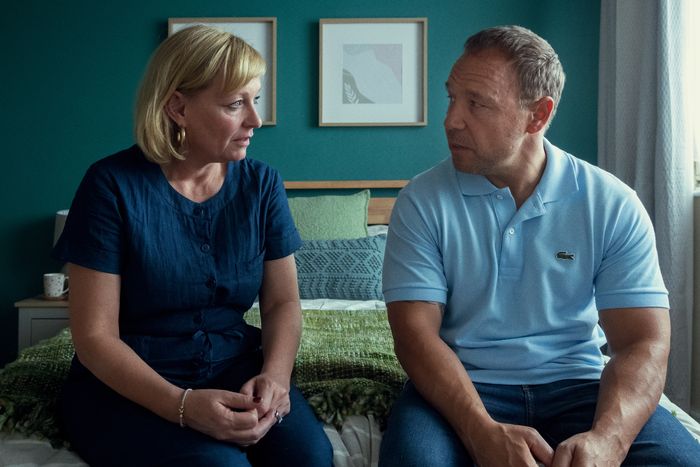
Photo: Ben Blackall/Netflix
If all that this British series did was technically succeed at pulling off four episodes that were each shot in a single take, that would have been impressive enough. But what makes Adolescence such vital television is the way it uses that continuous, unedited visual flow to underline its themes and character beats in this intense exploration of a preteen’s arrest on charges of murdering a fellow classmate. Director Philip Barantini, working alongside creators Jack Thorne and Stephen Graham, often shoots tight close-ups that make it difficult for the viewer to see, quite literally, what’s coming around the next corner. That approach mirrors the shock and uncertainty now embedded in every second for the accused, Jamie, and his family as they confront the possibility that Jamie could be a killer. The camera’s unflinching point of view also allows for the actors to unleash some remarkable performances, particularly Owen Cooper as an untethered, sometimes aggressive Jamie and Graham as his distraught dad Eddie. In the final episode, when Eddie and his wife, Manda (Christine Tremarco, also excellent), contemplate their role in enabling their son to become an incel, Adolescence does the most difficult and powerful thing it can do. It refuses to let us look away. — Jen Chaney
➼ Read Marah Eakin’s Adolescence recaps, Shannon Keating’s essay on how the series fails to bring Katie’s perspective to the story, Nicholas Quah’s close read of the ending, Fran Hoepfner on the show’s one-shot takes, and Roxana Hadadi’s interview with star and co-creator Stephen Graham.
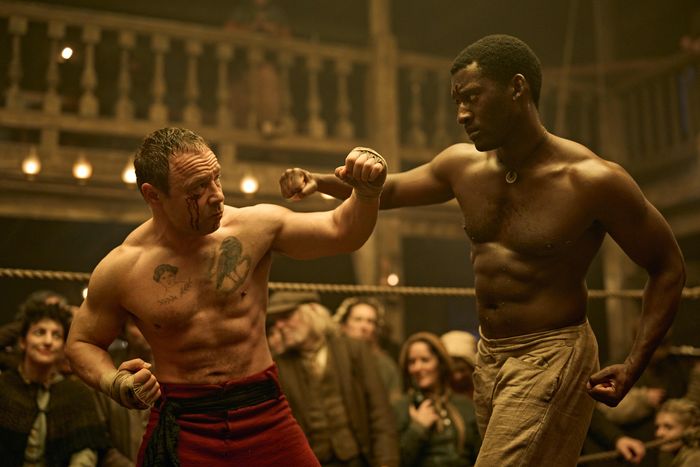
Photo: Robert Viglasky/Disney
Because sometimes you just want to watch someone get punched in the face. Those longing for Steven Knight’s Peaky Blinders movie will be well sated by this series, which has the same roiling energy, propulsive scoring, and heavily accented gangsters as the British filmmaker’s most popular work. Set in London’s East End in the 1880s, A Thousand Blows triangulates on three figures in the city’s shady underworld. There’s Mary Carr (Erin Doherty), queen of the female gang the Forty Elephants, who’s sick of stealing from the poor and hatches a scheme to yoink valuables from the Queen of England. Coveting her is bareknuckle-boxing legend Henry “Sugar” Goodson (the insanely ripped Stephen Graham, who enlisted Doherty to join him in his series Adolescence), a man who only knows how to use violence to solve his problems and whose natural state is “teetering on the edge of an emotional cliff.” And getting between Mary and Sugar is immigrant Hezekiah Moscow (Malachi Kirby), who fled a massacre in his Jamaican homeland for a job in London, only to learn that the zookeeper wanted to put him in a cage and advertise him as a “wild man of Africa.” Hezekiah pivots to boxing, and his strength in the ring and romantic chemistry with Mary get him the wrong kind of attention from Sugar — who’s just itching to swan-dive off that cliff into self-destruction. A Thousand Blows pulls off a casting hat trick with this trio, whose magnetism elevates some of the first season’s cornier dialogue and sells the characters’ rapidly developed feelings. The fights are brutal, the schemes are clever, the six-episode drop is concise, and the “to be continued” ending promises more drama down the line. If you felt particularly burnt by The Nevers, give A Thousand Blows a try. — R.H.
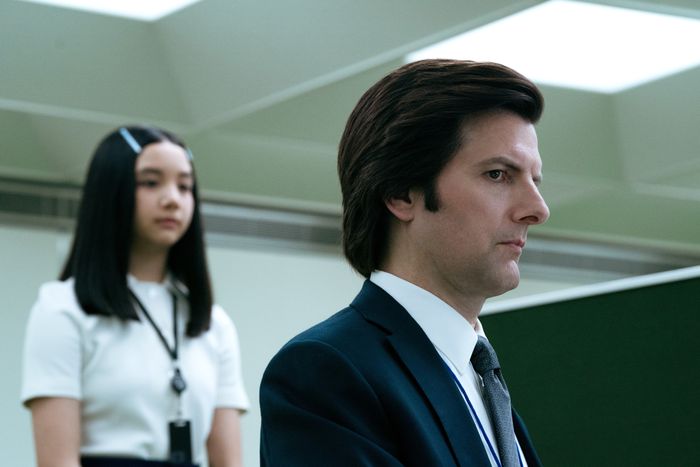
Photo: Apple TV+
The first season of Severance ended on a cliffhanger so intense it temporarily halted the flow of oxygen to most viewers’ brains. Then the show did the cruelest thing possible: It did not come back for three years. When season two of this dense and deeply weird workplace thriller finally dropped on Apple TV, expectations were understandably high. These ten new episodes meet and often exceed them.
Series creator Dan Erickson, director Ben Stiller (he handles half of the season’s episodes), and their colleagues have delivered a surreal, meticulously rendered odyssey that delves more deeply into the cultlike environment at Lumon, the shadowy biotech company that has a team of severed employees whose work and personal lives are fully divorced from each other. As the members of that team, Mark S. (Adam Scott, in a career-best performance), Helly R. (Britt Lower), Irving B. (John Turturro), and Dylan G. (Zach Cherry) continue to investigate what’s really going on at this freakishly controlling corporate enterprise. The craftsmanship, from the idiosyncratic production design to the carefully composed cinematography, is sterling on every level. And while it may feel right to describe Severance as a drama, it’s got a really terrific, twisted sense of humor that feels especially suited to these dark times. If you didn’t guffaw during the office memorial service where employees were told to “each take nine seconds” to remember a former colleague, I’m sorry, but you may not be Lumon material. —J.C.
➼ Read Kathryn VanArendonk’s review of Severance, Erin Qualey’s recaps of the season, VanArendonk’s close read of the conversation between Mark’s innie and outie; Devon Ivie’s interview with star Britt Lower, and Roxana Hadadi’s interview with star Tramell Tillman .
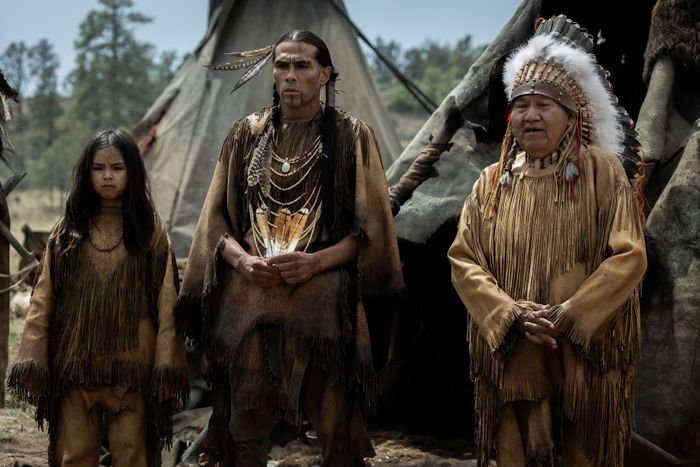
Photo: Matt Kennedy/Neflix
No, Peter Berg and Mark L. Smith’s gritty-grimy-ugly depiction of the American West in American Primeval isn’t perfect. Too many moments feel derivative of The Revenant, and Betty Gilpin could have had more to do. But there’s a pureness to how committed American Primeval is to its thesis of “American history bad, actually.” Pop culture has been so stuck in a mode of romanticizing pioneers and settlers that American Primeval, with its insistence on diving into Mormon history and rejecting the idea that violence in the name of gaining power is justified, feels like a balancing of the scales. Taylor Kitsch gives one of the most textured performances of his career, Shea Whigham is having a ball going head-to-head with Kim Coates, and the series actually takes the time to depict the Shoshone with depth and context. All the beautiful shots of the sprawling American landscape are nice, but American Primeval never lets us forget that these lands are soaked in blood. —R.H.
➼ Read Roxana Hadadi’s full review of American Primeval and Keith Phipps’s recaps of the series.
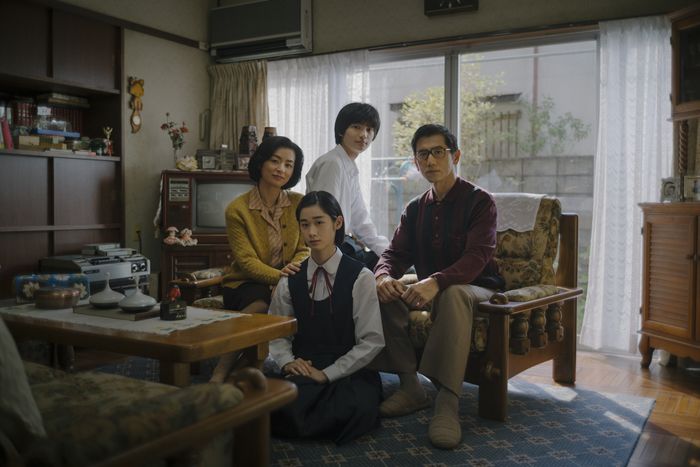
Photo: Netflix
Once again, Netflix has unceremoniously dumped a miniseries from the wonderfully empathetic Japanese filmmaker Hirokazu Kore-eda on its streaming service with no fanfare, and once again, it’s phenomenal. In 2023, it was The Makanai: Cooking for the Maiko House, an adaptation of a manga series; in 2025, it’s Asura, an adaptation of a 1979 TV series and its preceding novel. One of Kore-eda’s many superpowers is finding the core of friendship, family, and community in these sources and blowing them up into immersive proportions, and Asura is riddled with these kinds of connections. The seven-episode miniseries follows four sisters who suspect that their father might be having an affair — and might also have fathered a child with the other woman. The daughters range in their reactions to the possibility, which in turn alters their relationships between each other and their partners. But their varying responses aren’t finite. The women change their minds throughout the course of the series as they gather for meals to gossip, reveal their own hidden secrets to each other, and wonder whether the men they love could also be cheating on them. Does anyone really know anyone at all? The cast and Kore-eda address that question with humor and nuance, a lot of meal scenes for all The Makanai nostalgists, and a finale that suggests love is a choice to be made every day rather than a certainty to take for granted. It’s a cheeky ending to one of the most thoughtfully rendered series of the year. — R.H.
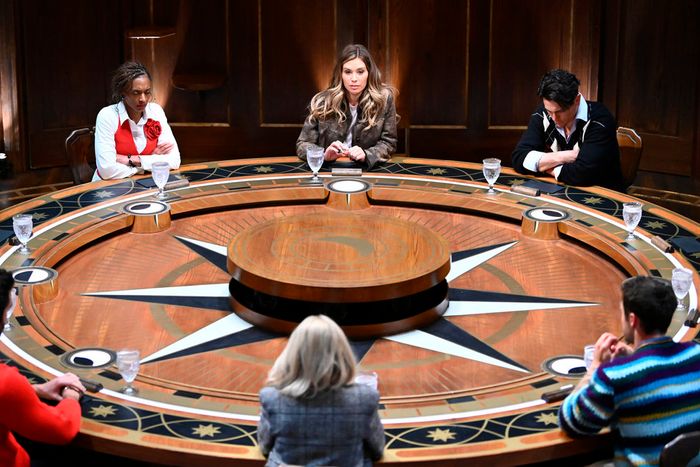
Photo: Euan Cherry/Peacock
Honestly, Lala’s outfits are enough to get this show in our best of the year. Those little tutus! But even setting aside the continued sartorial magnificence of Alan Cumming and his stylish sidekick, The Traitors’s entertainment value as a social experiment keeps on rising. Since the series has fully reoriented itself around reality-TV celebs, it’s become a fascinating analysis of how this genre’s stars perform themselves, lean into their infamy, and align based on the networks that gave them fame in the first place. Reality-TV competitions are all about assumptions, how we size up strangers and decide to ally ourselves, and that tribalism has an even sharper edge now that we think we know these people from their appearances on other series. That’s fun! It’s a bonus that this season has had so much mess, from bickering Traitors who spend most of their time backstabbing each other to Tom Sandoval somehow winning us over with his transformation into a walking banana peel. —R.H.
➼ Read Tom Smyth’s recaps of the season.
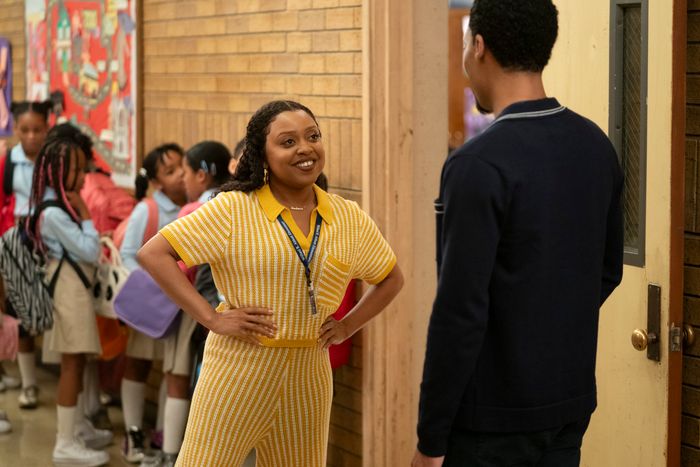
Photo: Gilles Mingasson/Disney
After a third season dominated by the will-they-or-won’t-they relationship between Janine and Gregory and a flurry of high-profile guest stars, Quinta Brunson’s public-school sitcom put its head down and got back to basics for its fourth season. With Janine (Brunson) and Gregory (Tyler James Williams) openly together and the cameos kept to a minimum (well, okay, there was the Always Sunny crossover), Abbott did what it does best: explore real issues (gentrification, low teacher pay) through the prism of relatable comedy. Abbott is still the most consistently funny show on broadcast television, with a cast that understands their characters so deeply they’ve made them feel like old, dear friends. Even the kids on Abbott raised the bar this season. Please, somebody give an Emmy to the little girl who played Margaret, the student who dressed up as Barbara to celebrate the 100th day of school because she assumed Mrs. Howard was 100 years old. (“You’re even older than Ms. Teagues, and she’s, like, 50.”) — J.C.
➼ Read Ile-Ife Okantah’s recaps of the season, Roxana Hadadi on the backstory behind the Always Sunny in Philadelphia crossover episode, and Devon Ivie’s interview with star Janelle James.
Related