
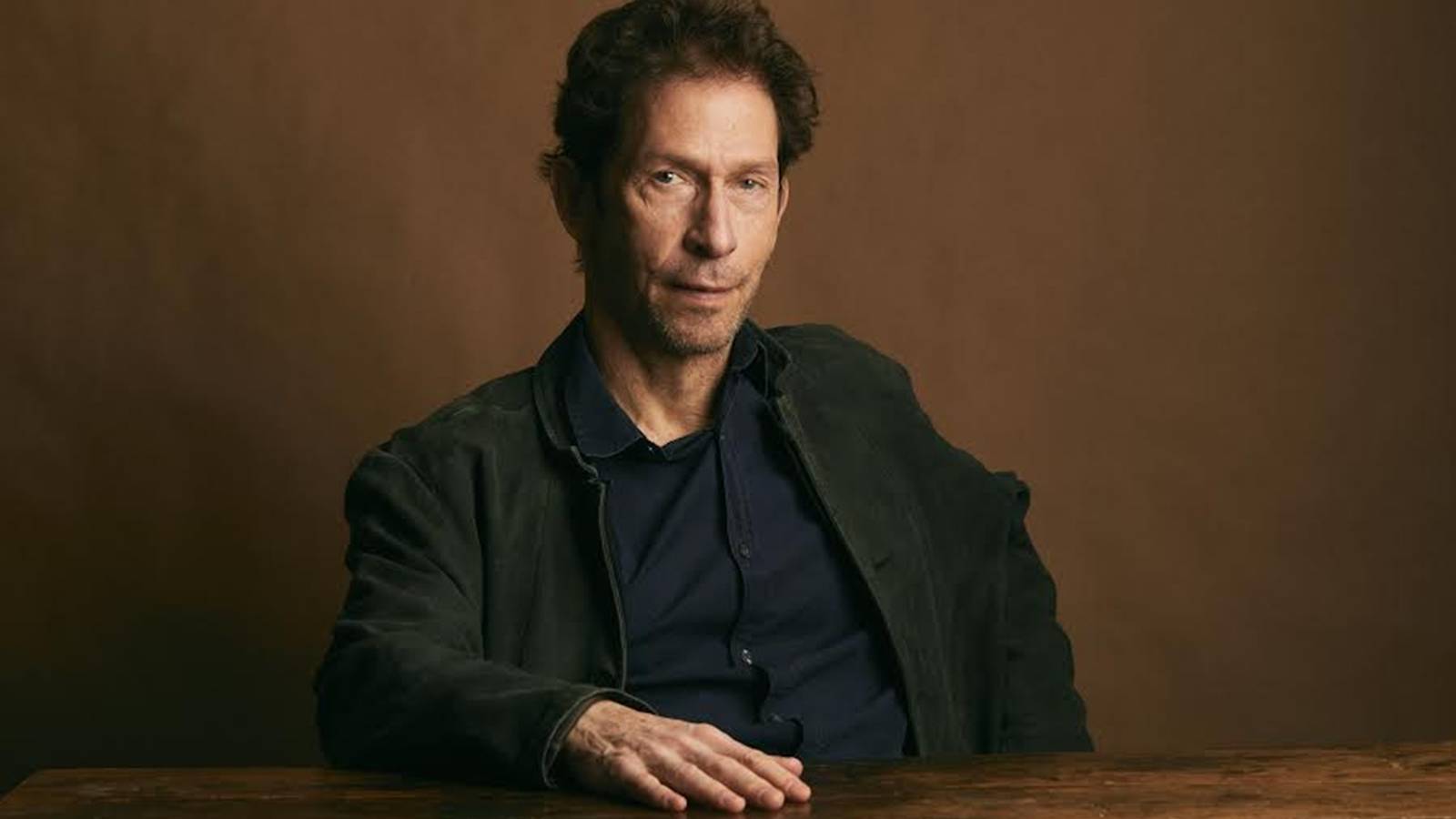
Tim Blake Nelson is well-known by TV and film fans for his wide range of acclaimed acting performances, perhaps most famously for his roles in two films by The Coen Brothers, 2000’s O Brother, Where Art Thou? and 2018’s The Ballad of Buster Scruggs (where Nelson played the title character).
Nelson is also a playwright, screenwriter, and director.
Nelson has also appeared in a number of superhero films, playing Samuel Sterns/The Leader in 2008’s The Incredible Hulk and then again in 2025’s Captain America: Brave New World. He also played a superhero, Looking Glass, in the acclaimed HBO sequel series to Watchmen.
Nelson brings his experience with the superhero world to his second novel (following 2023’s City of Blows), Superhero, which was published this week from Unnamed Press. CBR sat down with Nelson to discuss the influences of the novel, and the striking coincidence of being cast in a superhero movie while already writing a novel about the making of a superhero movie.
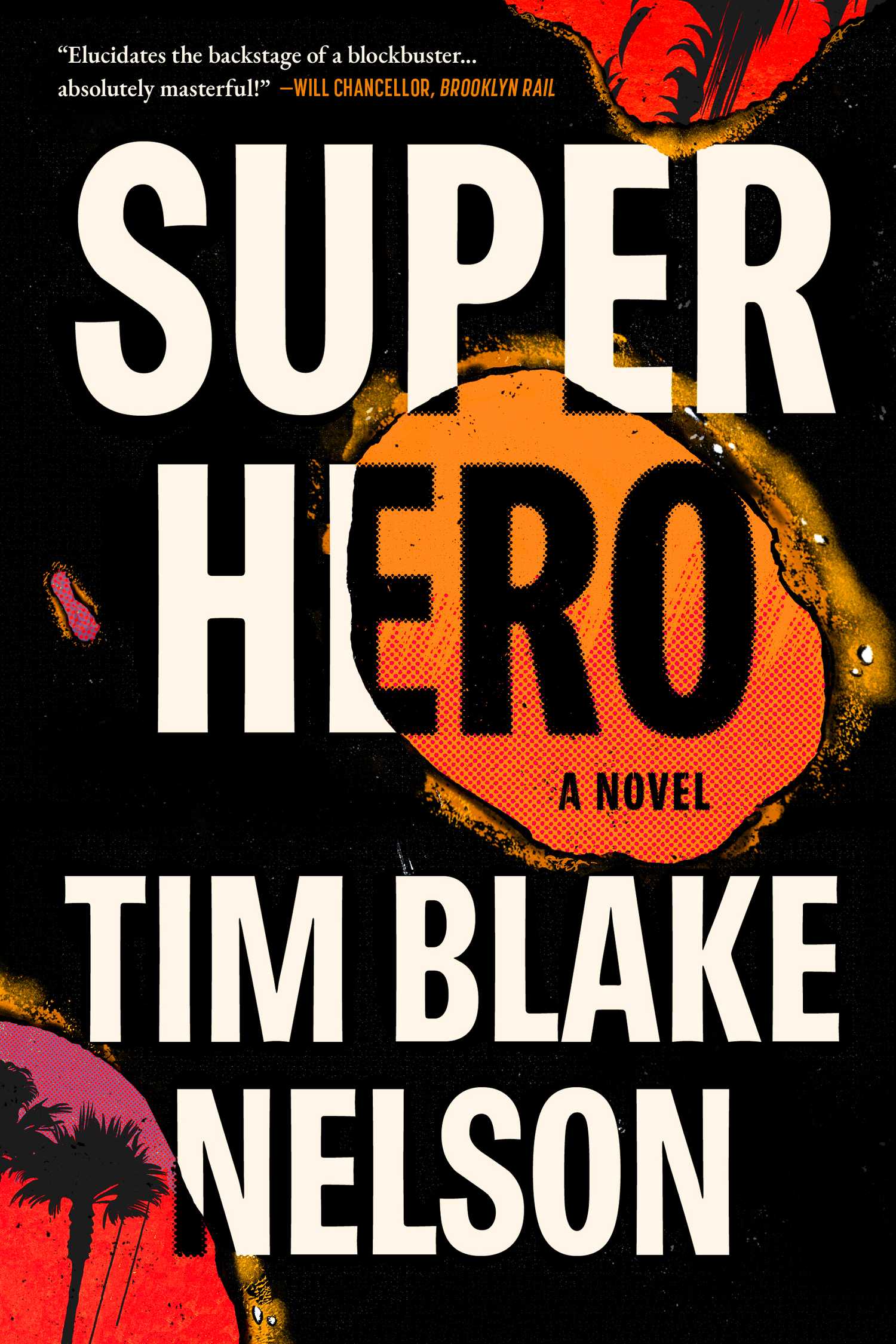
Image via Unnamed Press
Tim Blake Nelson: Thanks for taking the time to talk about Superhero. CBR readers are the the people I want to be reading the book.
Oh yeah, definitely. I imagine, because this is the audience that this book speaks to. They know these situations, these tropes so well.
Also, people who see these movies and who read comic books are smart. And they’re like me in terms of…I’m not calling myself smart, but they’re nerds. I love that word. It’s what I am, resolutely. And I love information. I’m a completist, and that’s the type of people who immerse themselves in this world. I’m writing for those people. The vocabulary is for those people. The intricate structure of the novel is for those people. The subject matter is for those people, and the psychological and cultural explorations are for those people.
Before we go too deep into the book itself, I have a more general question: your first book was also about the movie industry. So why did you choose for the second one to go into the superhero genre?
Specifically, because I think there’s a reason that in the 1950s comic books reached an apogee (40s and 50s and then into the 60s) culturally in America. And I think there’s a reason that the superhero movie reached its apogee at the beginning of the 21st century as a cultural phenomenon in America. And so, by delving into this world, I get not only to be quite specific about something with which I’m incredibly familiar as somebody who worked within that system, but I’m also able to write a narrative that amplifies in larger ways and is able to extrapolate themes that are much more broadly relevant culturally, politically, and even spiritually, than just within the narrow confines of the comic book world and the comic book movie world.
That is fascinating that we’ve now had comic book movies be such a big deal for long enough that we can look back and see the broader shape of how they have existed in our timeline. A lot of times, when you’re in the middle of it, you don’t see the cultural impact of the popular movies of the era until you have a little distance. And now we’ve had a decent amount. It has been, what, 17 years since the first Iron Man movie?
Well, yes, you’re absolutely right. And yet, at the time of seeing the first Iron Man movie at the Loews 86th Street here in New York City, that moment in which Tony Stark is in his suit, and he goes into the extremist village and the terrorist is holding on to some women and children, as I recall it, and he’s able to use the technology to just blow the terrorist away, I did think to myself, “Okay.” And the audience cheered. The packed house cheered and laughed. I did think, Okay, this phenomenon is going to be huge, and it is reaching into something that is both completely modern and cutting edge, but also atavistic in a way, because the audience response was just uninhibited and visceral.
So it is interesting you started working on this before you were even in the most recent superhero movie, right That must have been quite the coincidence.
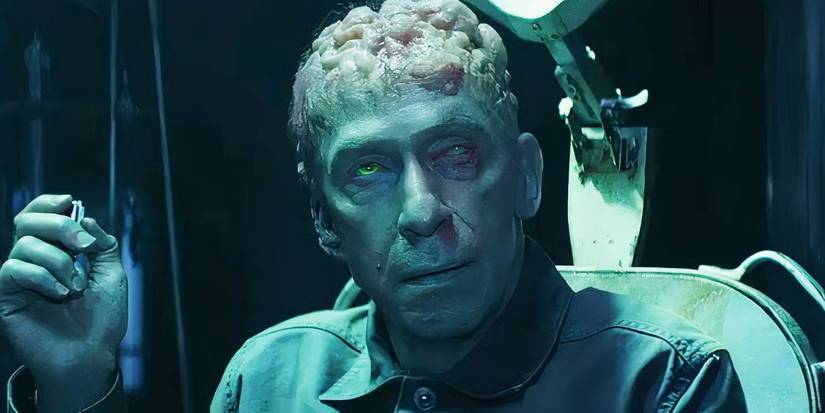
The Leader in Captain America: Brave New WorldImage via Marvel Studios
When Nate Moore and Kiana Davidson Zoomed with me and said, We want to bring you back as Mr. Blue in Captain America, I was already about halfway through writing Superhero. I just thought to myself, How did I get so lucky? And then not only was I able to cull from experiences I had on that movie, but I also formed true friendships with Kiana and with Nate. Kiana especially, who is not only a wonderful producer but a wonderful person. She read the novel, but also, during the shooting of Captain America 4, she was incredibly generous with me in terms of sharing how it all worked, but also the history of Marvel.
Not that Sparta is specifically Marvel in the novel, because it isn’t. It is a compendium of Marvel and DC. And I have experience in the DC world as well, through Watchmen, so I’m borrowing from that too. But yes, working on Captain America 4, when I worked on a Marvel movie at the phenomenon’s beginnings.
Way back when you didn’t have to make 100 million dollars for it to be considered successful, was a blessing.
What is interesting is, structurally, Captain America 4 didn’t change anything in the novel, right? It just gave you more background, more depth?
No. Structurally, I don’t think that without Captain America 4 and my experiences on it, I could have done what I ended up doing with some of the plot of the novel.
Oh, really? That’s surprising.
I was going in there and getting scanned in that room several times a day, and that inspired part of the novel.
That’s fascinating. So you had a whole other angle on that part of the novel originally?
Yeah. And then I did a lot of back and forth with the guys who ran that facility to get everything absolutely right.
Right. “What can you actually do? How would it work?”
Yeah. And if you look at the novel, it is very specific about all the equipment. That is because I befriended those guys and they shared everything.
That specificity really stood out. I know some people call the book a satire, and yes, there are absurdist elements, but there is nothing in here that reads as if it could not actually happen. Everything feels true to life. I am sure these things are based on something you saw at some point.
Anybody who calls this a satire, in the modern misuse of that word, has never been on a set. It is not a deeply satirical piece of fiction. It is mildly satirical. Satire exaggerates reality for humorous rhetorical effect, and that makes this only a mild satire because very little of it is exaggerated.
Right. There is nothing in here where I thought, “that could never happen.” Everything reads like something we have all heard of happening, or seems to be a realistic extrapolation of something we have heard of happening.
There is a scene in the novel in which the movie star and his producer wife are trying to persuade the DP to remain on the film, and they buy out a whole restaurant. Well, guess what? I know for a fact, from a DP, that a movie star did that.
Again, nothing surprises me with stuff like that! Perhaps it all happening on TOP of each other is a surprise, of course, but even there, it had a very Greek tragedy aspect to it. Actually, speaking of that, the Greek tragedy aspect of Peter’s downfall reminded me of the first film you wrote and directed, Eye of God.
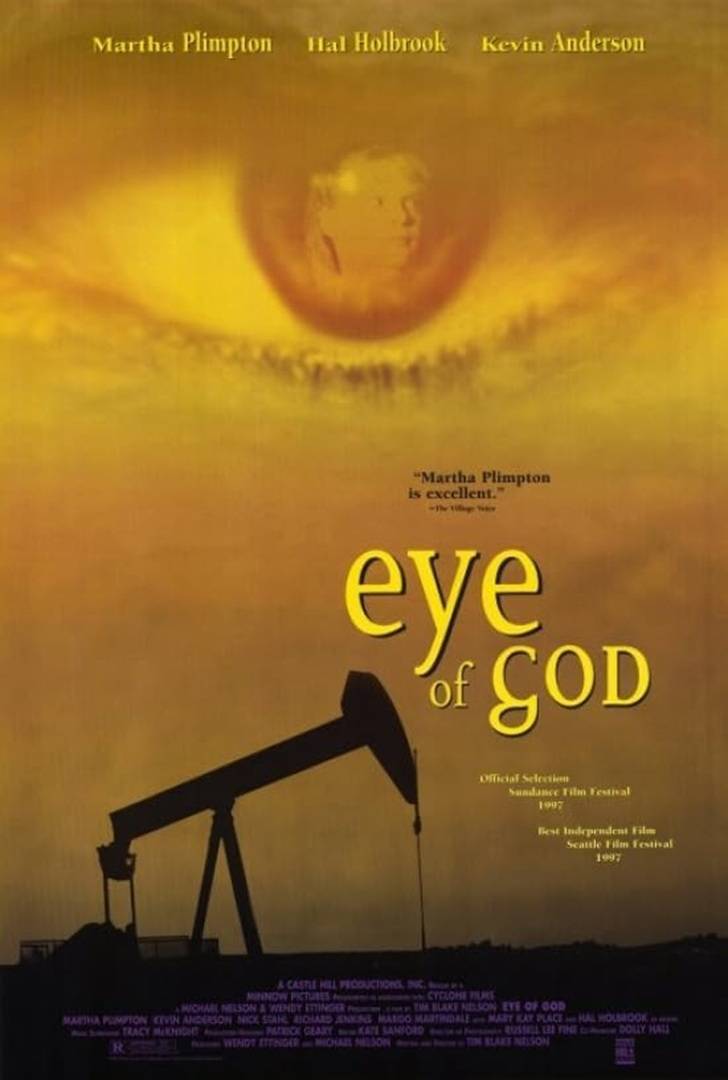
Image via Castle Hill Productions
Oh, wow.
And how X would only happen if Y, and if only this person had not made a certain decision, things would not have cascaded the way they did. Like if Declan had not made the decision to try to scam the studio for the cars, then he wouldn’t have had to try to leak something damaging about Peter to hide his mistake, etc. It is interesting how there seems to be a through line in your writing going all the way back to that first film..
Thanks. And by the way, the thing with the car, some producers did that.
I am not the slightest bit surprised.
That is why we do not have the Iowa tax credit anymore, because some producers bought BMWs.
As the joke goes, when you play Monopoly, how often do you trust the banker? Give people access to REAL money, and things happen.
And on that note, it reminded me of Jeff Greenfield, who once wrote a book about what would happen if no one got enough electoral votes for president. At the time, it seemed absurd, but so many things sound absurd right up until they actually happen. So it is the same with the plot of this film, it really isn’t farfetched at all.
I do not think it is.
Towards the end of the novel, I really thought that the interview section was striking, the way the public only gets these clipped, polished versions of the “truth” well after the fact. I was watching one of those quickly packaged TV documentaries recently and thought, “No, that is not how it actually happened at all.”
That is the experience even when you read a New York Times article.
Excellent point. If you are involved in something, you know they will never get X, Y, or Z right. If it is a topic you are an expert in, you are always going to find problems.
Anybody who has been on one of those press lines, and I am sure you have, knows it is all theater. Whether you are on your side as the journalist or on the actor or filmmaker side, it is all theatrical.
There was a story recently about a divorce lawyer who realized at his first settlement conference that he had been dating the soon-to-be ex-wife of his client. He immediately reported himself. No fines, just a slap on the wrist. But as he notes, every lawyer in his town knows that story now. These stories become the oral history of the industry. That is what this book reminded me of.
Yeah. I do not think there is a major story in this book that is not based on something I experienced or that somebody told me.
Was that the origin of the book? Hearing a story and thinking it could be a book?
The restaurant story, from the DP. I thought, “Oh my God, that could be a fulcrum.” And then it did not become the fulcrum. It became something else.
What I love is how easy it would have been to mock the blockbuster, which so many narratives do. But your book points out the absurd stuff while still showing that everyone involved is coming from a place of, if not love, then genuine engagement. It is not negative.
Well, I love working for Marvel and DC, and I love that I got to be part of those mythologies. I deeply appreciate what the genre, and people like Kevin Feige, Ryan Coogler, Jon Favreau, and actors like Robert Downey Jr, Edward Norton, Mark Ruffalo, Scarlett Johansson, Anthony Mackie, have accomplished. Getting to play my little part is the kind of thing I dreamed of when I went into this field, and, yes, studying Shakespeare at Julliard for four years. In a lot of ways, this novel exposes what I love about making movies.
That comes out. As opposed to your first novel, which was not as much a love letter. There is a good bit with Lucia, where her brother presents her as a paragon of virtue. When she tells him early on, “You cannot just be a wedding photographer. You have to do more.” He interprets that as meaning he should not make superhero movies, when, of course, she only meant to share your gift. And that superheroes were NOT something that she ever had disdain for, and that he just read into her words something she never actually meant. That was a clever bookending.
Thank you. I am grateful you gave this such a close reading. That proves what I said earlier, that the devotees of this world are smart.
There was always that factoid that comic book readers had better vocabularies as kids. I do not know how true it is, but they claim there have been studies.
Well, I have a kid who is a junior at a very prestigious college, and he can cite the MCU, the Star Wars universe, the Batman universe, chapter and verse. And he is obsessed with Warhammer, Minecraft, and many video games.
There you go. Give kids something they are passionate about and they will absorb everything.
What is remarkable about the MCU is you have this lattice of standalone films that all interrelate.
Yeah, the shared universe is an amazing innovation in cinema. It is such a tremendous achievement that everyone wants to do it, and you cannot just do it.
So again, not to spoil anything, but before Captain America 4, was your ending the same, just resolved differently?
No. The way I write, I will know certain things will happen, but I rarely know how it will end. I would rather let the characters guide me. It allows a more unpredictable outcome. I have three rules. Anything I write has to cohere, surprise, and at the end feel inevitable. The best way to achieve surprise is not even knowing myself where it is headed until the moment it happens. What ends up happening with Peter on a specific night, that sets up the climax, I did not realize would happen until he was at the party.
That is fascinating. It does feel like that in the book, that fork in the road sense.
Yeah. And I wrote that while I was doing Captain America and learning about all the tech. And the way that one character’s fate is revealed is an homage to Cormac McCarthy’s No Country for Old Men. Llewellyn Moss effectively dies off screen. You find out through someone else’s point of view. It is surprising, the last thing you are expecting.
You are right. It is not dramatic, but unexpected.
I loved how McCarthy did that. That is why I am constantly reading. I love how storytellers accomplish things in narrative terms. And if you are going to be part of that tradition, you embrace it. That is why the novel Superhero has a whole section called Origin Stories. It is borrowing from that form.
And the synthesis of all that, the mechanics of the era, the noir, the pulps, the late 40s and 50s concepts merging into this superhero idea. Like Watchmen borrowing from The Outer Limits. We are always taking influences and synthesizing.
Superhero is out right now in bookstores everywhere.