
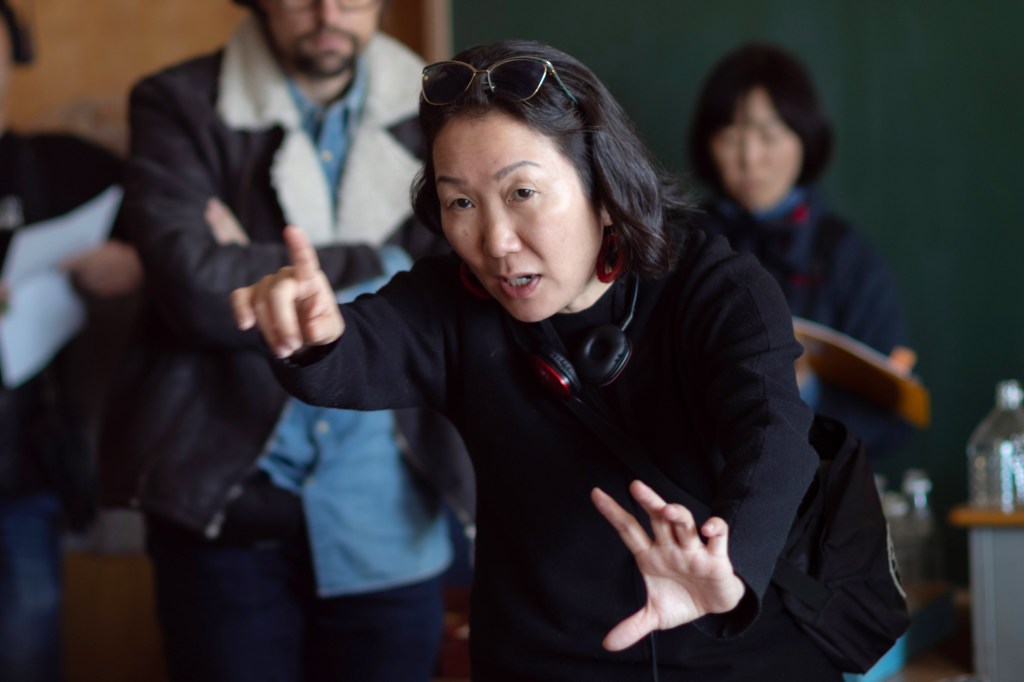
Hikari made her name as a director in 2019 with her first feature, 37 Seconds, which premiered at Berlin. Then she went on to direct episodes of Tokyo Vice and Beef. Now, with her latest film, Rental Family, set in Tokyo, she draws on her heritage and explores themes of exclusion and isolation. In the film, Brendan Fraser stars as struggling American expat Phillip Vandarploeg. While Phillip’s life in Toyko was initially successful, as he acted in lucrative commercials, of late it has palled, turning into loneliness, ennui and a stalled career. But when Phillip lands a job pretending to be a family member of a paying client, his life is radically changed. Hikari reveals how she landed on the film’s subject and Fraser’s dedication to understanding life in Tokyo.
DEADLINE: When did you decide on the idea for Rental Family? I know your co-writer Stephen Blahut was looking for jobs in Tokyo and stumbled across a rental family gig. But when did it become, “I’m going to write a screenplay about this”?
HIKARI: It’s funny because when he told me about it, it was just kind of instinctive. I was like, “Oh, wow. There’s a story. We should make a movie about it.” It was just literally that instant, the inspiration. I always listen to my gut. That’s how I guide my life. So when I felt it, I was like, that has to be a story. I know there’s got to be a story. In Japan, we always had renting a girlfriend or renting older men to give you wise advice, or even renting the lap for a cuddling service.

Mari Yamamoto and Brendan Fraser in ‘Rental Family.’
James Lisle/Searchlight Pictures/Everett Collection
DEADLINE: So you knew about that before?
HIKARI: Yeah. That’s been around for years. When I was 19, I had a job in a department store [in Japan]. The job was specifically called “mannequin”, meaning you get hired by all the departments, so I would go up to the seventh floor — the department stores are usually 13 floors, and then every department, every floor, has different stuff. On the seventh floor, they’ll be like, “OK, tomorrow you’re going to go sell shoes, but the shoes are specifically for bunions.” So, I’d go up to the seventh floor and then pretend to be the professional of bunioned feet. I’d just go in and in the morning, I learn everything about it, and by 10 a.m. I know everything. Then the following day, I’ll go to the basement and sell salmon roe from Hokkaido, or whatever, pork cutlets, and I have to know about this pig that they’re frying etc. So, I had that job and I was like, “What’s the difference? We’re pretending.” But then for me, my question was more like why this exists, why people use these services? What’s happening socially? Why, why, why? What kind of people? Are they just lonely people, or they just want to see what is it like? So that was really us digging into why this business exists.
With the rental family, this one gentleman, he was on his deathbed. This is from an interview [I read]. He didn’t have a good relationship with his daughter. He tried to reach out to her and she never responded. So before he died, he hired somebody who looks like her. She walks in and says, “I’m so sorry dad. What happened was terrible. Just please forgive me,” or maybe he was apologizing to her that he wasn’t a good father. Then I think at the end, she agreed to just watch him die, to just be there for him. But this job, watching people die so the older people don’t feel lonely, it exists in America, too. I just got on an airplane coming back [to the U.S.], and I met this gentleman. He was so kind. He told me his wife volunteers to spend time with elders who have a month left. And so, when they’re ready to go, she just goes there and hold their hands until they die. So similar jobs exist. Then even in America, in Western culture, there’s always escort services.
DEADLINE: Yes and there’s the girlfriend experience or the boyfriend experience. Why do we accept that, but we’re surprised that people want other things? It’s interesting.
HIKARI: Yeah. Increasingly, people are becoming lonely. I think five, six years ago, or even 10 years ago, when social media started blooming… People just have to be on it, people were comparing themselves, so there’s a lot of depression happening even in the younger-aged kids that they’re like, “This person has this. Why don’t I have it?”
There’s a lot of suicide because people feel like they’re less than all these people on the internet. And one of my best friends that I knew forever, from college, he committed suicide a year ago. Then a year before that, my other best friend from college, he also committed suicide. They’re both white males in their 40s. It’s frightening. It’s getting very weird.
You can look for all these other parts, you can search for everything, but the answer is always within us.
Hikari
DEADLINE: In some ways, I think this film is a really important PSA. I love the message at the end where Phillip sees himself in the mirror, because really the thing you learn as you get older is that you are with you always.
HIKARI: Yeah. You can look for all these other parts, you can search for everything, but the answer is always within us, like you said. For example, I wanted to put that in for no religious reason whatsoever. It was just more reflecting that the divine being is us. You think you’re putting your hands together and you thought that there is god, but it’s actually god is within you, right?
DEADLINE: That’s absolutely what I got from that scene.
HIKARI: And the power to do anything you want.
DEADLINE: Men specifically are struggling to connect in the film. There’s also the boss character (Takehiro Hira) that we find out is so lonely too. Do you think that co-writing this with Stephen helped you weave in that male perspective, or because of what happened with your friends, you already had that idea in your mind?
HIKARI: No, I think it really helped, because he is a white male in his 40s, or 30s when he started writing. We were together as partners for many years and now were a family. We’re so close that it’s becoming brother and sister, it’s awesome. We still create together, which is great. Stephen’s been to Japan many times with me. He even shot 37 Seconds.
‘Rental Family’
James Lisle/Searchlight Pictures/Everett Collection
DEADLINE: He was your DP on that film.
HIKARI: Yeah. I think, in some way, when he goes to Japan, he felt loneliness. He loves Japan and he loves the culture. He loves the custom of it, too.
DEADLINE: When you studied in Utah, you’ve said that you felt like the most excluded, isolated person.
HIKARI: Yes. Now I feel much more grounded. But for so many years… I think as I got older and I experienced more in life, and especially even work too, now I just don’t give a f*ck. This is me.
DEADLINE: Tell me about the experience of shooting with Brendan in Japan. What that was like to work with him in that context and have him be there among the Japanese cast?
HIKARI: He loves Japan, I think. That was a very important thing. Some people don’t like being in Japan, or I feel like American people, it’s easier for them to go to Europe, but it’s a little bit difficult to go to the East. But, fortunately, he went to Japan many times before and he really loved it. Even six months before we met, he showed me a picture. He’s like, “Yeah, I just went to Japan. I was there for three weeks. It was such a great time.” I was like, “Oh, this is perfect, because I would have to keep you there for a good three months!” So he just loved it. He loved shabu-shabu, which is a hotpot. I think shabu-shabu is his favorite thing ever. We also cooked at his house, too. But he would also go to shabu-shabu with his family.
Read the digital edition of Deadline’s Oscar Preview magazine here.
He would also take a train just to go, what does it look like? I asked him, “If you don’t mind, before we start shooting, just hop on the train and see what it feels like to be in this tiny mashed pit.” And so, he did that. He walked around. If he got lost, instead of checking the iPhone, he would ask people, “How do I get to from A to B?” And the people would tell him where to go. So he really did that as if he were to live in Japan for seven or 10 years, as Phillip had done. It was really helpful.
He was so respectful. He would just say good morning to every single person who he could meet on set, and he did that every single day. To me, that said something about who he is.
DEADLINE: How were his Japanese language skills?
HIKARI: I asked him if he would like to take a lesson and at the same time he was like, “I want to take a lesson!” So, we set up him with a Japanese teacher in New York, and they did online meetings and sometimes in person for about three, four months. Especially because the SAG and the writers strikes happened, so we used that time for him to practice Japanese. When we were on set, we had a dialect coach so that when we had long lines, she could teach him every time, every morning, when he came in. So at least he felt comfortable.