
This year, Revolution turns 20. Two decades of chronicling watches, people and ideas have given us a front-row seat to a remarkable story: how an age-old craft has both preserved its soul and reinvented itself for the 21st century. To celebrate, we’ve chosen over 100 names and milestones that, for us, define the era so far. From leaders to watches, you can see the whole list here.
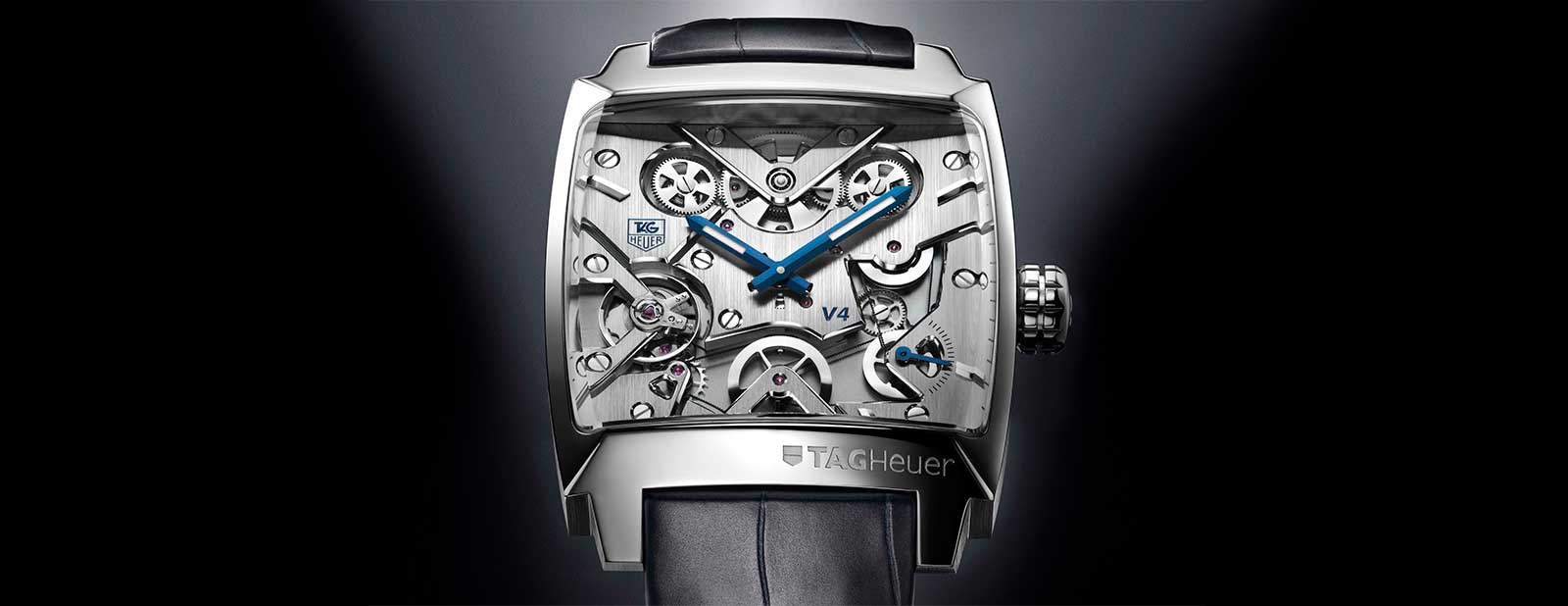
At the 2004 Baselworld fair, TAG Heuer unveiled the Monaco V4 as a concept, before bringing it into production in 2009. Departing from traditional gear- driven mechanisms, it introduced a belt-driven movement that used five notched belts with tension regulated by two turnbuckles. Power came from a linear tungsten mass that moved along a track to wind four barrels, arranged in a V-shape and inclined at 13 degrees.
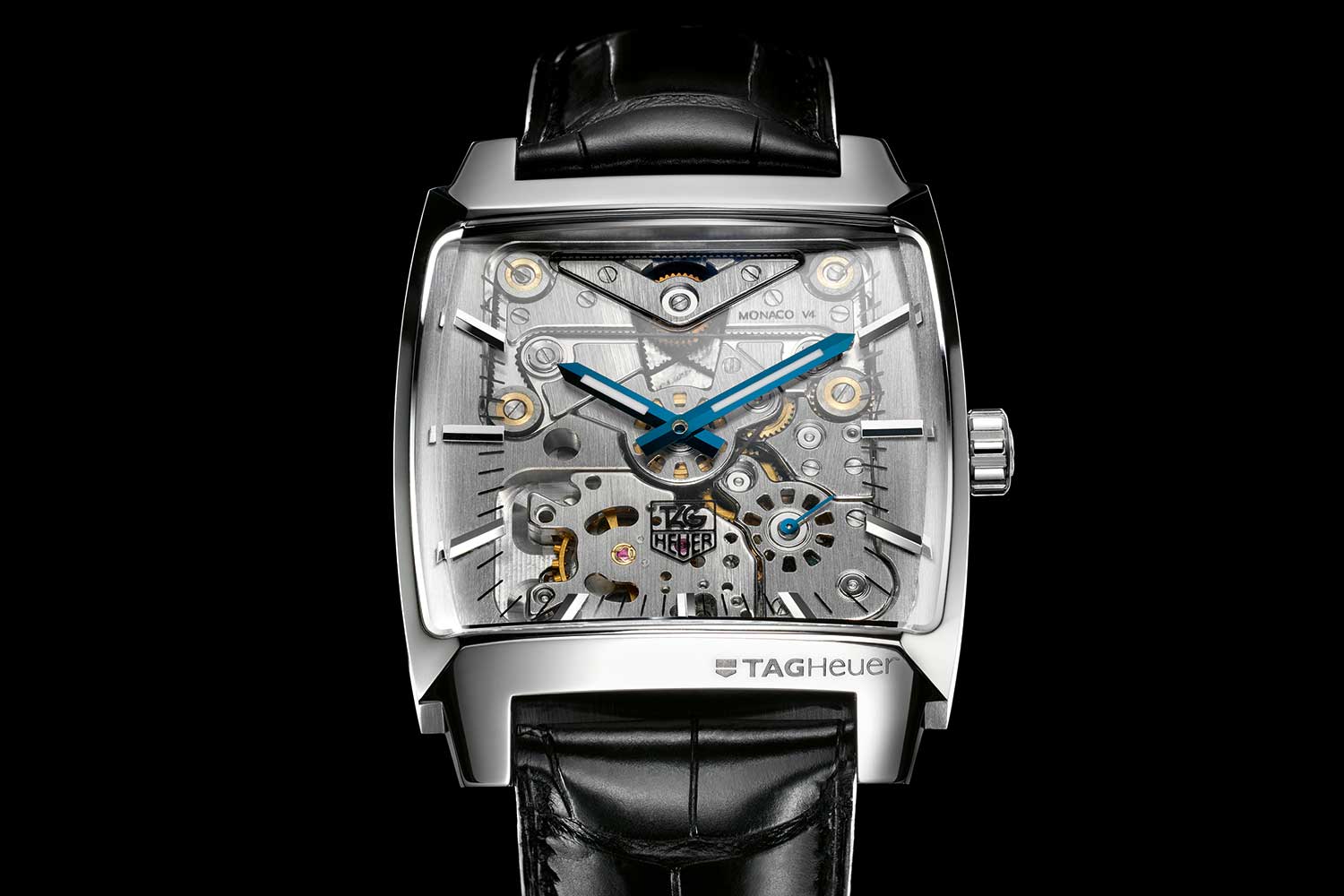
TAG Heuer Monaco V4, 2004
The V4 owes its movement design to Jean-François Ruchonnet, a Swiss watchmaker and engineer who envisioned a layout inspired by racecar engines. This approach not only reduces friction but also allows energy to flow more efficiently, creating a visually striking and mechanically innovative architecture. The Monaco’s square case provided ample room for an open-worked dial, offering a glimpse into the intricate mechanics. By embracing unconventional engineering solutions, TAG Heuer demonstrated a commitment to innovation and a willingness to challenge established norms, earning the Monaco V4 a place among the most technically daring haute horlogerie pieces of the 21st century. By the time TAG Heuer released the 950-piece platinum edition, it was timed to celebrate the brand’s 150th anniversary, just ahead of the Monaco’s 50-year milestone.
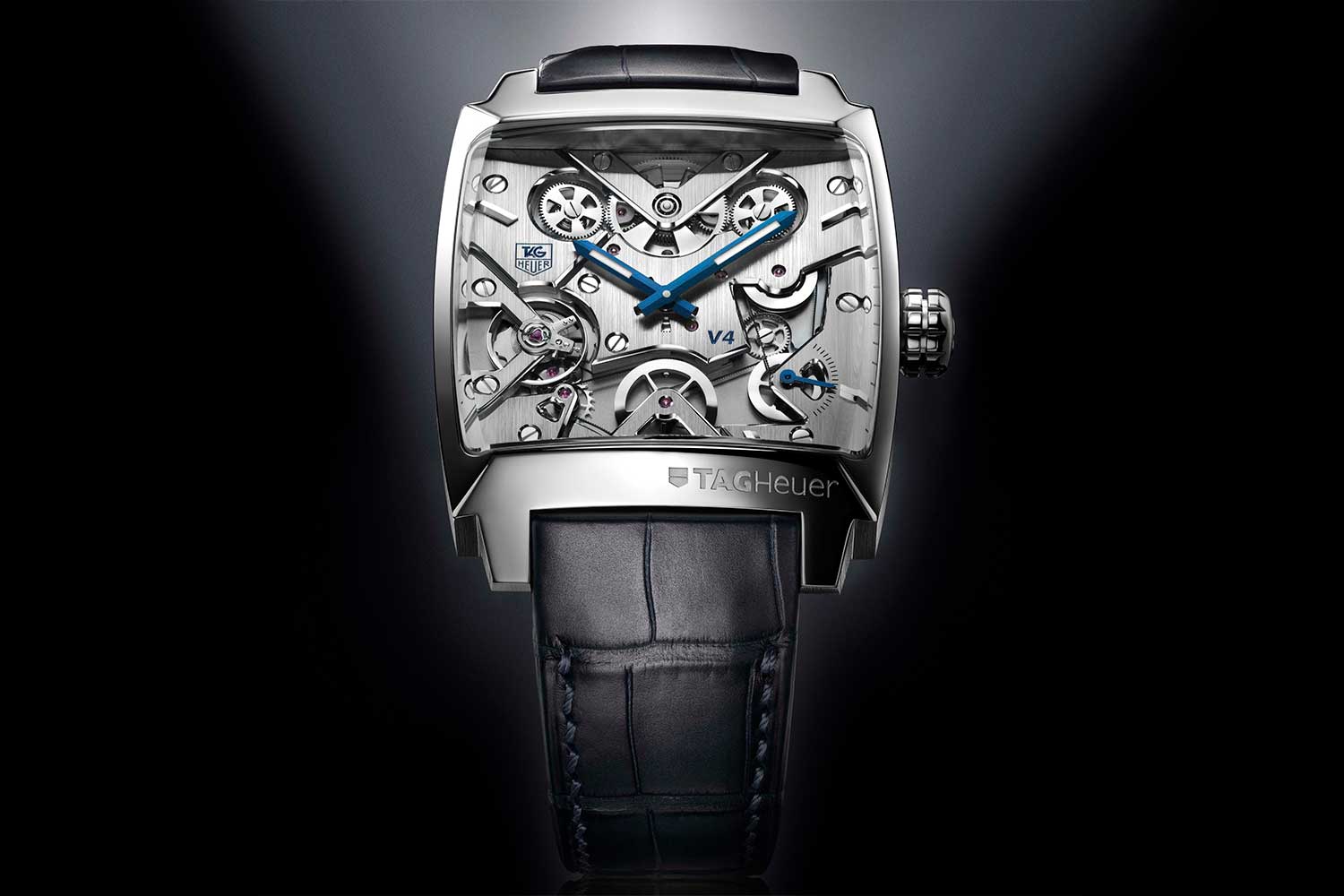
TAG Heuer Monaco V4 in platinum for celebration of 150th anniversary
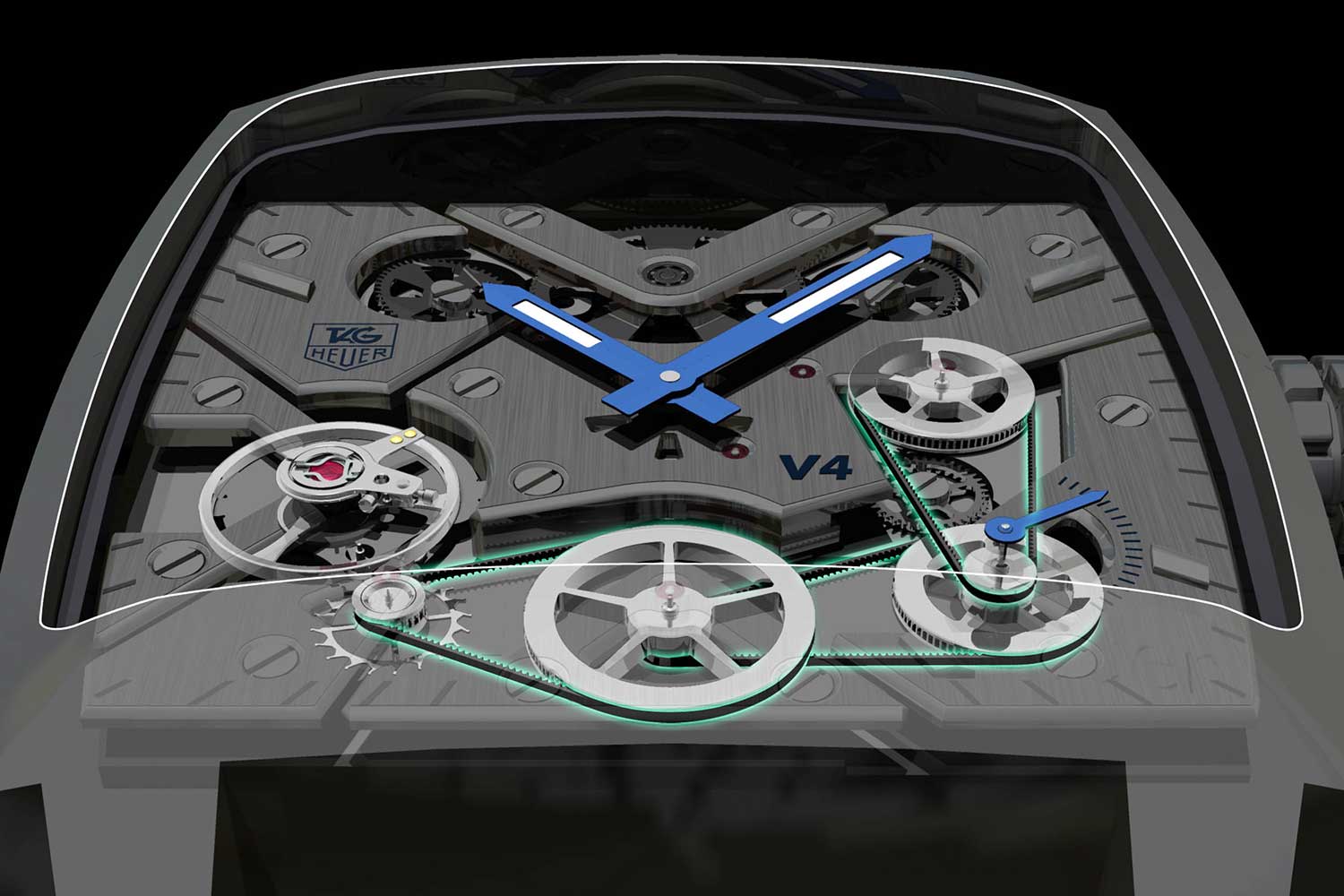
The watch features 4 barrels mounted on ball bearings, pinions and belts: a world first. The watch reveals its movement through its anti-reflective sapphire glass. It displays intricate design features (tungsten ingot, linear mass, two pairs of barrels, mounted in parallel and connected by belts)
Its innovation was not for naught. Initially seen as radical, it evolved into several iterations, including titanium, platinum and tourbillon versions, the latter in 2014 when the brand introduced the Monaco V4 Tourbillon. The last V4 models appeared in the mid-2010s; discontinued since, its complexity and high production costs likely explain why we don’t see it today. Yet its experimental spirit lives on, and notably within the Monaco line. The square-cased icon has become TAG Heuer’s unsaid but seemingly preferred canvas for mechanical innovation. Its broad, angular case provides the real estate to house unconventional movements and complex displays, while its association with motorsport adds cultural weight to any technical experiment. That’s why the Monaco seemingly remains the brand’s playground, as seen most recently in the Monaco Split-Seconds Chronograph and other avant-garde editions.
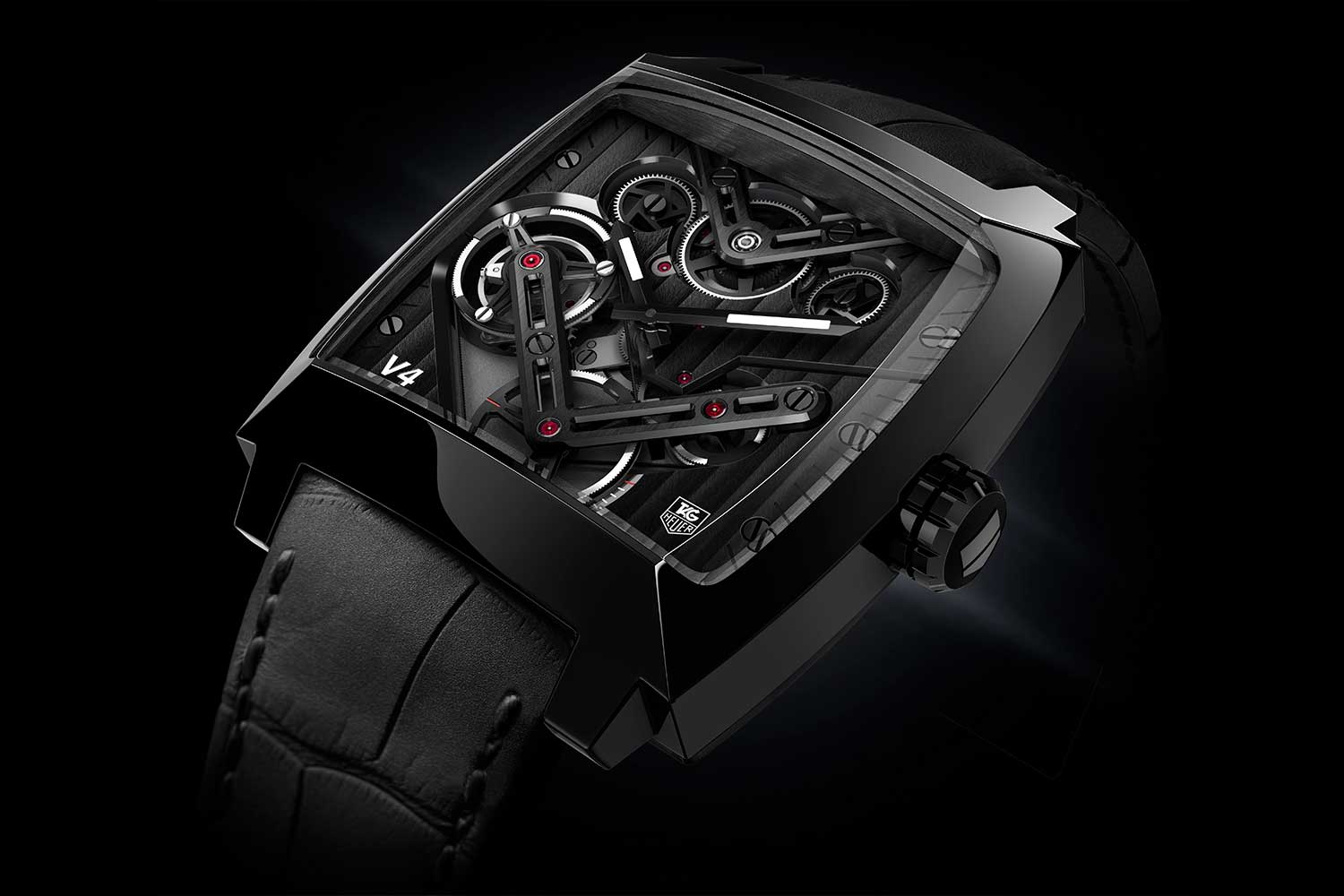
TAG Heuer Monaco V4 Tourbillon, 2014
Tech Specs: TAG Heuer Monaco V4
Movement: Self-winding belt-driven transmission Caliber V; 52-hour power reserve
Functions: Hours and minutes
Case: 40.5mm × 40.5mm × 17mm; platinum; water resistant to 50m
Dial: Skeletonized
Strap: Alligator leather; platinum folding clasp