
The world is gearing up for the generative AI boom, for better and worse. Scientists are warning that AI will create a massive, unsustainable energy demand. The data centers used to train and run these AI systems consume a huge amount of power, and this is expected to skyrocket in the coming years.
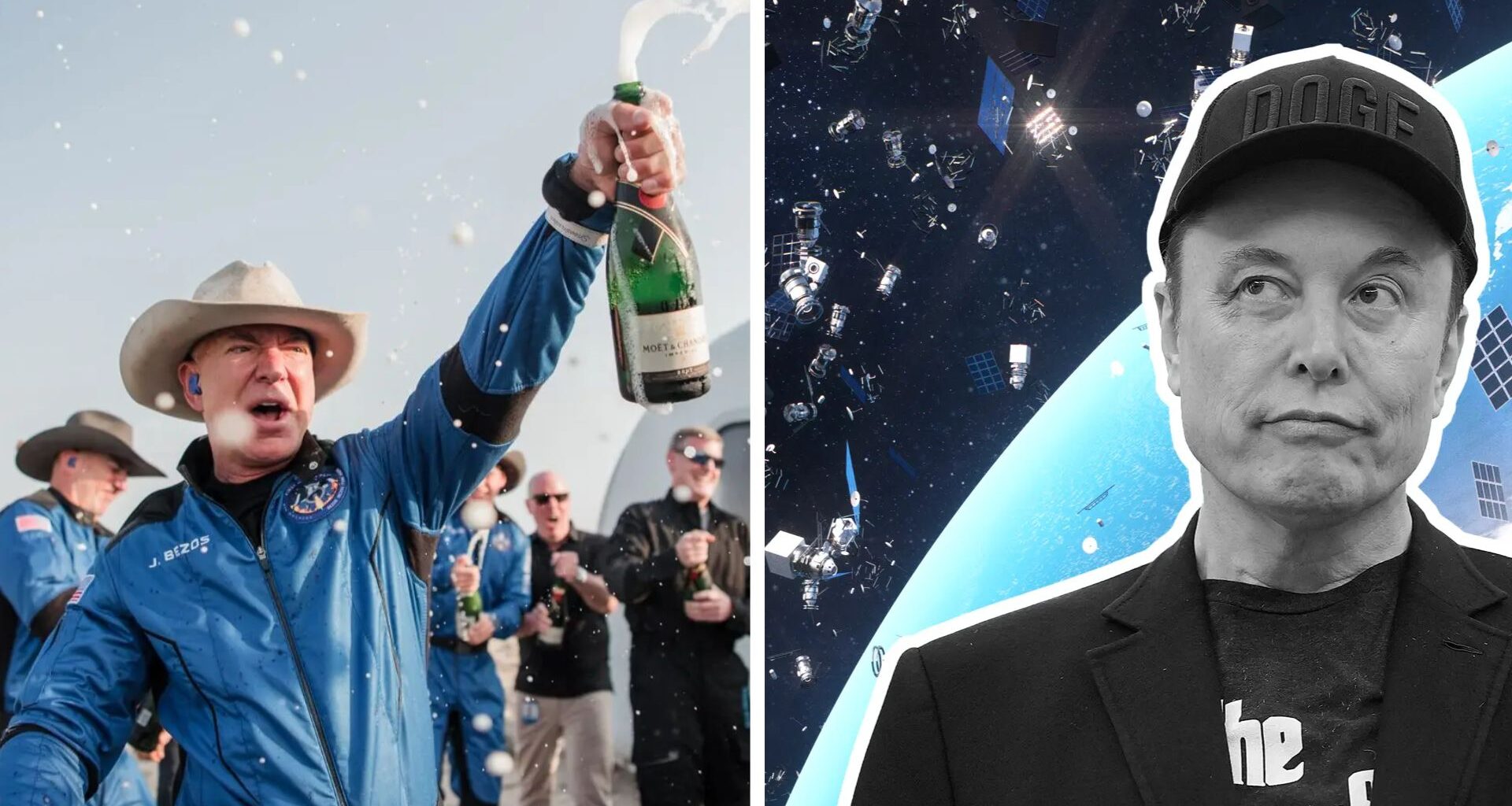
In a bid to overcome this problem, several firms have announced plans to develop data centers in space. Last month, Elon Musk announced that SpaceX would join the race. Now, The Wall Street Journal reports that Jeff Bezos’ Blue Origin also aims to send its own data centers to Earth’s orbit.
Space data centers can overcome AI’s power problem
Earth’s orbit is already very congested, and astronomers have warned that we are on the verge of a destructive cascading effect known as Kessler Syndrome. And yet, sending data centers into orbit might be necessary—if the ongoing AI boom doesn’t slow down.
The world seems to be going full steam ahead with AI, and it’s showing no signs of slowing down—despite warnings of an AI bubble. The energy required to power AI data centers could become a real problem. As a Goldman Sachs report from earlier this year noted, AI-driven energy demand could rise by 165 percent by 2030.
The solution could come in the form of orbital data centers. In theory, operating data centers in space could drastically reduce energy costs and environmental impact. These data centers would leverage the cold temperatures of space to remove the need for energy-intensive cooling systems on Earth. They would also utilize 24/7 solar energy in space.
And several big names have gotten behind the idea. Earlier this year, former Google CEO Eric Schmidt revealed that he acquired space startup Relativity Space to develop orbital data centers. In October, SpaceX CEO Elon Musk said his private space company would harness its Starlink infrastructure to build data centers in space.
“Simply scaling up Starlink V3 satellites, which have high-speed laser links, would work,” Musk wrote on social media platform X. “SpaceX will be doing this.”
Now, Jeff Bezos’ space firm, Blue Origin, has also joined the race. According to a Wall Street Journal report, the company has been secretly working on the technology required for orbital data centers for over a year.
Gigawatt-scale orbital data centers within 10-20 years
The new development is in keeping with the vision of Amazon and Blue Origin founder Jeff Bezos for moving much of Earth’s industry and infrastructure off-world. In October, Reuters reports that Bezos predicted gigawatt-scale data centers would be built in space within the next 10 to 20 years.
“We will be able to beat the cost of terrestrial data centers in space in the next couple of decades,” Bezos said. “These giant training clusters … will be better built in space, because we have solar power there, 24/7. There are no clouds and no rain, no weather.”
This week, space-based solar power company Aetherflux also announced it aimed to develop data centers for space, with its ‘Galactic Brain’ project. The firm’s CEO, Baiju Bhatt, claimed that its sunlight-harvesting technology will “remove the limits faced by Earth-based data centers.”
With SpaceX and Blue Origin now in the mix, Elon Musk and Jeff Bezos are competing across several fronts. Bezos also recently founded and appointed himself co-CEO of a new AI startup called Project Prometheus. Early next year, Blue Origin aims to land its Mk1 lunar lander on the Moon. If all goes to plan, NASA could consider the spacecraft as a viable alternative to SpaceX’s delayed Starship lander for its upcoming Artemis III mission.