
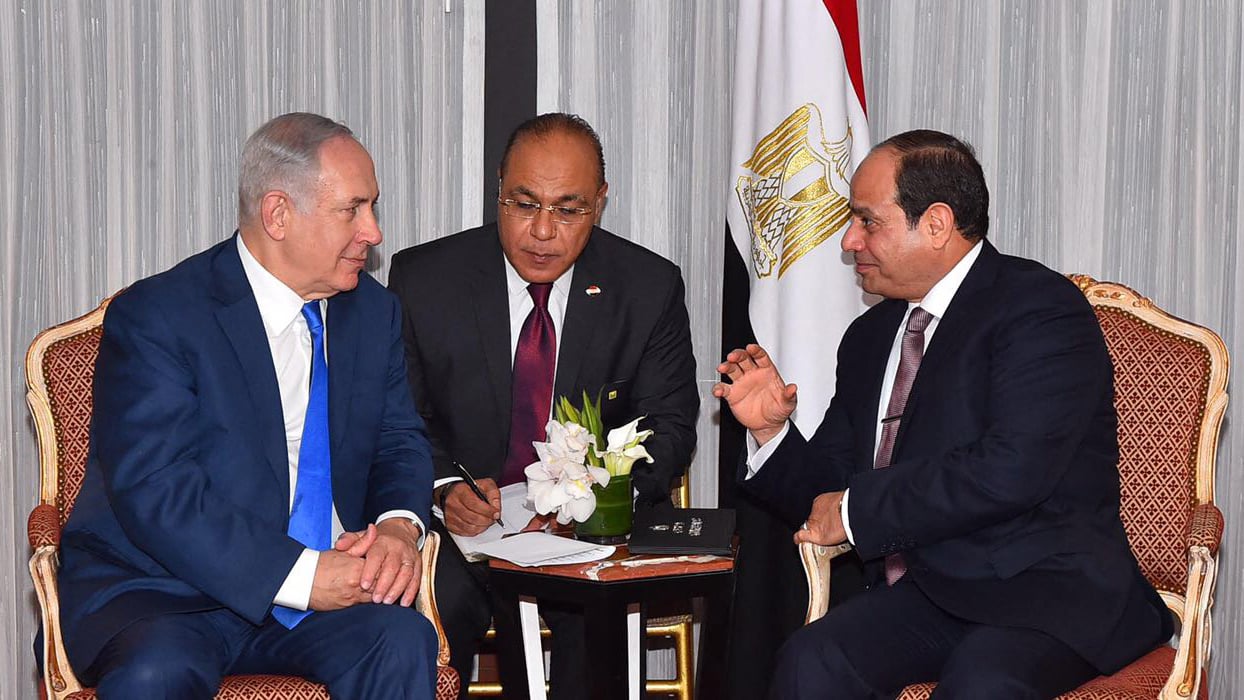
Egyptian President Abdel-Fattah el-Sissi currently has no plans to meet with Prime Minister Benjamin Netanyahu, a government official familiar with the matter told The Times of Israel, amid reports that the Israeli premier is actively seeking such a sit-down.
Egypt has fumed at Israel for a host of issues in recent months that remain unresolved, accordingly decreasing the chances that Sissi will meet Netanyahu any time soon, despite interest in Jerusalem and Washington in making such a summit happen, the official said.
Throughout the Gaza war, sparked by Hamas’s October 7 onslaught, Cairo warned Israel against military operations that would push Palestinians southwards in the Strip toward Egypt’s Sinai Peninsula, viewing such a possibility as a red line and a national security threat.
Cairo still fears that Israel hasn’t ruled out the effort amid plans to focus the first reconstruction projects in the southern Gaza city of Rafah, along the Egyptian border, the official said.
Tensions have also flared over the Rafah Crossing. Israel has allowed the crossing to open only for Palestinians exiting Gaza, a policy Egyptian Foreign Minister Badr Abdelatty said last week Cairo views as an attempt to thin the enclave’s population — an outcome Egypt has said it will not permit.
Get The Times of Israel’s Daily Edition
by email and never miss our top stories
By signing up, you agree to the terms
Strains deepened further in October, when Israeli Energy Minister Eli Cohen pulled out of a planned signing ceremony for a lucrative natural gas deal with Egypt, arguing the terms were unfair to Israel — a move that angered both Cairo and Washington.
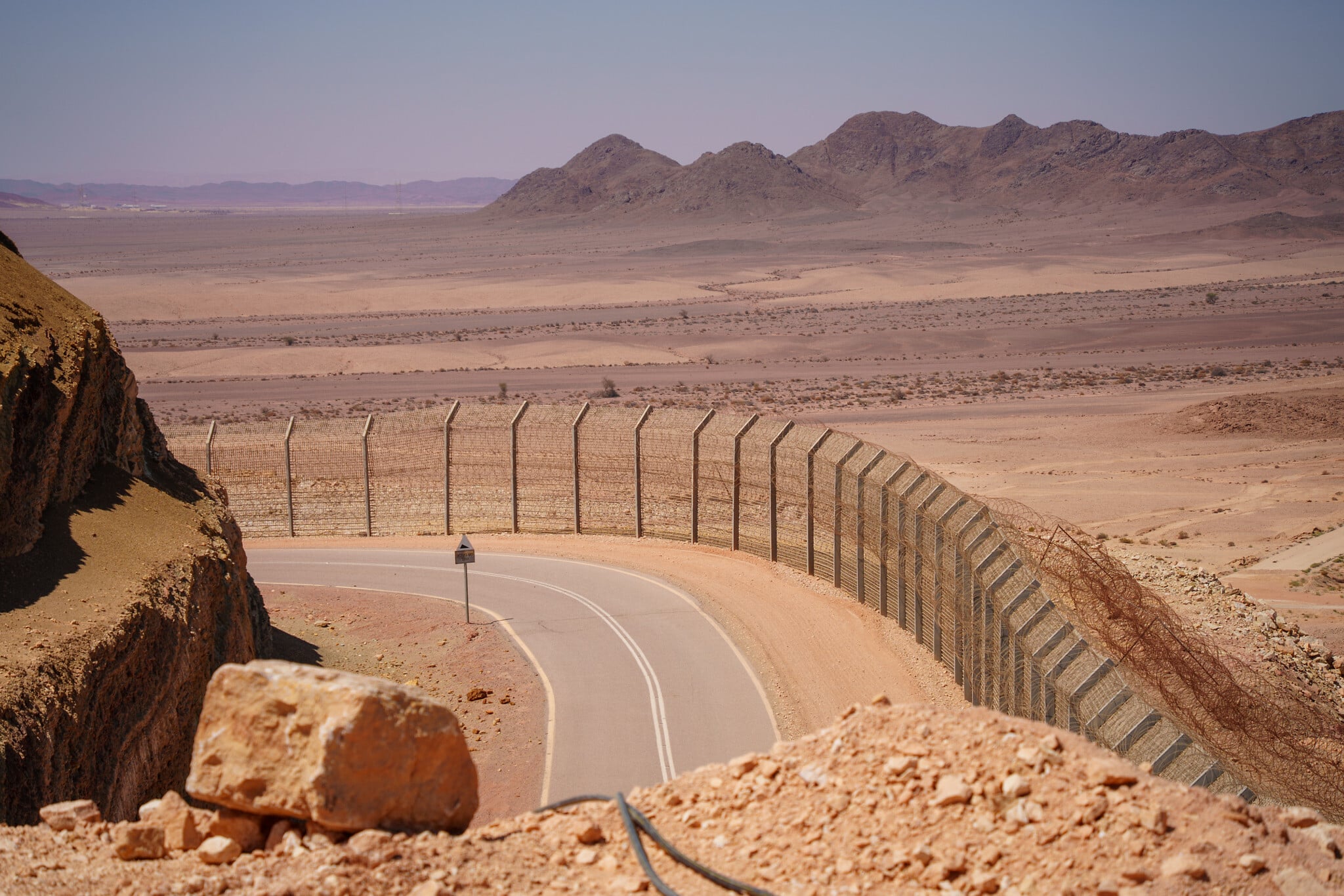
View of the Israeli-Egyptian border. September 9, 2025 (Yaniv Nadav/FLASH90)
Netanyahu, Israel’s Ambassador to the US Yechiel Leiter and other Israeli officials have also repeatedly accused Egypt of amassing troops in the Sinai Peninsula, in what Jerusalem claims is a violation of their 1979 peace treaty. Egypt has dismissed the allegations outright.
Netanyahu and Sissi have long shared a strained relationship and have not spoken since before the war.
While Netanyahu has sought in recent months to repair ties, Sissi has shown little interest in engaging with the Israeli leader absent what the official described as fundamental changes in Israel’s conduct toward Egypt.
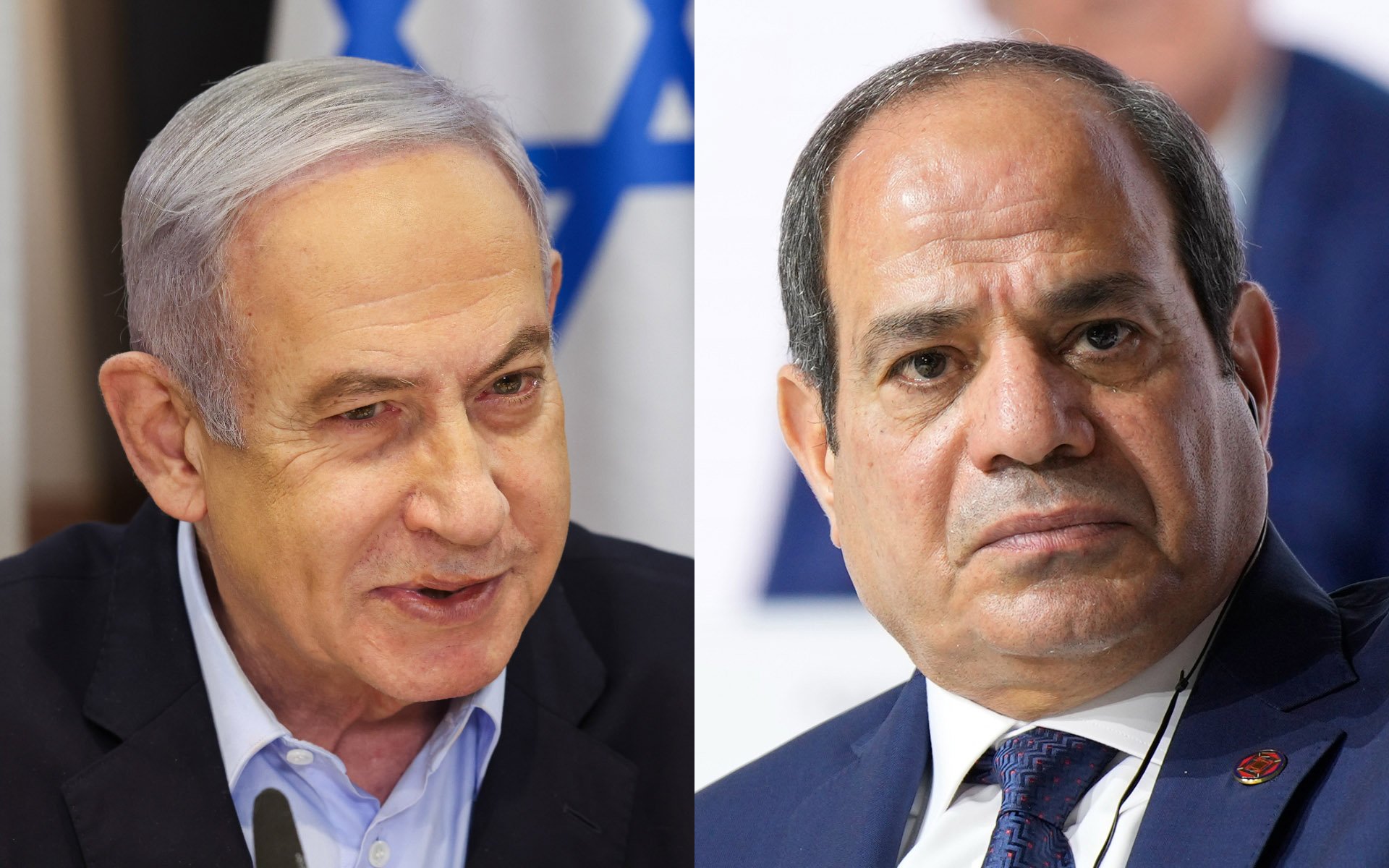
Left: Israeli Prime Minister Benjamin Netanyahu in Tel Aviv, January 7, 2024; Right: Egyptian President Abdel Fattah el-Sissi in Paris, June 23, 2023 (Ronen Zvulun/via AP; /Lewis Joly/AP)
The official added that Sissi is also wary of being used as a “prop” by Netanyahu in an Israeli election year.
The comments came as Netanyahu was reportedly working to arrange a visit to Cairo, where he hoped to meet Sissi and sign a multibillion-dollar agreement to supply Israeli natural gas to Egypt. Israeli officials have been coordinating the effort with senior US diplomats, according to a senior American diplomatic source familiar with the preparations.
Netanyahu has publicly visited Egypt twice in the past, both times under former president Hosni Mubarak, with his last official state visit taking place in January 2011. Other meetings were held secretly.
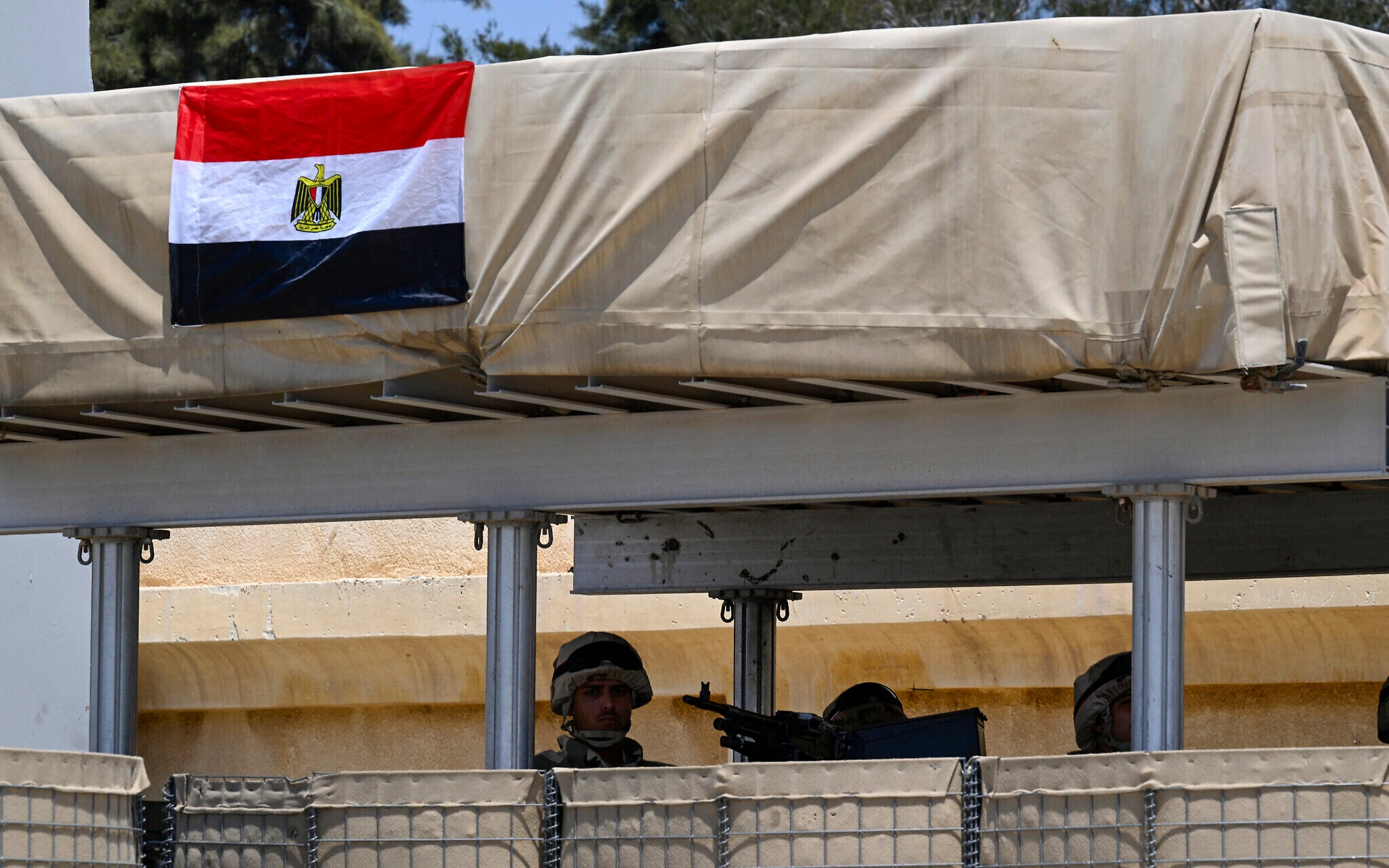
Soldiers at a post on the Egyptian side of the Rafah border crossing with Gaza in Rafah on August 18, 2025 (Khaled DESOUKI / AFP)
Since the Hamas-led October 7, 2023, attack that sparked the Gaza war, diplomatic relations between Israel and Egypt have largely frozen, aside from ongoing security coordination — particularly between intelligence services — focused on hostage-related issues.
Additional disputes have emerged over control of the Rafah Crossing, Egypt’s refusal to accept Gazan refugees, potential Egyptian participation in the planned International Stabilization Force for Gaza, and recent drone-based smuggling attempts from Egypt into Israel.
The proposed gas deal, estimated at $35 billion, carries clear economic benefits for both sides. However, Cohen has warned that large-scale exports could undermine Israel’s domestic energy security and has delayed the agreement pending the resolution of broader security disagreements with Egypt.
Netanyahu, for his part, reportedly views the deal as an opportunity to demonstrate that Israel is strengthening and expanding its peace agreements in the region after the war, and to advance his long-standing vision of using Israel’s natural gas reserves to secure long-term state revenues.
Times of Israel staff contributed to this report.
Watch DocuNation Season 3: The Heart of Israel
when you join the ToI Community
In this season of DocuNation, you can stream four outstanding Israeli documentaries with English subtitles and then join a live online discussion with the filmmakers. The selected films show Israel beyond the conflict: a place of storytellers and musicians, of dreamers, makers, and communities rooted in meaning and trust.

When you watch DocuNation, you’re also supporting Israeli creators at a time when it’s increasingly difficult for them to share their work globally.
To learn more about DocuNation: The Heart of Israel, click here.
Support ToI and get DocuNation
Support ToI and get DocuNation
Already a member? Sign in to stop seeing this
You appreciate our journalism

You clearly find our careful reporting valuable, in a time when facts are often distorted and news coverage often lacks context.
Your support is essential to continue our work. We want to continue delivering the professional journalism you value, even as the demands on our newsroom have grown dramatically since October 7.
So today, please consider joining our reader support group, The Times of Israel Community. For as little as $6 a month you’ll become our partners while enjoying The Times of Israel AD-FREE, as well as accessing exclusive content available only to Times of Israel Community members.
Thank you,
David Horovitz, Founding Editor of The Times of Israel