
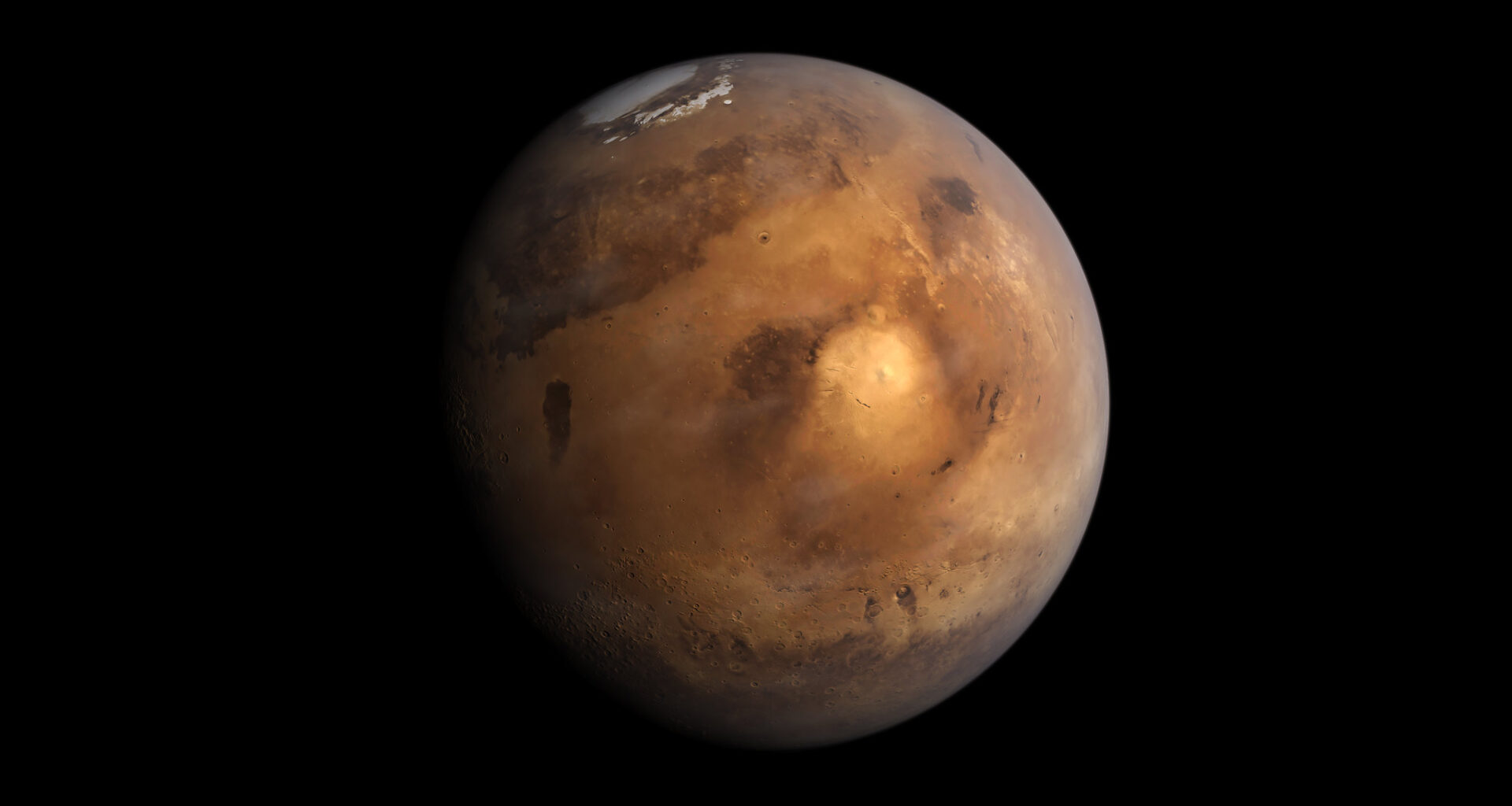
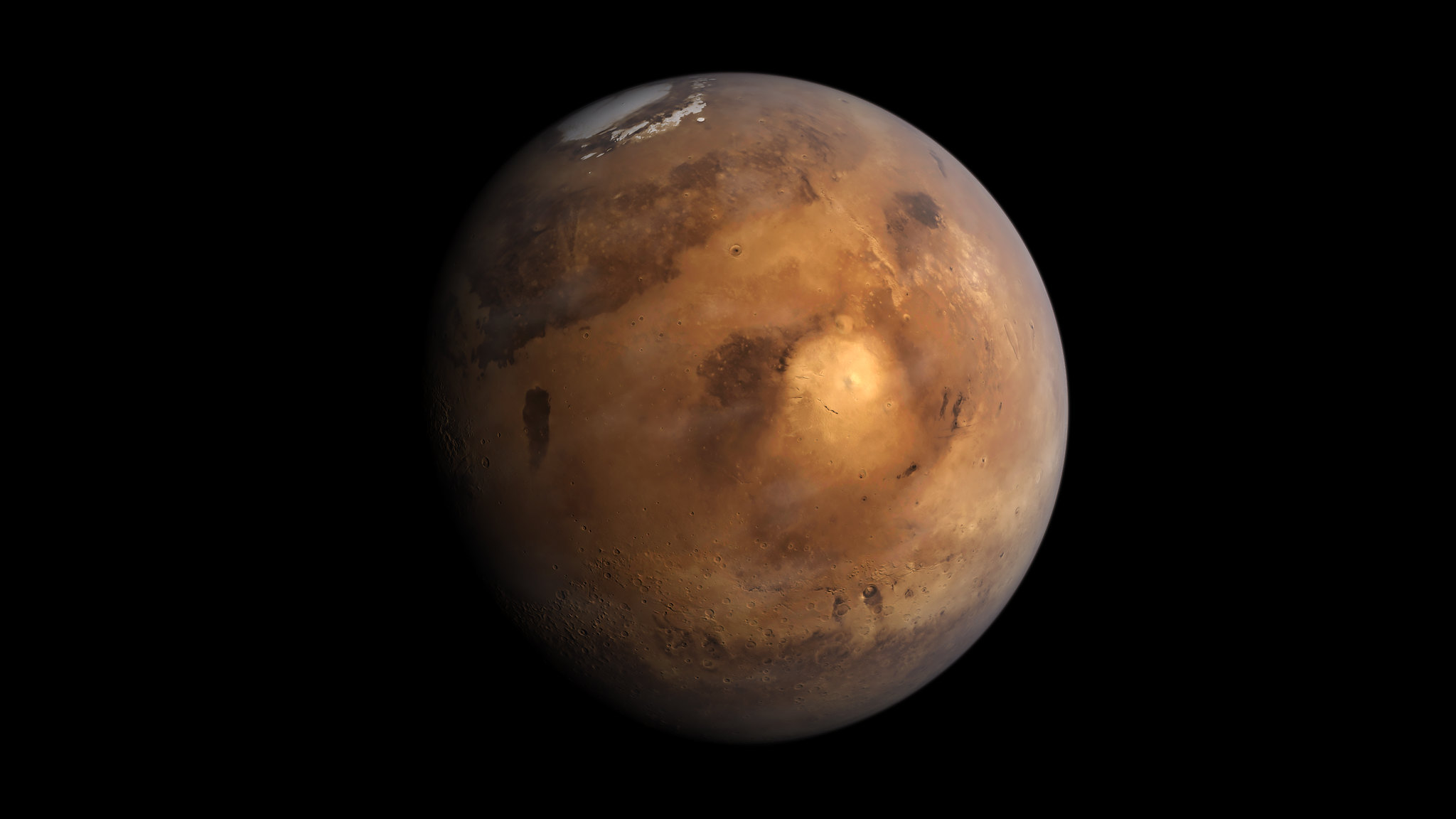
Experts find that time moves faster on Mars by microseconds each day. Credit: Kevin M. Gill / CC BY 2.0 / Flickr
Time passes slightly faster on Mars than it does on Earth, according to new research. While the difference is extremely small — just under half a millisecond per day — it may become crucial for future space missions and interplanetary communication systems.
The study, published in The Astronomical Journal on Dec. 1, was conducted by physicists Neil Ashby and Bijunath Patla at the U.S. National Institute of Standards and Technology. Their findings show that time on Mars runs about 477 microseconds faster per day compared to Earth.
This change in timekeeping isn’t noticeable to the human eye, but it carries potential challenges for future space-based navigation, especially as space agencies and private companies explore the idea of long-term missions to Mars.
Gravity differences make time pass differently
Researchers traced this time variation to differences in gravity and orbital speed between the two planets. Mars has a much weaker gravitational field — about one-fifth that of Earth — and its orbit around the sun is more stretched out. These factors influence how quickly time flows, based on predictions first made by Albert Einstein more than a century ago.
Einstein’s theory suggests that time is affected by both gravity and motion. According to this idea, clocks located in weaker gravity or moving at higher speeds tend to tick faster. This concept, though more commonly discussed in science fiction, plays a real-world role in technology such as satellite-based navigation.
Physicists Ashby and Patla included several key elements in their model, including the effects of Earth, the Moon, and the Sun. They discovered that time on Mars not only passes more quickly but also shifts depending on where Mars is in its orbit. The daily difference in time can change by as much as 226 microseconds, depending on Mars’ position relative to the Sun.
Patla explained that calculating Mars’ timing was more difficult than expected due to the need to account for four separate gravitational influences. The planet’s changing distance from the Sun adds another layer of complexity, creating slight but measurable fluctuations.
Why this matters for future space technology
Although the time gap is tiny, it could cause issues in high-precision systems. For example, modern data networks — such as 5G — rely on timing accuracy down to fractions of a microsecond. Any delay or mismatch in time could disrupt the flow of information between Earth and Mars.
As space exploration continues to evolve, so too will the need for accurate timekeeping beyond Earth. Ashby emphasized that just as GPS on Earth depends on perfectly timed clocks, similar systems will be required on other planets. Without adjusting for the way time shifts on Mars, future technologies may face serious synchronization issues.
The researchers have also studied how time flows on the Moon, where clocks run about 56 microseconds faster than on Earth each day. Their work serves as a foundation for building reliable timing systems in outer space, where even the smallest differences can have a major impact.