
Fans of English novelist Jane Austen rank among the most devoted viewers of Masterpiece, so series producers and some PBS stations are celebrating the 250th anniversary of her birth in ways that reinforce those connections.
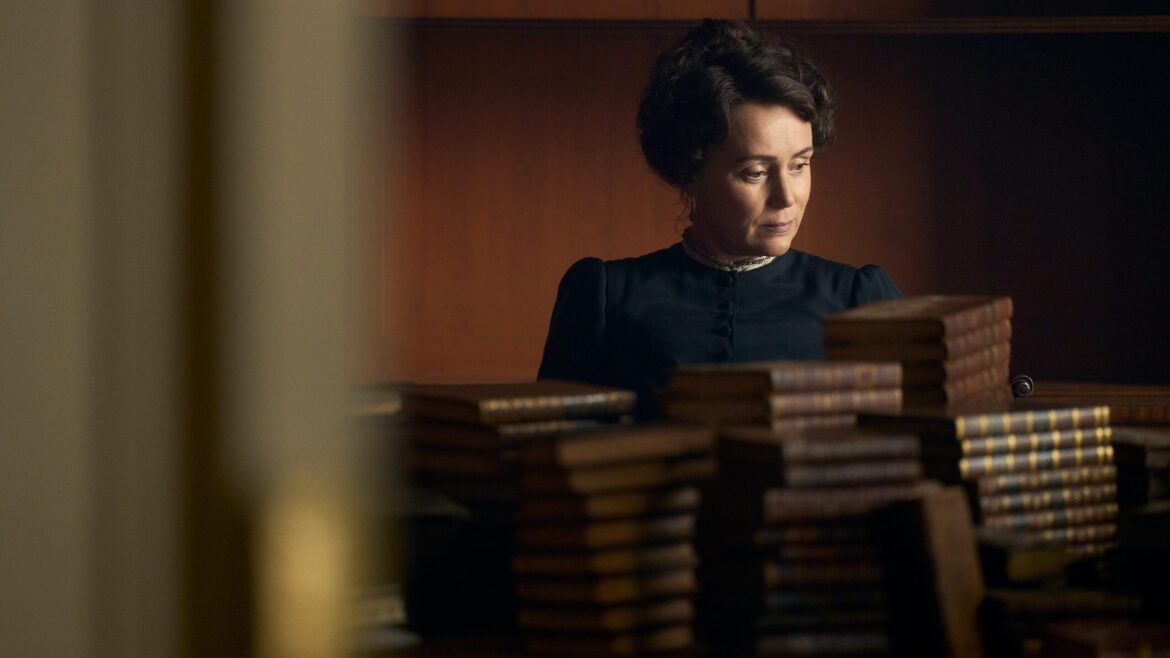
Dec. 16 marks the actual anniversary of Austen’s birth, and in many ways the party started months ago. In May Masterpiece premiered Miss Austen, a four-part adaptation of Gill Hornby’s 2020 book about the relationship between Jane Austen and her sister Cassandra. The Guardian called the drama “masterly TV.” On Tuesday, the date of Austen’s birthday, Masterpiece will release a documentary-style podcast exploring the novelist’s legacy, a compilation video and digital feature.
To Masterpiece Senior Series Producer Erin Delaney, who is interviewed on the podcast, the wisdom and richness found in Austen’s novels has generated “unlimited interest” in her life and work. “Younger people just keep discovering her, want to watch movies, series and even documentaries about the author behind the novels,” she said. “That just helps build the following for Masterpiece and other public media.”
Masterpiece has brought numerous adaptations of Austen’s to PBS over the last 45 years, according to a Masterpiece guide to her novels and their TV adaptations. It notes the 1980 PBS premiere of a BBC dramatization of Pride and Prejudice.
It was A&E that premiered the breakthrough 1995 Pride and Prejudice TV series starring Colin Firth and Jennifer Ehle to U.S. audiences, but Masterpiece’s commitment to the author’s work has had more staying power. Its catalog includes Northanger Abbey, Sense and Sensibility, Emma, Mansfield Park, Persuasion and Sanditon. The dramas are big draws for Masterpiece’s loyal viewers and donors, and they’ve also helped to attract younger audiences, according to Delaney.
Public TV’s adaptations of Austen dramas haven’t just built up the fan base for the novelist,” says Mary Mintz, president of the Jane Austen Society Of North America. They’ve “helped to define PBS and the Masterpiece brand as well.”
Stations have tapped into Austen’s PBS connections with special events for viewers and members. This month WYES in New Orleans and Vegas PBS hosted afternoon tea parties celebrating the author’s 250th birthday.
 Schneweis
For Vegas PBS, which hosts annual teas featuring Masterpiece’s popular costume dramas, the decision to celebrate Austen proved to be a huge draw, said Margaret Ann Schneweis, member services manager. The annual event, held at the Four Seasons Hotel, started years ago as a tie-in to Downton Abbey and then to Sanditon, the BBC–Masterpiece adaptation of Austen’s unfinished novel, she said.
Vegas PBS started promoting the Austen birthday celebration tea in May with a run of spots around the premiere of Miss Austen. Sales of the $199 tickets were so strong that the event team expanded attendance to 280, moved the party into a larger ballroom and sold out again. “We’re talking all ages, too,” says Schneweis. “We’ve got three generations — of grandmothers, mothers and daughters, as well as great-grandpas, grandpas, husbands.”
The three-hour event combined community engagement and fundraising, including a raffle contest. The goal was to raise $50,000, which is more than Vegas PBS typically earns from the annual tea, Schneweis says.
Interviewed before the tea drinkers assembled in the Four Seasons ballroom, Schneweis regarded the event as a success regardless of the fundraising total. “We have 280 people coming … [and] once somebody comes for tea, they’re usually a repeat customer.”
Enduring appeal
During the 2000s, viewership for period dramas declined, but adaptations of Austen’s novels continued to draw audiences for Masterpiece, according to Delaney. “Having Austen out there in the world kept period drama cooking leading into Downton Abbey,” she says. Although Downton is set in a different period, “it brought costume dramas back to the forefront.”
 Delaney
“Both Jane Austen and Downton Abbey reasserted Masterpiece’s place in the world, while showing we don’t follow trends, we follow good drama,” Delaney adds.
In 2008, series producers made Austen a focal point of the relaunch of the Masterpiece brand, according to Delaney. They assembled a package of movie adaptations that included Sense & Sensibility, Northanger Abbey, Persuasion, Mansfield Park, the 1996 TV film of Emma starring Kate Beckinsale and the 1995 Pride & Prejudice TV series. The collection was dubbed “The Complete Jane Austen Season.” At the time Masterpiece projected that the package would attract over 25 million viewers during its broadcast run.
The strategy proved to be a huge rating success, and not just because of the cumulative reach of the dramas. Audience demographics for that period showed a 50% increase in viewing by women aged 18-49 compared to the previous year. “We wanted to show we were young, hip, fresh and remind people that we were still here, Delaney says. “We got a lot of press and visibility that year thanks to Jane Austen and that kicked her up the ladder of recognition, too.”
Jane Austen marathons became a Sunday afternoon staple for station pledge drives while the dramas were in rights. Today, the Masterpiece team constantly receives emails and social media messages from people that have just discovered Austen’s novels and want to stream the dramas on Passport.
To those who foster Austen fandom among readers, the novelist’s popularity shows no signs of abating. The University of North Carolina hosts a Jane Austen Summer Program that sells out its 125 spots every year, says Dr. Inger Brodey, a professor of English and comparative literature, who runs the symposium. The four-day program consists of readings, balls, discussions and other activities around Austen’s work and the period in which she lived.
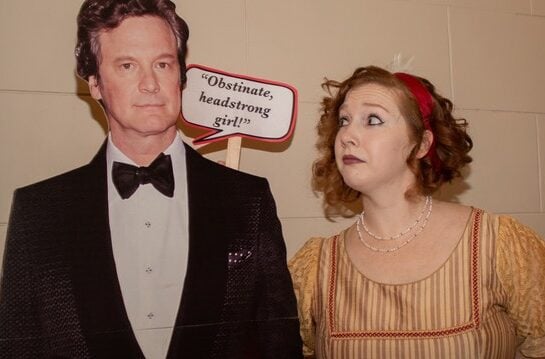 A participant in the University of North Carolina’s 2019 Jane Austen Summer Program poses with a cardboard cutout of actor Colin Firth, the actor who portrayed Mr. Darcy in the BBC’s 1995 adaptation of Pride & Prejudice. (Photo: Kristin Chavez)
Program participants, who have mostly been undergraduates, keep getting younger, Brodey adds. “Our youngest participant this year was 11. Our oldest was 81.” She credits public media’s “incredible influence” for “getting people to read the novels after watching” the adaptations.
Teenagers and young adults have also boosted membership of the Jane Austen Society Of North America, says Mintz of JASN. After the society began offering free memberships to students, more than 1,000 joined over the last two years. The society has also held Austen-inspired essay and short film competitions for high school and college students.
“The data of people joining and participating in our competitions prove there’s interest in Austen from people of younger age,” Mintz adds. The society’s celebrations of Austen’s 250th birthday have broken all their previous records, with nearly 1,000 people attending its annual general meeting in person. “We also had an additional 200 people watching virtually, so we think it was the largest Jane Austen conference ever.”
Historically, Austen’s novels have always appealed to younger readers. Her books were so popular amongst soldiers during World War I — nearly 100 years after her death in 1817 — that Rudyard Kipling was inspired to write the 1924 short story, The Janeites, about servicemen bonding over Austen’s writing in the trenches.
Brodey credits Austen’s mastery of voices and deep understanding of human nature for her enduring appeal. “She satisfies two contradictory impulses,” she said. “This desire for liberation and independence, but at the same time this yearning for domesticity. She makes it seem possible that female characters can have independence and be respected by their future spouses. That magical combination is, I think, extremely appealing to contemporary women.”
At 250 years old and after countless adaptations, movies and TV series about her work and life, Austen is always on Masterpiece’s shortlist of potential projects, Delaney admits.
“There may or may not be some ideas bubbling, which may or may not come to fruition,” she says. “But whenever we’re thinking, ‘Ooh, it’s time for another great period drama,’ we then always ask, ‘What could we do with Jane Austen?’”