
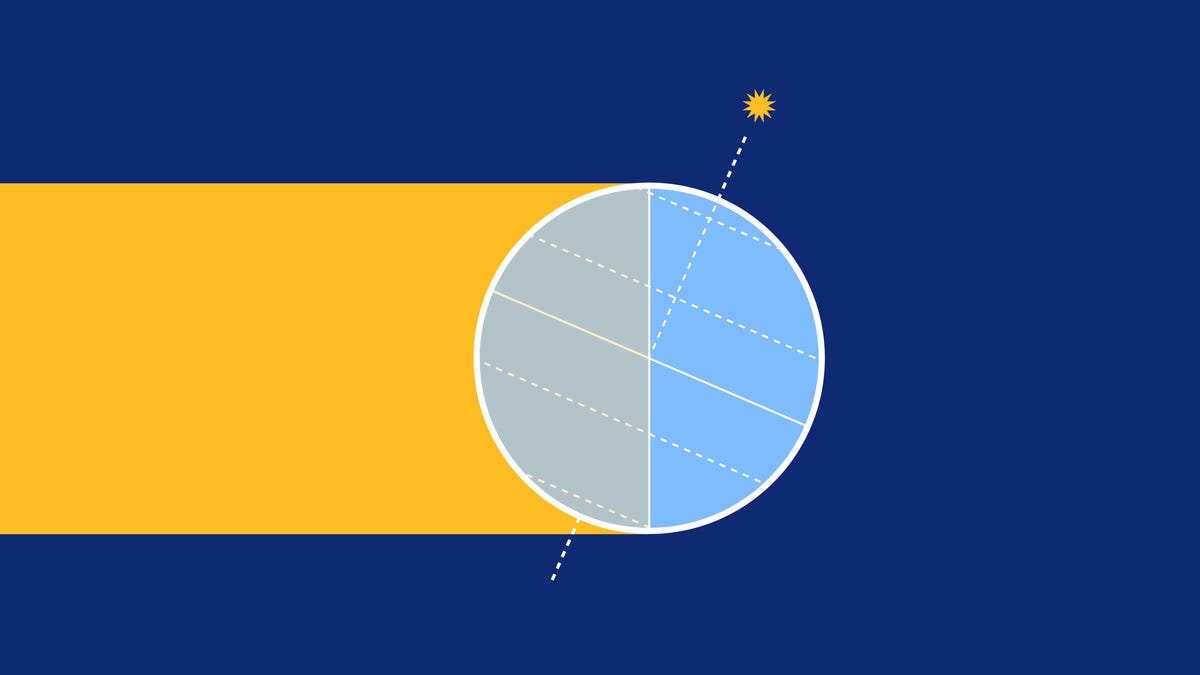
On Sunday, Dec. 21, at exactly 10:03 a.m. EST, the Northern Hemisphere’s astronomical winter officially begins with the winter solstice. That’s the moment when the Northern Hemisphere is tilted furthest from the sun.
The solstice will be the “darkest” day in terms of daylight since it gets the fewest hours of sunlight, according to the National Weather Service. During the winter solstice, the sun’s rays will be directly over the Tropic of Capricorn, a line of latitude that circles the Earth in the Southern Hemisphere. In astrology, the winter solstice marks the first day of the Capricorn season.
The date of the solstice varies from year to year and can fall anywhere between Dec. 20-23, but it most often falls on the 21st.
Unable to view our graphics? Click here to see them.
The Earth’s seasonal movements around the sun
The Earth’s tilted axis causes the seasons. During the Northern Hemisphere’s winter, the land north of the equator is tilted away from the sun, which lowers the amount of the sun’s energy warming the Northern Hemisphere.
Daylight will begin to lengthen after the winter solstice until the summer solstice of 2026, also known as the longest day of the year.
Why is the Earth tilted on its axis? It’s probably the result of collisions with various protoplanets and other massive objects during the formation of the solar system billions of years ago, according to NASA.
What’s the difference between a solstice and an equinox?
Solstices occur in June and December, which mark the beginning of astronomical summer and winter. The summer solstice is when the sun is at its highest point in the sky, while the winter solstice occurs when the sun is at its lowest point in the sky.
Equinoxes – when day and night are roughly equal – occur in March and September and mark the astronomical beginning of autumn and spring in the Northern Hemisphere.
We observe the sun as it travels along its longest and highest course across the southern sky, reaching its northernmost point from Earth’s equator. So, at local solar noon, the shadow you throw will be the shortest of the entire year.
Parts of this story previously published on Dec. 20, 2024
CONTRIBUTING Doyle Rice/USA TODAY, Maria Francis/USA TODAY NETWORK
SOURCE NASA