
It’s been a decade since Microsoft effectively conceded defeat in the smartphone war, yet the ghost of Windows Phone continues to haunt the industry. Parts of the OS are still alive in the form of apps that bring live tiles to Android and launchers that maintain the bold Metro design language of the OS—something that remains unmatched by Android or iOS to this day.
But there is one specific feature that no other phone manufacturer can even think of implementing today. It wasn’t a piece of hardware or smooth OS animations. It was the People Hub. In 2025, your phone is essentially just a launcher for isolated apps. Windows Phone had a different idea: the phone should be about people, not apps.
The Windows Phone hub philosophy
Microsoft’s tile-first design unified apps, people, and content in a way iOS and Android still haven’t replicated
Yadullah Abidi / MakeUseOfCredit: Yadullah Abidi / MakeUseOf
To understand why the People Hub was so revolutionary, you have to remember the tech landscape of 2010. The iPhone had just established the grid of icons paradigm, something that we largely still follow today. If you want to see what your best friend is doing, you open Instagram. To read their thoughts, you open X or Threads. To message them, you open WhatsApp or Messenger. You’re hopping between walled gardens fragmented by corporate interests.
I don’t know if Microsoft foresaw what was going to happen, but someone responsible for Windows Phone looked at the grid and saw a problem: it forced you to do all the work.
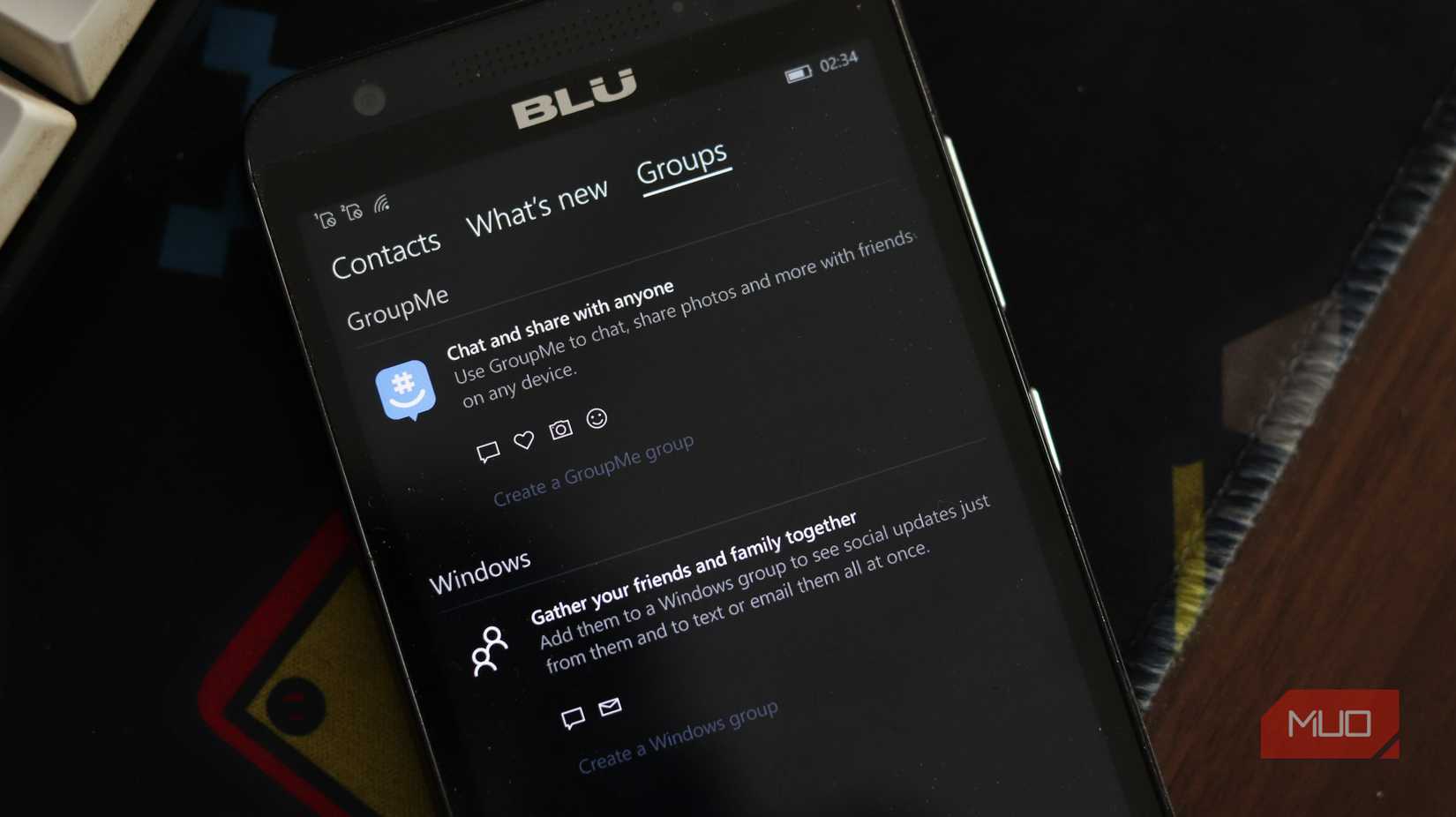
The solution Windows Phone came up with was “Hubs”. Instead of 50 different apps, the OS aggregated content into panoramic views. You had the Music + Video Hub, the Pictures Hub, and the crown jewel, the People Hub.
The People Hub wasn’t just a contacts list. It was a dynamic social dashboard. When you tapped on a contact, you didn’t just see their phone number and email address. You saw their latest tweet, most recent Facebook photo, their LinkedIn status, and Windows Live updates, all brought together into a beautiful, horizontally scrolling typographic interface.
Yadullah Abidi / MakeUseOfCredit: Yadullah Abidi / MakeUseOf
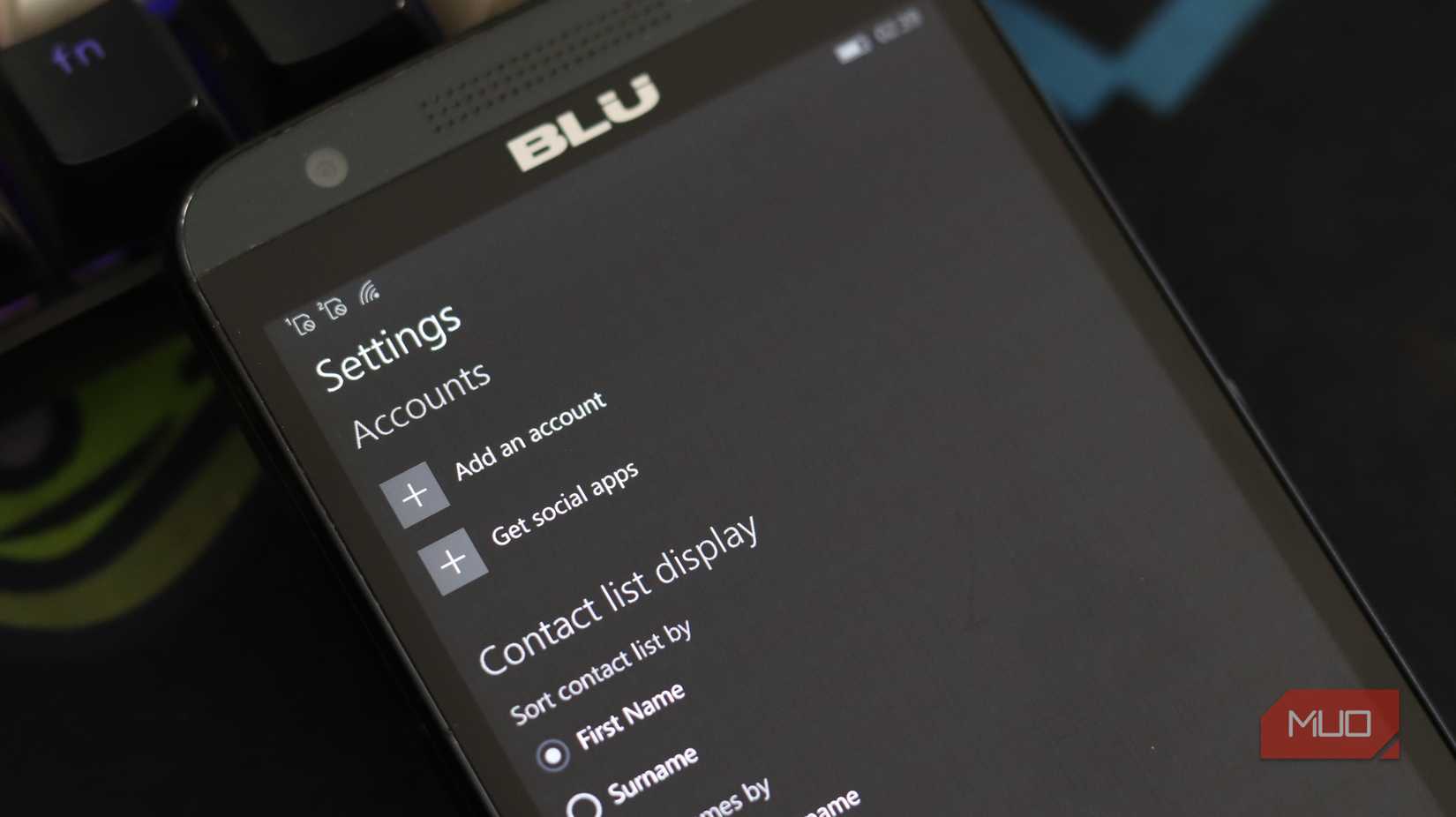
The integration went both ways. Windows Phone also included a “Me” tile that acted as a centralized dashboard for your own digital identity.
If you wanted to post an update, you didn’t need to hunt down the app for a particular social network. You tapped the Me tile, typed your status, and ticked the boxes for the networks you wanted to publish to. One tap, and your post was blasted across your entire social footprint.
This might sound trivial today, but the feeling of it was distinct. You weren’t using Facebook or Twitter (now X). You were simply communicating. The OS abstracted the service layer away, treating social networks as utilities instead of destinations. It felt like you were in control of your digital life rather than being a passive consumer of algorithmic feeds.
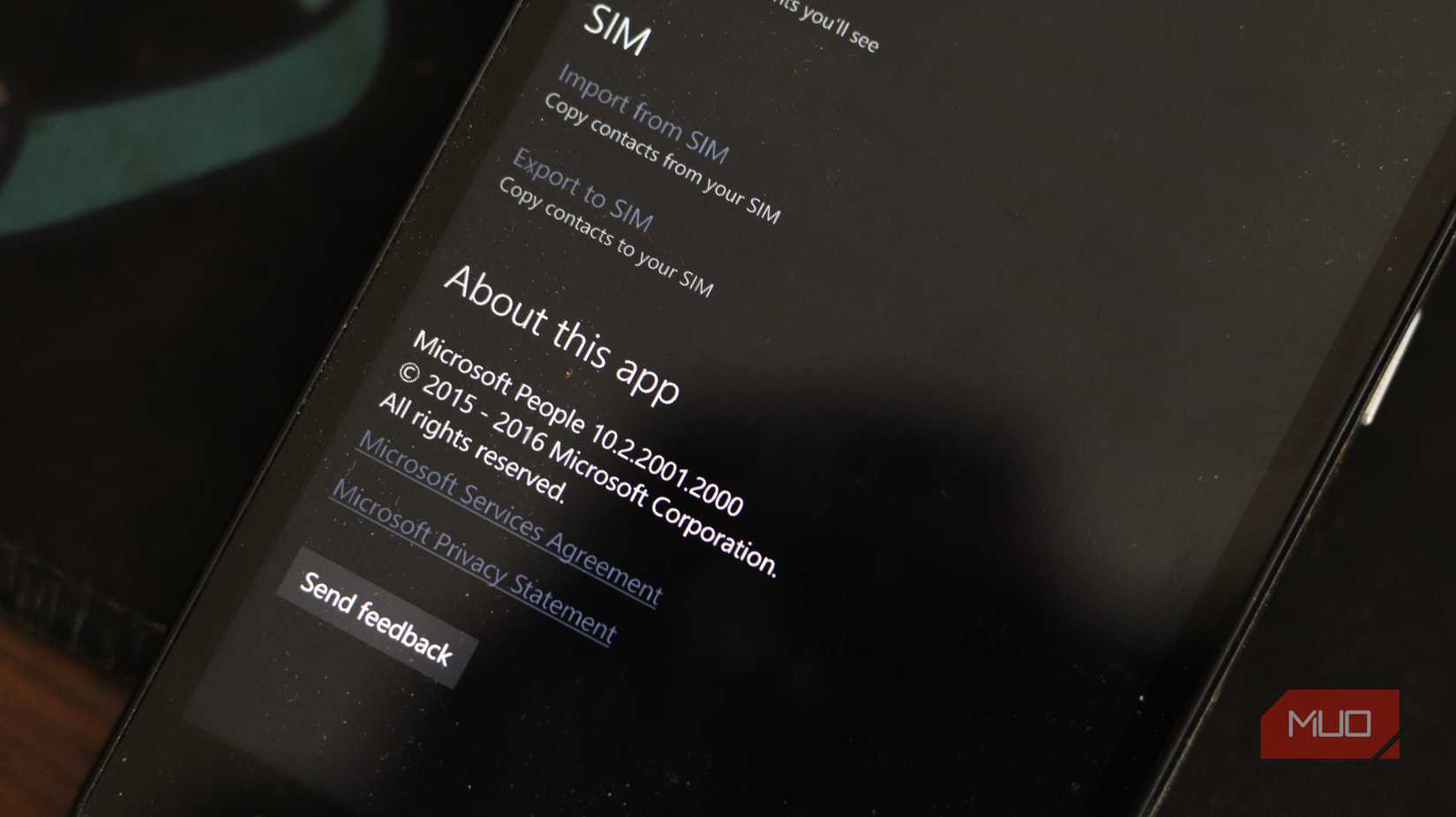
Perhaps the most utilitarian aspect of this integration was the unification of messaging apps. If you were texting someone and they went offline, the phone could switch the thread to Facebook Chat without breaking the conversation flow. There was no separate Facebook Messenger app to install. All messages were treated as text.
Yadullah Abidi / MakeUseOfCredit: Yadullah Abidi / MakeUseOf
This is something Android has been desperately trying to recreate with RCS and Google Messages, and something Apple holds hostage with iMessage. But even those implementations are limited to their specific protocols. Windows Phone didn’t care about the protocol; it just cared that you wanted to talk to someone.
Why can’t modern phones match it
The limitations of today’s app-siloed systems are worse than you think
So why isn’t the People Hub around today? Why can’t the iPhone 17 or Pixel 10 just pull my friend’s latest Instagram post or story directly into their contact card?
The answer is the same as what caused the Windows Phone’s demise. The feature was too ahead of its time.
The People Hub worked because, in the early 2010s, social networks had open APIs. They were eager for growth and happy to let Microsoft scrape their data to populate the Windows Phone UI. But as the decade wore on, the business model of the internet shifted.
Yadullah Abidi / MakeUseOfCredit: Yadullah Abidi / MakeUseOf
Facebook, Twitter, and Instagram realized that if you viewed their content inside Microsoft’s People Hub, they couldn’t serve you ads. They couldn’t track your online times. They couldn’t pull you into an algorithmic “For You” feed designed to keep you scrolling for hours.
The People Hub was a bit too efficient. It let you glance and go, the exact opposite of the doomscrolling engagement metrics that modern tech giants crave. One by one, the APIs were shut down. Social media giants forced Microsoft to remove the integration, requiring users to open the standalone app. The beautiful panoramic views of the People Hub became ghost towns, eventually reduced to simple deep-links.
The user experience we lost along the way
Today’s devices feel more capable yet somehow less connected
Today, we have better screens, faster processors, and more capable cameras than the Lumia engineers could have ever dreamt of. Yet, the user experience of managing relationships and using your phone has regressed. I would still use Windows Phone in 2025 if I could.
On a modern phone, social networking means managing a dozen different apps. It means remembering where a conversation is happening, being bombarded with ads and algorithmic suggestions every time you want to see a photo your friends posted. And if you want to bring it all together, you’ve got AI features that can be uncomfortably invasive with your personal messages, emails, and photos.
We have traded a user-centric interface for an advertiser-centric one.
Related
I Switched to iPhone After 10 Years on Android—These Missing Features Drive Me Crazy
Apple, why is this still not a thing?
Windows Phone was flawed. It lacked apps, it arrived late, and its reboot from Windows Phone 7 to 8 burned early adopters. But its vision of a people-first OS was a glimpse of a more humane digital future. It treated your contacts as people, not content creators, and it treated you like a person, not a set of eyeballs for serving more ads.
That is the forgotten feature modern smartphones will likely never match. It wasn’t code, it was respect. And that’s not something modern software or tech giants seem keen on bringing back.