
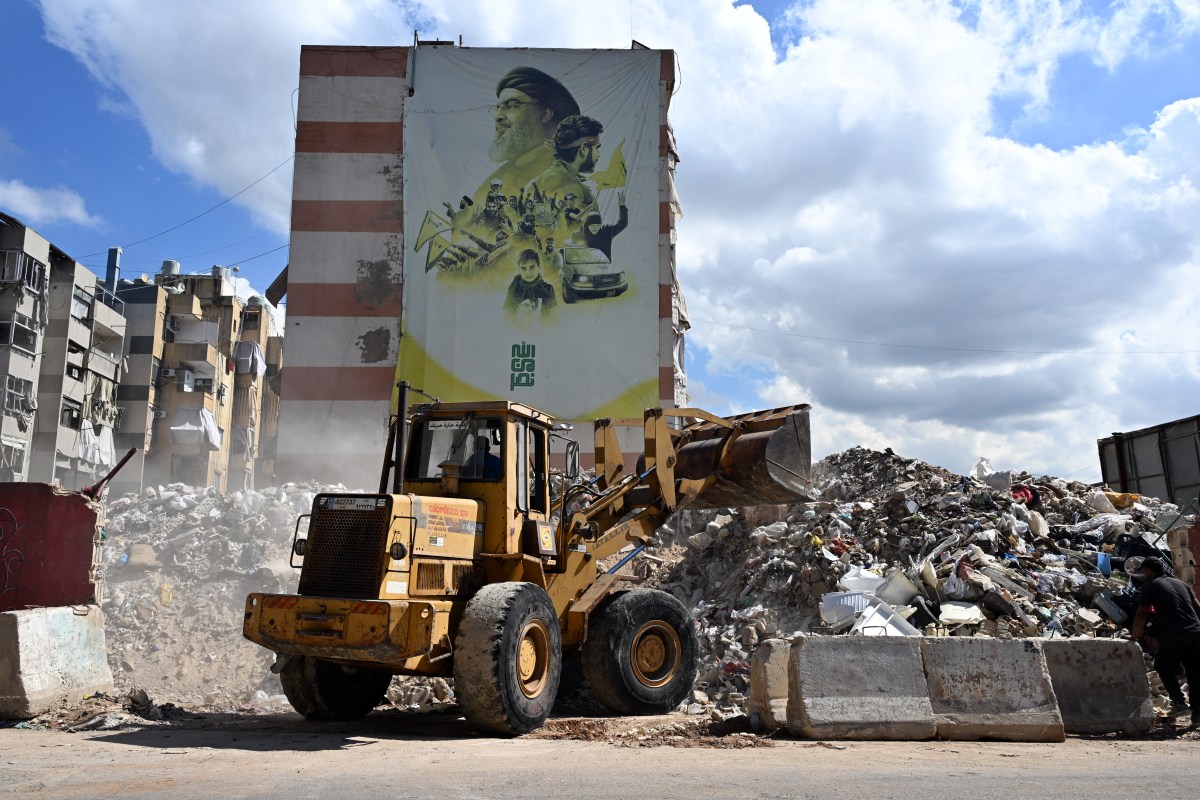

Dahieh is considered a stronghold of Hezbollah and was heavily attacked in the last war.
Houssam Shbaro / AFP
Listen to the article
Listening the article
Toggle language selector
English (US)
English (British)
Generated with artificial intelligence.
The many crises that have struck Lebanon in recent years have left deep psychological scars on the population, with many forced to cope without any support.
This content was published on
December 18, 2025 – 09:00
Giannis Mavris

Where does Switzerland stand in the world? And where is it heading? I focus on current and possible future developments.
After completing my studies (history, law and European studies), I worked for a time at the Swiss embassy in Athens. I have journalistic experience at home and abroad, at the local and national levels, as a freelancer and as a staff journalist. Today, it’s with an international focus.
Deutsch
de
Libanon: Ein Land sucht den Umgang mit Depressionen, Angst und Traumata
Original
Read more: Libanon: Ein Land sucht den Umgang mit Depressionen, Angst und Traumata
Italiano
it
Libano, un Paese che lotta contro depressione, ansia e traumi
Read more: Libano, un Paese che lotta contro depressione, ansia e traumi
Lebanon has barely had a moment to breathe since 2019. An economic collapse, chronic political paralysis, the COVID-19 pandemic, the Beirut port explosion and the war with Israel have pushed the country’s population to the brink. In the conflict between Israel and the HezbollahExternal link alone, more than 4,000 people have been killed, 17,000 injured and over one million displaced.
The succession of crises has taken a severe psychological toll on the people of Lebanon. A studyExternal link published in early 2025 found the country in the grip of a serious mental health crisis. Depression, anxiety and post-traumatic stress disorder (PTSD) were widespread, affecting about half the population. The many traumatic events, the study concluded, are far from being processed.
In recent months, the situation in Lebanon has somewhat stabilised. But despite a slight economic recovery, security remains fragile as Israel continues to attack Lebanese territory almost daily as of mid-December 2025.
>>Read about Giannis Mavris’s recent visit to southern Lebanon.
More
More
War & peace
Rubble and drones: in the no-go zone between Lebanon and Israel
This content was published on
Nov 20, 2025
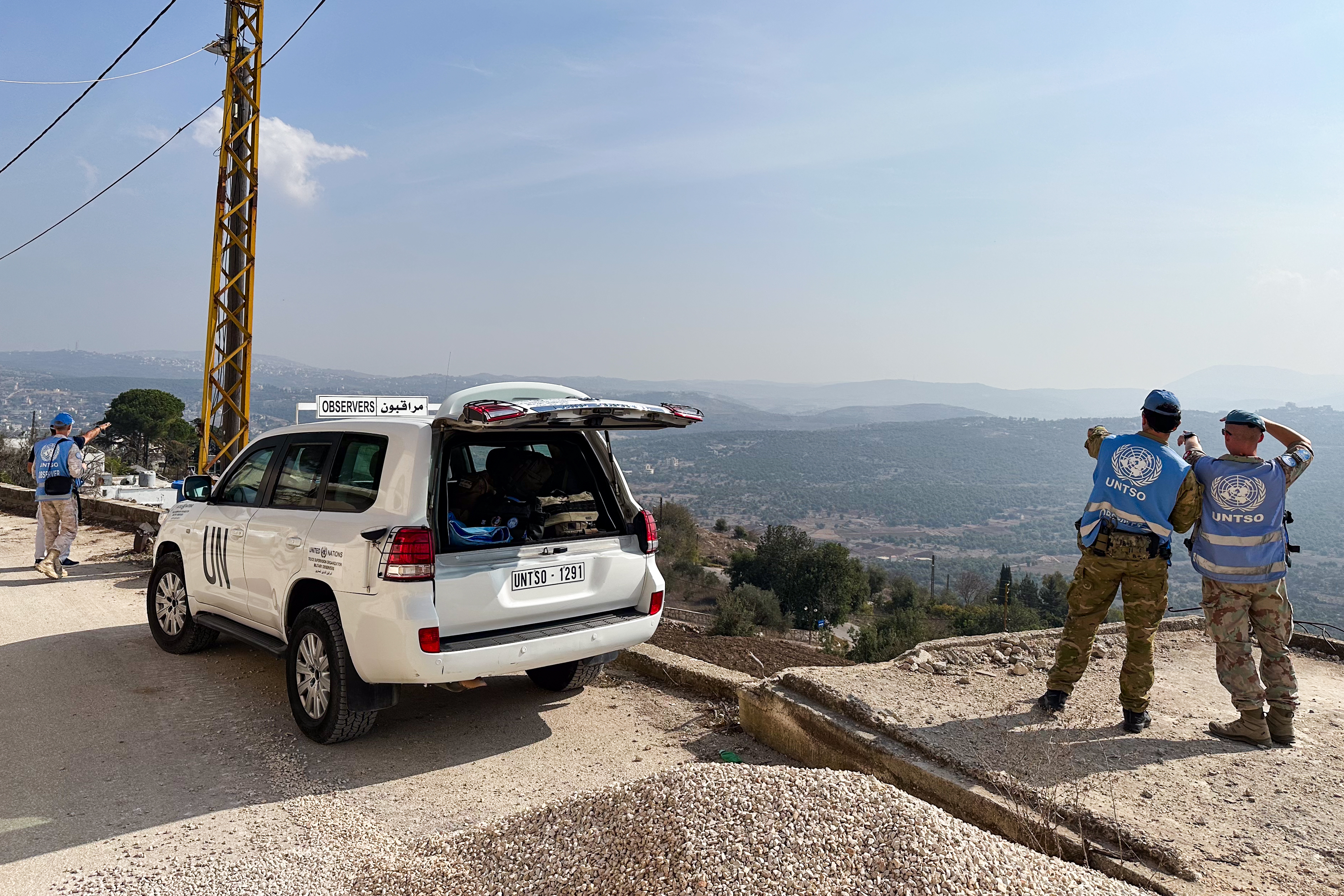
Since the 2024 war, the demarcation line between Lebanon and Israel has become a no-man’s land of devastation. We join a team of United Nations military observers on patrol on the Lebanese side.
Read more: Rubble and drones: in the no-go zone between Lebanon and Israel
Plenty of problems, lack of funding
Many of Lebanon’s psychological scars run deep. After 15 years of fighting, the Lebanese civil war ended in 1990 with a general amnesty. There was no legal reckoning and no national reconciliation. The presence of Palestinian refugees and Syrians who fled their own civil war has added to the country’s psychosocial challenges.
Lebanon’s underfunded public health system is unable to tackle these problems alone. Many rely on aid organisations which are themselves reeling from funding shortfalls after Western countries cut their development and aid budgets.
Why we are reporting on this
Switzerland is present in Lebanon via a wide range of aid programmes, and the Swiss embassy in Beirut also handles diplomatic relations with Syria. The Swiss Agency for Development and Cooperation (SDC) and numerous Swiss NGOs operate in Lebanon.
The projects mentioned in the article are implemented by the local organisation Amel Association InternationalExternal link, which is the implementing partner of CaritasExternal link and the NGO Terre des hommes.External link
From December 13 to 20, the foundation Swiss SolidarityExternal link is collecting donations in support of projects that protect children from violence and abuse, including the initiatives described here.
Swiss Solidarity raises funds for people in need and is the humanitarian arm of the Swiss Broadcasting Corporation, the parent company of Swissinfo.
NGOs often operate across multiple sectors because issues such as mental health, poverty, displacement, and addiction are deeply interconnected and rarely solvable in isolation. A visit to a health centre run by the NGO Amel in Dahieh, a poor suburb of Beirut, and conversations with women there highlight the enormous challenges on the ground.
The enduring legacy of Lebanon’s civil war
Souad Dib Alauch is waiting on the ground floor of the health centre. The 82-year-old woman has been suffering from a badly infected ankle and needs an MRI scan which would cost the equivalent of $16 (CHF13) at the public hospital, an amount she does not have. “They told me to go and pray to get things moving,” says the Shiite woman unmoved.
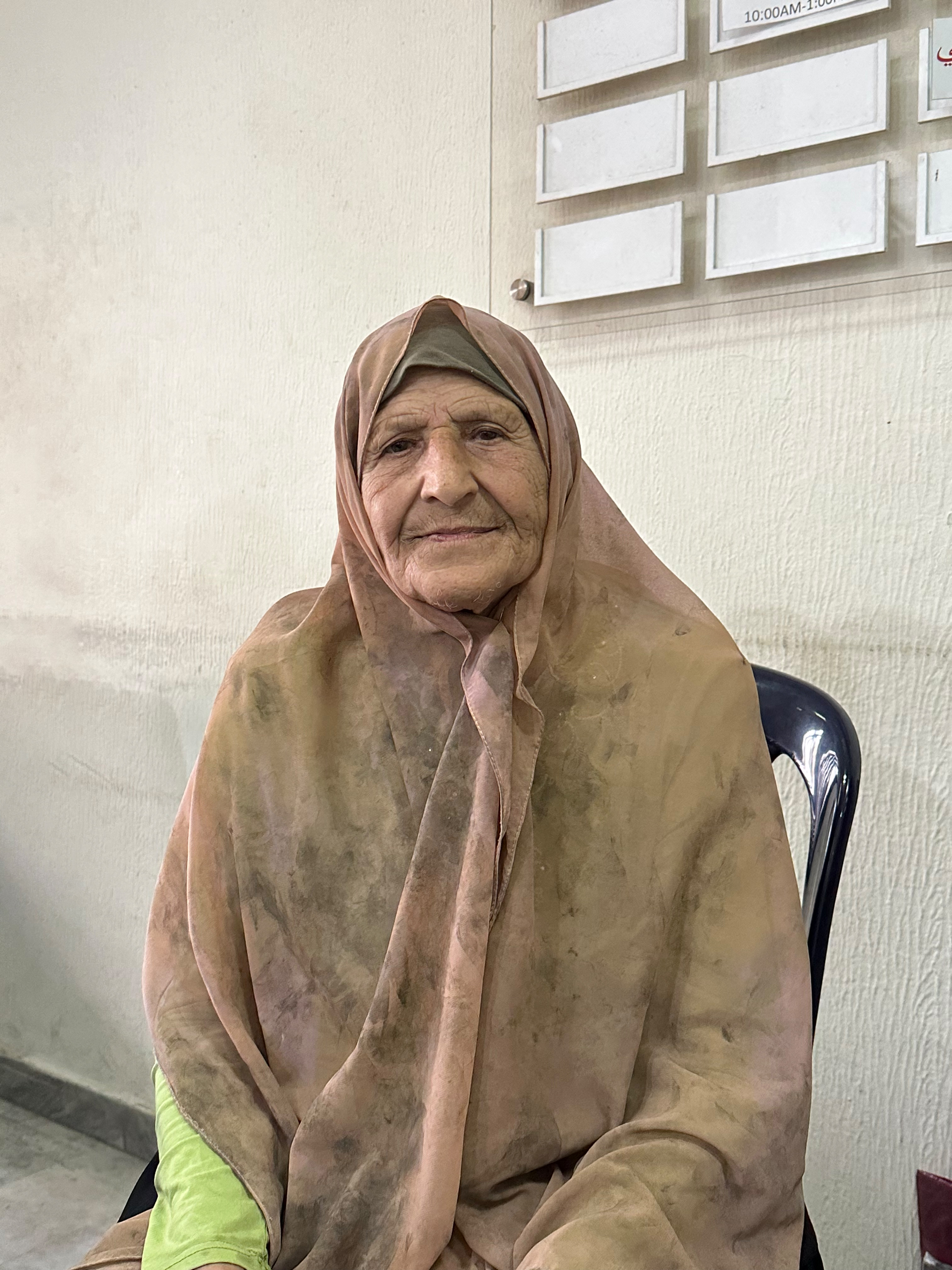
Souad Dib Alauch cannot afford to go to the public hospital.
SWI swissinfo.ch / Giannis Mavris
Dib Alauch has been a widow since the civil war. Her husband, a cab driver, was kidnapped by a Christian militia at a checkpoint and subsequently tortured and killed. The killers placed his decapitated body in the boot of his car which they then parked in front of the family home. A few years later, her eldest son died when the Lebanese army attacked their neighbourhood. “I know exactly who killed my husband and my son,” she says today.
How does Dib Alauch make ends meet? “God provides,” she replies simply. Her second-oldest son, who had supported her financially, died during the COVID-19 pandemic, and her youngest son is too poor to help. She lives in a house without electricity or running water.
Before we bid farewell, she is keen to share one more thought. “I spent my whole life scrubbing other people’s floors and stairs, yet I was able to provide for my children. I’m proud of that,” she says, capturing in just a few words what true resilience looks like.
The problems spill over into Syria
On the second floor of the health centre is Rouhaya Farouk Al Omar. The Syrian woman is wearing a niqab and does not want to be photographed, but she is willing to talk. Obviously traumatised, she is desperate to share her story with someone.
Four months earlier, the woman in her late twenties fled Syria with her husband and her nine-year-old son after their village in the north of the country came under siege by Kurdish forces from the autonomous region of Rojava. “We didn’t have water or electricity. It was very hard,” she says. When traffickers, she recalls, had brought them across the border to Lebanon, they lost everything, including their clothes. Since their arrival, they have lived in poverty in a one-bedroom apartment with her brother and his family.
Rouhaya Farouk’s husband works as a day labourer and earns barely enough for the family to survive. They do not receive any government assistance. She is desperate. “We pay $200 (CHF160) in rent without water and electricity. But we don’t have any money. If things don’t change, we will soon end up on the street.”
Poverty and lack of opportunities place Rouhaya Farouk under constant psychological strain. She had already been suffering from PTSD since she fled Syria. Her five-year-old daughter was injured in the powerful earthquake that struck in early 2023 which killed tens of thousands of people in Syria and Turkey. With no money for treatment, the girl later died of her injuries. “Since she passed away, I cannot see a light at the end of the tunnel,” she says.
How the health centre in southern Beirut provides care
Waafaa Allaw sums up the obvious. “The situation is miserable.” Allaw is a registered nurse and has worked at the Amel health centre in southern Beirut for seven years. The centre is the first point of contact and refers patients to specialists.
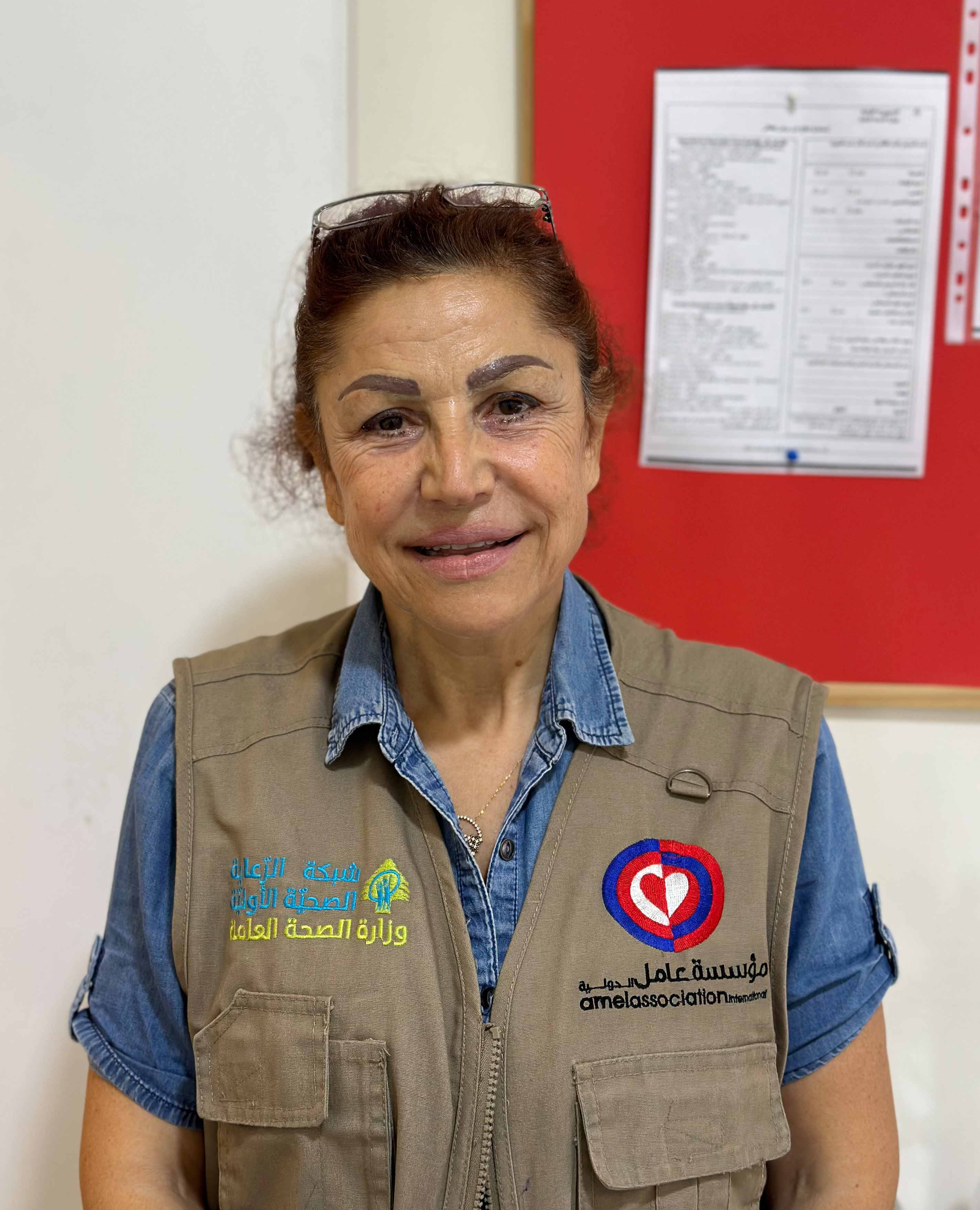
Waafaa Allaw of Amel.
SWI swissinfo.ch / Giannis Mavris
“In the past few years, we have taken on many more psychosocial cases which often involves the stabilisation of traumatised or chronically ill patients,” says Allaw. They also frequently care for elderly people who lost their relatives in the last war and now have almost nobody to look after them. Israel has carried out massive attacks on southern Beirut which is considered a Hezbollah stronghold.
Apart from its medical services, Amel’s centre offers educational programmes for children, counselling for women and families and support from social workers. “What is particularly worrying is how much the scope of people seeking our help has grown,” says Allaw. She is convinced that “the crises requires a political solution.”
Edited by Benjamin von Wyl
Adapted from German by Billi Bierling/ds
More

More
Inside SWI
Our weekly newsletter on geopolitics
Switzerland in a fast-moving world. Join us to follow the latest Swiss foreign policy developments. We offer the perfect immersive package.
Read more: Our weekly newsletter on geopolitics
Articles in this story