
Physicians have been studying our own burnout for years. My own specialty of family medicine ranks among the highest with a self-reported 51% burnout rate. So when you are dealing with your primary care doctor, consider they might be hanging in there by a thread. A simple coin flip. But I’m not going to write a self-absorbed paean to the noble physician as tragic hero. Instead I want to acknowledge and explore something more important and helpful to you the reader. Lately, many of us in clinical practice have been noticing something else in our examining rooms: our patients are burning out more than ever, too.
They come in with elevated blood pressure, new-onset insomnia, tension headaches, bad family conflicts, and vague complaints that don’t fit neatly into diagnostic codes. When we ask what’s happening in their lives, often the floodgates open. They’re exhausted from managing chronic conditions that never give them a day off. They’re overwhelmed by the relentless news cycle and existential uncertainty of 2025. They’re drowning in the demands of work, family, finances, and simply surviving in an increasingly complex world full of angry people and fellow burnouts.
And just like physicians, they’re often trying to push through it alone.
So today, I want to share something that Dr. Tomi Mitchell, a family physician and certified health and wellness coach, developed for her colleagues in medicine. It came to my attention after an excellent article she wrote was forwarded to me (by a burned out colleague). After years of studying burnout patterns and coaching other professionals, she created a framework she calls The Anatomy of Alignment. While she designed it to help physicians understand our own burnout, I think it can be retrofitted for all of us patients as we navigate the compounding stresses of chronic illness, societal upheaval, and daily life in 2025.
The three-legged stool
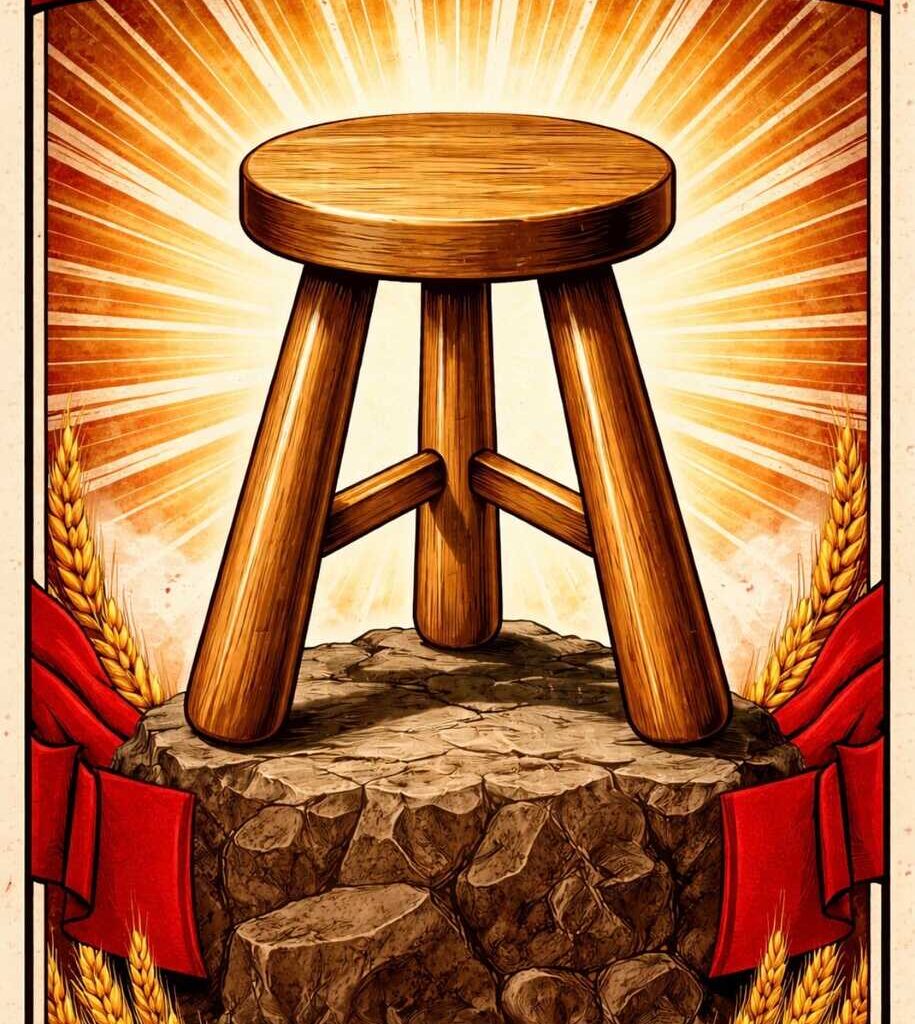
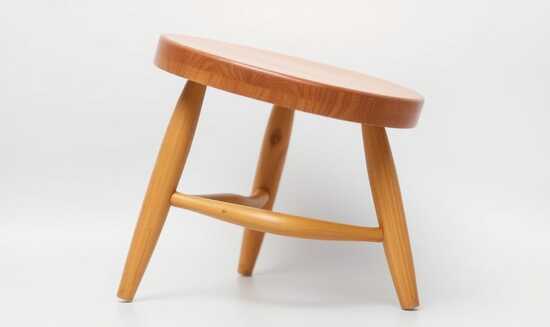
Dr. Mitchell asks us to imagine our well-being as a three-legged stool.

For us to sit comfortably, to feel grounded and whole, all three legs must be strong and balanced:
Leg #1 – our relationship with ourselves
Leg #2 – our relationship with significant others (partner, friend, confidant)
Leg #3 – our relationship with the world around us
Stress is conceived not just as a feeling of overwhelm, but rather as a kind of testing ground and warning signal that reveals where the cracks are forming. Stress is our weight being absorbed with uncertain creaking noises.
When all three legs/relationships are strong (with ourselves, another, and the world), we feel quite resilient and powerful even in difficult times. But when one leg weakens, the stool wobbles. When two legs fail, collapse becomes inevitable. Collapse = burnout.
As Dr. Mitchell writes: “Burnout, in this model, is not simply the product of overwork; it is the outcome of relational misalignment.”
Why this matters, especially now
We’re living through a particularly challenging chapter. Some would say a shit show. The political landscape of 2025 has left many Americans feeling unmoored, regardless of which side we’re on or in the independent spaces between. Daily headlines bring news that feels destabilizing—policies that affect healthcare access, insanely high insurance premiums, intentionally wanton environmental destruction, civil rights and masked ICE agents, economic insecurity, and a freaking affordability crisis regardless of how leaders gaslight us. For some of us, it’s a threat to core values and morality itself. For others, it’s a different kind of uncertainty. Either way, the constant state of vigilance and anxiety takes a toll on all generations.
Add to that the very personal burden many of us carry and that I tend to on a daily basis: chronic illnesses. Diabetes that requires constant monitoring. Autoimmune conditions that flare unpredictably. Chronic pain that degrades every moment. Depression or anxiety that makes simply getting through the day Sisyphean. For example, I saw 21 patients in the office today. I went back just now and tabulated their chronic problem lists. 225 chronic problems distributed among these 21 patients just today, ranging from age 21 through 90 years old, from intractable migraines to terminal cancer, and not including the new problems we discussed. These conditions don’t clock out at 5 PM. They don’t take weekends off. They quietly erode our energy, our patience, and our hope.
The compounding effect is what we’re seeing everywhere: people whose three legged stools have become dangerously unstable.
How the legs fail
Here’s my best interpretation of this model in the context of being a family doc trying to help and understand myself and my patients. Here are the unstable legs:
Wobbly relationship with self: When chronic illness becomes our identity. When we measure our worth by productivity in a world that demands constant output. When we scroll through social media comparing our struggle to others’ highlight reels. When we haven’t paused long enough to ask ourselves what we actually need.
Wobbly relationship with significant others: When illness or exhaustion makes us irritable and withdrawn. When we’re too depleted to be present with the people we love. When we stop communicating honestly because we don’t want to be a burden. When relationships that once sustained us begin to feel like one more demand on our limited energy. How was your day? When we lack the energy to even listen.
Wobbly relationship with the world: When the news makes us feel powerless, small, and abused. When our chronic conditions make us feel like spectators in our own bodies. When work feels meaningless, or we’ve lost the grip of what once gave us purpose. When we look around and think, This isn’t the world we thought we’d be living in. This isn’t the world we want to raise our children in, much less leave them when we are gone.
Sound right?
A path back to alignment
Maybe alignment can be restored. That’s what the author believes. It requires intention, honesty, and often outside support. Drawing on Dr. Mitchell’s framework, here’s how we might strengthen each leg:
Leg #1 – Reconnect with ourselves
Audit our inner dialogue. What scripts are running in our minds? The inner monologue. I should be able to handle this. Everyone else is coping better than me. I don’t have time to rest. This internal dialogue loudly yet silently sabotages our well-being.
Honor our body’s signals. Pain, fatigue, anxiety. These aren’t character flaws. They’re data, signals, codes to be uncoded. Our bodies are trying to inform us. We need to listen before the whimpers become screams.
Practice presence over performance. We don’t have to optimize every moment. Sometimes the most productive thing we can do is rest. Sleep. Stare at the ceiling. Naps, hurkle durkle, floor time. Let our nervous systems remember what calm feels like. I admit I took a quick nap upon arriving at work this morning, and another 5 minute power nap between patient sessions. How else to handle 225+ problems and a 12 hour work day? Family medicine, my friends.
Find our center. Whether through journaling, making art, getting therapy, prayer, meditation, or time in nature—we need to create space for reflection. To turn off the relentless clock. Why does baseball now have a pitching clock?? Chronic illness compels us to reorient within our own bodies. Societal chaos demands we find an inner compass and stick to it.
Leg #2 – Strengthen our connections
Be honest with our people. Our loved ones can’t support us if they don’t know what we’re carrying. Hopefully they have the energy to listen, and it helps to fill up their tank by listening first. Vulnerability isn’t weakness—it’s the foundation of intimacy. We have way to many strong men running amok.
Ask for what we need. I need someone to listen without trying to fix this. I need help with dinner tonight. I need an hour alone. Chronic illness and burnout erode our capacity to ask. We must practice anyway. Have I ever told you about the 3 H’s? I believe there are 4 actually.
Create rituals of connection. A weekly walk with a friend. Cultivating an actual friend. A phone call with someone who gets it. A shared meal where phones stay in another room, closed up in a cigar box or something. These small moments of genuine connection are medicine.
Remember: we are not our diagnoses. To the people who love us, we’re not “the diabetic” or “the one with chronic pain.” We’re whole people who happen to be managing difficult circumstances.
Leg #3 – reclaim our relationship with the world
Limit our exposure to chaos. We don’t need to read every news article or doom-scroll through every political development. Being informed is different from being consumed. We need to set boundaries around media consumption, especially as that media is all about rage bait, algorithms, spectacles of violence, and a drumbeat of fear.
Find our sphere of influence. We can’t fix the healthcare system or change the political landscape quickly. But we can vote, advocate for local causes, support community initiatives, or simply show kindness to a stranger. A neighbor. Personal agency, even in the smalles doses and actions, counters helplessness. It feels damn good.
Reconnect with meaning. What matters to us? What brings us joy, even in small ways? What would we do if we had one more hour of energy today? We should chase those things, however imperfectly. Don’t follow your dreams, chase them!
Reframe our chronic conditions. This isn’t about toxic positivity or pretending illness is a gift. But can we find ways that navigating our challenge has taught us something? Made us more compassionate? Helped us understand what truly matters? Sometimes meaning isn’t found. It’s created, interpreted, stubbornly forged from failure and success at the same time.
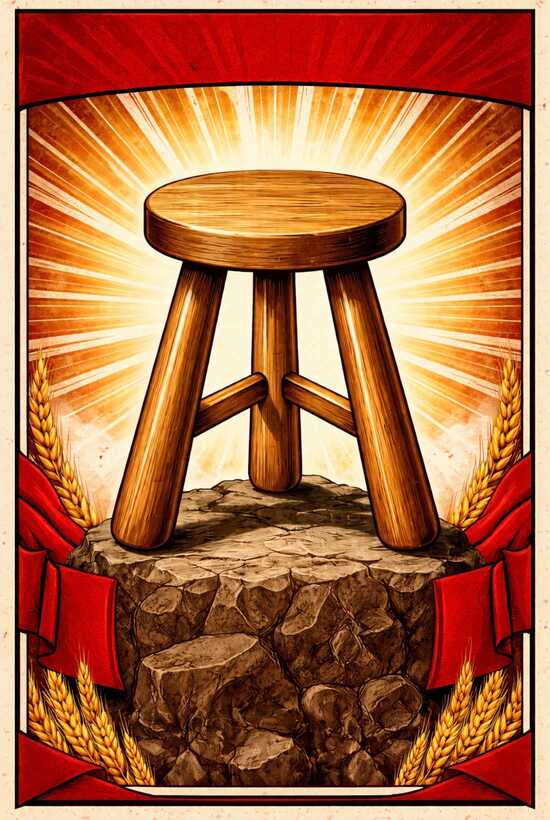
Benevolent propaganda in the service of The Anatomy of Alignment paradigm.
The science behind relationships
The Harvard Study of Adult Development, which Dr. Mitchell references in her work, followed participants for over 85 years and found that the quality of our relationships—not wealth, achievement, or even genetics—is the strongest predictor of health, happiness, and longevity.
Strong relationships buffer us against stress. They protect both mind and body. Loneliness carries health risks equivalent to smoking 15 cigarettes a day.
I have let so many of my relationships falter. Between the betrayal I feel of those once common values, to the deferred reckoning with the trauma of being a healthcare worker in a pandemic, to simply being too tired to pick up the phone (we all text now, right?)… doctor heal thyself.
This leg is really key.
A word about faith and stress
Faith (whatever that means to each of us) gives suffering a framework. It doesn’t remove the pain, but it can change our relationship to it. Some of us find it in religion. Others in philosophy, nature, cosmology, art, literature, a warm dog, or simply a belief that humans are wired by evolution to endure and adapt.
Stress, meanwhile, isn’t the enemy per se. It’s the creaking noise that alerts us to which leg of our stool needs attention. When we find ourselves snapping at loved ones after reading the morning headlines, that’s our relationship with the world straining under weight. When a symptom flare sends us spiraling into despair about our bodies betraying us or catastrophizing, that’s our relationship with ourselves calling for compassion. When we realize we’ve been so consumed by managing our condition or surviving the news cycle that we haven’t truly connected with our partner in weeks, or even shared eye contact, that’s our relationship with others asking to be prioritized.
The utility of Dr. Mitchell’s framework (if I truly understand it from my reading) is that stress stops being this vague, overwhelming force we’re supposed to “manage” and becomes specific, actionable information. We’re not failing when we feel stressed—we’re receiving a precise diagnosis about where we’ve drifted out of alignment. The question then becomes: which leg needs our attention right now? Often, when we’re overwhelmed, we try to fix everything at once. But sometimes, strengthening just one relationship, choosing to have an honest conversation, setting one boundary, or taking one afternoon for genuine rest… might be enough to restabilize the whole stool upon which we can rest.
Our choice and invitation?
As the author wrote: “Burnout is not failure. It’s feedback. It’s the body and spirit saying, ‘You’re out of alignment.’”
I think we deserve more than just survival here in 2025. We deserve lives where, even in the midst of chronic illness or societal chaos or daily overwhelm, we feel connected to ourselves, to our people, and to something greater than our senseless pain and conditions.
I’m going home to sleep now, to let the glymphatic system in my brain clean out a bunch of stressed proteins, tattered molecules, candy wrappers, and existential dread.
Then I’ll recommit to reconnecting with self, others, world.
Maybe this woodworking is worthy of your time, too.
~
This diary was first posted on Examined, where I write about primary care and life in medicine. Future posts are available if you want to sign up for the email distribution list with me!