
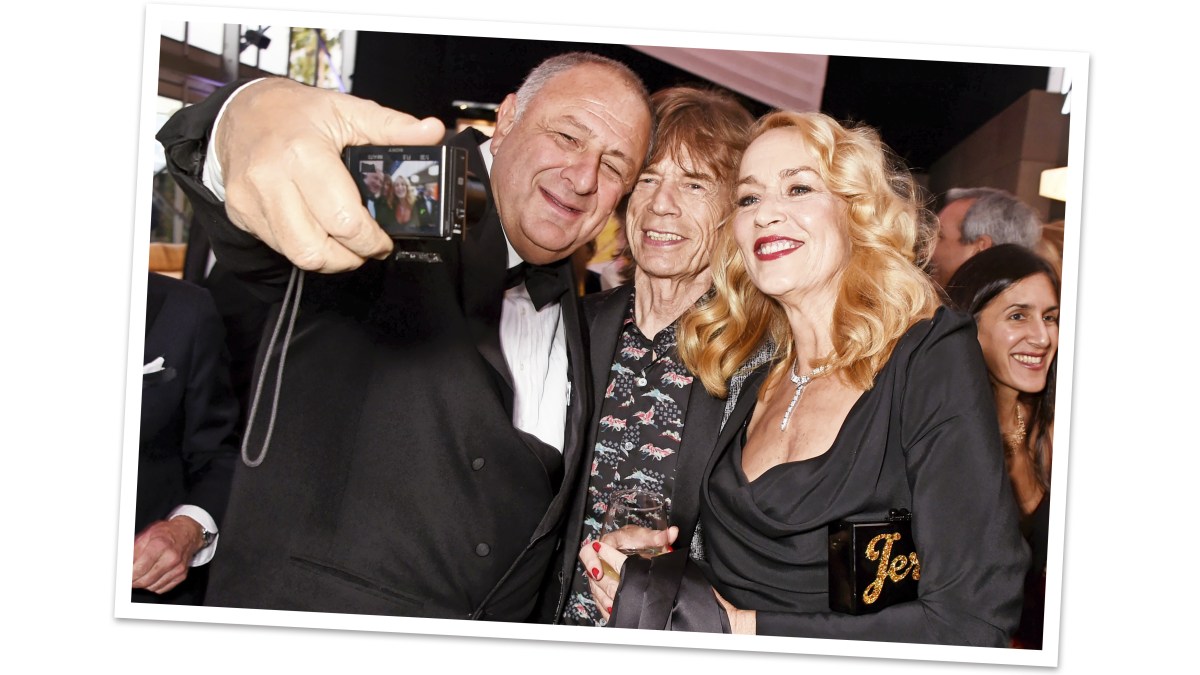
Jean Pigozzi is sitting in his apartment in the Albany in Mayfair, London, swaddled against the November cold snap in two vast fleeces. The walls are painted in Battenberg-cake colours and are bare except for a huge television screen set to the financial news, a nod to his fluctuating fortunes as a tech investor.
The investor and photographer — he is said to have invented the celebrity selfie — owns the largest collection of African art in the world, but that is kept elsewhere, perhaps at his remarkable mid-century home on a stretch of prime Riviera coastline in Antibes (Roman Abramovich is a neighbour to one side; the Heineken dynasty to the other). Or maybe in his modernist mountaintop house on a private island on Panama’s Pacific coast. Or most likely in shipping containers in a Swiss freeport, waiting to be moved into the new museum in Cannes that will soon bear Pigozzi’s name.
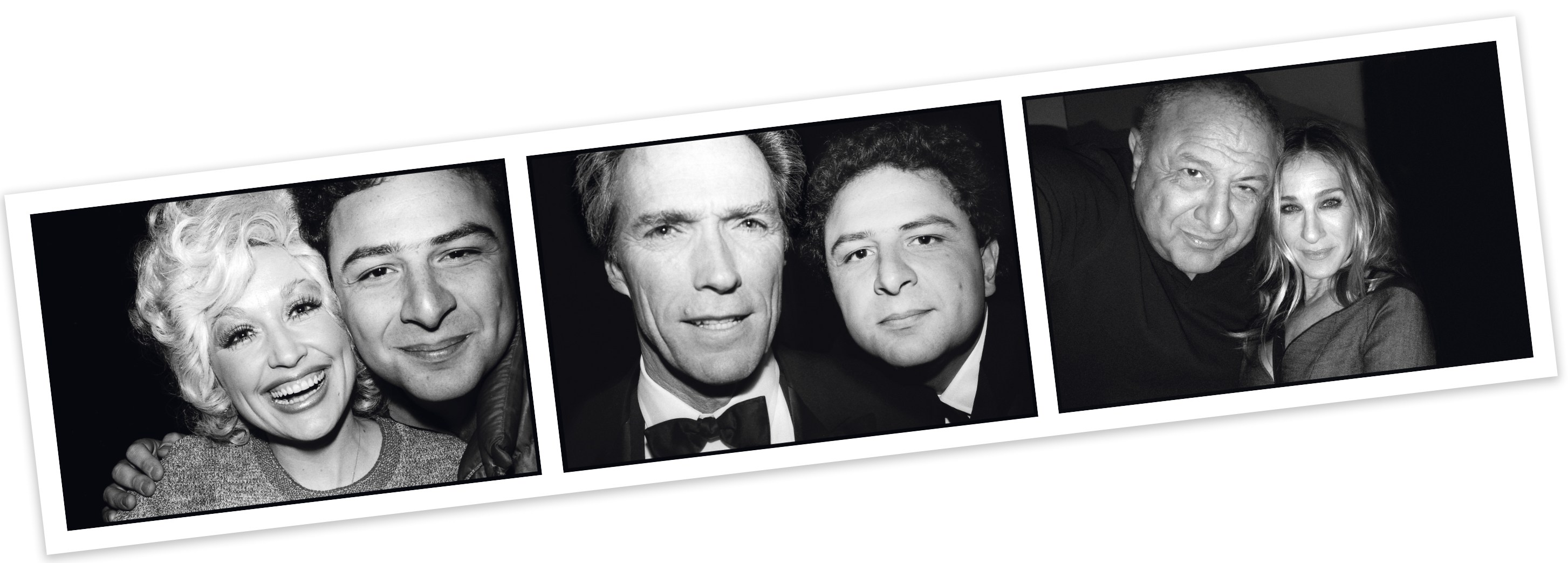
With, from left, Dolly Parton, Clint Eastwood and Sarah Jessica Parker
COURTESY OF JEAN PIGOZZI
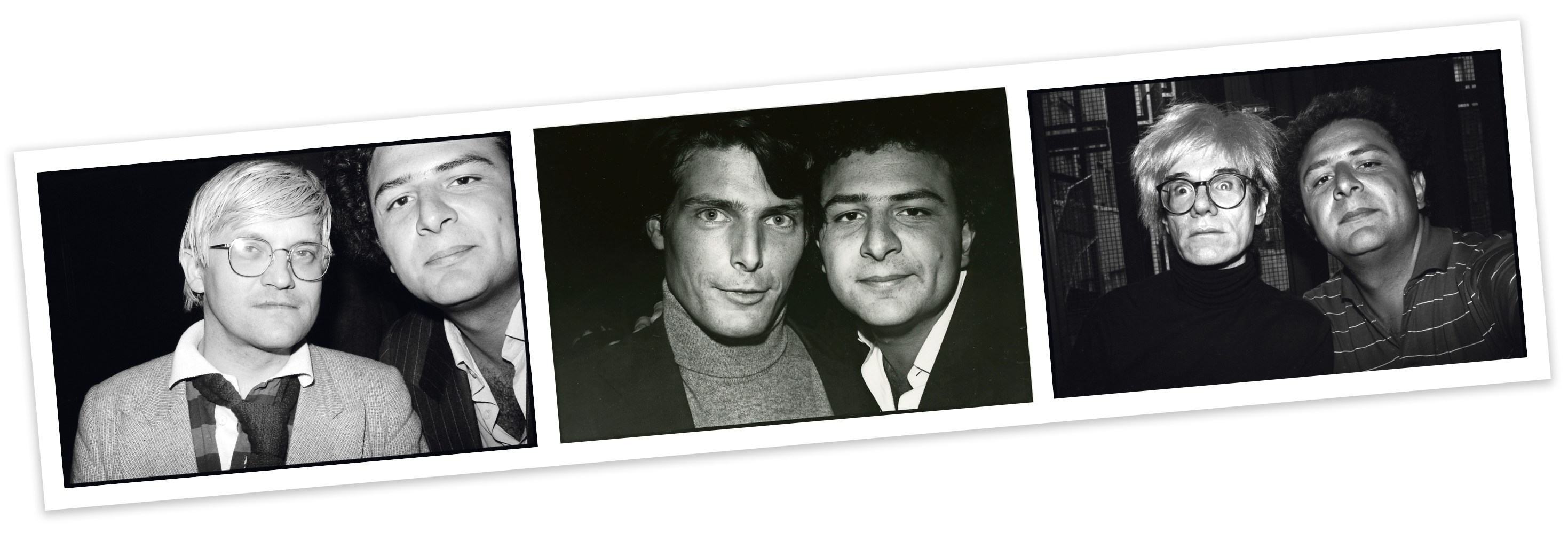
With, from left, David Hockney, Christopher Reeve and Andy Warhol
COURTESY OF JEAN PIGOZZI
We are meeting to discuss I Am Curious Johnny, a documentary directed by Julien Temple. It tells the story of Pigozzi’s life through interviews with his friends, many of them well known — Mick Jagger: “You like dressing up, don’t you, Johnny?” — and also via unusual interviews between Pigozzi and himself, done in split screen or using AI animations of old childhood photographs. The documentary aired at the Rome Film Festival and was released on HBO Max in the US last month. It captures, the director noted, the impact of “wealth and its effects on those who possess it”.
“My childhood was not good. And so I am reliving it now,” says Pigozzi, who is 73.
When he was 11, he found out that the woman he thought was his mother was not, in fact, related to him at all. His real mother was one of his father’s mistresses, whom he met only a few times in the decades that followed. Shortly afterwards, he was sent to a Jesuit boarding school of such bleakness that he woke one winter morning to find a blanket of snow on his bed. When he was 12, he returned from school to be told that his father had died suddenly from a heart attack that day.
Pigozzi had been born into vast wealth as the heir to an industrial fortune made by his father, Henri. He was raised between a grand house in Paris and Villa Dorane in Cap d’Antibes.
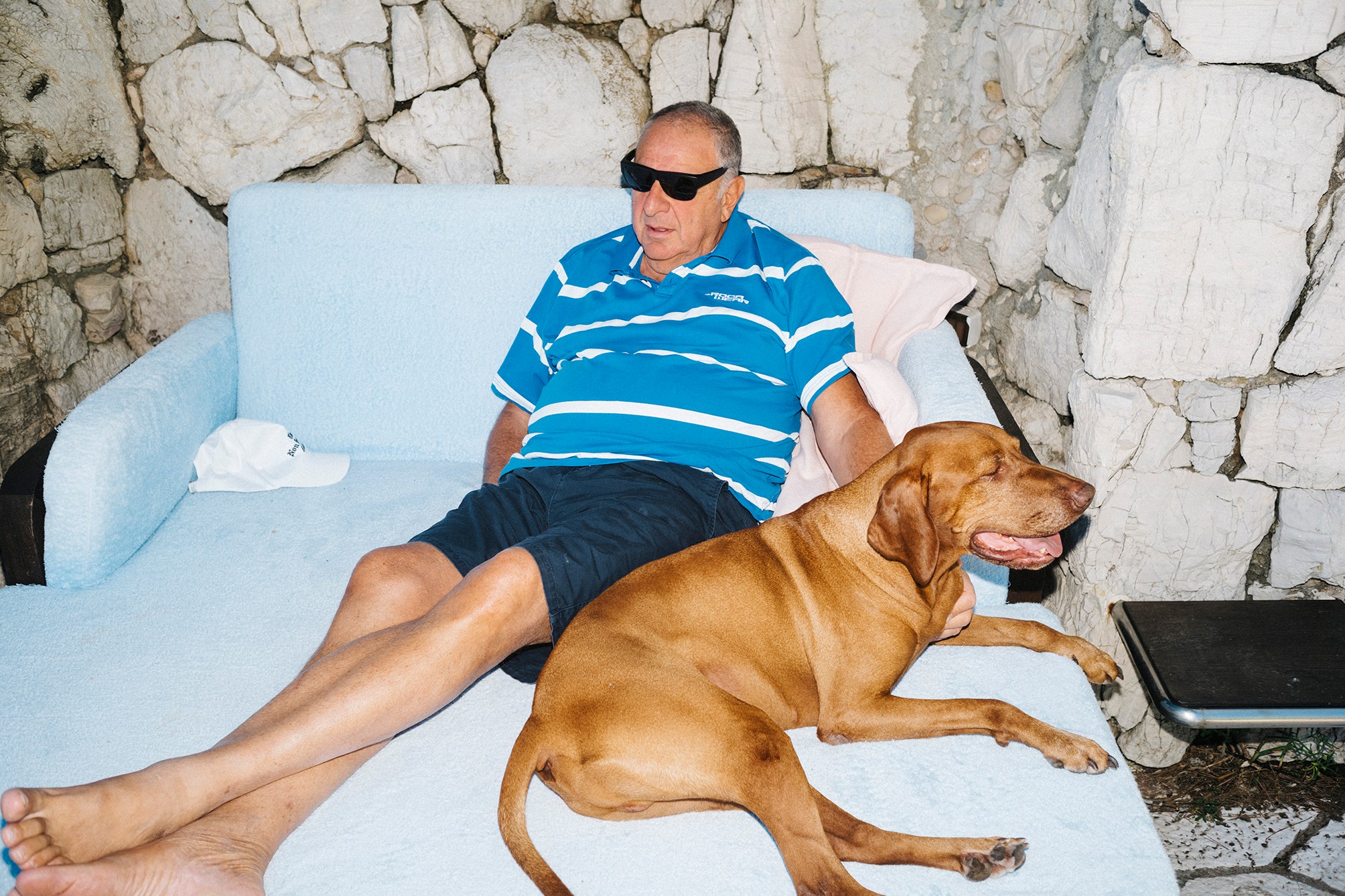
At his home in Antibes in 2021 with his Rhodesian ridgeback, Saatchi
GREG FUNNELL
When his father died, his first emotion, he says, was relief. Pigozzi Sr — who founded the French car company Simca — was “really an incredible person”, he says, but also a difficult one. “I was terrified of my father. He was really tough on me, and what drove him crazy is that I was a bad student because I was dyslexic.
“With that weird upbringing, I should have gone to a shrink,” he says. But he never did. “And so I decided, in this film, that I would ‘shrink’ myself.”
• I’m just having a few friends over…
By most people’s standards, Pigozzi is something of an enigma. In one Vanity Fair profile, Elton John described him as “one of the world’s greatest characters. I don’t really know what he does, though, apart from always taking those pictures.”
The same magazine later compiled a map of the most powerful people on the planet, from Jay-Z to Anna Wintour, Michael Bloomberg to Tom Hanks, showing how each of them was connected to Pigozzi.

With Sharon Stone in Cannes, 2021
GETTY IMAGES
His close friends include Bono, Charles Saatchi, Twitter co-founder Jack Dorsey, Elle Macpherson and Jagger, and his annual pool party is a fixture of the jet-set calendar. A menagerie of celebrities could often be found dancing around his famous kidney bean-shaped pool at his Côte d’Azur home, filled with plastic animals.
‘I stopped the pool parties. I knew fewer and fewer people’
Or at least, that’s how it was. “I stopped doing the pool parties,” Pigozzi says. “More and more people came, and I knew fewer and fewer of them.”
Back in the day, his close friends might show up to the annual party, held during the Cannes Film Festival, with perhaps a plus-one in tow. In more recent years, guests would try to bring “bodyguards, hair and make-up, a PA, security”, he says. “I’m not interested in that.”
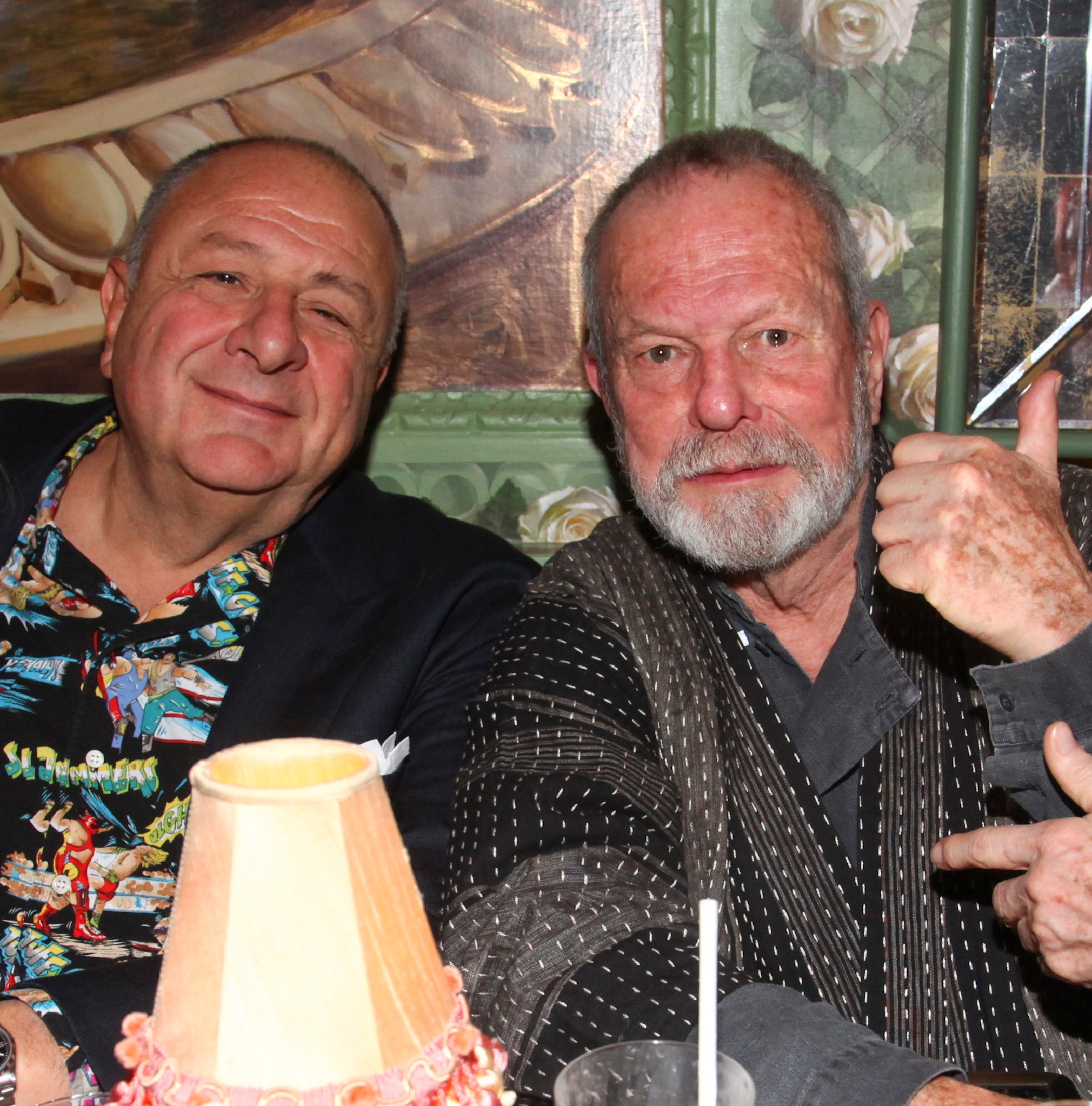
With Terry Gilliam at a Bafta event, 2019
CAMERA PRESS
Besides, he says, “The youngest person that I know in Hollywood now is Leonardo DiCaprio, who’s over 50. De Niro, Jack Nicholson, Michael Douglas, Francis Ford Coppola — they’re all in their eighties. And I don’t want to have a party with decrepit old people, so I’m not doing it.”
Despite being a figure of the Riviera high life, Pigozzi has never consumed a drop of alcohol in his life, he says, apart from on the crêpes suzettes he allows himself twice a year. He did once smoke half a joint with Rex Harrison, he admits, but only because it was Rex Harrison, and he is glad he never tried cocaine because his love of food is perilous enough: he has to “stay horizontal until 11am each morning”, he says, “so that no chocolate croissant jumps into my mouth”. The sole suit he owns is “for funerals”. Despite hailing from an automotive dynasty, he drives “a tiny car that looks like a yoghurt container”. The only things he hates, he says, are garlic and pompous people.
‘My life may be a bit ridiculous. But I’m not changing’
He dresses in a kaleidoscopically colourful wardrobe and today wears the cheapest watch he could find in duty free, partially in light of the recent spate of “Rolex-ripping” in London but also because “it tells the time just as well”.
“At my age, perhaps I should be wearing suits and walking slowly and going to a club and shooting on the weekend,” he says. “But I’m not interested in that. I can’t do it. It might be a bit ridiculous, the life I have. But I’m not willing to change.”
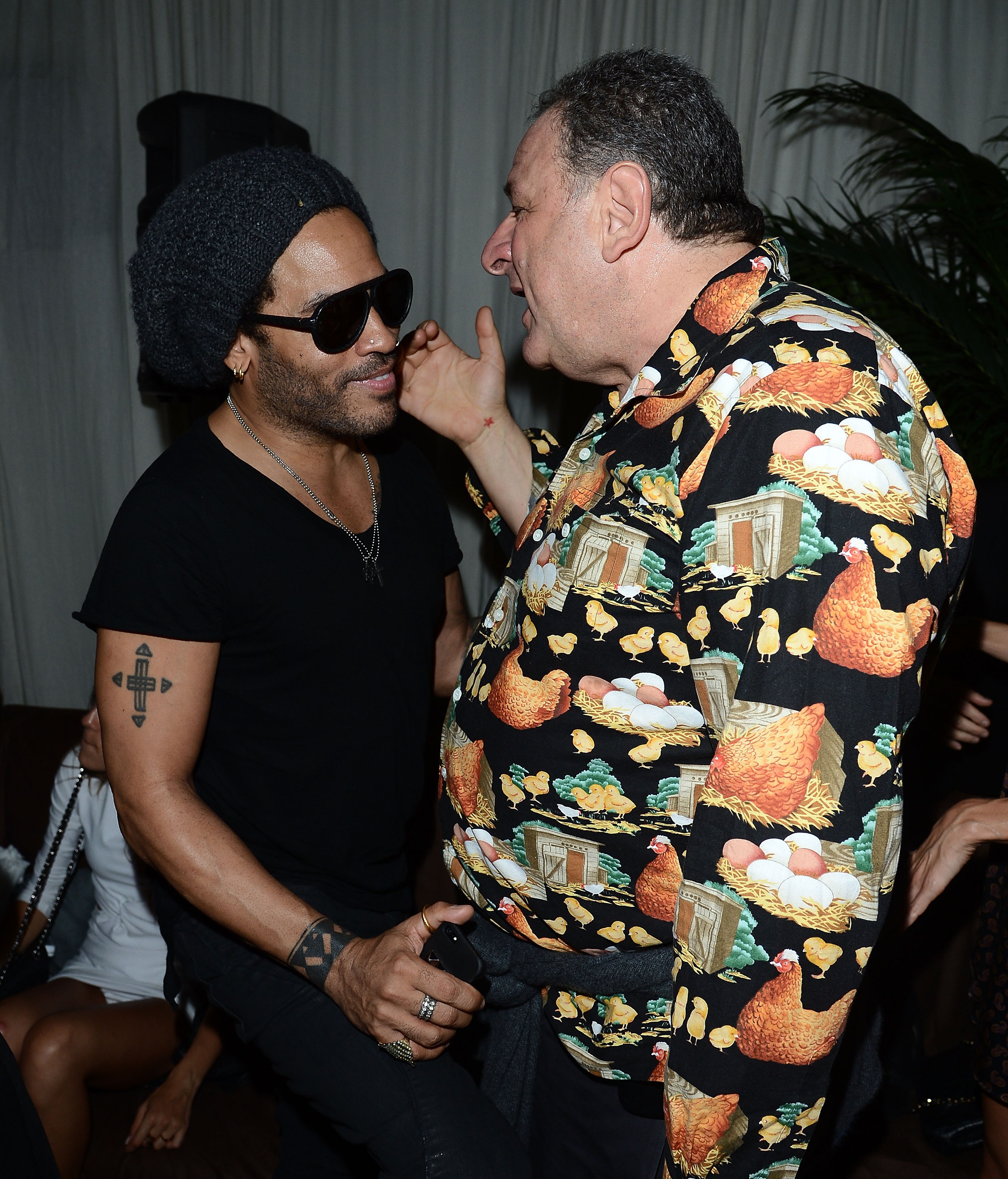
A Soho Beach House barbecue with Lenny Kravitz
GETTY IMAGES
The documentary traces Pigozzi’s early life in Paris to his studies at Harvard in the Seventies. As a young man visiting Manhattan on weekends, he would approach famous people on the street, stand next to them, extend an Inspector Gadget arm and snap a high-flash shot of the scene on his Leica — creating selfies before the term was invented.
In his images, David Hockney looks young and self-conscious in a rugby shirt beneath a blond mop of hair; Hunter S Thompson appears almost hygge-cosy in a chunky woollen hat. A picture from 1983 shows Steve Jobs giving the finger to the vast, granite-bound IBM sign at his rival’s head office in Manhattan.
‘I have backed so many companies that died’
After leaving college, Pigozzi hung out with Basquiat and Warhol and the Studio 54 set. “I bought a Basquiat at his first show, a self-portrait, for $1,250,” he says, though he rues the day he refused to accept a later work from Basquiat in exchange for a new suit the artist wanted. “The suit would have cost $560,” he tells me now. “That painting sold recently for $35 million [£26 million].”
It wasn’t his only misfire. In the Nineties, he found himself at one of the early investor pitches for an online bookshop called Amazon. “There were ten people in the room, and this little guy arrived and said, ‘My wife and I drove from New York to Seattle with our three dogs. I started a company — we’re selling books and we’ll be selling some other things after that,’ ” Pigozzi says, and laughs. “I said, ‘This guy! He doesn’t know about Barnes & Noble. He’s an idiot,’ ” he laughs, of Jeff Bezos. Other opportunities have been more fruitful. In the mid-Noughties, Pigozzi invested in a fledgling company called the Facebook, “and that was very, very good”.
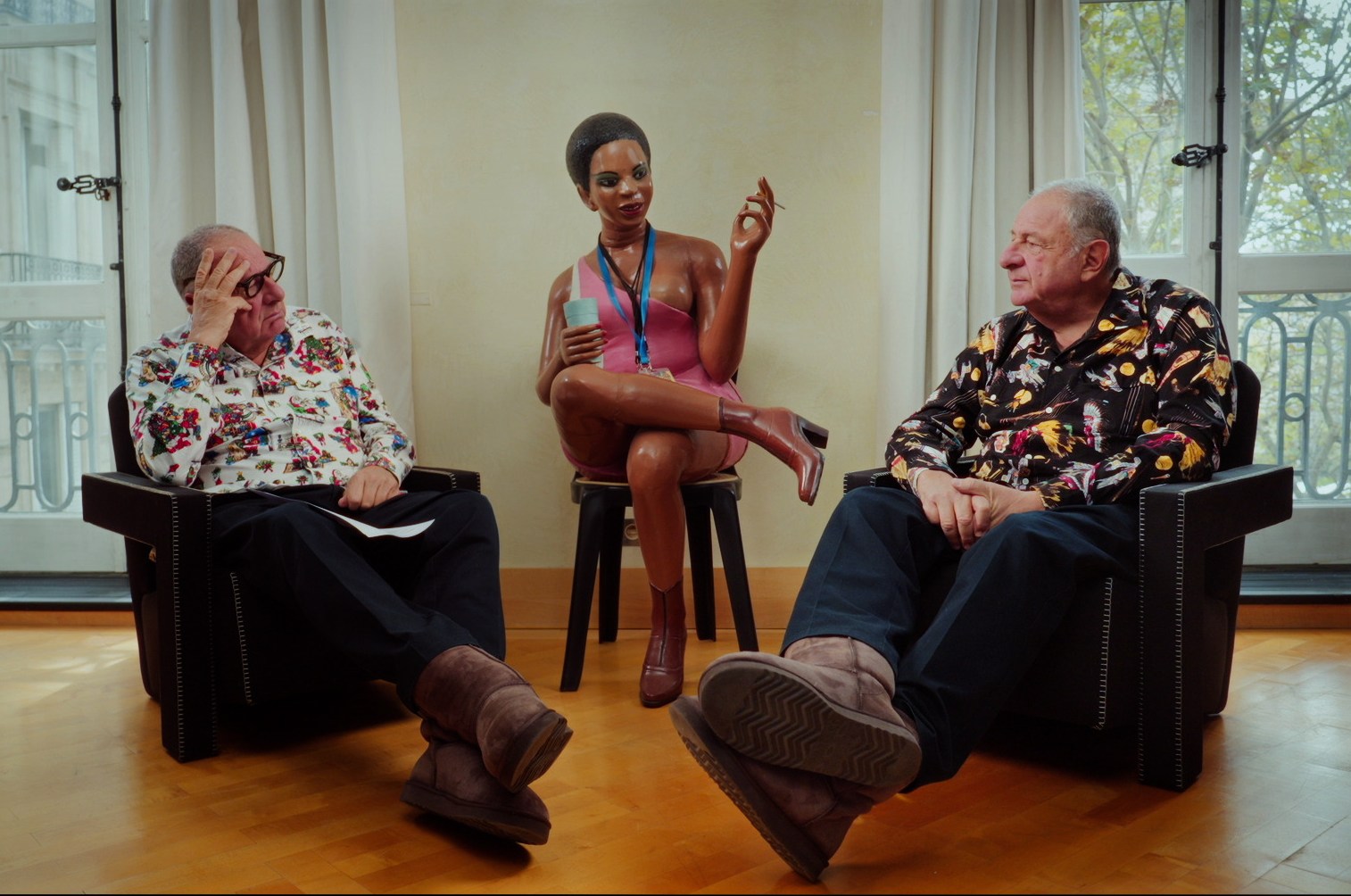
Interviewing himself in the film I Am Curious Johnny, directed by Julien Temple
RECORDED PICTURE COMPANY
When it comes to investing, he reckons he’s had far more failures than successes, though his net worth is estimated at $350 million. “I have attended dozens of high-tech funerals,” he jokes, and has a collection of caps at home — from dead startups and cratered schemes. He looks at them and thinks, “Oh, this baseball cap cost me $50,000, or this T-shirt was $100,000. I have backed so many companies that died.” He lost a lot of money in the dotcom boom and again in the 2008 crisis.
Now, although he is optimistic about the prospect of AI, he is wary of startups affixing the tag to absolutely anything in an attempt to capitalise on the zeitgeist — “an AI hairdresser, an AI lawyer”. It may well be another bubble. “But I have a tiny, tiny piece of Open AI,” he admits (he will not be drawn on how much). “And if it doesn’t collapse, that’s going to be my retirement money.”
Perhaps his legacy will be his art collection. It spans “more than 10,000 pieces” of African art, though, in a typically Pigozzian twist, its owner admits he’s never set foot on the continent himself. Pigozzi helped bring to western eyes artists like Seydou Keita, the Malian photographer whose stylised Fifties portraits of his nation’s middle classes are strange and surprising portals themselves, along with dozens and dozens more. “You know they have Alcoholics Anonymous and they have Sex Addicts Anonymous?” he says. “Well, if they had Collectors Anonymous, I would be there.”
‘My father’s family were very, very poor’
This urge to acquire and collect may well be a hedge against one of Pigozzi’s latent fears: that he will one day return to the poverty of his father’s youth in Turin. He keeps a picture of his father as a child, with his six sisters and his parents. “They were very, very poor,” he says. “Anything not to go back, you know? I am always scared.” He has a waking nightmare, he says, “where a demon says, ‘Sorry, there’s nothing left here.’ ”
There are other fears too. Pigozzi tells me the story of his friend Kerry Packer, the Australian tycoon, who died for several minutes when he had a heart attack in 1990 out riding his polo pony. Pigozzi later asked him what he saw. “He said, ‘Nothing, nothing. It was black. I didn’t see my life before my eyes.’
“The greatest invention ever made is to make people believe in life after death,” Pigozzi says, before leavening that thought with a joke. “You know, one day I was with Woody Allen and I said, ‘Woody, I hear that the Muslim terrorists, when they kill somebody, they go to heaven and they have 72 young virgins.’ And Woody said, ‘You know what? I’d rather have two professionals.’ ”
‘Old people just talk about taxes and diseases’
I ask him why he thinks he needs the therapy that the documentary promises. Hasn’t he, by all accounts, lived a rich and jolly — if often esoteric — life? “I am kind of troubled,” he says, “because theoretically I should be married. I should be a grandfather now, right? I never got married. I never had children. And so that’s not completely normal.” He has had many girlfriends over the years and once invited six of his exes to his 60th birthday party. “They became friends, but some of them didn’t like it that much,” he says. “It was an exciting experiment.” And while he doesn’t regret not marrying (“because I’m a terrible negotiator”), he does regret never having children and thus grandchildren, in part because he is more interested in what young people have to say than his contemporaries, who “just talk about taxes and diseases and their doctors”. He laughs.
And yet, “The most terrifying day of the year is Father’s Day. Because I think someone’s going to press the thing on my door. Ding, dong! ‘I’m Charlie. I’m 35 and I’m your son.’ ”
Does he get lonely? Sometimes, he says. “But more and more I have a lot of projects. I started doing collages, made with things that concern me. So I put aeroplane tickets, bills from restaurants, yoghurt pots that I liked, photographs that I took… I have a big book and I think I did 50 pages,” he says. “And I don’t know if I’m going gaga or not.” On the contrary, he seems both thoughtful and sharp.
He is wrong-footed, however, by the passage of time. “I think I should sleep more, but I really hate sleeping. It’s such a waste of time,” he says, “When I was 12, I would be in a chemistry lesson that lasted 55 minutes — and it was eternally long. Now that I’m 73, I have a glass of water and I blow my nose and an hour is gone.” He struggles to live in the present, he says, and has “this obsession with the future”. When he is in a restaurant eating his spaghetti, he is thinking about the cake he’ll have for dessert. But when he is eating the cake, he doesn’t appreciate it because he is wondering how he will get home. “It’s a terrible disease,” he says. He now practises transcendental meditation twice a day to combat it. “I have no idea if it’s changed anything. But I think I’m calmer.
“When I go to bed each night, I am happy if I have learnt something new that day,” he says. “And if nothing happens, I’m depressed because it’s one less day in my life, one day that I didn’t learn anything. So I really always try to be curious.”
I Am Curious Johnny will be released in the UK next year