
This article contains spoilers for the movies mentioned.
Although surprises are usually a bad thing for the characters in a horror film, an unexpected twist is always appreciated by moviegoers. In horror, a plot twist is more than a simple shock to make sure the audience is still awake; it’s a vital way to keep the audience unsteady and easier to frighten.
A well-timed plot twist can entirely change the tone of the story and the audience’s relationship with the characters on screen. The following horror plot twists drastically contribute to the strength of their films, and in some cases, are the main reason why the movie is still relevant. These great horror plot twists are untouchable movie moments that are each responsible for their fair share of involuntary gasps.
10
‘Final Destination 5’ (2011)
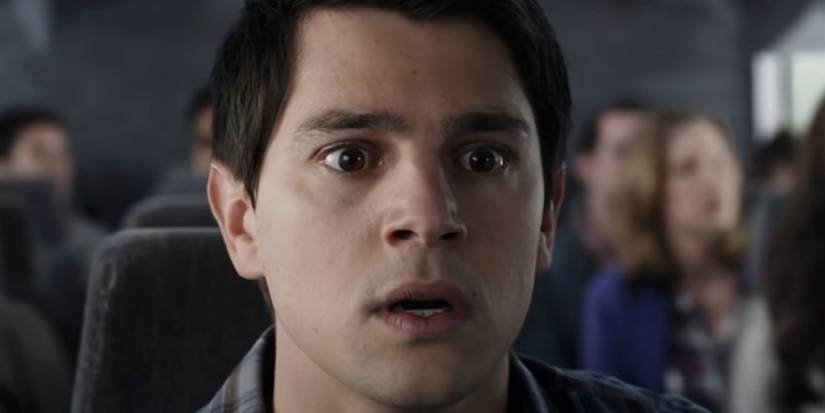
Nicholas D’Agosto as Sam looking scared on a plane in Final Destination 5.Image via Warner Bros. Pictures
The Final Destination series has always enjoyed misdirecting the audience, but it was taken to the next level for the fifth installment. Final Destination 5 sees a new group of would-be victims narrowly avoid dying on a suspension bridge collapse, but as always, death comes back to finish the job. What follows is a series of shocks and surprises, but none bigger than in the end, when the movie is revealed to be a prequel that takes place directly before the first Final Destination.
As survivors Sam (Nicholas D’Agosto) and Molly (Emma Bell) board a plane for Paris, they witness a scuffle that causes a few students to be escorted off the flight. Sam and Molly are on the notorious Flight 180, and the film ends with the two dying in the explosion that the cast of the first movie escaped. It’s a jaw-dropping twist that cleverly ties the series up in a neat bow, hitting the viewer with a prequel in plain sight that no one can claim they saw coming.
9
‘Orphan’ (2009)
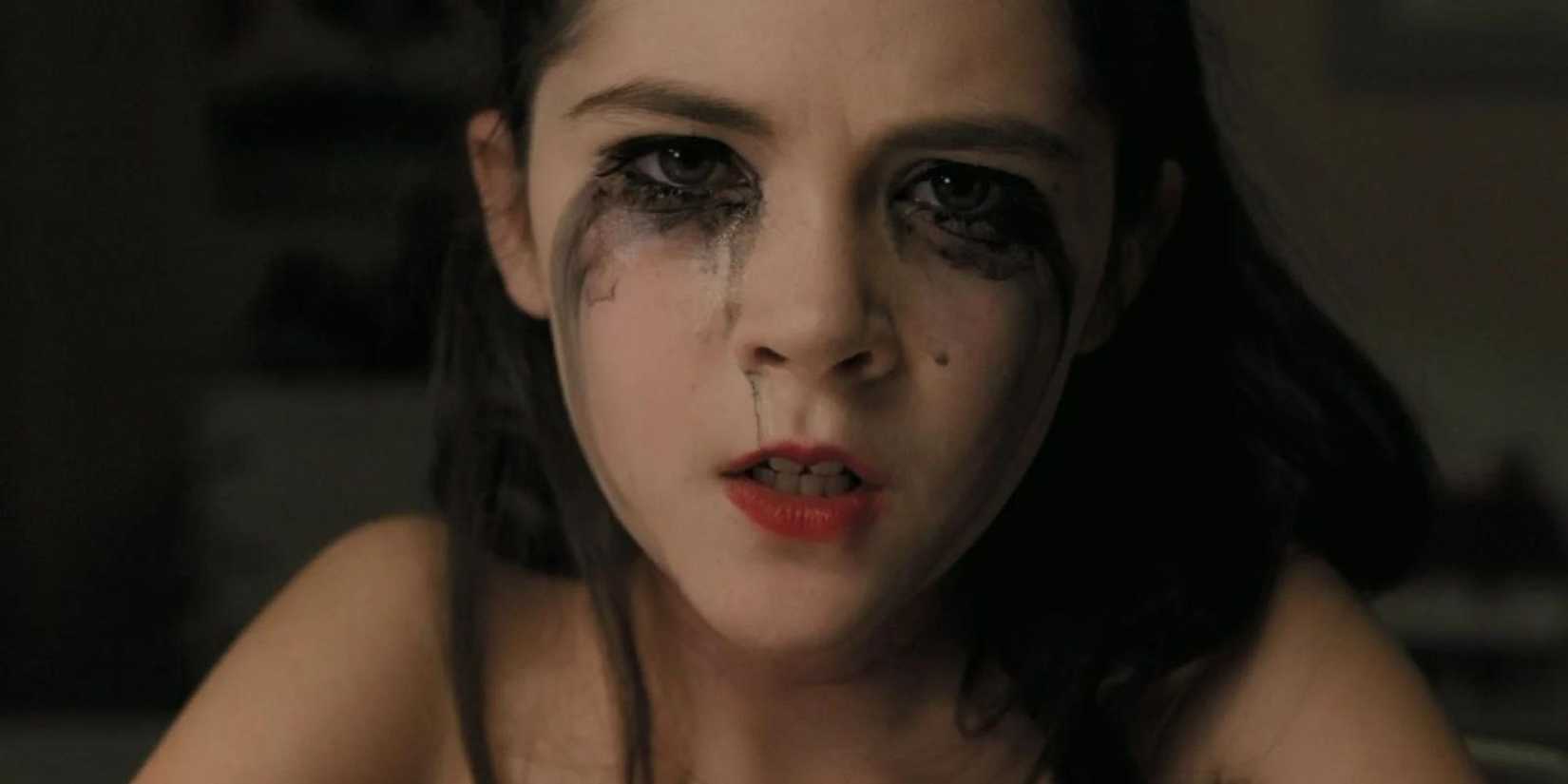
Isabelle Fuhrman as Esther crying with mascara running down her face in Oprhan.Image via Warner Bros
A grieving couple decides to adopt a child, or so they think, in the horror thriller Orphan. Couple Kate and John Coleman (Vera Farmiga and Peter Sarsgaard) invite 12-year-old Russian girl Esther (Isabelle Fuhrman) into their home, but her presence soon comes with odd behavior and violence. In an unbelievable twist, Esther attempts to seduce John, and after being rejected, removes her makeup and false teeth, revealing she is actually a 33-year-old woman named Leena Klammer.
Some twists add something extra to a film, but in Orphan’s case, the twist is the movie. Audiences have seen killer kids in movies before, and it’s telling that most moviegoers don’t need a deeper explanation for why the child is evil in the first place. However, Esther’s transformation from child to furious and scorned adult was something that spurred those who watched it into recommending the movie based on that scene alone. Unsurprisingly, the movie has become so successful that it has spawned two sequels.
8
‘The Others’ (2001)
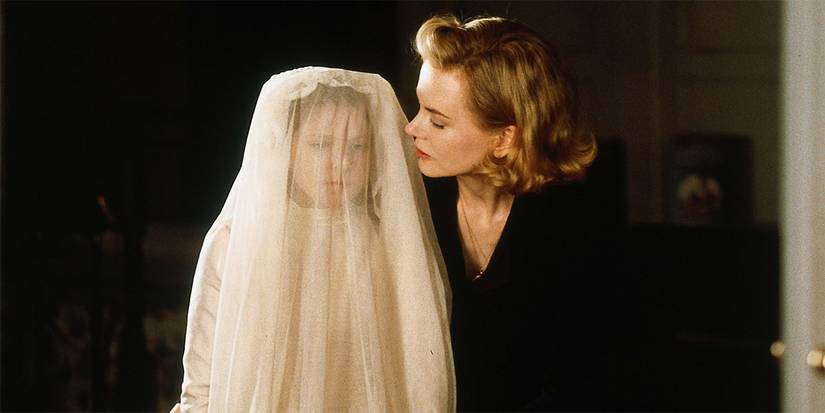
Grace (Nicole Kidman) speaks to Anne (Alakina Mann) who has a veil over her face in The Others.Image via Dimension Films
The supernatural thriller The Others would be considered one of the scariest horror movies of the 2000s based on the acting alone, but the twist ending leaves no question. For the entire movie, Grace Stewart (Nicole Kidman) has been trying to protect her children from ghosts in their home. In the finale, Grace realizes that the ghosts are in fact her and her children, both of whom she killed in a murder-suicide that she has suppressed the memory of.
It’s daring to use the “the hero is actually dead the whole time” twist because it’s used so frequently, even outside of horror. In spite of that, The Others is plotted so carefully that the film manages to avoid suspicion until the realization becomes clear to Grace. A good twist ending will succeed at surprising the audience while allowing a different but equally engaging experience on a rewatch, and The Others has the appeal.
7
‘The Wicker Man’ (1973)
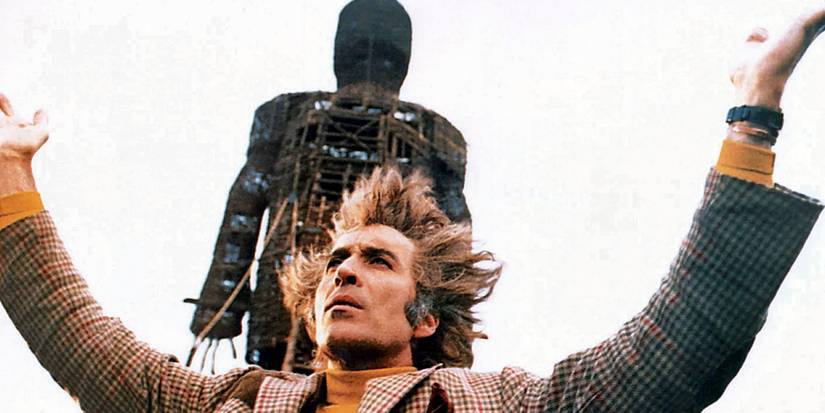
Lord Summerisle stands in front of a large wooden man in The Wicker Man.Image via Warner Bros.
For the longest, The Wicker Man held the gold standard for horror plot twists. Dedicated and pious police officer Sergeant Neil Howie (Edward Woodward) visits a small community living on an island in search of a missing girl. Unfortunately, the missing person’s case is a ruse, designed to lure Howie to their town so they may sacrifice him in a burning wooden statue to their pagan god.
The Wicker Man’s plot twist is shocking, but it adds a chilling layer to the story when taking into account that everything that happened in the movie was staged. Essentially, Howie is walking through one long con created by the village to lead him down specific paths with educated guesses about how he would react to certain situations. The level of deception runs deep in every interaction Howie has, implying that everyone around him knows the horrible way in which he’s soon going to die, and they’re looking forward to celebrating it.
6
‘The Mist’ (2007)
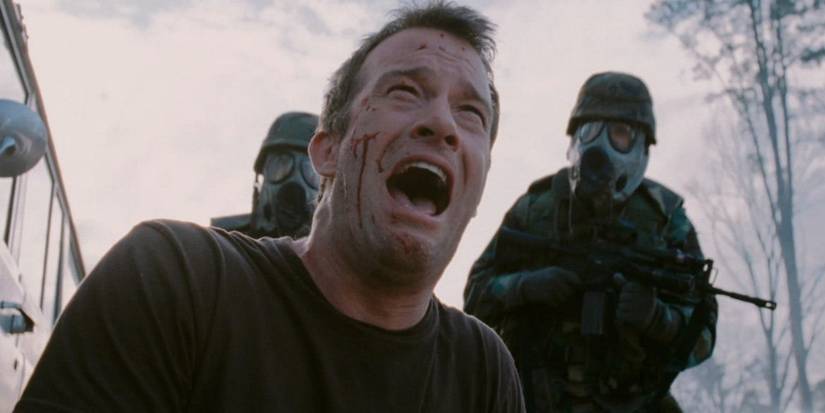
David screams in anguish in the finale of The Mist.Image via Dimension Films
There are downbeat horror endings, and then there’s the dump truck of sorrow that is the ending to The Mist. Ever since the mist arrived with the terrifying monsters, David (Thomas Jane) has seen the vicious ways the creatures have killed his neighbors. So when his escape plan leaves him stranded in a car with everyone vulnerable to an attack, David kills them all, including his own son, as an act of mercy.
However, David should have played one more song on the radio before going through with it, because moments later, the military arrives to destroy the monsters, rendering his sacrifice meaningless. It’s the cruelest turn of events for characters who were the voice of reason and were most deserving of a happy ending. David is crushed, the audience is crushed, and people who are told second-hand about this infamously bleak ending are either horrified or allured.
5
‘Black Christmas’ (1974)
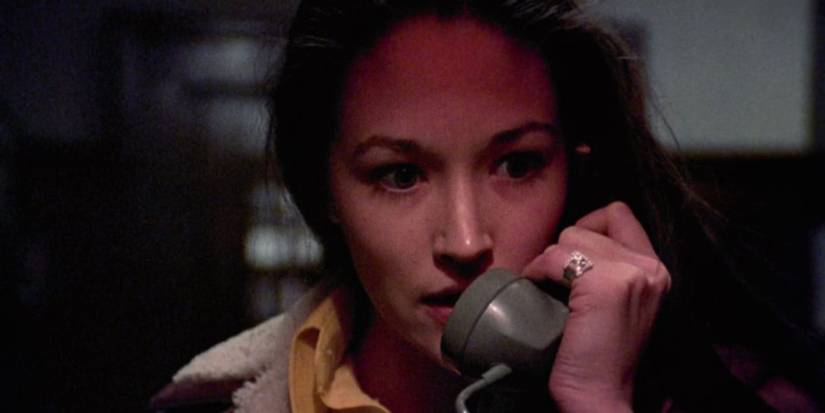
Jess Bradford on the phone in Black ChristmasImage via Warner Bros. Pictures
The obscene phone calls at the heart of the holiday slasher Black Christmas still hold the power to make skin crawl, but even more so for the sorority student Jess (Olivia Hussey), when she learns their source. While Jess stays on the phone receiving an extended verbal tirade from the mysterious Billy, the police frantically attempt to trace the call. Their trace is successful, leading the police to learn the distressing news that the calls are coming from inside Jess’ sorority house.
Urban legends have circulated about the killer’s call coming from inside the house for decades, but the first use of it in a movie is Black Christmas. To receive a threatening phone call is frightening in its own right, but there is an added violation in learning the offense is inside the one space you feel is safe or secure. The reveal of Billy’s location ratchets the tension up to an unbearable level as Jess carefully considers what to do in a situation where every move could be her last.
4
‘Diabolique’ (1955)
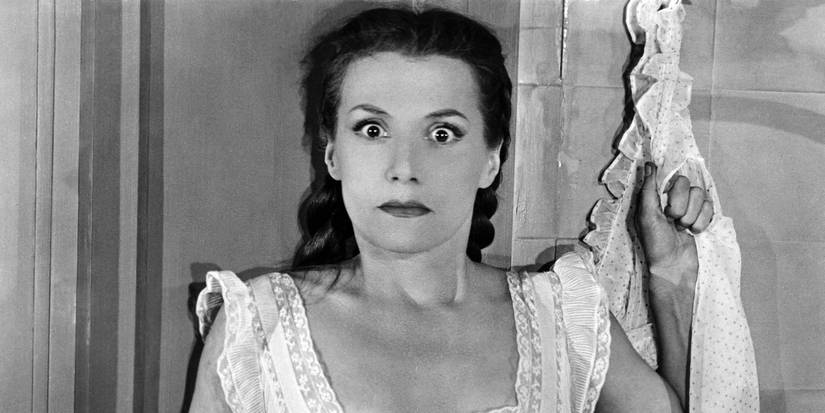
Véra Clouzot looking terrified in Les Diaboliques.Image via Cinédis
Diabolique became known as one of the greatest horror movies of the last 100 years thanks to a legendary twist. The film follows two women, Christina (Véra Clouzot) and Nicole (Simone Signoret), as they plan to murder Michel (Paul Meurisse), the abusive man who is their respective husband and lover. When Michel’s body goes missing from their staged scene, the two begin to experience odd, unexplained occurrences, hinting that the man is still alive.
In the horrifying climax, Christina is confronted with the corpse of Michel in a bathtub, dying from fright when he rises from the watery grave. However, Michel is still very much alive, and this was actually a plan by Michel and Nicole to agitate Christna’s heart condition and scare her to death. The twist is brilliantly staged, chilling both for its execution and its psychological implications, and the shot of Michel rising from the bathtub is still unsettling even after knowing the truth.
3
‘Scream’ (1996)
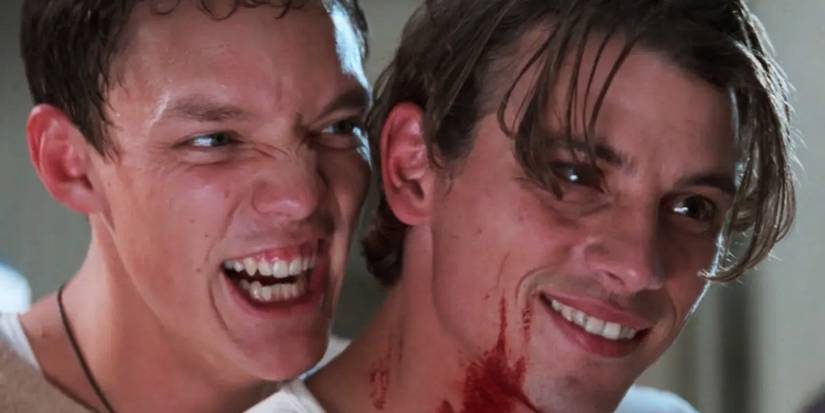
Stu Macher and Billy Loomis smiling with blood on their faces in Scream.Image via Dimension Films
Scream is one of the most important horror movies of the ’90s, largely responsible for breathing life back into a subgenre that had grown stale in the decade. The would-be teenage victims were familiar with horror movies, and the self-aware film pointed out the tired tropes of slashers by subverting them at every opportunity. This innovative approach extended to the opening scene with Drew Barrymore, the humorous lines from likable characters, and the identity of the killer(s).
The prime suspect to be the killer is Billy (Skeet Ulrich), the boyfriend of Sidney (Neve Campbell), but his name is finally cleared when he is killed by Ghostface. His “death” was just a trick to throw Sidney off track, because Billy is alive and confesses that both he and Stu (Matthew Lillard) are behind the murders. The concept of two killers was the last thing audiences expected, and the simple twist on a well-worn formula was an ingenious way to end the film.
2
‘The Sixth Sense’ (1999)
It’s impossible to talk about twists and not mention The Sixth Sense. The breakout film from director M. Night Shyamalan told the story of child psychologist Malcolm Crowe (Bruce Willis), who assists a young boy named Cole (Haley Joel Osment). Anyone who had seen a trailer for the film was aware that Cole could see dead people, but the jaw-dropping twist was that Malcolm was one of the aforementioned spirits.
A violent encounter at the beginning of the film between Malcolm and a former patient proved fatal, but his spirit had not moved on. Through his time with Cole, Malcolm was able to find closure, but the same couldn’t be said for the audience, who were still processing what they just watched. The twist ending, along with excellent performances from Willis, Osment, and Toni Collette as Cole’s mom, made The Sixth Sense a sleeper hit.
1
‘Psycho’ (1960)
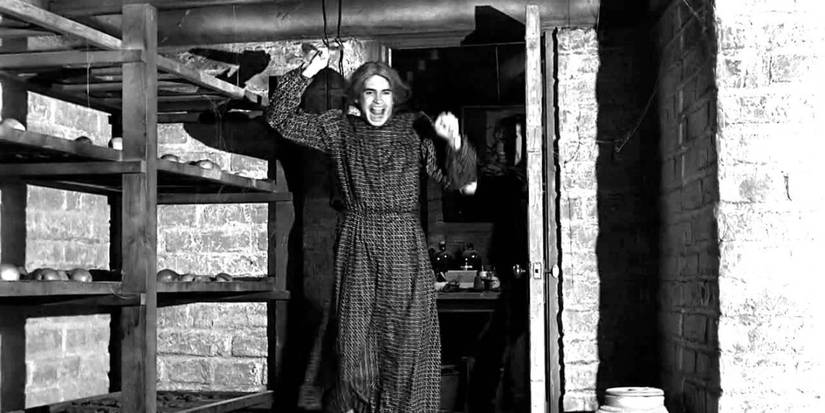
Norman Bates dressed as his mother wielding a knife in Psycho.Image via Paramount Pictures
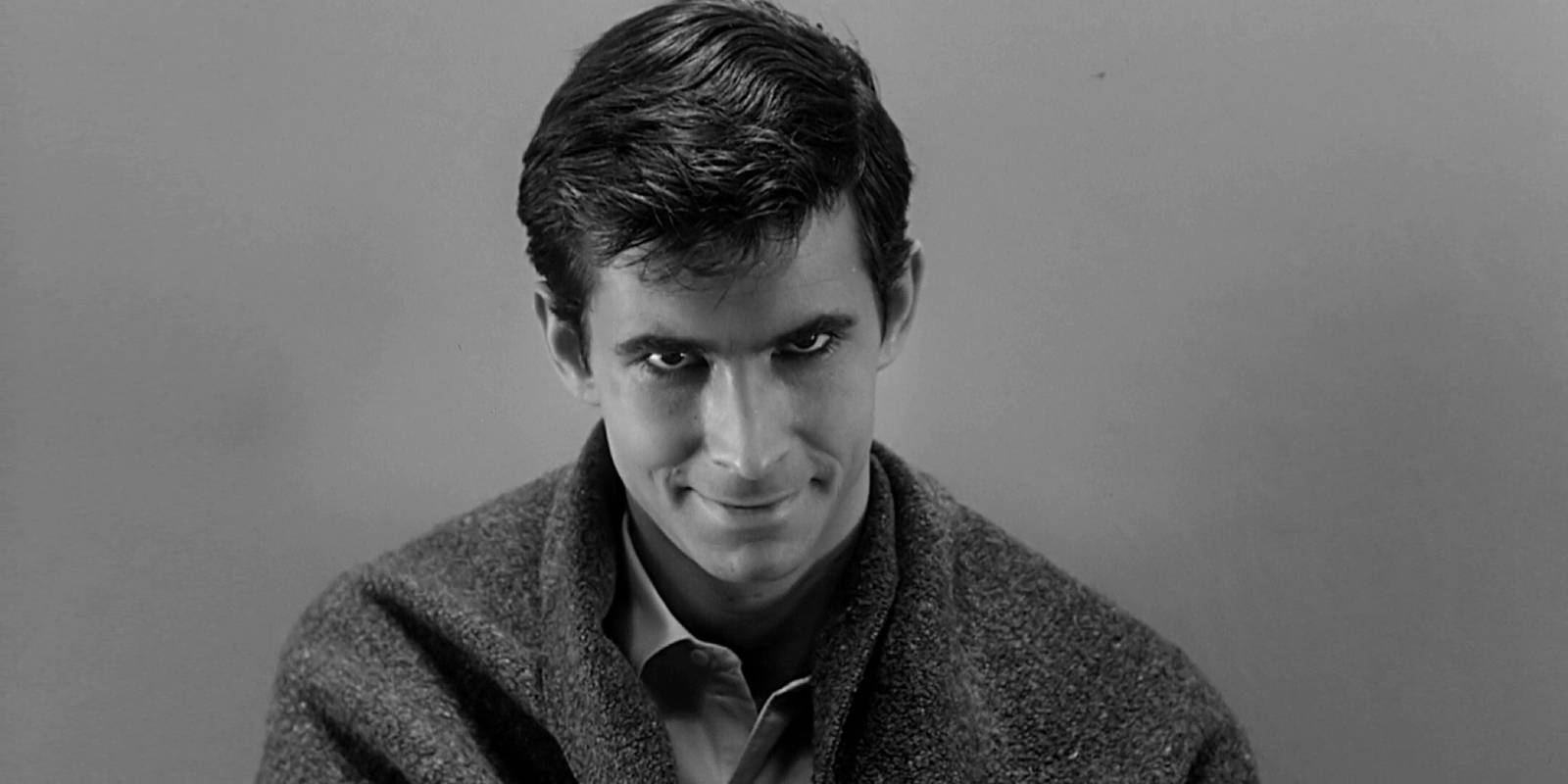
The impact Psycho had on horror cannot be overstated, featuring twists that redefined what the genre was capable of. The early and iconic death of Marion Crane (Janet Leigh), our assumed lead of the movie, definitely qualifies as a major twist, but the biggest comes in the final moments of the film. It’s at this time that we learn that Norma, the supposedly dangerous mother to Norman Bates (Anthony Perkins), has been dead for a substantial period of time, and Norman is the one responsible for all the bloodshed.
Concerned that the twists would be revealed before audiences had a chance to see the movie, director Alfred Hitchcock tirelessly worked to preserve the surprises by not allowing late admittance into the theater and buying up copies of Robert Bloch’s book. The efforts paid off because Psycho was a massive hit, influencing future horror creators to explore the terrors of human behavior instead of monsters and oversized creatures.
Release Date
September 8, 1960