
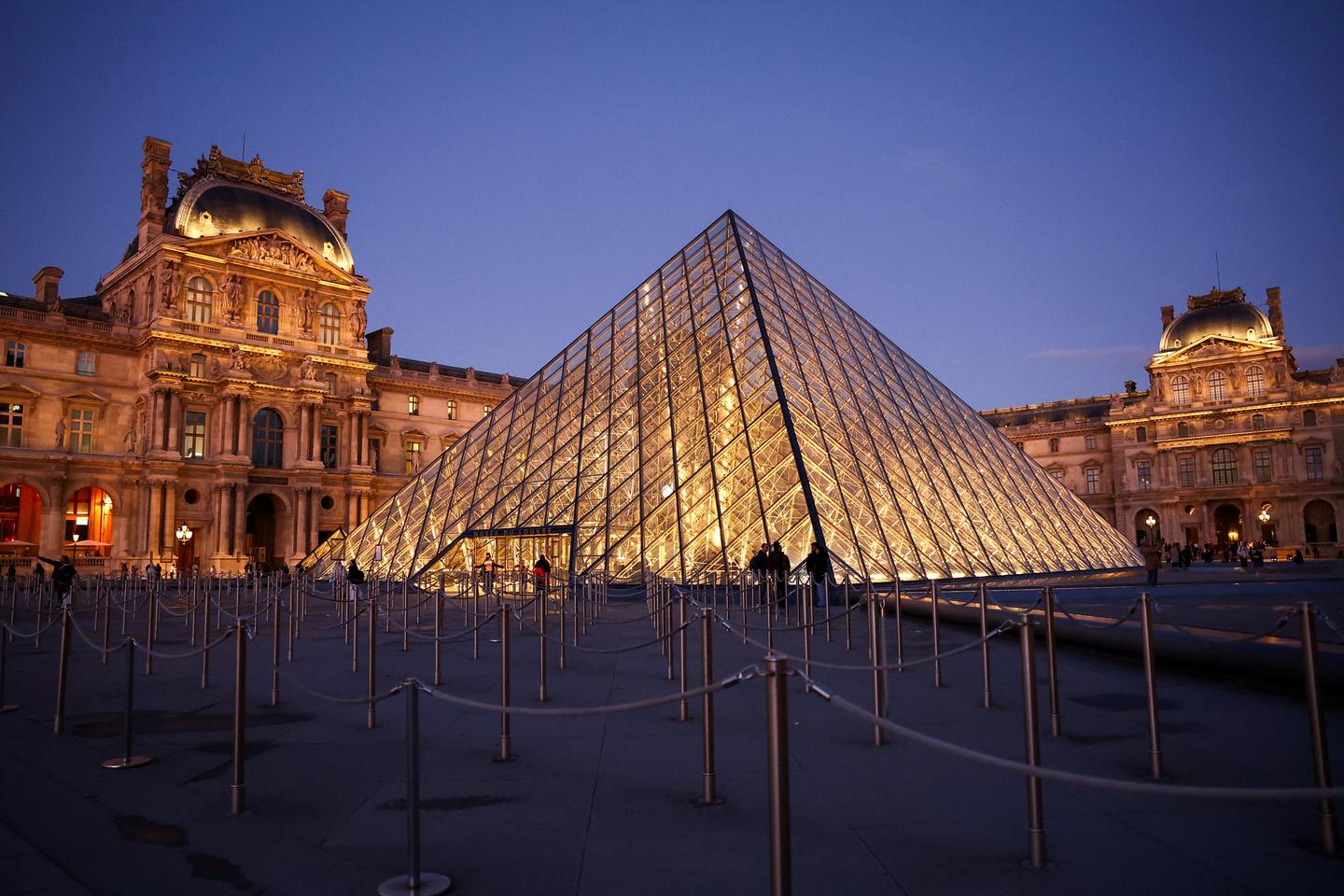
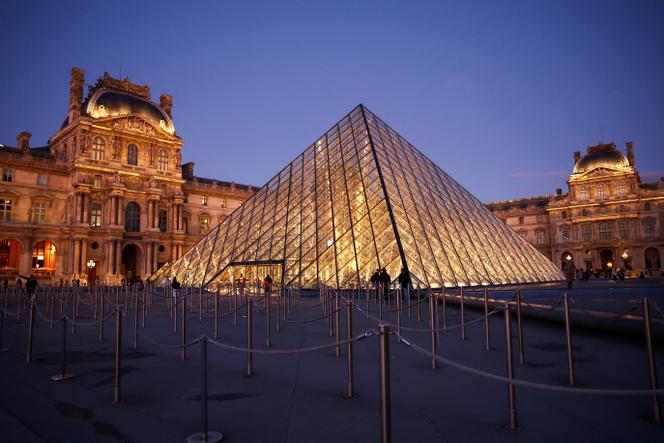
 Louvre Museum, after its Campana Gallery, originally built in 1930s, which displays a collection of Greek vases and houses the museum’s office spaces, was shut down due to structural issues, weeks after a daylight heist exposed security flaws, in Paris, France, November 17, 2025. REUTERS/Abdul Saboor ABDUL SABOOR / REUTERS
On October 19, 2025, thieves broke into the Louvre’s Galérie d’Apollon, stealing eight pieces from the French Crown Jewels valued at approximately €88 million. Multiple suspects have been arrested in the case, but the jewels have yet to be found and the investigation is ongoing.
In the aftermath of heist, which garnered global attention, the journalists on the Le Monde in English team reflected on our favorite objects in the collection of the world’s largest museum, and what we would hate to see stolen.
Read more Subscribers only Two months after Louvre heist, French museums remain on high alert
Diana Liu: The Louvre Pyramid
Like most Parisians, I don’t go to the Louvre every weekend. When I pass by the museum, it’s mostly at night – on a run or an evening stroll after dinner at one of the Japanese restaurants near Palais Royal. The glass pyramid (completed in 1989 by Chinese-American architect I. M. Pei) illuminates Napoléon III’s massive imperial courtyard, adds modernity to the Renaissance architecture and casts its amber light on the surrounding walkways and the fountains, drawing both tourists and Parisians into its glow. It’s truly the Louvre’s most splendid treasure, because it belongs to the entire city.
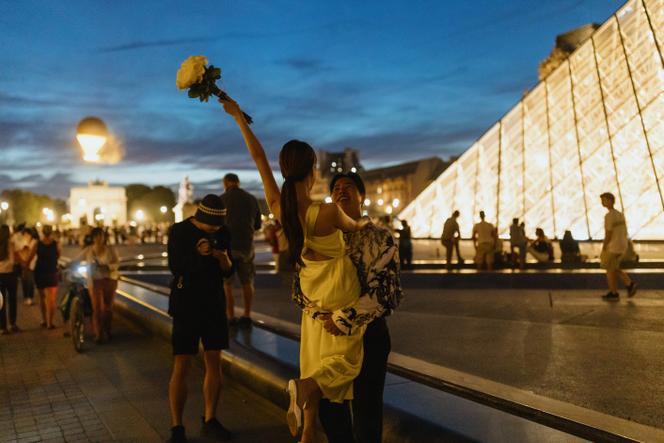 Paris, Tuilerie, August 6, 2024, the basin seen from the Louvre. LAURENCE GEAI/MYOP FOR LE MONDE
Sophie Sassi-Gorman: The blue hippopotamus figurine in the Egyptian collection
When I first saw this in the Louvre’s Egyptian collection, it struck an unexpected chord of recognition. I am pretty sure we had one of these turquoise treasures at home in Dublin when I was growing up. My dad spent a lot of time in Egypt at a certain point, so it is possible. Hopefully, he had just brought home a reproduction he’d picked up in a souk of these traditional figurines. They were often placed in tombs as hippopotamuses were hugely feared – reasonably enough as the hippo might look deceptively sweet but it is one deadly beast – and it was believed that they could help protect you in the afterlife from all the unknown horrors. The Louvre’s one dates from the 13th dynasty and is apparently from Dra’ Abu el-Naga’ Necropolis on the west bank of the Nile at Thebes. The origins of my dad’s one remain a mystery.
Read more Subscribers only The Louvre’s history of burglaries 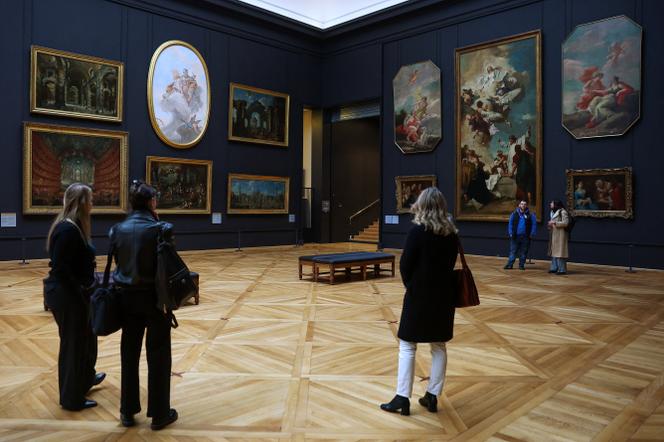 People look at paintings at the renovated gallery Salle Piazzetta in the Denon wing (Aile Denon) during a press preview at the Louvre Museum in Paris, France, December 2, 2025. GONZALO FUENTES / REUTERS
Julian Mathews: The Raft of Medusa
Some works survive a heist simply because they are too big to steal, and Théodore Géricault’s The Raft of the Medusa – six meters of collective panic – is one of them. On my first visit to the Louvre after the theft, I found myself standing before a painting that was radical long before it became topical. Géricault, a Romantic at odds with his neoclassical teacher Jacques-Louis David, painted a monumental canvas devoted not to ancient history, but to a recent, very real scandal – mismanagement, abandonment, bodies left behind.
The morning after the jewels vanished, the parallel was hard to miss. Culture Minister Rachida Dati insisted nothing had failed; Louvre President Laurence des Cars acknowledged blind spots; Interior Minister Laurent Nuñez waved for help; President Emmanuel Macron delivered solemn lines. Like Géricault’s castaways, they stared toward a distant horizon, suspended between denial and hope. At that point, the painting was already doing its job – and I was glad it stayed exactly where it was.
Hannah Steinkopf-Frank: The paintings of Marlene Dumas
In 2025, South African painter Marlene Dumas became the first contemporary woman artist in the Louvre’s permanent collection. The nine portraits now in the museum, from the “Liaisons” series, are evocative in how much they express in such a seemingly simple style. There’s also a bit of creepiness in the faces, not unlike the mask worn by Hannibal Lecter, as Dumas told Le Monde. And while a certain effortlessness might come across in her paintings, that’s not necessarily the case, as she explained: “To paint is to embark on a battle, with no guarantee of success.”
Read more Subscribers only Marlene Dumas becomes first contemporary woman artist in Louvre’s permanent collection 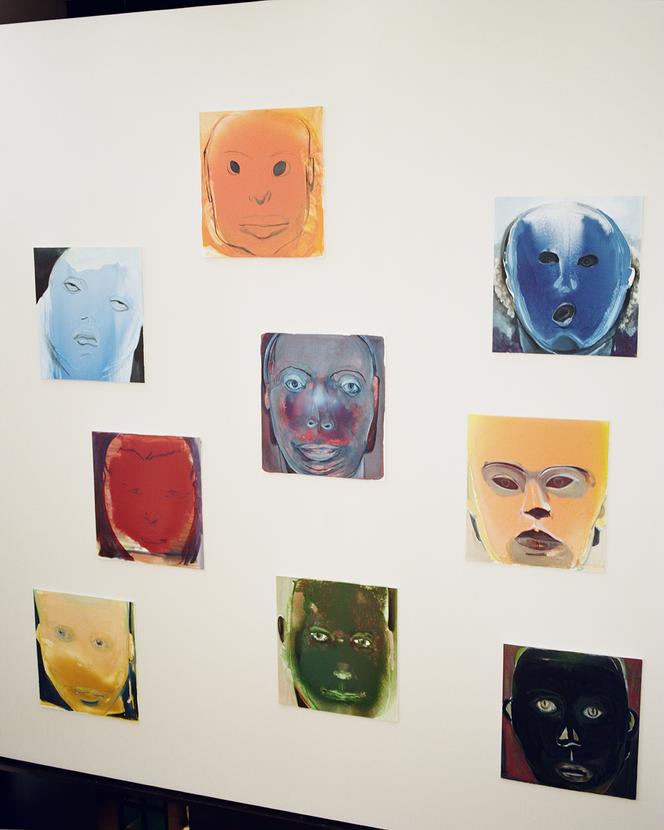 Marlene Dumas at the Louvre, October 25, 2025. MARGAUX SENLIS FOR M LE MAGAZINE DU MONDE
Zorro Maplestone: Apollo Slays Python (all of them)
While many discovered the Louvre’s Galérie d’Apollon with the stunning jewelry heist, I’ve always enjoyed a quick swing through there during a Louvre jaunt. Not for the dusty jewels of autocrats past, but to look up and bask in the wonder of Eugène Delacroix’s magnificent Apollo Slays Python, on the ceiling.
Subscription
€2.49€/month for the first year
Get unlimited access to Le Monde in English articles.
Find out more
New
Le Monde’s app
Get the most out of your experience: download the app to enjoy Le Monde in English anywhere, anytime
Download
Newsletter
LE MONDE IN ENGLISH
Sign up to receive our daily selection of “Le Monde” articles translated into English.
Sign up
Newsletter
M International
Sign up to get the best of M le Magazine du Monde twice a month, straight to your inbox.
Sign up now
Yet that’s not the only Apollo Sauroktonos one can see in the Louvre: Be he a triumphant Italian white marble dragon-slayer, a pensive Roman youth or even a sensual Florentine bronze, all throughout the Louvre shining Apollo reminds us that we are always but one prophetically-aimed shot away from defeating our own coiled and chthonic serpents.
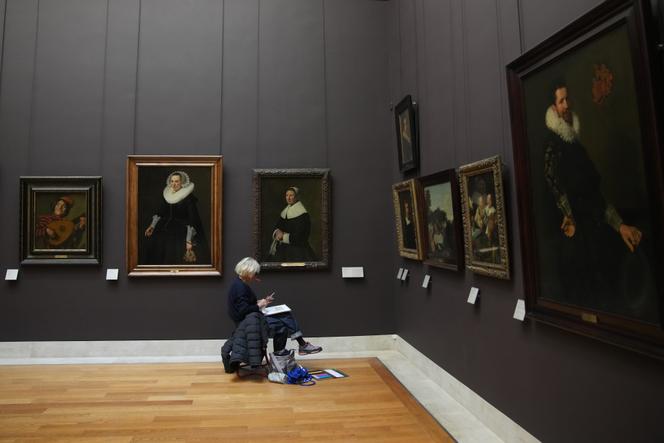 A woman draws in the Richelieu gallery of Le Louvre museum are seen Wednesday, November 19, 2025 in Paris. CHRISTOPHE ENA / AP
Pierre-Paul Bermingham: The Tennis Court Oath
On December 15, Louvre employees voted to go on an indefinite strike. The protest was called off (while warning of future action) a few days later, but their “unanimity” – according to the CFDT and CGT unions – made me think of a drawing currently exhibited at the Louvre, on loan from the Château de Versailles. The Tennis Court Oath (known in French as Le Serment du Jeu de Paume) by Jacques-Louis David represents an early moment in the Revolution, when all members but one of the Third Estate swore not to separate until a constitution was established. Over the following months and years, the near-unanimity of that day would collapse, violently. And David would never complete his painting.