
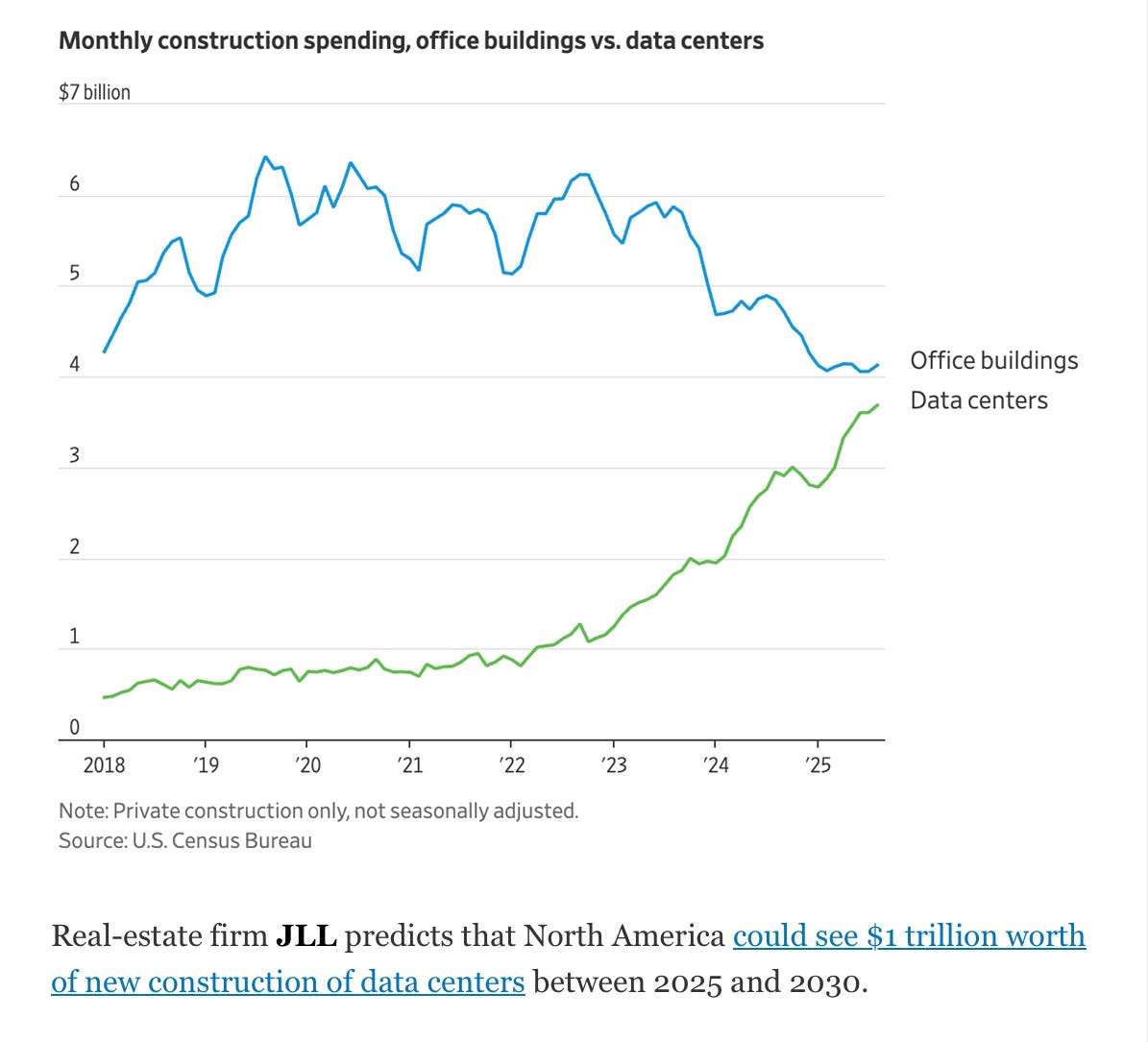
Silicon Valley and The White House appear to be completely smitten with large language models, rebuilding the world around the hope that LLMs will lead to artificial general intelligence, and a radically redefined economy. Signs of this enthusiasm are widespread. The generative AI economy has driven Nvidia and the valuations of private companies like OpenAI to astonishing heights. According to the Wall Street Journal, “Business investment in AI might have accounted for as much as half of the growth in gross domestic product, adjusted for inflation, in the first six months of the year.” And it’s not just chips; data centers are a big part of what’s going on too, per this graph in Tom Loftus’s WSJ newsletter this morning shows that construction spending on data centers is going way way up, even as construction for office buildings is declining:
But many others have found that LLMs are not quite as advertised. First there was the MIT study on productivity, showing that 95% of companies aren’t receiving significant returns on their AI investments, and then several other studies pointing in the same direction. And now, this morning, I read that even in coding, the flagship application of generate AI, trouble is brewing:
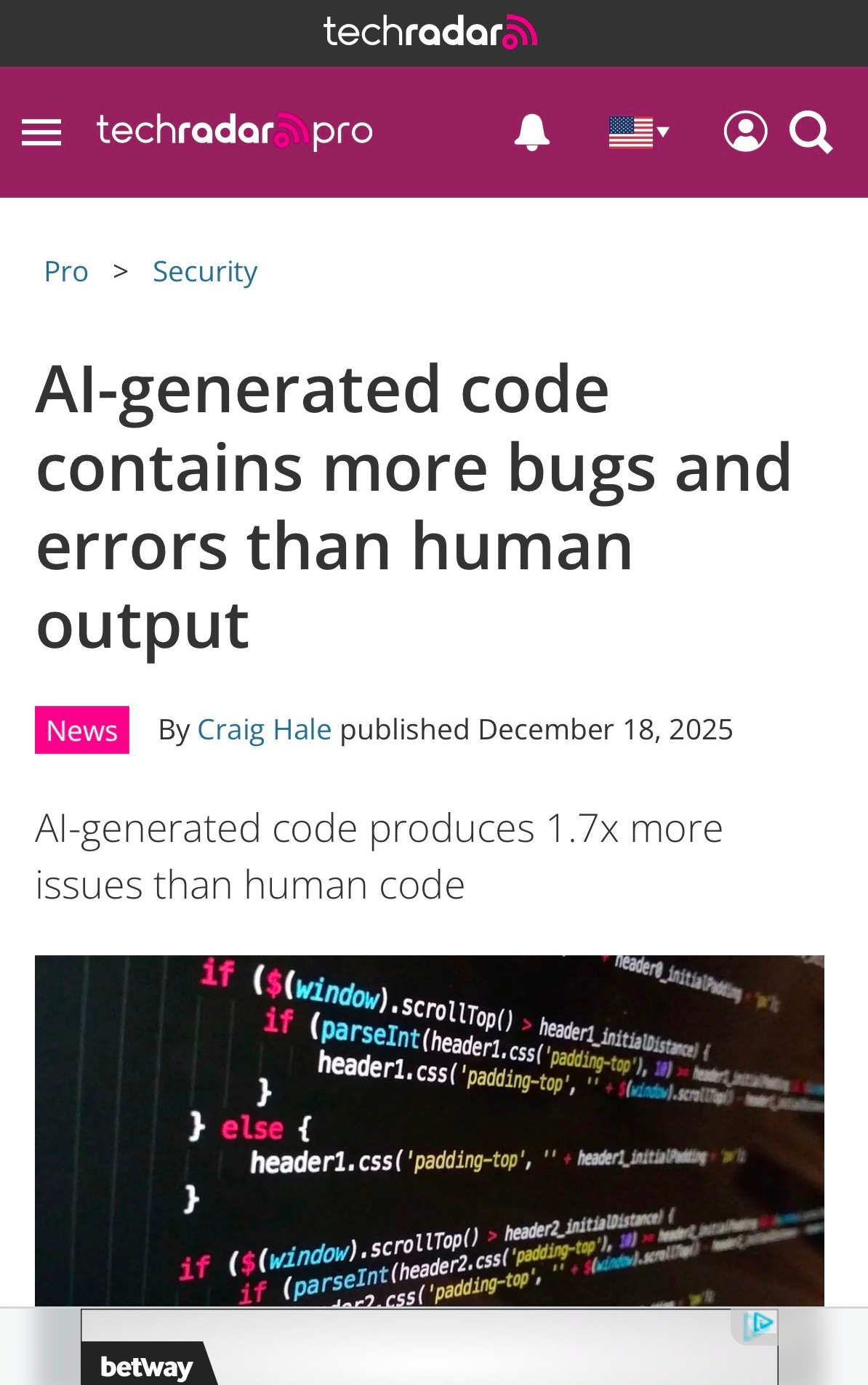
This is in line with the July METR study showing that coding tools sometimes impair productivity rather than increasing it.
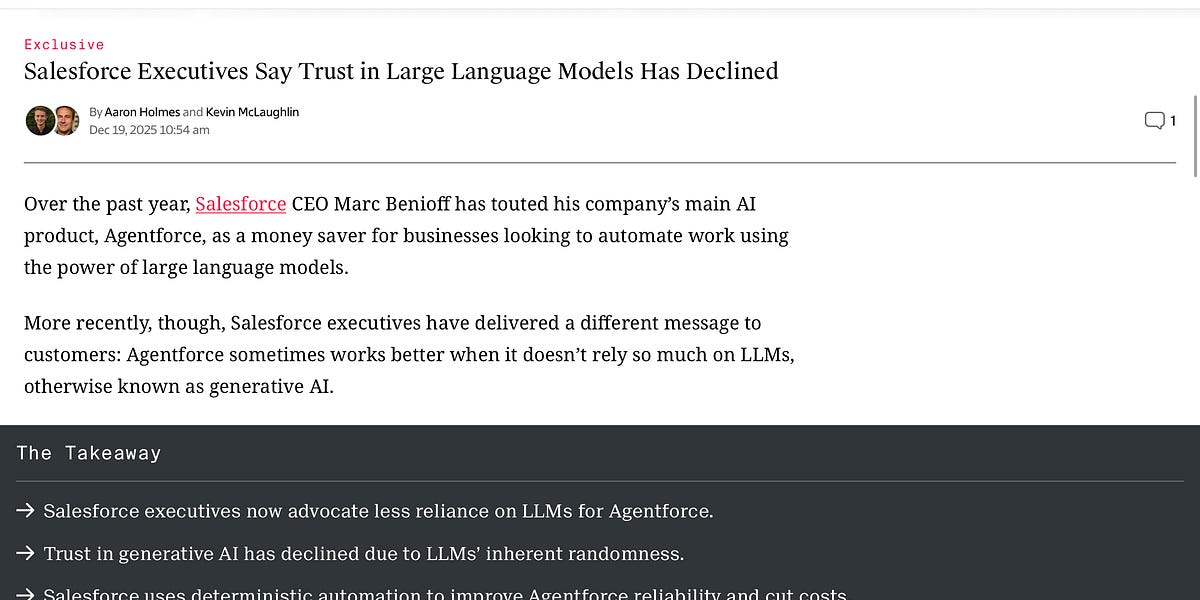
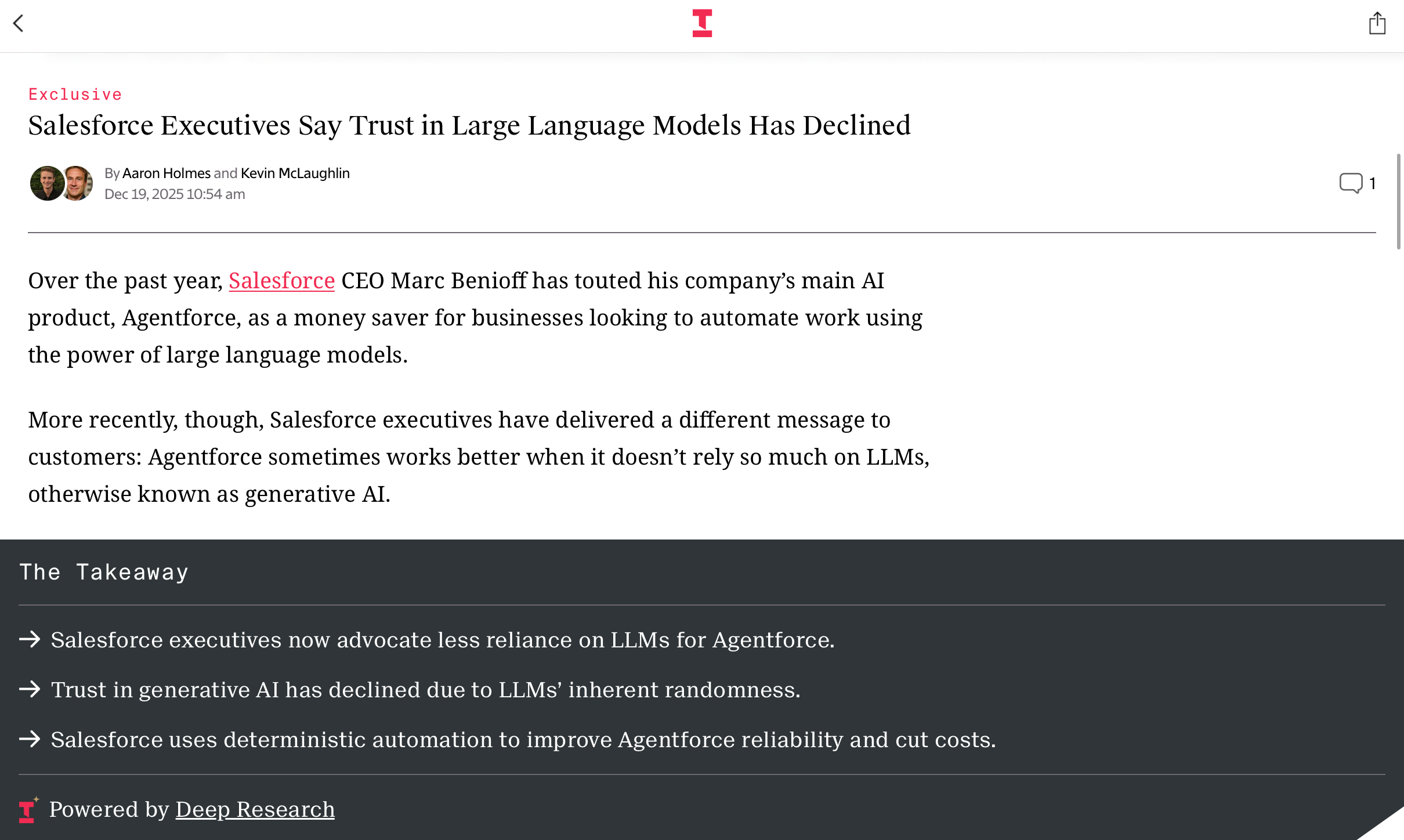
Meanwhile, in an echo of The Klarna Effect, Salesforce is backing down on its own enthusiasm for LLMs, warning that they aren’t trustworthy. The Information quotes an exec there as saying that trust in generative AI (you know, the kind that you need all those data centers for) has declined over the last year:
Needless to say, the speculative America, buying chips and building data centers on the hope that it will pay off, is at odds with the growing disappointment.
We could easily wind up with too many data centers, and a lot of chips that rapidly lose their value. In the worst case, as I have warned before, we may hear shouts of “too big to fail” and calls for government bailouts.
And, honestly, I think that is the most likely scenario.
§
The other thing I read this morning was about some dude who went all in on Tesla – and lost, timing it badly, in a CBC story called “Bank denies allegations it gave bad advice to Tesla investor who lost $415M.”
The bank’s defense is arguing, perhaps with good reason, that the guy should have known better. The bank claims the client “was already a highly sophisticated and experienced options trader, including with the use of significant margin” and pointedly observes that “plaintiffs had numerous opportunities throughout the relevant period to follow [the bank’s] investment advice by diversifying and derisking the mix of assets in their investment accounts.”
Good advice for individuals investors; good advice for a nation.
Going all in on Generative AI, without diversifying intellectually and economically, is likely an immense mistake.