
Nutrition can feel overwhelming and challenging to manage, especially in our fast-paced lifestyles. Recently, apps like Nourish and Fay Nutrition have emerged, serving as online therapy platforms for food and healthy eating.
Sounds great on paper, but is it actually something that can help you navigate your diet on a daily basis? Our tester, Kristin, tried out Nourish to see if it could help guide her as she reset her diet while managing chronic pain. Follow along with her experiences and our Nourish brand review to see if this app can help you on your nutrition journey.
The platform is similar to online therapy platforms, as it matches you with an RDN or allows you to search for one. But its main goal is to help people access information and guidance on how to eat healthier in a way that fits their lifestyle, culture, goals, and personality.
Nourish launched in 2021, cofounded by childhood friends who wanted to increase access to helping people eat well. “More than half of Americans have a chronic condition related to what they eat,” said the founders in an interview from 2023, “which has contributed to healthcare costs going up and quality-adjusted life expectancy going down.”
The founders have employed registered dietitian nutritionists, which helps keep the back-and-forth between insurance companies to a minimum for both RDs and patients.
To get started with Nourish, you need to fill out a questionnaire. Kristin says the process is intuitive and simple, and she found it to be quite helpful. “I liked that it asked about medications and what conditions one might manage,” she said.
The questionnaire starts by asking about your goals and areas you’d like to work on, your current activity level, where you’d like support, and how motivated you feel. Then it asks you questions about your location, date of birth, and your insurance provider. The final question before matching with a nutritionist asks you to share any additional information about your goals, concerns, and what you hope to achieve through Nourish.
Afterwards, you’ll be given a list of RDs that best align with your goals and specifications. All of their qualifications are shown on their page, along with a bio. Kristin’s RDN was “so impressive. She has a PhD in Food Science and a Master’s in Public Health, in addition to being a nutritionist and dietitian.” The platform shows the dates and times when each professional is available to meet. You can schedule appointments as early as the same day or the next day, or for a future date.
You can also add additional filters to narrow your search further, including language options and any diet preferences you have, such as Indian, Mediterranean, Soul Food, and more.
Kristin was happy to find she could filter for diets. “I was able to select soul food, you know, Black, southern soul food, and that gave me a different cache of nutritionists.” Her dietitian was also African American, so she was able to converse with someone who understood her body, nutritional needs, and the medical issues she had dealt with. “She seemed to really understand the nuances–and talk about accomplished,” Kristin said.
It was just so cool. So I’m like, well, I can really talk and be open with [my dietitian]…And I had conviction, I was motivated.
After signing up and answering questions, Nourish will match you with a dietitian to meet you where you’re at. You’ll work with them to come up with an action plan with you that considers sleep, mindfulness, movement, and more.
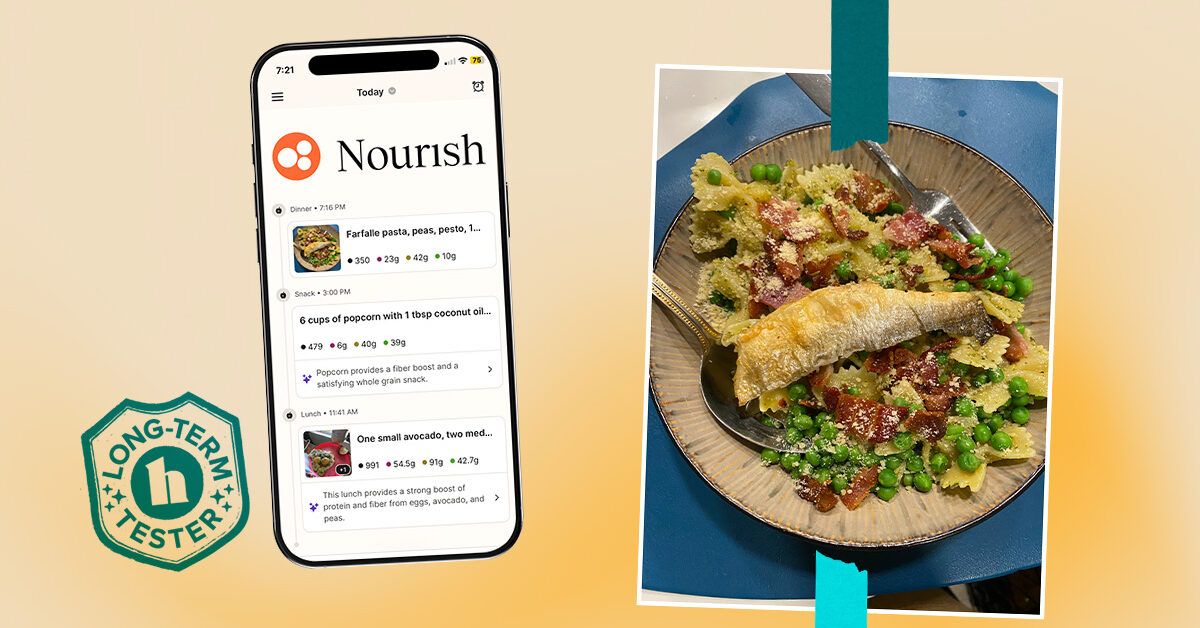
Alongside meeting with your RDN, Nourish offers tools and resources in the mobile app that can help you track your progress and meals, set goals, and find recipes and meal ideas. It also offers curated content tailored to your specific conditions, diets, and more. Members also have the option to have medically tailored meals delivered to their door.
The food logging aspect of this app is intuitive, as Kristin mentions that you just have to “snap a photo of your food and add any notes or descriptions for items not visible in the photo, and it’ll calculate it for you!”
Your nutritionists can also send comments and notes on your meal logging to help you stay on track. “My nutritionist made a point to say we’re looking for balanced eating according to my rigorous activity level and to sustain energy through the day,” Kristin said, “not calorie counting and losing pounds.”
What about the dietitians?
Keep in mind that to qualify as an RDN, you must have a minimum of a master’s degree, have at least 1,000 supervised practice hours in an Accreditation Council for Education in Nutrition and Dietetics (ACEND)-accredited program, take the national exam for dietitians, become licensed in your respective state, and maintain your credentialing throughout your career. And that’s not including any specialty certifications you may want to pursue.
To be a nutritionist at Nourish, the professionals must be a registered dietitian nutritionist credentialed by the Commission on Dietitian Nutritionist (CDN). They must be legally authorized to work in the United States. The onboarding process for RDNs has a fast turnaround from application to hire.
All Nourish RDNs are brought on as W-2 employees, which means the employer handles a lot of administrative tasks and provides employer-based benefits. At the same time, they’re also able to carry on their own private practice.
Each RDN can create their own routine. Nourish handles everything related to insurance, credentialing, acquiring and matching patients, and any other tasks that detract from patient-focused care.
Nourish monitors its dietitians’ progress with their patients and how they handle required tasks, such as completing progress logs and applying for licensure. Nourish focuses on finding RDNs who are empathetic and “care deeply about helping patients”.
[My RDN is a] nutritionist, dietitian, food scientist, master in public health, and has a doctorate in nutrition studies, I believe? I mean, talk about all the acumen, all the accolades.
A big part of Nourish’s mission is to keep information to health and nutrition easily accessible to as many people as possible. Because of that, Nourish claims that 94% of in-network patients pay $0 out-of-pocket for every appointment with an RDN. Depending on your insurance plan, you may have to pay a copay, however.
Currently, Nourish collaborates with major insurance providers, including Blue Cross Blue Shield, UnitedHealthcare, Aetna, and Cigna. It does accept Medicare; however, Nourish will only accept it if you have a diagnosis of diabetes or chronic kidney disease. No other diagnosed conditions (including prediabetes) are included.
Nourish does not accept Medicaid at this time, but it does accept HSA/FSA payments.
Nourish also has a ‘Nourish Guarantee’ for billing that ensures there will be no surprise fees for any miscommunication, uncovered appointments, denied coverage, and more.
If you are not covered by insurance or decide to pay out of pocket, Nourish’s sessions are priced at $145 per session. Nourish also charges a $75 no-show and late cancellation fee if you cancel within 24 hours of your scheduled appointment time. If you cancel at least 24 hours before your appointment time, you will not incur any fee.