
Baghaei cited the Lavon Affair, which took place in Egypt in 1954, as an example. “The Zionist regime, exploiting Egyptian Jews, carried out a series of bombings and sabotage operations against non-civilian targets linked to the United States and Britain in Alexandria and Cairo, including libraries and post offices. This is a very clear case of a false-flag operation,” he said.
Without directly mentioning last week’s shooting in Australia, he added that “these actions are entirely precedented. The most effective way to counter such behavior is to expose it and inform public opinion about the conduct and crimes of the Zionist regime, which spares no inhumane means to advance its objectives.”
Earlier this month, a mass shooting at a Hanukkah gathering at Bondi Beach in Sydney killed 15 people, including a child. Australian police and intelligence agencies said the attack was linked to Islamic State, and authorities and world leaders said it was motivated by antisemitism.
Following the attack, some Israeli officials and media outlets raised the possibility of Iran’s involvement in the attack, saying the matter was under review. Israel Hayom reported, citing an Israeli official, that in recent months Iran’s activities to target Israeli and Jewish interests worldwide had increased.
Iranian officials and state-linked media, meanwhile, rejected accusations of structural antisemitism or plots to attack Jewish targets, instead seeking to cast Israel as responsible for the Sydney incident.
Ebrahim Azizi, head of parliament’s national security and foreign policy committee, said last week that what he called Israeli officials’ “hasty” remarks about the attack could point to their own role, while lawmaker Esmail Kowsari said: “Enemies have always tried, by hiring agents, to pin responsibility for their actions on the Islamic Republic and the IRGC.”
Separately, a senior Iranian military commander accused Israel on Sunday of carrying out killings abroad for its own political ends.
“The Zionist regime has resorted to self-harm and, in an effort to prevent reverse migration and escape internal turmoil, is assassinating members of the Jewish community and individuals linked to it in other countries,” said Abdolrahim Mousavi, chief of the General Staff of the Armed Forces of the Islamic Republic.
“Israel is playing the victim. This is not the first time; they have repeatedly committed such crimes,” he added.
Mousavi or other Iranian officials provided no evidence for the allegation.
In August, Australia accused Iran of involvement in two antisemitic arson attacks and ordered its ambassador to leave the country within seven days.
No access to Qatar-held funds
Turning to Iran’s frozen assets held in Qatar, Baghaei said Tehran still does not have effective access to billions of dollars transferred under a US-mediated prisoner swap arrangement.
“This issue is one of hundreds of examples of the United States’ failure to honor its commitments. Under the understanding that had been reached, assets belonging to the Iranian people were supposed to be made accessible to the government of the Islamic Republic of Iran. Unfortunately, the American side did not fulfil its obligations, and this breach of commitment continues to this day.”
The funds, previously blocked in South Korean banks after US sanctions in 2018 and later transferred to Qatari banks under a 2023 agreement, remain inaccessible despite assurances they could be used under defined conditions, he said.
Iran has previously said it gained access to funds released from South Korea and transferred to Qatar, following an agreement mediated by Washington.
The $6 billion in Iranian funds was released under a US sanctions waiver as part of a prisoner exchange deal that saw Iran agree to free five Americans, while five Iranians detained in the United States were also released.
US officials said the money, transferred from South Korea to Qatar, could be used only for tightly monitored humanitarian purposes and was not directly accessible to Tehran.
 Iran reports progress on accessing frozen assets despite sanctions
Missile program pressure
Responding to a question about Israeli and US media reports suggesting Prime Minister Benjamin Netanyahu may urge US president Donald Trump to back renewed military action against Iran over its ballistic missile program, Baghaei said Iran’s missile program was purely defensive and not open to negotiation.
“Iran’s missile program has been developed solely for the defense of the country and is fundamentally not a matter for negotiation,” he said.
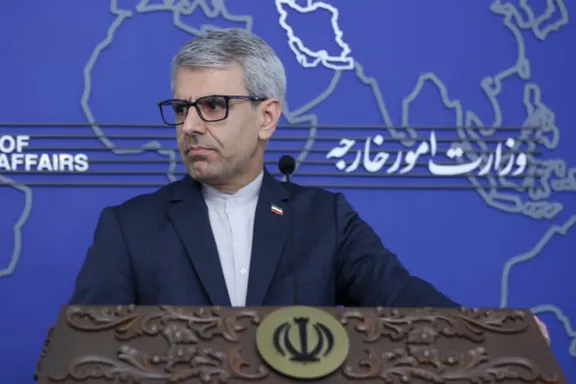 Iran’s Foreign Ministry Spokesman Esmail Baghaei
“The media hype is also part of a hybrid war that the Zionist regime, with the help of the United States and affiliated media networks, has long designed and pursued against the Islamic Republic of Iran… The armed forces of the Islamic Republic of Iran know well how to defend the country if necessary.”
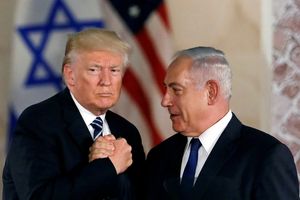 Israel to brief Trump on possible Iran strikes – NBC
 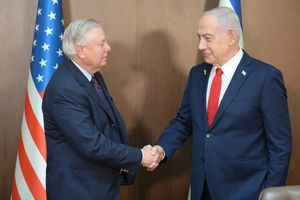 US should strike Iran if nuclear enrichment resumes, US senator says
Ukraine accusations
Baghaei also rejected comments by the Council of Europe that Iran has provided military assistance to Russia in the Ukraine war, calling the comments repetitive.
“From the very beginning of the conflict, we have said disputes must be resolved through dialogue, and that we have had no involvement in this war,” he said, adding that maintaining relations with Russia did not amount to military intervention.
“European countries should genuinely focus on their own responsibilities and act on them, instead of repeatedly levelling accusations against others. European parties need to look at their own track record and examine why the Ukraine conflict emerged in the first place.”
Western governments say Tehran has provided Moscow with Shahed-series drones, which Russia has used extensively to strike Ukrainian infrastructure, particularly energy facilities and urban areas.
Iran has denied direct involvement in the war but has acknowledged supplying drones to Russia before the conflict, a remark disputed by Kyiv and its allies, who say cooperation has expanded since the invasion.
PJAK and regional security
Asked about remarks by Turkey’s defense minister suggesting the Kurdish armed group PJAK had prepared to act against Iran during Tehran’s June conflict with Israel, Baghaei said he could not comment officially but described the broader context as indicative of coordinated pressure.
“One point is entirely clear: Israel and the United States had designed a very comprehensive plan to strike at the foundations of Iran,” he said, adding that Iran resisted efforts to undermine its territorial integrity.