
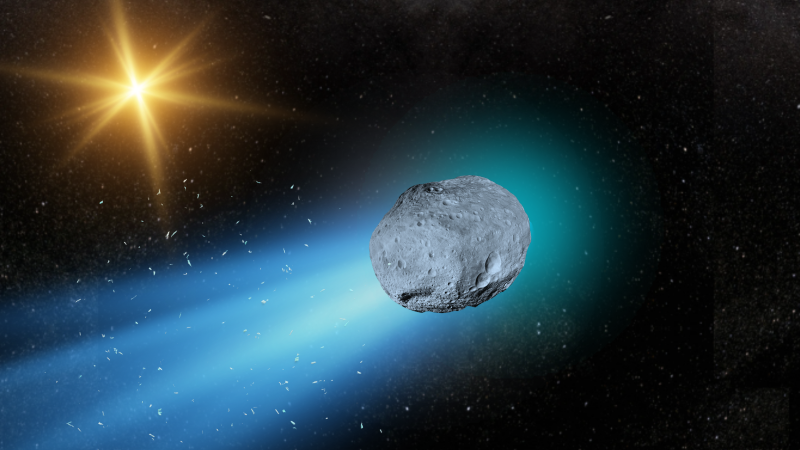
Astronomers continue to track the mysterious interstellar visitor Comet 3I/ATLAS as it speeds through the solar system, using spacecraft and telescopes both in orbit and on Earth, News.Az reports, citing Reuters.
On Wednesday, NASA released its latest images of the interstellar object after the U.S. government shutdown led to a month-long pause in public updates from the space agency.
Comet 3I/ATLAS was discovered in July by the Asteroid Terrestrial-impact Last Alert System (ATLAS) observatory in Chile – a NASA-funded project designed to detect potentially hazardous asteroids and comets. It is only the third confirmed interstellar object ever observed entering our solar system, following 1I/‘Oumuamua in 2017 and 2I/Borisov in 2019.
During the government shutdown, NASA’s communications pause temporarily limited access to new imagery and mission updates. However, other space agencies – including the European Space Agency (ESA) – continued to monitor the comet. In October, ESA released images captured during a Mars flyby using orbiters originally designed to study the Red Planet, not fast-moving interstellar objects millions of miles away.
NASA: Comet 3I/ATLAS not aliens
NASA Associate Administrator Amit Kshatriya addressed growing online speculation about the comet’s origins, firmly dismissing rumors that it could be alien technology.
“3I/ATLAS is a comet,” Kshatriya said.
Source: NASA
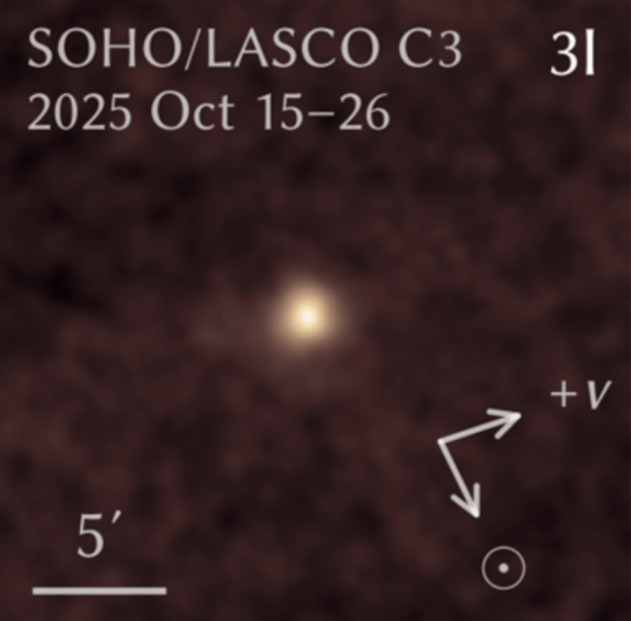
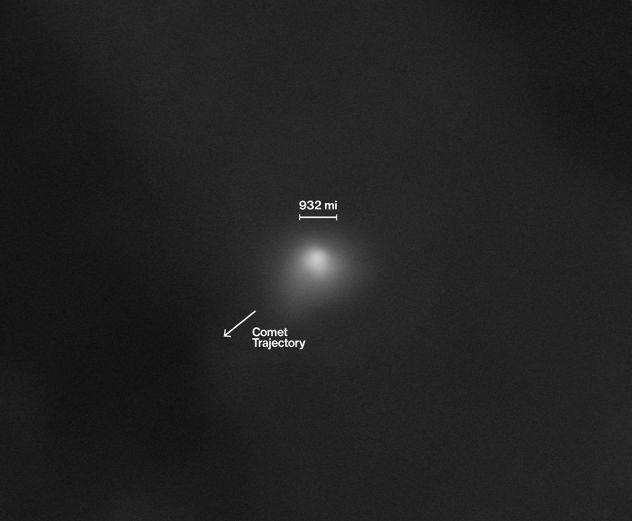
Nearly a dozen spacecraft and space telescopes are currently observing the interstellar comet as it travels through the solar system. On Wednesday, NASA released new images from the SOHO mission – which studies the sun – as well as from several Mars missions, including the Perseverance rover, Mars Reconnaissance Orbiter (MRO), and MAVEN spacecraft.
Some of the closest images were captured between Oct. 15 and 16 by the joint ESA/NASA SOHO spacecraft, showing a subtle brightening as the comet approached the sun.
Astronomers are particularly interested in how Comet 3I/ATLAS behaves chemically before and after reaching perihelion – its closest point to the sun – which occurred on Oct. 31, when it passed within about 126 million miles (203 million kilometers) of our star.
Source: NASA
According to NASA, Comet 3I/ATLAS will make its closest approach to Earth on Dec. 19, remaining roughly 170 million miles (274 million kilometers) from the planet. Researchers hope that the latest data and imagery will help reveal how interstellar comets differ from those native to our solar system – offering rare clues about the formation and composition of distant star systems.