
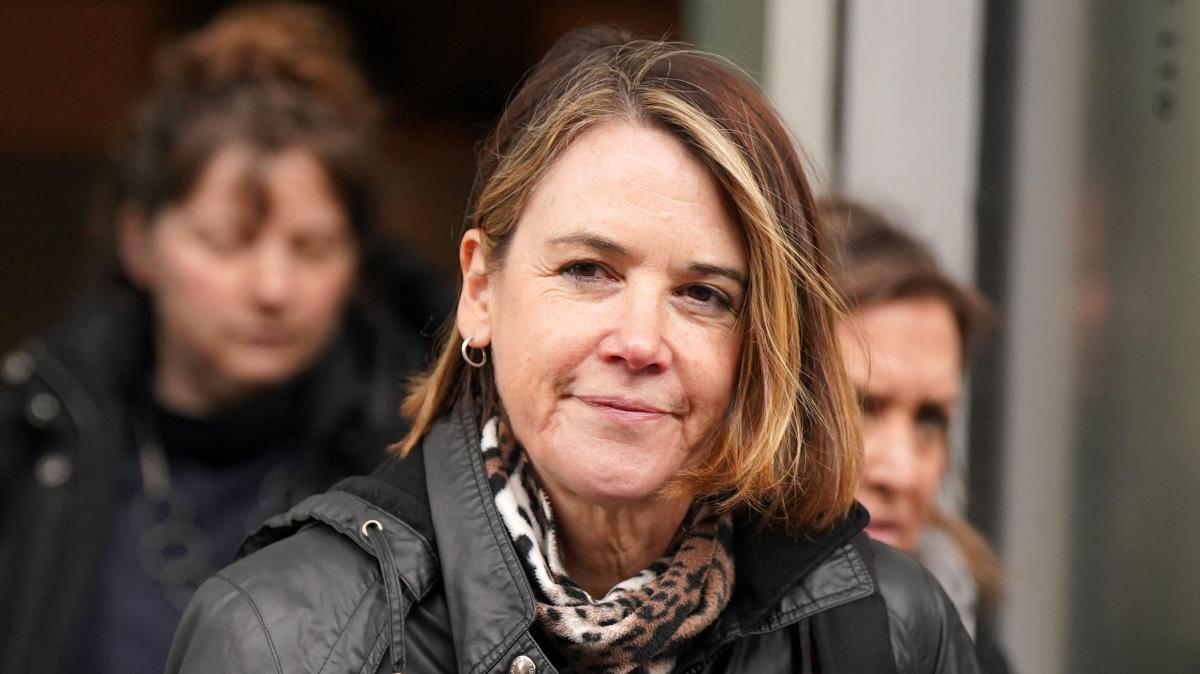
Invisible and anonymous — two words that have been used this winter to describe Caroline Lamb, the head of the Scottish NHS.
Despite appalling waiting times, a flu spike that is pushing hospitals further into crisis and doctors planning to strike, Lamb has rarely been seen, according to staff.
“I would estimate less than 1 per cent of the NHS workers could tell you who is the chief executive,” Andrew Buist, a GP who recently led the British Medical Association Scotland’s GP committee, said. A frontline union representative said: “We do not see much of her or other senior people.” In August, The Scottish Sun reported that Lamb had not visited a single hospital for more than a year.
Lamb, who trained as a chartered accountant, was appointed to the top post in January 2021 and has a salary of more than £200,000.
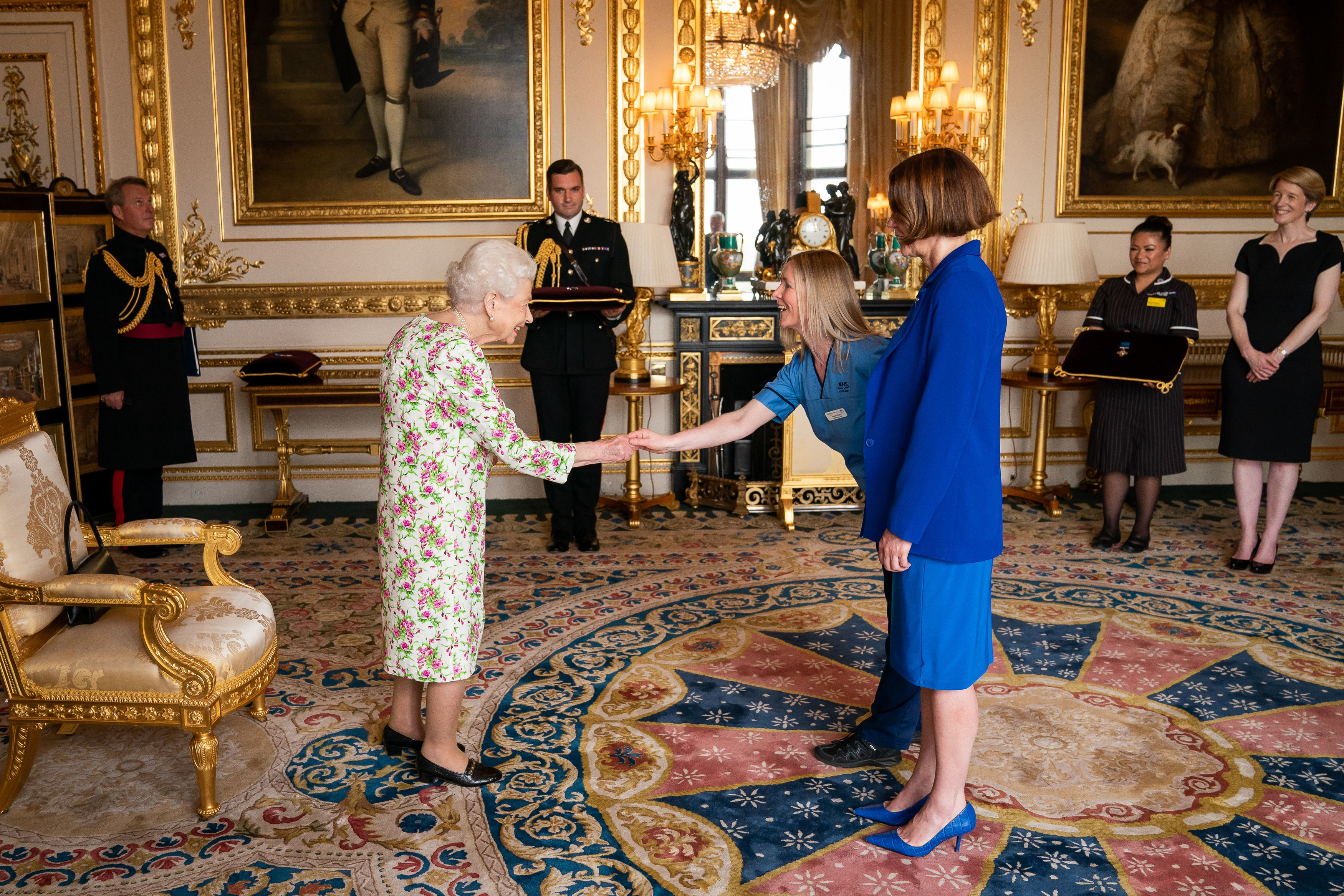
Elizabeth II presented the George Cross to representatives of the NHS, including Lamb and Eleanor Grant, a palliative care nurse, in July 2022
AARON CHOWN/PA
Since then, waits for planned treatment have soared. This summer, Scottish Labour figures showed that waits of more than two years were 800 times more common in Scotland than in England.
Tech advances have also been slow. The blurb on Lamb’s Scottish government web page says that advancing use of digital technologies is one of her main priorities, and she led the Scottish government’s digital health and care directorate before her promotion. But although patients in England have had access for six years to an NHS app to manage appointments, test results and conditions, in Scotland the first iteration of the platform has only just gone live — to dermatology patients in Lanarkshire — and a full roll-out is not expected until 2030.
The Covid-19 recovery plan published during Lamb’s first summer in charge bears little resemblance to what has happened. Plans to open 11 new treatment centres are in disarray and hospital activity, which were supposed to exceed that of 2019 by 10 per cent, still lag behind.
The atmosphere at the top, one union figure said, was one of lethargy. “I think she and her team are happy with the status quo because that is the easiest place to be,” a seasoned NHS operator said. “Even if you did [have the vision to accelerate improvement], why would you when you cannot change the mind of government ministers.”
Another political insider noted a weariness in the civil service about suggestions of any reform that might rattle a special adviser to the SNP. Those in charge, they said, had little choice but to “manage decline”.
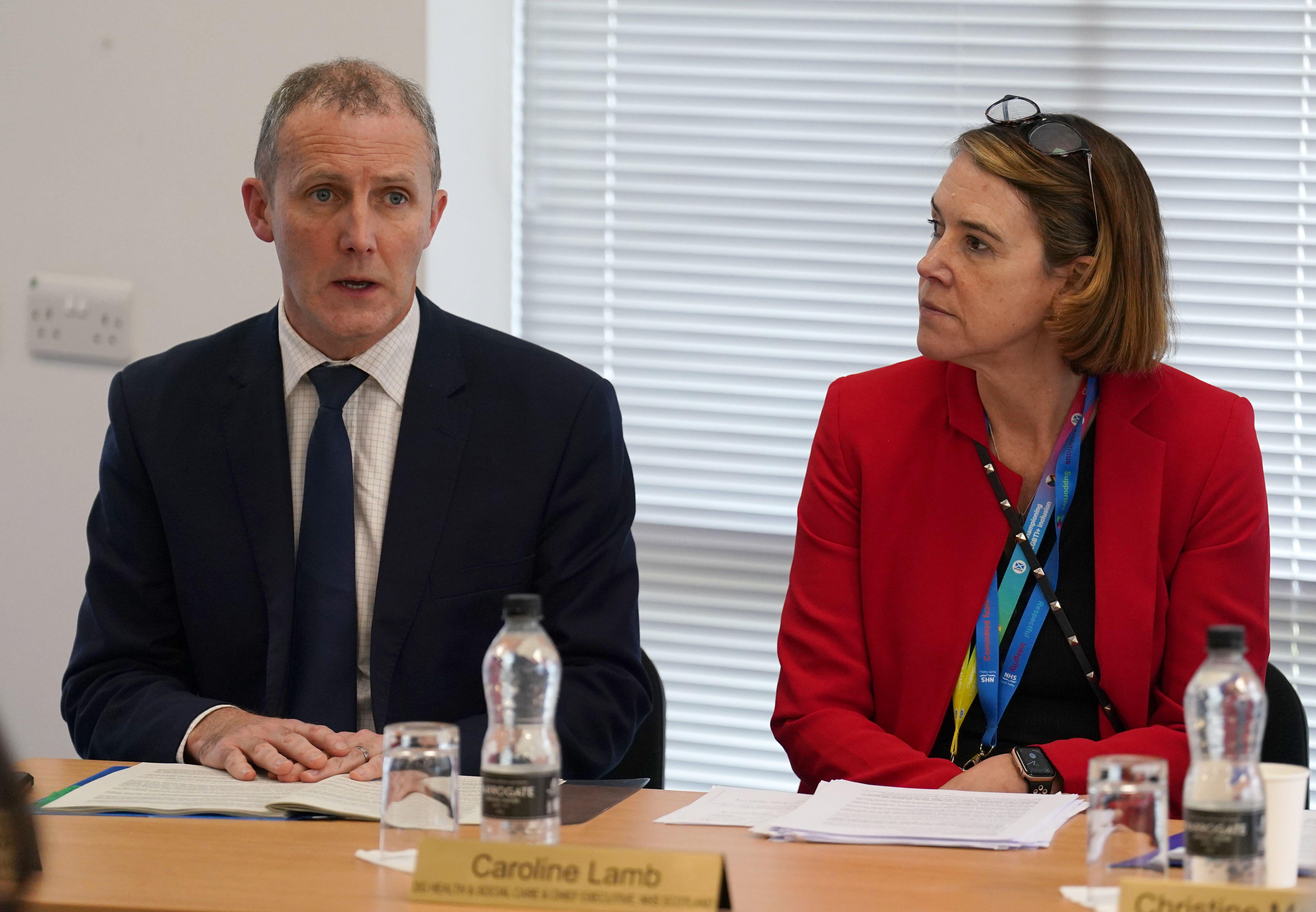
Lamb with Michael Matheson, then the Scottish health secretary, in 2023
ALAMY
If there was one top priority, they added, it was staff pay. Strikes by doctors and nurses over salary have been avoided in Scotland, and nurses have been given the best pay deal in the UK. However, those leading unions and professional bodies north of the border have said their relationship with the Scottish government is at an all-time low.
In November, an announcement about new regional working arrangements, designed to encourage health boards into better collaboration, provoked anger among staff as days of rumour and denial were followed by an invitation to a meeting at the 11th hour. Somehow the Scottish government has ceded to pay demands — inflating the salary bill with the inevitable opportunity cost elsewhere — and still annoyed the workforce.
The spending watchdog Audit Scotland summed up the situation in its 2025 report on performance: “The NHS in Scotland has not improved in line with commitments made by the Scottish government, despite having more staff and more money.”
Some say Lamb’s job is simply impossible. The budget will never stretch to meet need and her political masters are interested only in saying they are better than England and better than they have been before. Taking tough decisions to lead the health service out of the quagmire would, they suggest, be an uphill struggle for anyone.
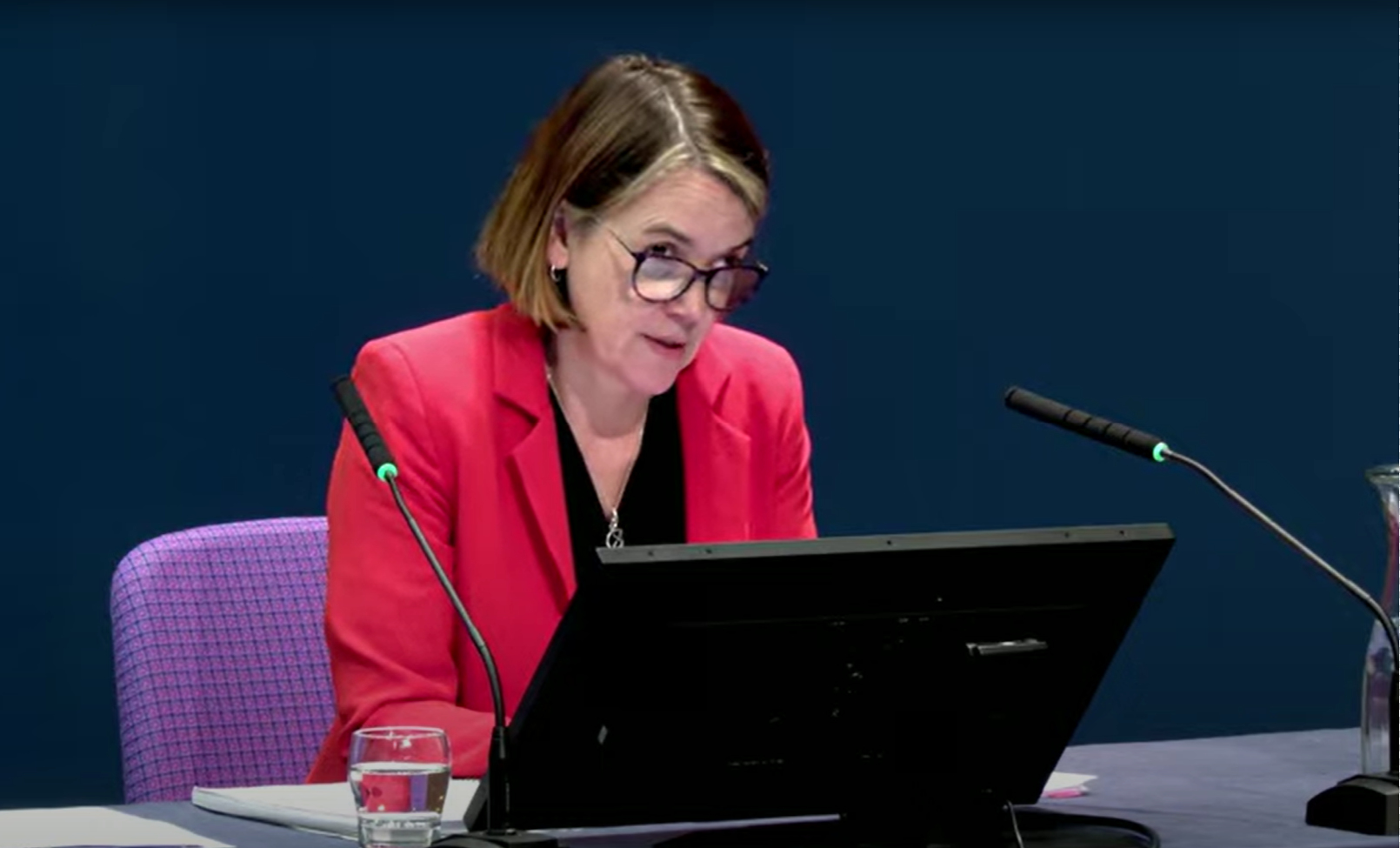
Lamb at the UK Covid-19 inquiry
UK COVID-19 INQUIRY/PA
Those who have met Lamb regularly describe a “pretty constructive” and honest relationship. Karen Titchener, the new patient safety commissioner appointed by the Scottish parliament this year, said: “We have good leadership in Caroline Lamb and [the Scottish health secretary] Neil Gray. I think they are aware how terrible things are out there. I really do think they want the best — it is just a question of how does the system support that?”
She noted that governance, following through commitments and accountability for delivery all needed improvement.
From the outside, it is hard to tell why Gray did not announce the £20 million to boost winter capacity until mid-November. Had planning really been left so late, or was this moment in Holyrood just political window dressing focused on scoring party points rather than managing healthcare?
Either way, there are signs the Scottish NHS is ill-prepared. The Royal College of Emergency Medicine called at the start of December for urgent action in Scotland to prevent a “truly ugly winter”. On Monday, NHS Lanarkshire became the first health board of the year to tell patients to stay away from accident and emergency departments unless their condition threatened life or limb.
The number of hospital beds occupied by patients who cannot go home because care shortages in the community — which had fallen a little — began rising again this autumn. Edinburgh Royal Infirmary, which recorded its best A&E waiting times since 2021 earlier this year, as well as improvements in patient flow, has deteriorated sharply since June. Aberdeen Royal Infirmary has repeatedly had the worst turn-around times for ambulances, and patients wait three to five hours to be offloaded.
Lamb has made only 25 hospital visits since she took her post, including only two last year, according to The Scottish Sun. Buist said: “I find it astonishing that you could be in that position with all the high-profile NHS problems being experienced on the front line and not frequently visit NHS sites. The NHS chief executive needs to get out on as regular basis as possible, going to different departments to speak to people on the front line and to find out what is going on.”
When points in this article were put to the Scottish government, a spokesman said: “NHS Scotland is making real progress, with the number of performed operations reaching its highest level since before the pandemic and reductions in long waits for five consecutive months.
“Our national treatment centres programme — the single biggest increase in planned care capacity ever created in NHS Scotland — is delivering more procedures this year. We have developed front-door frailty services in every health board in Scotland and are expanding hospital at home capacity to at least 2,000 beds by the end of 2026.
“These examples of significant improvements across our NHS have been supported by the £220 million we are investing as we strive to reduce waiting times, improve hospital flow and minimise delayed discharges across the country.”
Lamb was said to have made several site visits in recent months, and to meet staff, patients and carers regularly.