
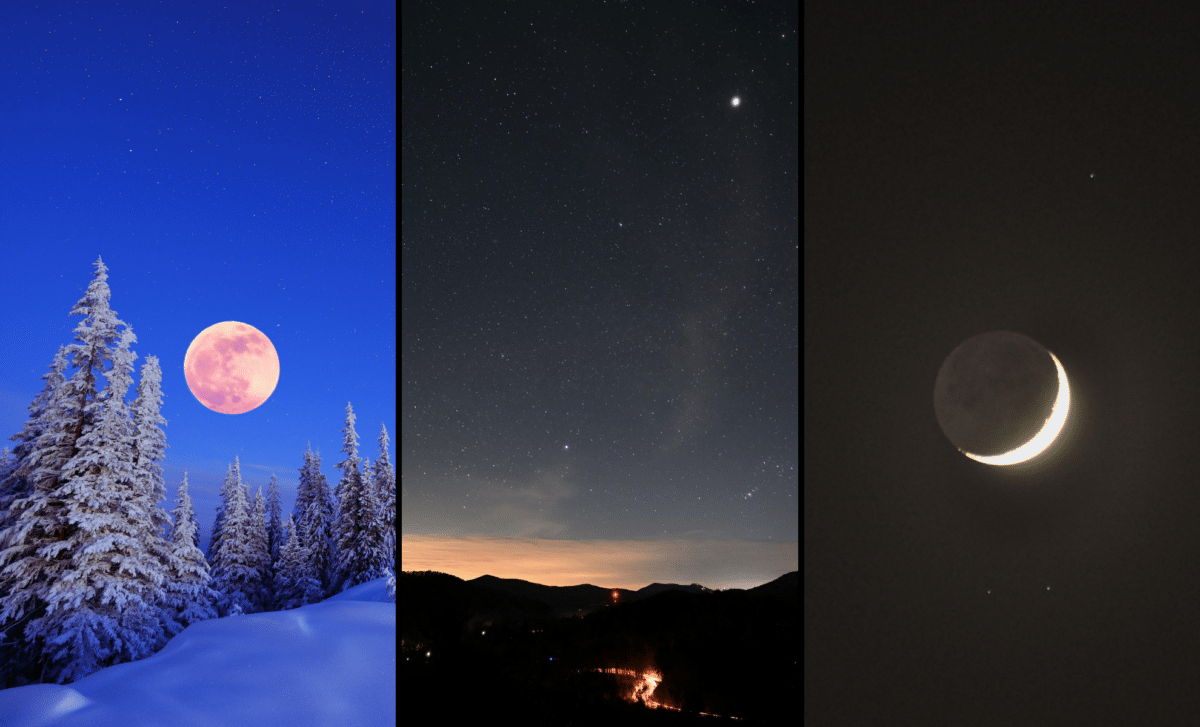
January offers some of the most incredible celestial events that are best enjoyed through a pair of binoculars. Whether it’s witnessing Jupiter at opposition or capturing the detailed shadows on the first-quarter moon, the winter sky is filled with wonders. This article will guide you through the most exciting sights to look for in January, providing you with all the essential details for an unforgettable stargazing experience.
Jupiter at Opposition: A Celestial Giant Comes Close
One of the most anticipated astronomical events of January is Jupiter’s opposition, set to occur on January 10, 2026. Opposition happens when Earth is positioned directly between a planet and the Sun, making the planet appear brighter and larger than at any other time of the year. Jupiter, the largest planet in our solar system, will be fully illuminated by the Sun, making it an extraordinary sight in binoculars.
When you aim your binoculars at Jupiter during opposition, you won’t just see a bright disk; you’ll also get a rare glimpse of the planet’s four Galilean moons: Io, Europa, Ganymede, and Callisto. These moons, easily visible through binoculars, look like small dots of light lined up around the planet. The sight of these moons orbiting Jupiter is a powerful reminder of how dynamic our solar system truly is.
This event, visible for a few weeks before and after the exact opposition date, offers a stunning view that’s perfect for both novice and experienced astronomers. According to LiveScience, the 8×42 or 10×50 binoculars will provide the best views of Jupiter and its moons, enhancing your experience by bringing distant objects into clear focus.
First Quarter Moon: Shadows and Detail Like Never Before
The moon is often seen as a bright, unchanging object in the sky, but the best time to observe its features is actually during the first-quarter phase. In January, the first-quarter moon will be visible on January 7, and it offers one of the best opportunities for detailed viewing with binoculars. During this phase, the terminator line, where the lunar night meets the lunar day, creates deep, dramatic shadows that reveal the craters, valleys, and mountains that adorn the moon’s surface.
Binoculars make it possible to see details that are often hidden from the naked eye. As you peer through your binoculars, you’ll notice the contrast between the bright, sunlit portion of the moon and the dark, shadowed areas. This sharp contrast allows you to appreciate the rugged topography of our lunar neighbor. As the moon rises in the evening and stays visible until midnight, it’s the perfect target for an evening stargazing session. The first-quarter moon remains one of the most visually captivating celestial objects, especially for those looking to discover lunar features up close.
Supermoon Rising: A Lunar Event to Remember
Another spectacle worth witnessing in January is the Supermoon rising on January 3, 2026. While full moons are often a popular target for stargazers, the supermoon offers something extra special. A supermoon occurs when the moon reaches the closest point in its orbit around Earth, making it appear larger and brighter than a regular full moon.
The moonrise, especially when viewed through binoculars, offers an even more magical experience. The light from the moon passes through Earth’s thick atmosphere as it rises, scattering shorter blue wavelengths and allowing the longer red and orange wavelengths to dominate. This phenomenon gives the rising supermoon its warm, golden hue. Catching the supermoon during its rise, just after sunset, creates a stunning scene as the moon’s light begins to reflect off the surface of the Earth, offering the best view of the night. According to LiveScience, watching the full moon rise over the horizon with binoculars is a moment you won’t want to miss.
Earthshine on the Moon: A Subtle Yet Spectacular Sight
While the full moon can be a bit overwhelming with its bright, reflective light, January offers a subtle but beautiful sight in the form of Earthshine. This phenomenon occurs when the moon is in a crescent phase and sunlight reflecting off Earth’s oceans, icecaps, and clouds softly illuminates the dark side of the moon. It’s an enchanting and ethereal sight that can be seen through binoculars, revealing the faint glow of the lunar surface that is usually hidden from view.
During the waning crescent phase, the Earthshine is especially noticeable, offering a hauntingly beautiful image of the moon that is rarely captured by the naked eye. This occurs in the days leading up to the new moon on January 18, 2026, and can be observed just before dawn in the east. If you’re stargazing in the early mornings of January, be sure to look for this rare and subtle lunar event.