
Inside a vast plant in Edmonton, north London, Coke cans, Amazon boxes and other ghosts of Christmas past speed along conveyor belts, blasted with air jets and zapped by three-tonne magnets to separate materials before being crushed into colourful bales.
After Britain went to bed on Christmas Day, the waste giant Biffa’s “materials recovery facility” geared up to deal with the debris of our festive food and gifts.
More than 350 staff work at Edmonton, one of Britain’s biggest recycling hubs, which runs 24 hours a day, 364 days a year, processing 280,000 tonnes of household waste annually.
Now is its busiest period: the UK produces 30 per cent more waste than usual this week, including enough wrapping paper to wrap around the planet nine times, one billion Christmas cards and 114,000 tonnes of plastic packaging.

Biffa’s plant in Edmonton, north London
ROBERT MILLS PHOTOGRAPHY
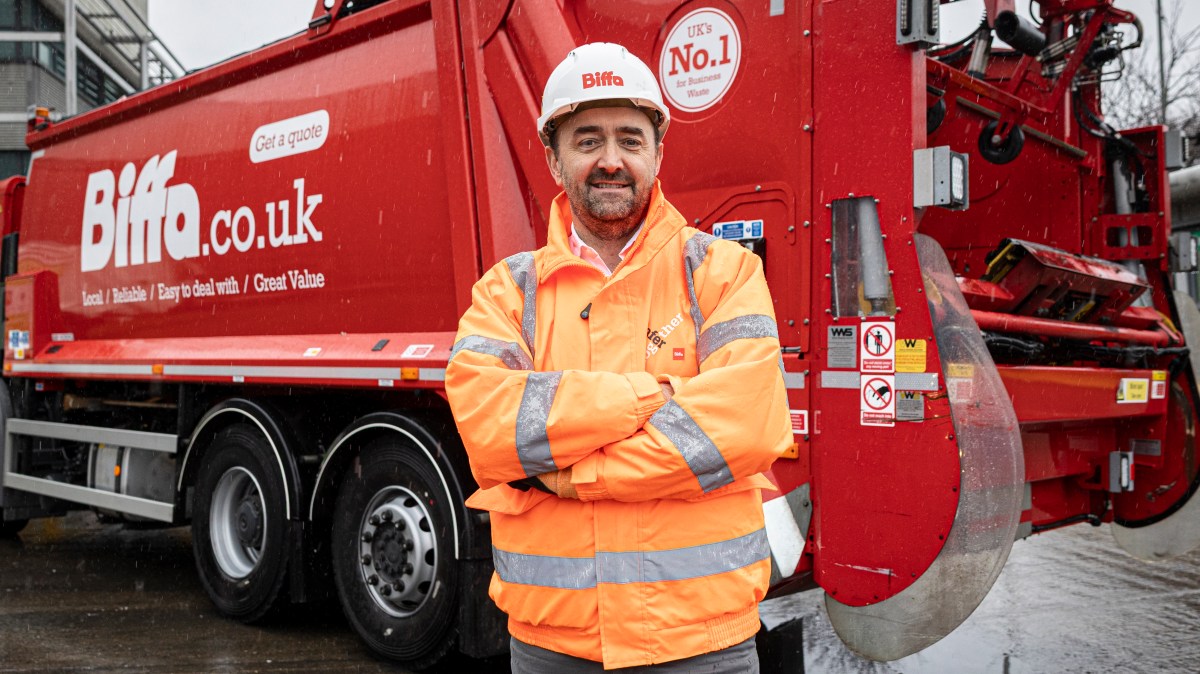
Edmonton’s recycling work is an odd mix of highly technical — optical scanners, AI software and magnetic current filtering to split rubbish into its material components — and deeply manual. Workers in orange high-vis, goggles and gloves loom over conveyor belts, rapidly whipping out chunks of metal, jeans, soiled nappies and other “contaminants”, as Michael Topham, Biffa’s chief executive, puts it as we stand on a metal platform gazing down.
Krispy Kreme packets, pizza boxes, milk bottles and cardboard stream past, and the 53-year-old chief executive muses that “this is a mesmerising story of our consumption”.
When the plant opened 15 years ago, newsprint ruled and cardboard came mostly in large TV boxes. Now digital media and online shopping boxes dominate.
Plastic bottle use is growing. “Negative news around the water industry seems to have led to a mistaken societal distrust of drinking water,” Topham adds as Evians roll past.
Biffa has a plant at Plymouth, where staff find marine distress flares in the loads; in Edmonton, treasures have included a 400-year-old Bible, a fencing sword, police riot shields and weapons. A Teesside centre found body parts; another received live shotgun shells, which “amazingly didn’t set off”.
There’s treasure in the muck, though. Biffa, which US private equity company Energy Capital Partners (ECP) took private for £1.3 billion in 2023, is one of the country’s biggest waste firms, alongside the French multinational Veolia. Revenues rose 9 per cent to £1.89 billion last year, with underlying earnings of £271 million.
Topham has been at the company for 15 years — as the firm went on its own “circular economy” of ownership, from hedge fund to public listing to delisting.
“In the FTSE 250, we performed, but struggled with the broader problem around funding flowing into UK public equities,” he said. “It was a matter of time before someone came along with an offer.”
Now ECP’s investment focuses on technology: Biffa hasn’t yet turned its fleet of 3,500 £250,000 diesel bin trucks electric, but automation of sorting has ramped up. We pass the now-abandoned “fibre cabin” area, where 30 people used to sort recycling; now, machines shake out plastics so paper and cardboard can be crushed into 80 bales, each weighing 1.2 tonnes, a day. Many are sent to Germany and France, as UK mills cannot keep up.
“People have this idealised image that everything is recycled perfectly nearby,” Topham said.
He fears the government’s proposals to mandate recycling of flexible plastic — such as carrier bags and ready meal film — could damage exports. “There’s no end user in the UK,” he said. Some in the waste sector have been condemned for sending plastic abroad, where it has ended up in toxic piles in unregulated countries.
• Why aren’t people recycling any more?
Topham wants the government to ban unprocessed plastic exports. “Keeping plastic in the UK would create green jobs and resilience. The fear that it would push up the cost of living is unfounded — recycled plastic can be cheaper than virgin plastic. Our backers have a lot of capital available to invest in this, but there’s a nervousness that any change of government would reverse policy. It’s a problem.”
Crows circle a huge rubbish mountain as bin trucks reverse in, each dumping another eight tonnes of recycling. A fat rat darts around as loading shovels scoop waste to the start of the sorting conveyor belt. The plant’s two cats and hawk are obviously having a nap.
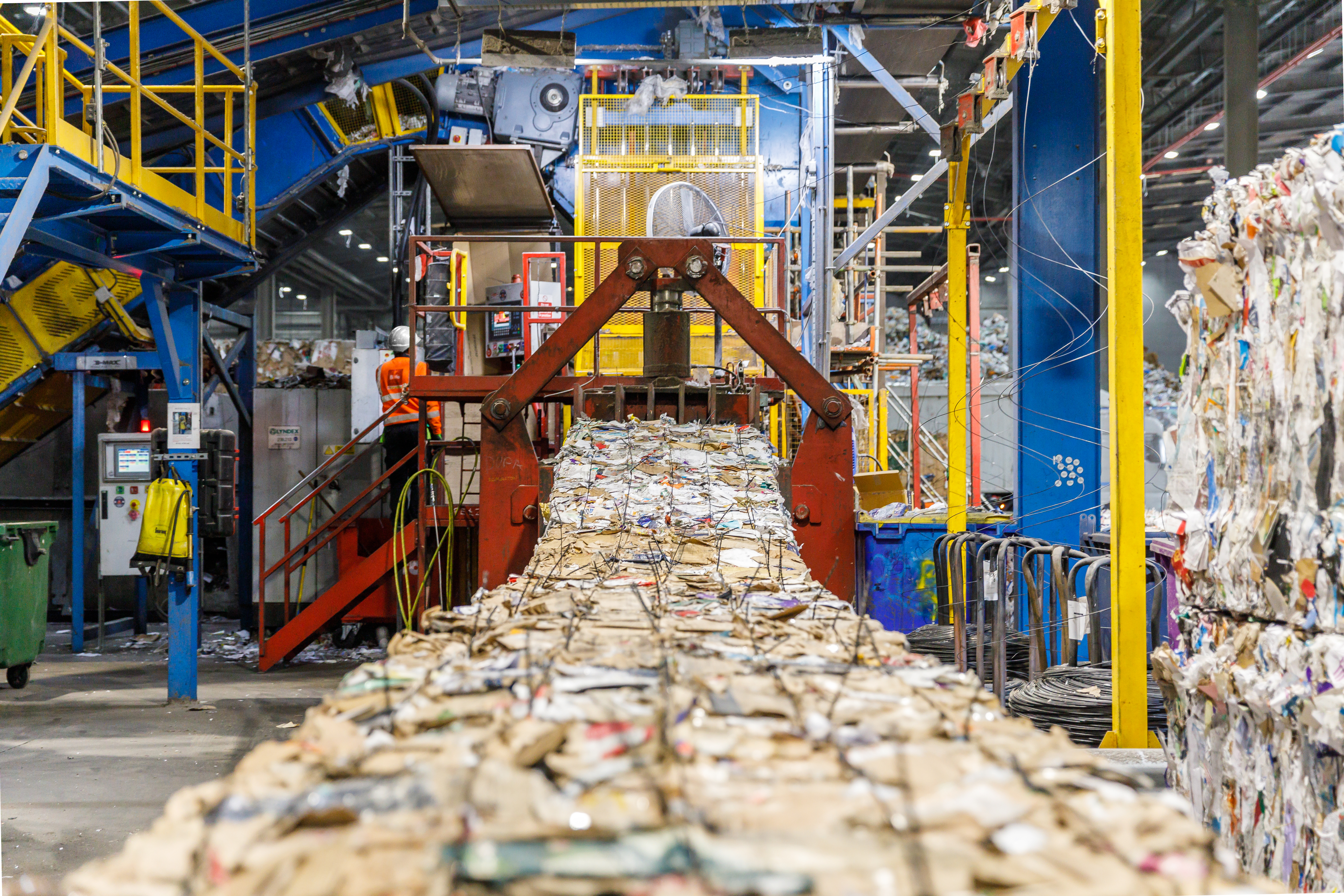
Eighty bales of crushed paper and cardboard, each weighing 1.2 tonnes, can be produced every day
ROBERT MILLS PHOTOGRAPHY
Topham, though, says the pile’s highest risk isn’t vermin but disposable vapes. When mistakenly put in recycling and crushed, their lithium-ion batteries are liable to burst into flames.
“Vapes have caused a massive increase in fires in recycling plants over the past two years,” he said. “We’ve introduced ceiling water cannons to try to contain it — but vapes are dangerous and expensive, and ultimately taxpayers pay for the damage.” He wants the government to bring in a deposit return scheme on vapes, but it’s focused on an incoming scheme for plastic bottles.
Unlike most British factories, there’s still a corridor of workers’ lockers and a full car park in Edmonton. Biffa employs 11,000, mostly on bin rounds, but in sorting too. “Robotic picking isn’t there yet — it’s still slower and less accurate than people,” Topham said. “But it will improve. UV-readable tags are being trialled on packaging, so plants can identify not just material but brand. That data will drive better packaging design.”

Much of the rubbish can be filtered by scanners but workers are still needed to remove “contaminants”
ROBERT MILLS PHOTOGRAPHY
Behind us, a beeping lorry is filled with crushed milk bottles. Within a fortnight, these will be washed, flaked to lentil-sized pellets that are delivered to Arla Aylesbury, the UK’s largest dairy, then mixed with virgin plastic from shale gas, blown into bottles and put back on supermarket shelves, filled with milk again.
“Two weeks!” beamed Topham. “People don’t celebrate it, because it’s plastic. But it’s an amazing, brilliant system. Recycling really can be wonderful.”
How to recycle properly
It’s the issue that’s led to thousands of arguments: is it OK to chuck dirty, yoghurt-smeared pots and hummus tubs in the recycling, or is this “wishcycling” that diverts whole bin-bags to landfill?
“Just do a cursory rinse,” Topham says. “You don’t need to absolutely wash it. If people are putting their recycling in the dishwasher or filling up a sink of hot water just to clean it, that is not the right thing to do. But rinsing out obvious food contamination is really helpful.
“If you had something like a ketchup bottle, with bits of the sticky sauce still stuck inside, there’s a chance that the [sorting machines’] optical readers wouldn’t see that, and it would go off to be burnt.”
Eat your takeaways before the oil sinks in: food-soiled packaging ruins entire batches of recycling, so tear off or fold away contaminated parts. “Cardboard pizza boxes are easily recyclable when not too greasy and not too contaminated,” Topham adds. “But if the pizza’s been left in the box all night and left an oily residue, then it won’t be accepted for recycling at the mill.”
And use your brain when you see recycling labels. Topham reckons some of the used nappies going through Edmonton’s machines are there because the outer packaging says that it’s recyclable. “The plastic around it might be recyclable, but dirty nappies are sadly very much not.” The same is true for woollen insulation packs inside home delivery kits such as Hello Fresh: the outer packaging is recyclable, but the inner wool can’t go into a normal recycling bin.
Kerbside recycling bins are only for plastic bottles, pots, tubs, trays, glass bottles and jars, paper and cardboard and metal cans and tins.
But some other items can be recycled. Take clothes to textile recycling points at council tips if they’re not worthy for the charity shop. Batteries (even AA or button types), vapes, small electrical items such as kettles, toasters, hairdryers and hazardous items such as full aerosol cans, batteries and lightbulbs should never go in home recycling bins, but can be recycled if you take them to council tips or battery drop-off points in supermarkets.