

Listen to this article
Estimated 3 minutes
The audio version of this article is generated by AI-based technology. Mispronunciations can occur. We are working with our partners to continually review and improve the results.
A Hamilton hospital network is taking a closer look at how psychedelics might be useful in medicine.
“Psychedelics have shown great promise in some early studies,” Dr. Anthony Adili, chief innovation officer at St. Joseph’s Healthcare Hamilton told CBC Hamilton. “But promise alone is not enough. We really need good science and good evidence to guide our clinicians, our patients and our policymakers.”
Getting that data will require a “tsunami of research,” Adili said, so St. Joe’s has launched a new research centre dedicated to the health effects of psychedelics.
In a November news release, the hospital network said its Centre for Health Innovation and Research in Psychedelics will connect researchers from across Canada and around the world, offering clinical space to treat and monitor patients taking psychedelic therapies. The research may cross borders but for now, Adili said, the work is mostly based at St. Joe’s campus on West 5th Street.
LISTEN | Where does the research stand, and what risks should patients be aware of? :
Adili, who’s also vice chair of McMaster University’s department of surgery, said St. Joe’s is in it for the long haul. He anticipates the centre to have “long-standing funding” for “probably a couple decades.”
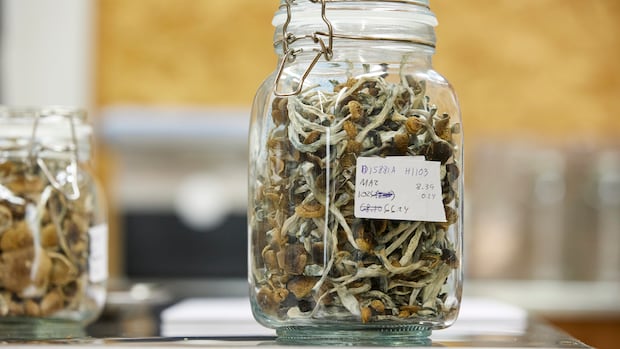
Psychedelic substances include psilocybin (an active ingredient in magic mushrooms), LSD, MDMA, DMT and ketamine, Adili said, many of which “are showing promise” for conditions such as treatment-resistant depression, migraines and anxiety.
St. Joe’s already has two trials on the go, he said. One is looking into psilocybin as a treatment for cannabis addiction and another for chronic pain.
“The acceptance of psychedelics as a bonafide medicinal therapeutic intervention has grown significantly in the last decade,” Adili said, but health professionals still need to determine “fact from fiction,” and develop “actionable guidelines.”
Psychiatrist Dr. Ishrat Husain has been researching psychedelics at the Centre for Addiction and Mental Health in Toronto since at least 2022 when he received Canada’s first federal government grant to study psilocybin for treatment-resistant depression.
However, Husain said, he wouldn’t be comfortable prescribing psilocybin to a depressed patient today.
“I don’t think we have any reliable evidence to say that psilocybin therapy should be part of the treatment protocols at present,” he said, noting he and a team of psychiatrists excluded psychedelics from a recent set of international guidelines on depression.
To date, he said, it’s still too early to confidently say who can benefit from medicinal psychedelics and who can’t, as there haven’t been enough robust, large-scale trials.
WATCH | How psychedelic therapy works on the brain: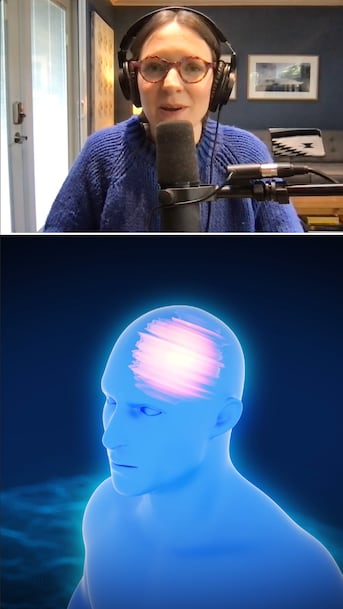
How psychedelic therapy works on the brain
How do psychedelic drugs work on the brain? Dr. Hillary McBride is back for another season of Other People’s Problems the podcast where you can listen in to real therapy sessions. This season Dr. McBride is integrating psychedelic therapy into her practice. Here she describes the effects of psychedelics with the analogy of an orchestra playing without sheet music and discovering new forms of music.
Despite that, Husain said, psychedelics continue to show promise.
It’s “really exciting” and “really important” that a centre like St. Joe’s will be dedicating itself to research in this field, he said.
The more institutions and the more regions of the country involved, the more generalizable and better the results will be, Husain added. It also means more patients will have access to “emerging” treatments in clinical trials.
Husain and his team are working on one large study with preliminary results expected in the first half of 2026.
“Hopefully,” he said, “That will be the first step towards determining whether this treatment is something that is moving towards clinical development and clinical use.”