
2025 was an exciting year for astronomical discoveries. Scientists got the best evidence yet for past life on Mars, discovered an interstellar comet zooming through our solar system, found clues of possible nearby exoplanets, and much more. Here are eight of the most spectacular space stories from the past 12 months.
The Chilean component of the Asteroid Terrestrial-impact Last Alert System spotted the interstellar interloper sneaking among the stars of the constellation Sagittarius on July 1, and it quickly became apparent that its trajectory was severely hyperbolic. Rather than orbiting the sun like comets native to our solar system do, it was just passing through — and it was moving faster than any comet ever seen. Its abnormally high velocity of 36 miles per second (58 kilometers per second) told us that the speedy object, which became known as 3I/ATLAS, had probably been wandering interstellar space and receiving gravitational nudges from nearby stars since before our solar system even existed.
You may like
By September, 3I/ATLAS was moving behind the sun, making it impossible for Earth-based telescopes to track its movements until it reappeared in mid-November. Instead, NASA and the European Space Agency turned to their fleets of spacecraft that had better views of the comet during solar conjunction.
So far, we’ve learned that 3I/ATLAS is a comet and that all of its features have been seen on comets before. Its chemistry is broadly similar to the solar system’s own comets, which is a profound discovery in its own right. There are a few differences, though — specifically, a slightly higher carbon-dioxide-to-water ratio, and a little more nickel than iron, which reflect the chemical composition of its star system of origin.
Besides a regular comet’s tail, 3I/ATLAS has also sprouted an “anti-tail” — a short tail pointed toward the sun. Often, anti-tails are an optical illusion, but 3I/ATLAS’ is real.
Astronomers will continue to track 3I/ATLAS into 2026 in the hope of learning more about its composition, but one thing is clear: It is a comet, not a spaceship.
Read more: New interstellar object 3I/ATLAS: Everything we know about the rare cosmic visitor
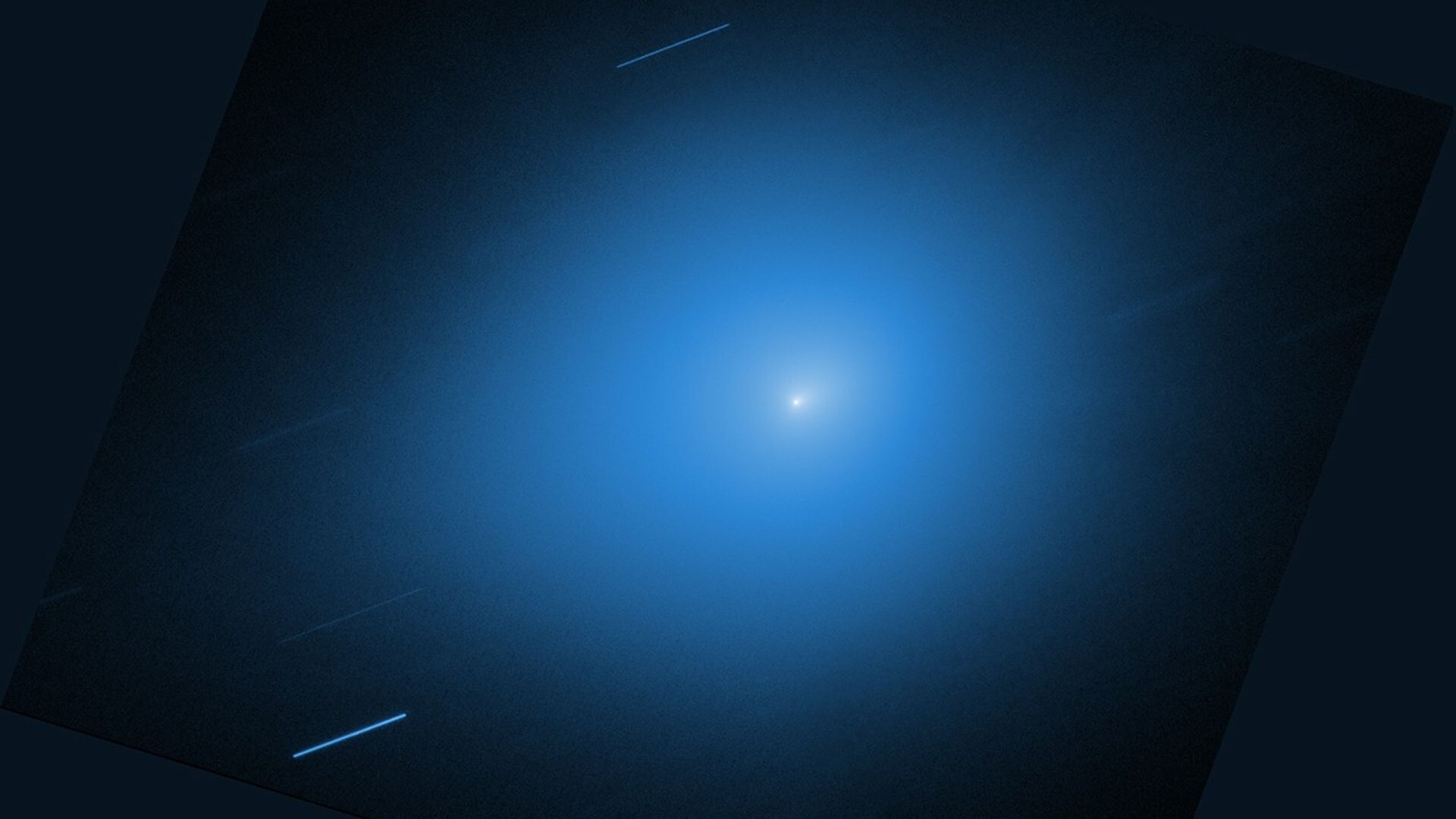
An image of 3I/ATLAS captured by the Hubble Space Telescope on Nov. 30, 2025. The telescope is tracking with the comet, which is why the fixed stars are trails. (Image credit: NASA, ESA, STScI, D. Jewitt (UCLA). Image Processing: J. DePasquale (STScI))2. The birth of supermassive black holes
As soon as the James Webb Space Telescope (JWST) began taking deep images of the cosmos in 2022, it quickly started finding “little red dots” in the background. Astronomers didn’t know what they were. At first they thought the dots could be dwarf galaxies or dense star clusters in the very early universe, but they were so luminous that the standard model of cosmology couldn’t explain how they could have formed, prompting critics to suggest cosmology was broken.
However, the spectra of the little red dots didn’t look like those of stars. In September, astronomers proposed an answer: The little red dots are “black hole stars” — supermassive black holes being born inside a huge, dense cloud of gas less than a billion years after the Big Bang.
You may like
These burgeoning supermassive black holes could have formed either by the direct gravitational collapse of a humongous gas cloud or from the merger of myriad stellar-mass black holes produced by the core collapse of massive stars in a dense stellar cluster hidden inside a gas cloud.
Nobody ever expected that those black holes would be produced by a whole new breed of object, so it’s a crucial development in our understanding of black holes, the galaxies that eventually formed around them, and the early universe in general.
Read more: Are ‘little red dots’ seen by the James Webb Space Telescope actually elusive ‘black hole stars’?
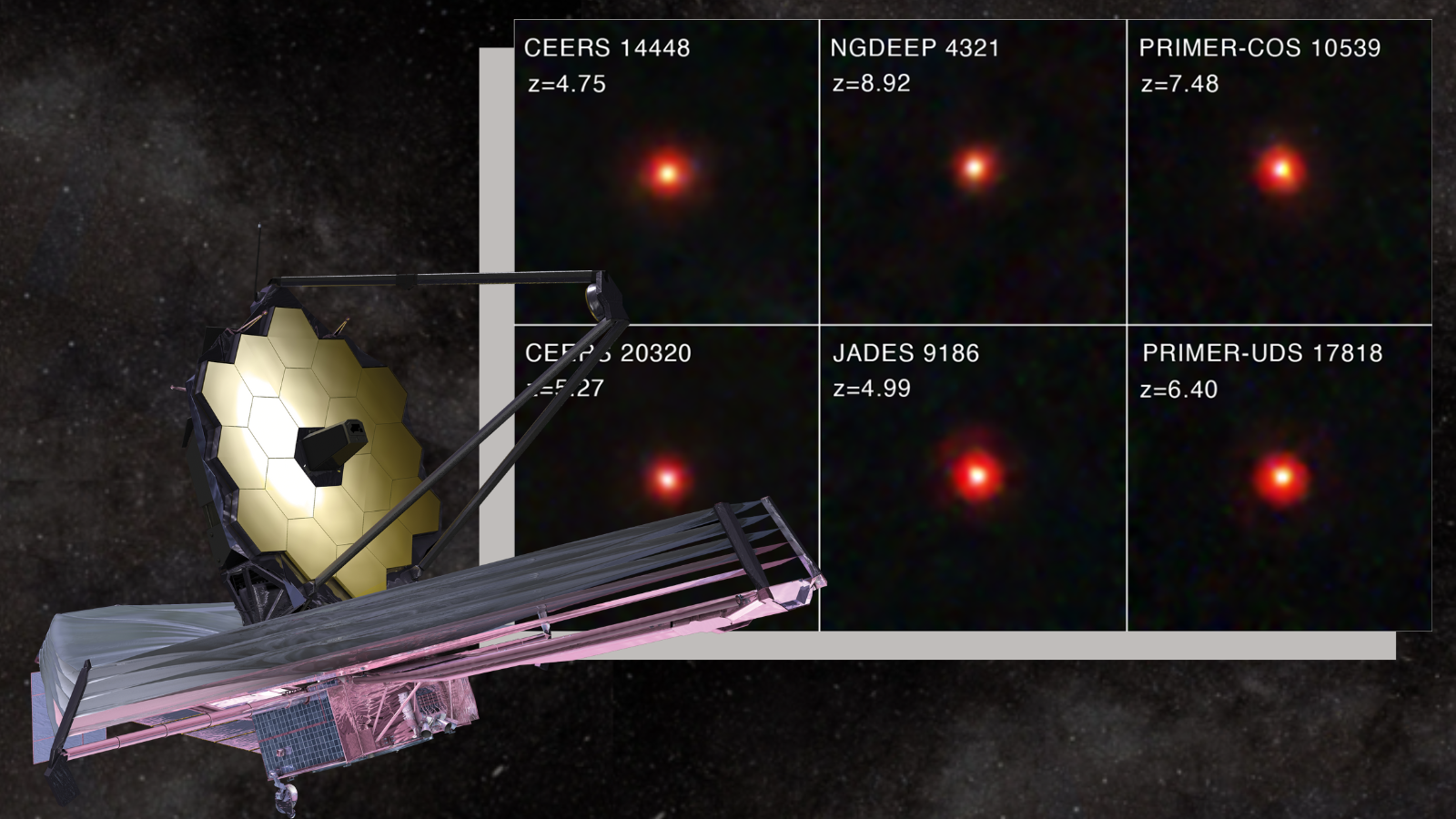
An illustration shows the JWST in space next to its observations of some of the earliest galaxies ever seen, the so-called “little red dots.” (Image credit: NASA, ESA, CSA, STScI, Dale Kocevski (Colby College)/ Robert Lea (created with Canva))3. Weakening dark energy
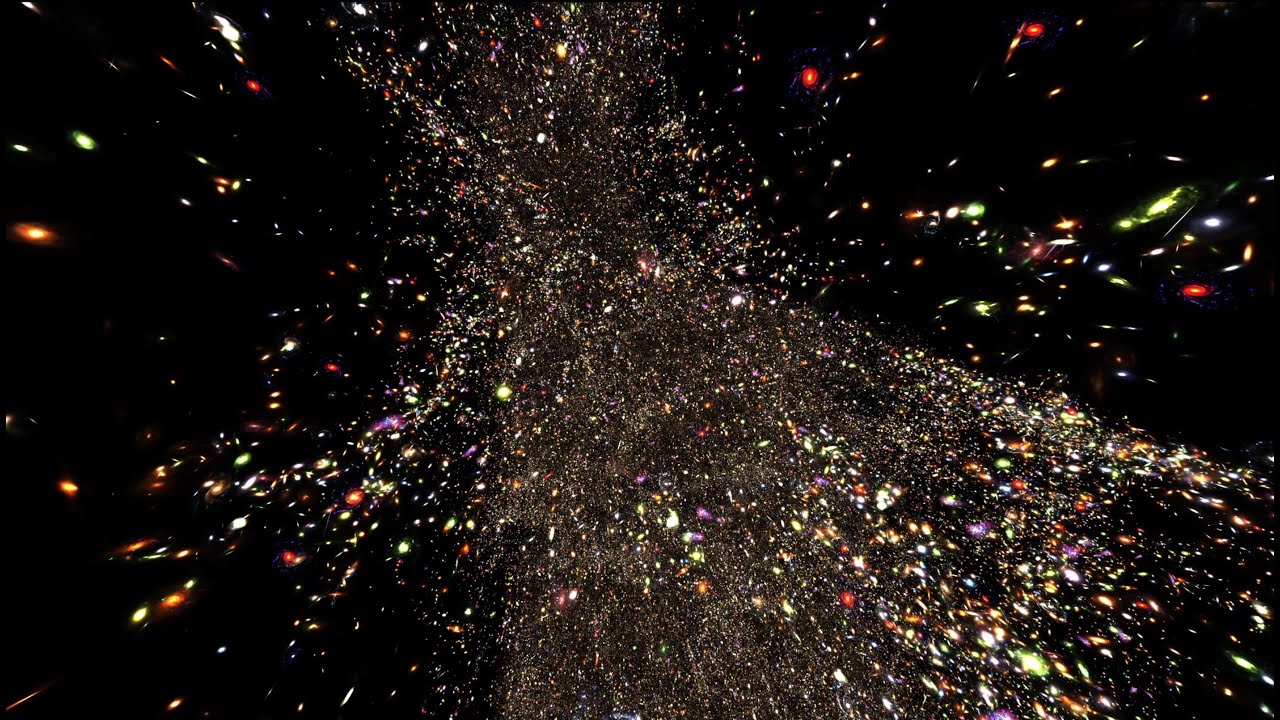
The first full data release from the Dark Energy Spectroscopic Instrument (DESI), a state-of-the-art device on the Mayall Telescope at Kitt Peak in Arizona, came with shocking news: Dark energy, which is responsible for accelerating the expansion of the universe, seems to be weakening.
This was a direct contradiction of the leading hypothesis, which was that dark energy was the cosmological constant and, therefore, unchanging. While the new findings are not yet at the level of confidence required for astronomers to be sure the results are correct, they are significantly intriguing.
In 2024, some preliminary results from DESI pointed toward the strength of dark energy changing over time. Then, in March 2025, the DESI collaboration released data from the instrument’s first three years of observations, spanning 13.1 million galaxies, 1.6 million quasars and about 4 million stars in relatively nearby galaxies, forming the largest and most accurate 3D map of the universe ever made.
The results showed that 4.5 billion years ago, dark energy seemed to begin weakening. Furthermore, during the previous 9 billion years, dark energy was stronger than anyone expected. This superpowered dark energy, dubbed phantom dark energy, invokes exotic physics. Why phantom dark energy would have transitioned into a weakening form two-thirds of the way into the universe’s history is a complete mystery. Assuming the findings from DESI are correct, it would transform the way we view the past and future of the cosmos. For now, it deepens the mystery of dark energy.
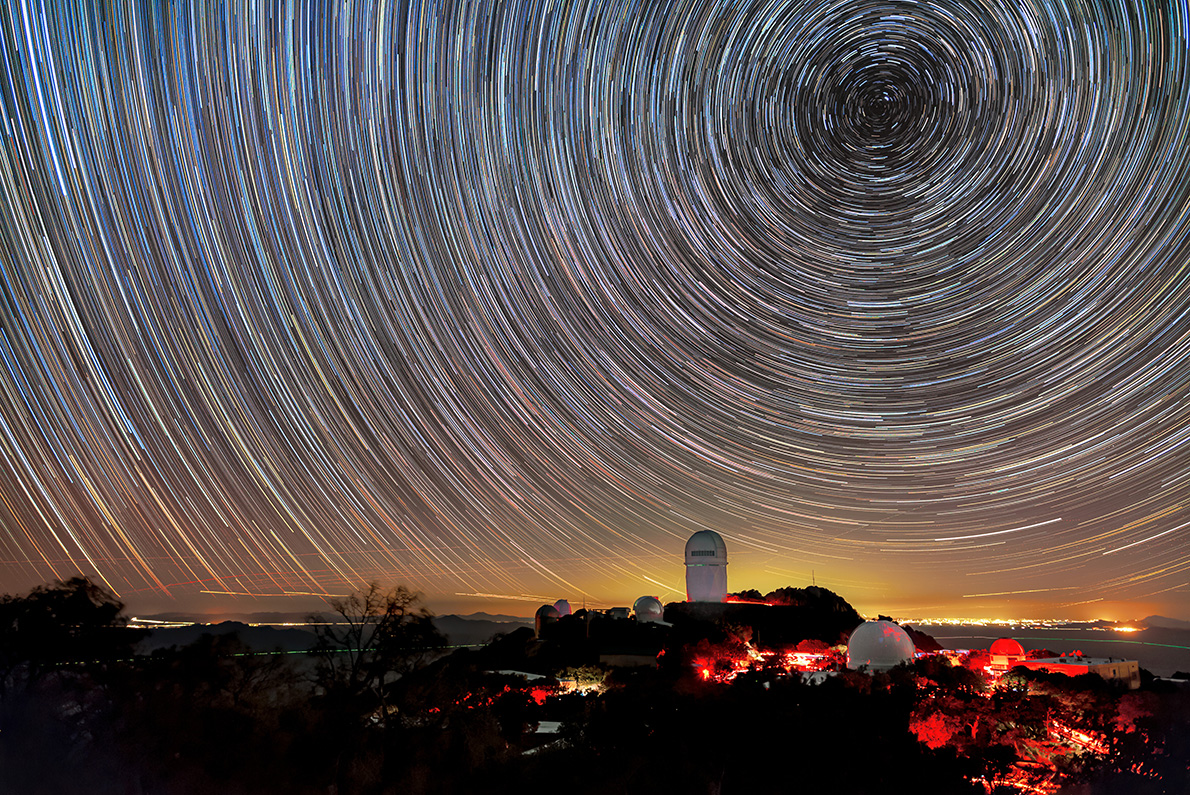
Star trails over the Mayall Telescope, which houses DESI on Kitt Peak in Arizona. (Image credit: KPNO/NOIRLab/NSF/AURA/Babak Tafreshi)
DESI Galaxy Flight with captions – YouTube
Watch On
4. A year of biosignatures
Some of the most intriguing and controversial signs that we are not alone in the universe came to light in 2025, with discoveries on planets both near and far.
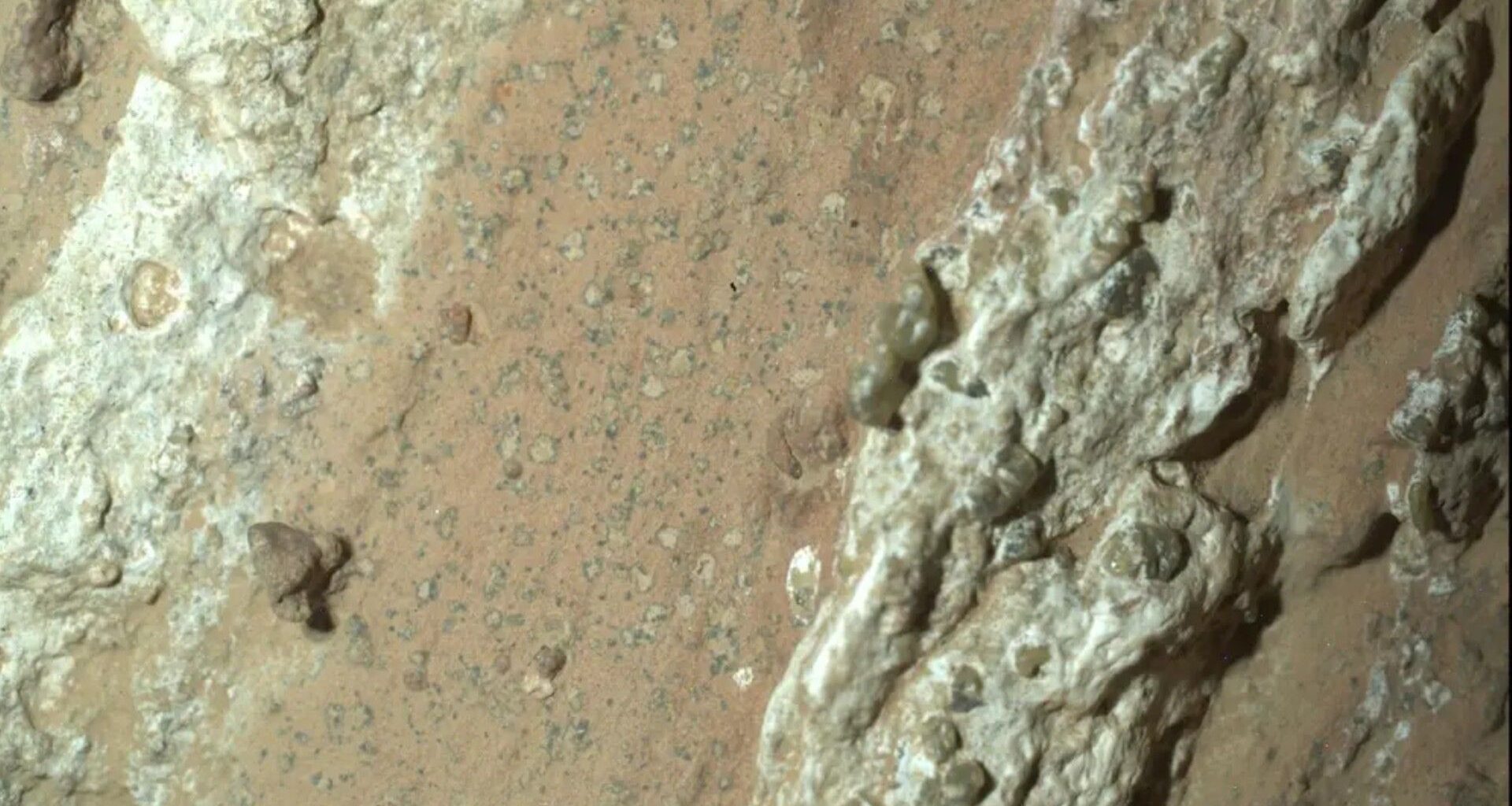
The best evidence yet for past life on Mars surfaced in September 2025, courtesy of NASA’s Perseverance rover. That evidence was in the form of some light-red spots ringed by dark material. These “leopard spots” are not uncommon on rocks on Earth, and they typically form in one of two ways: either when exposed to hot, acidic conditions that have not been present in that part of Jezero crater, or through biological action. Organic molecules were also discovered in clay sediments within the rock, although Perseverance was unable to identify these molecules. The discovery is the most compelling evidence yet that microbial life could have existed in Jezero crater 3.5 billion years ago.
A more recent biosignature was potentially found on the exoplanet K2-18b by astronomers using JWST. In 2023, a team found signs of the gas dimethyl sulfide, alongside methane and oxygen. The team thinks this finding suggests K2-18b is a “hycean” planet — a world with an incredibly deep global ocean of water, surrounded by a thick, hydrogen-rich atmosphere. The team predicted that dimethyl sulfide could be a biosignature on a hycean world, as it can be on Earth, but the initial detection was very tentative. In March 2025, JWST produced stronger evidence for dimethyl sulfide’s existence on K2-18b.
Even so, many astronomers are still skeptical of the discovery. Some argue against the concept of hycean worlds, point out that the signal is very weak, and raise the possibility that dimethyl sulfide can also form abiotically.
Read more: Did NASA’s Perseverance rover find evidence of ancient life on Mars? The plot thickens
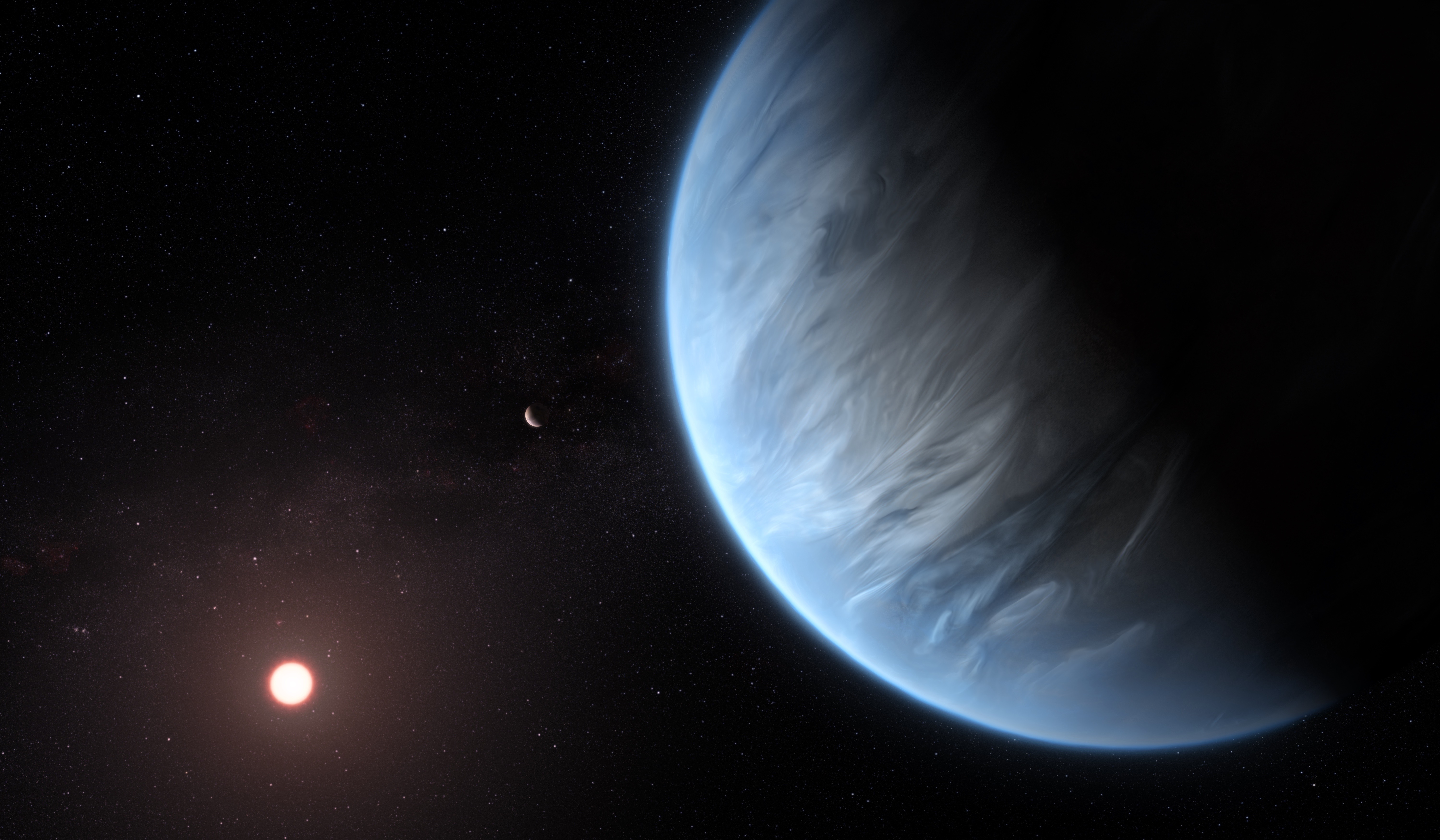
This artist’s illustration shows the planet K2-18 b, its host star and an accompanying planet in this system. K2-18 b is now the only super-Earth exoplanet known to host both water and temperatures that could support life. (Image credit: ESA/Hubble, M. Kornmesser)5. New exoplanetary neighbors
This year, astronomers made major steps in adding to the exoplanet inventory around the nearest stars, Alpha-Proxima Centauri and Barnard’s Star.
Astronomers had previously thought they’d found planets in both systems, but each time, the evidence didn’t hold up. Then, in 2024, a strong candidate for a small, rocky planet orbiting Barnard’s Star was revealed in data from the Very Large Telescope in Chile. In March 2025, this observation was confirmed to be real, along with those of three smaller exoplanets. The most massive of the quartet has one-third the mass of Earth, while the smallest is one-fifth the mass of our planet. Unfortunately, none reside in the habitable zone, but further planets in more temperate regions have not been ruled out.
Then, in August, observations by JWST produced the most convincing evidence yet for a planet orbiting Alpha Centauri A. The exoplanet is estimated to have a mass similar to that of Saturn and, therefore, expected to be a gas giant. Intriguingly, if this world is real, it must have a highly elliptical orbit that may result from its inclusion in a binary system.
Read more: 4 rocky exoplanets found around Barnard’s Star, one of the sun’s nearest neighbors
James Webb Space Telescope spots a potential new exoplanet just 4 light-years away from Earth
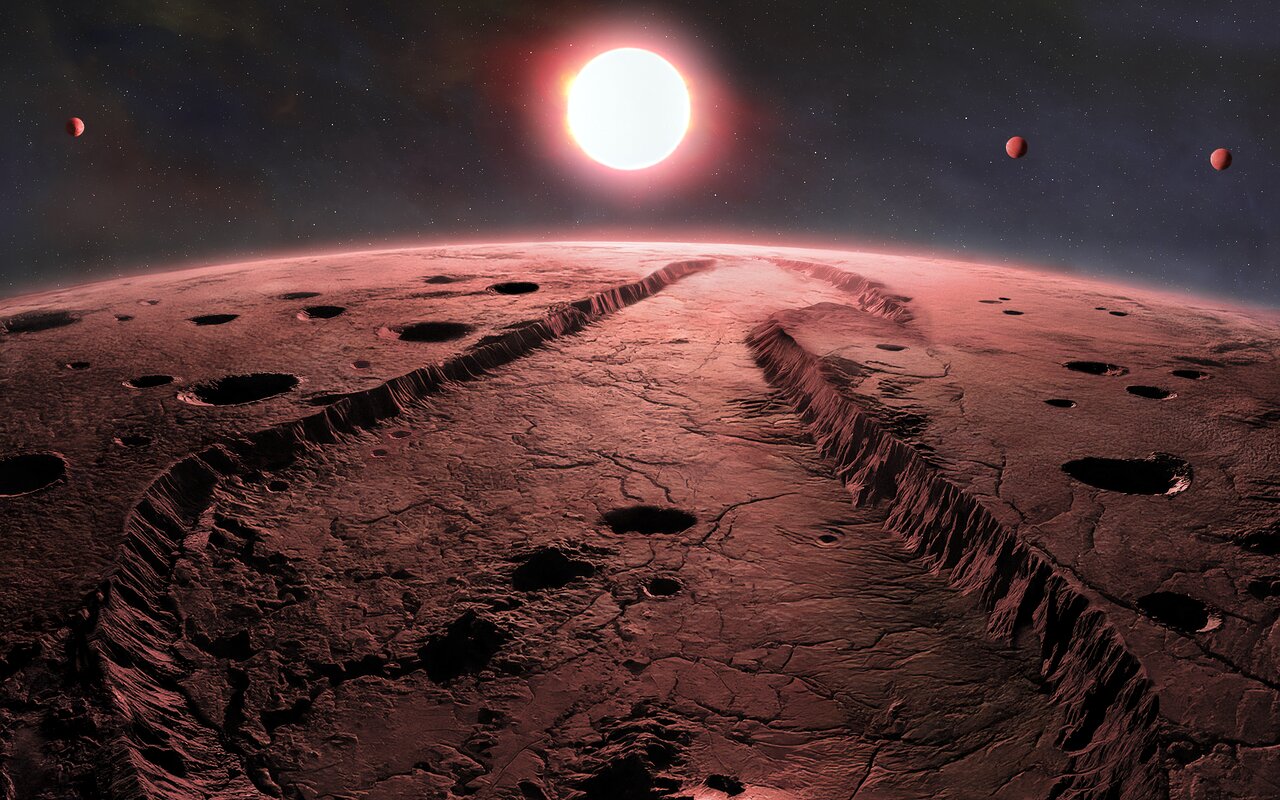
An artist’s impression of the Barnard’s Star system, from the surface of one of its planets. (Image credit: International Gemini Observatory/NOIRLab/NSF/AURA/P. Marenfeld)6. The Milky Way and Andromeda’s uncertain future
The Milky Way and Andromeda galaxies might not crash into each other in the next 10 billion years after all. New research published this year finds that there is a 50-50 chance that the two galaxies will miss each other.
By considering the way the Large Magellanic Cloud‘s gravity pulls on the Milky Way and how the gravity of the Triangulum Galaxy pulls on Andromeda, researchers refined how close Andromeda and the Milky Way galaxies will get by running a multitude of simulations.
They found that the critical distance is 650,000 light years. If they pass closer than that, the two galaxies will collide at some point in the next 10 billion years. If their closest approach is greater than 650,000 light years, they won’t make contact. According to the simulations, both possibilities are equally likely.
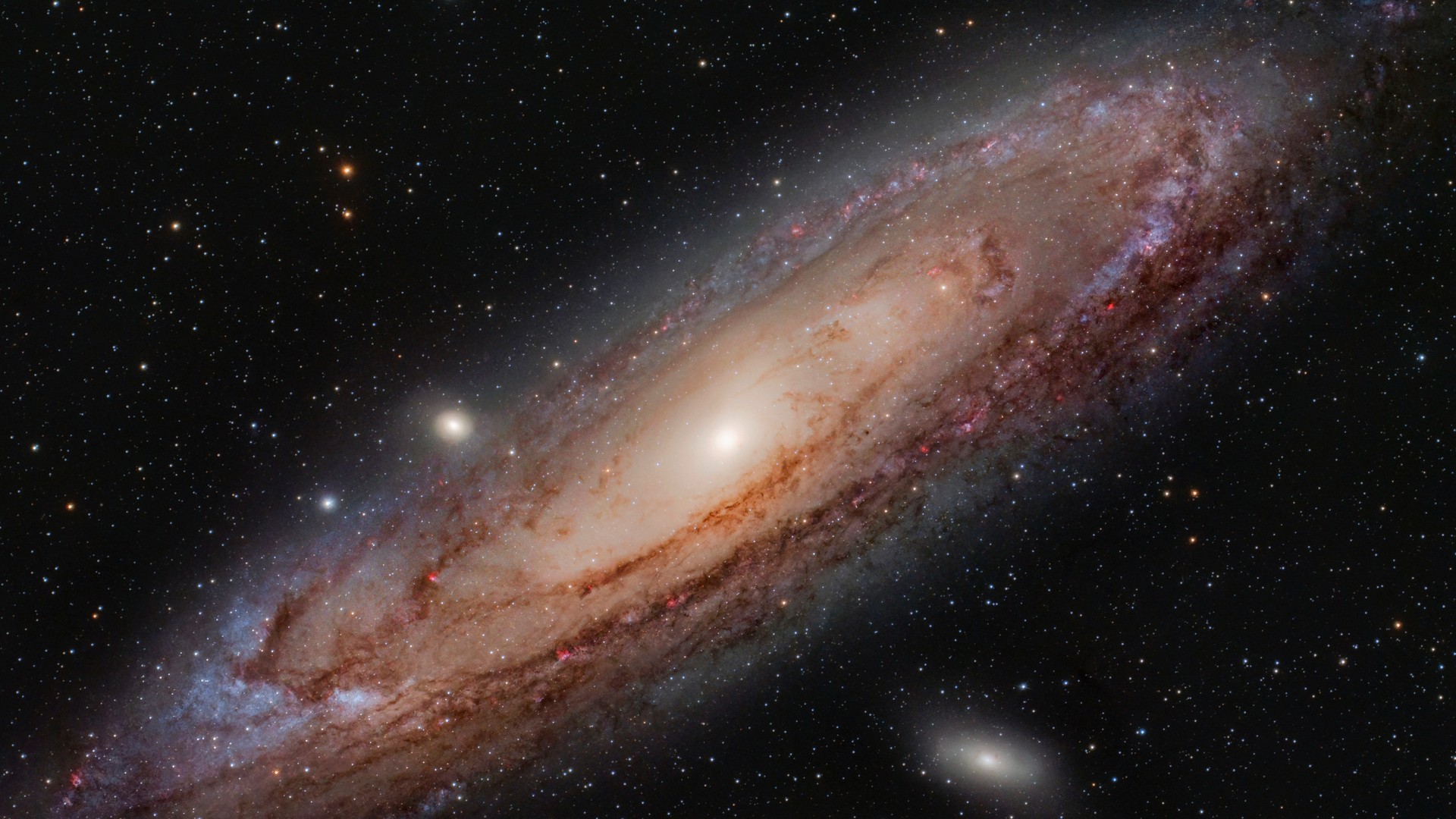
The Andromeda galaxy may avoid an imminent collision with the Milky Way. (Image credit: Westend61/Getty Images)7. The most massive black hole ever seen?
In 2025, astronomers may have discovered the most massive black hole ever seen. This ultra-massive black hole, which tips the scales at 36 billion solar masses, resides at the heart of one of the most massive galaxies in the universe, called the Cosmic Horseshoe because it acts as a gravitational lens that bends the light of a more distant galaxy into an Einstein ring sporting a horseshoe shape.
More massive black holes have been claimed, but the authors of the new research pointed out that those other black holes had their masses measured indirectly, so their masses are just guesses. The mass of the black hole in the Cosmic Horseshoe, on the other hand, has been measured directly and more accurately by tracking the motion of groups of stars around it, pulled by the black hole’s gravity. It certainly puts our 4.1 million-solar mass supermassive black hole, Sagittarius A*, in the shade.
Read more: The biggest black hole ever seen? Scientists find one with mass of 36 billion suns
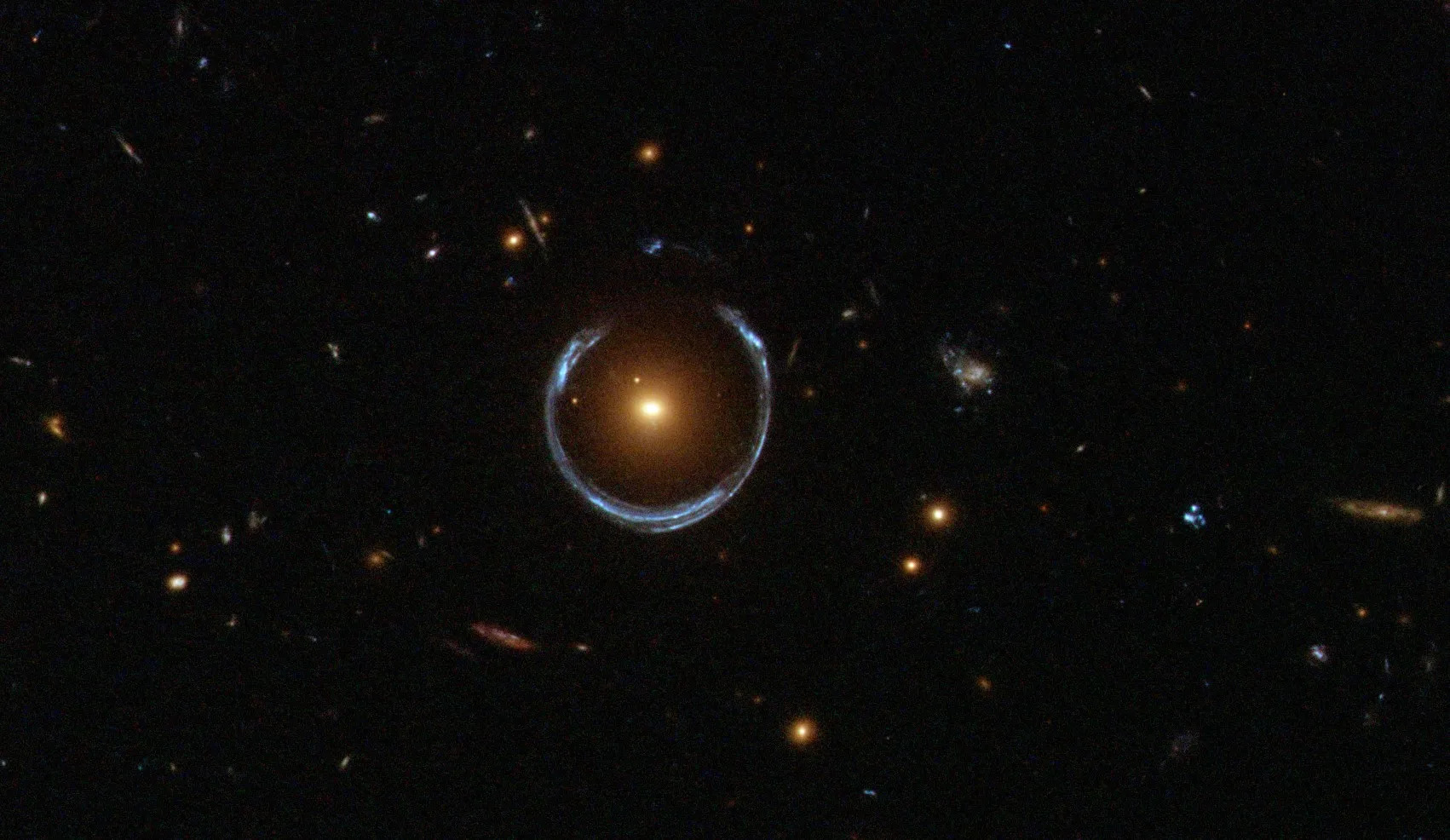
The Cosmic Horseshoe may host the most massive black hole ever measured. (Image credit: NASA/ESA)8. First light for the Vera C. Rubin Observatory
After more than a quarter century of planning and over 10 years of construction, the Vera C. Rubin Observatory in Chile, armed with its 8.4-meter (27.6 feet) Simonyi Survey Telescope, saw first light in the summer of 2025 — and its images of the heavens were exquisite.
The telescope is designed for high-resolution surveys, with studies of dark matter and dark energy in mind. Two areas of the sky were targeted for first light to demonstrate the telescope’s prowess. One was the mighty Virgo Cluster, whose member galaxies had never been seen so clearly across such a wide expanse of space, and with 10 million faint galaxies in the background to boot. The other image was of the Trifid and Lagoon nebulas, two star-forming regions in the Milky Way.
Each night, the telescope will capture 20TB of data with its 3.2-gigapixel CCD camera — the largest ever built — and issue 10 million alerts daily for asteroids, variable stars, tidal disruption events and supernovas. Over the course of its initial 10-year Legacy Survey of Space and Time, the observatory will accumulate 60 petabytes (60,000TB) of information. With all that data, the Rubin Observatory may deliver a tsunami of unprecedented astronomical discoveries.

The Rubin Observatory’s 8.4-meter telescope is ready for action. (Image credit: RubinObs/NSF/DOE/NOIRLab/SLAC/AURA/W. O’Mullane)