
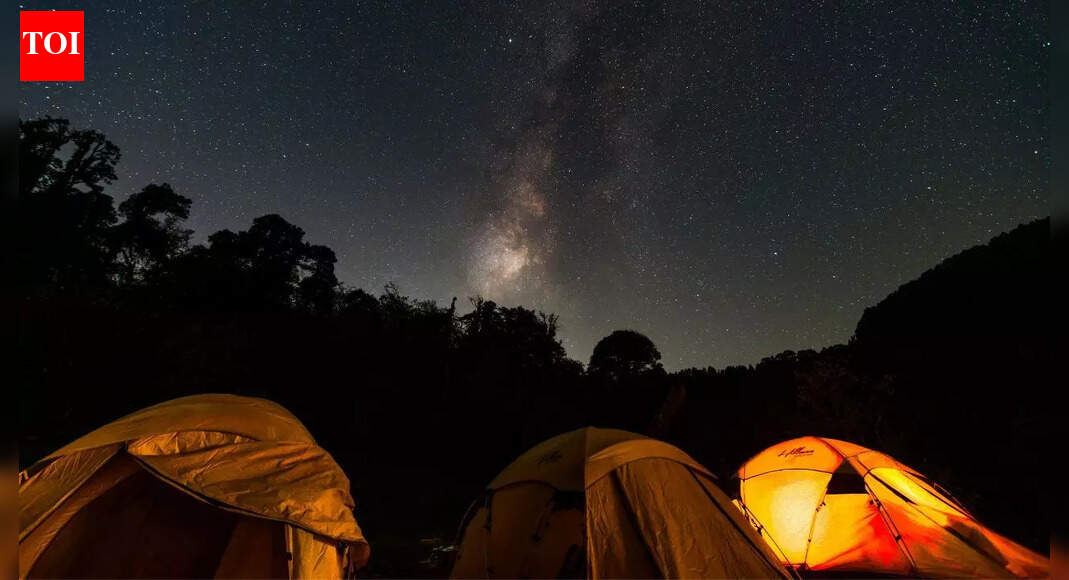
 Whether it be with naked-eye viewing, through a pair of binoculars, or with a beginner’s telescope, a certain amount of planning can make way for viewing enthusiasts to fully enjoy the spectacular events that take place in the sky in 2026. Be it eclipses, aligned planets, or an eight-year supermoon, there are plenty of spectacular sky events in 2026 for enthusiasts to enjoy. Sky viewing in 2026 has plenty on offer for anyone, be it a beginner sky watcher or an enthusiast with a deep love for astronomy. Events such as a lunar eclipse, a solar eclipse, a list of sky showers, aligned planets, and an Artemis Mission to orbit around the Moon by NASA make it a perfect year to experience the beauty of sky viewing with friends and family.
List of celestial events in 2026
DateEvent typeDescriptionVisibility / Notes3 Jan 2026Full Moon / SupermoonWolf Moon appears larger and brighter due to its proximity to EarthGlobal10 Jan 2026Planetary OppositionJupiter is at its brightest point for 13 monthsVisible worldwide17 Feb 2026Annular Solar Eclipse“Ring of fire” effect as the Moon covers the SunTotal in Antarctica; partial in southern Africa and S. America3 Mar 2026Total Lunar EclipseWorm moon turns deep red during 58-minute totalityWestern North America, East Asia, Australia, New Zealand20 Mar 2026Auroras / EquinoxPotential vivid green & red northern lightsMid-latitudes31 May 2026Blue MoonThe second full moon of the monthGlobal12–13 Aug 2026Total Solar Eclipse + Perseid Meteor ShowerTotal solar eclipse in Greenland, Iceland, Spain + meteor shower peakBest in dark-sky locations28 Aug 2026Deep Partial Lunar EclipseOver 96% of Moon immersed in Earth’s shadow, rust-colouredAmericas, Europe, Africa14–16 Nov 2026Planetary ConjunctionMars and Jupiter within 1° of each otherGlobal; best with binoculars24 Dec 2026SupermoonClosest full moon since 2019, unusually large and luminousGlobal5 Feb 2026NASA Artemis II Mission10-day crewed mission around MoonSpace / media coverage
Key celestial events in 2026
2026 promises to be an exciting year for skywatchers, with several remarkable celestial events set to capture global attention. From dramatic meteor showers and rare planetary alignments to lunar eclipses and close approaches of asteroids, the night sky will offer both predictable wonders and surprising cosmic displays. These events provide not only stunning visual spectacles but also valuable opportunities for scientific observation and public engagement with astronomy.Whether you’re a dedicated stargazer or a casual observer, the year ahead holds a series of moments that will bring the universe a little closer to Earth.January highlights: Supermoon and Jupiter oppositionThe year opens with a supermoon at the wolf moon on 3 January. This moon will appear slightly larger and brighter in the sky due to its close approach to Earth. The opposition of Jupiter will be observed on 10 January. It will appear at its brightest in 13 months.February and March: Eclipses and Auroras17 February: There is an annular solar eclipse, which presents the “ring of fire” that can be seen in totality only in Antarctica, with partial eclipses in southern Africa and South America.3 March: A total lunar eclipse makes the worm moon appear deep red for 58 minutes in western North America, East Asia, Australia, and New Zealand. It is the last total lunar eclipse before 2028.20 March: During the spring equinox, observers at mid-latitudes may see vivid displays of the aurora, due to the interaction of charged solar particles with the Earth’s magnetic field.On 31st May, the second full moon in the month, a blue moon rises. While the colour has not changed, the moon rise is a treat to watch.August: Total Solar Eclipse and Perseid Meteor ShowerThe year’s biggest event is on 12-13 August. A total solar eclipse moves across Greenland, Iceland, and Spain. Later that night comes the Perseid meteor shower. Dark-sky enthusiasts find this an ideal time for ‘star streaks.’Late August and November: Lunar and planetary events28 August: A deep partial eclipse plunges more than 96% of the Moon into the Earth’s shadow, making it appear rust red to observers in the Americas, Europe, and Africa.14-16 November: Mars and Jupiter come close to each other within a degree so that both can be viewed in the same field of a pair of binoculars.The year will conclude with a supermoon on 24 December, which will be the closest full moon occurring since 2019.Apart from natural occurrences, NASA’s Artemis II will see four astronauts go on a lunar orbital mission on February 5, comprising a 10-day journey around the lunar body on the Orion spacecraft, with a distance of over 5,800 miles past the lunar surface. This will be the farthest trip for human beings from Earth.