
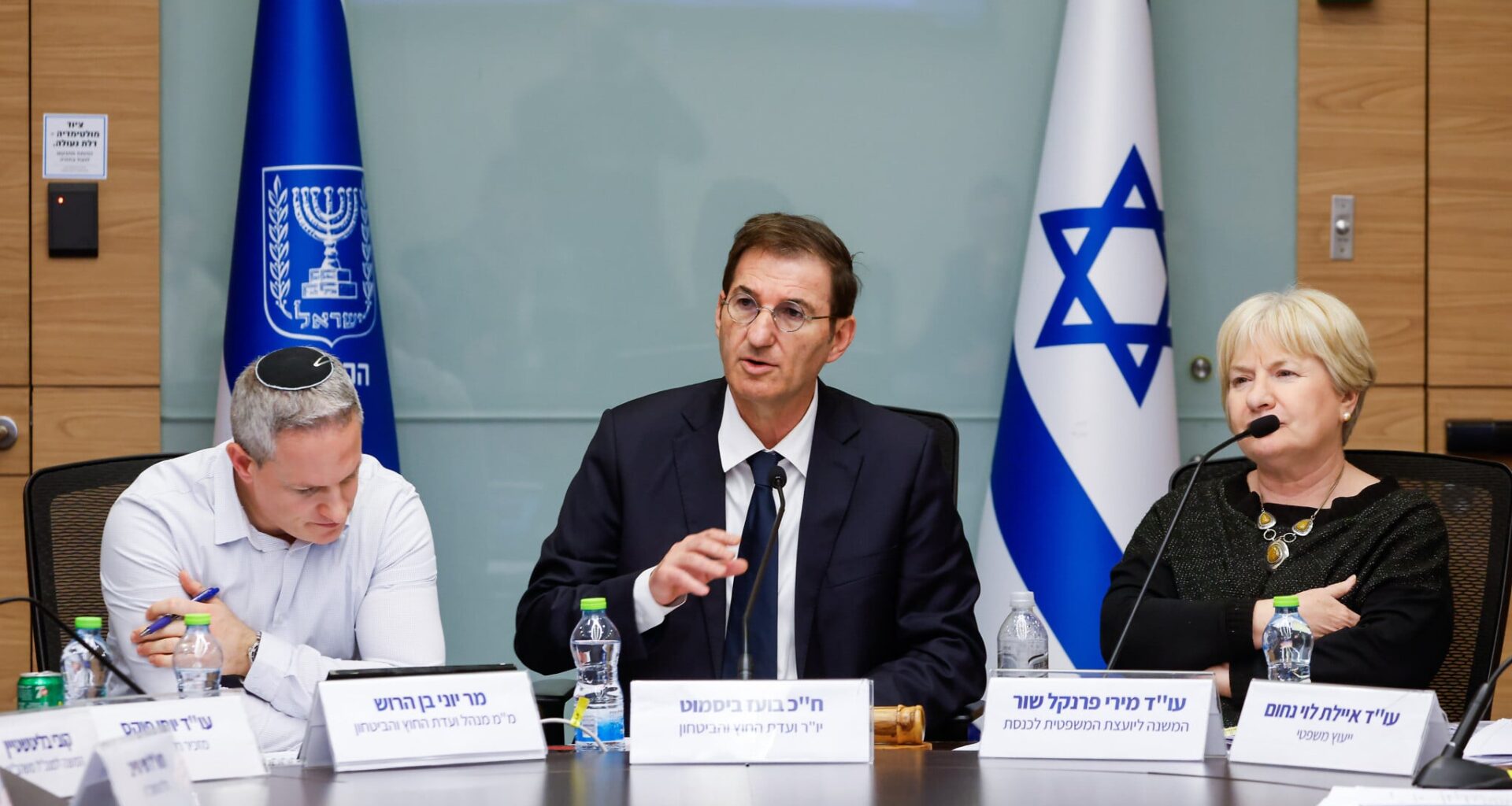
A coalition bill on ultra-Orthodox conscription is unlikely to lead to an increase in mobilization that meets the military’s manpower needs and will instead discourage enlistment, Deputy Attorney General Gil Limon charged in the Knesset Foreign Affairs and Defense Committee on Sunday, as lawmakers engaged in a day-long series of discussions of the controversial legislation.
“The arrangement proposed in the current bill not only does not advance the enlistment of members of the ultra-Orthodox community, it actually creates a negative incentive for enlistment,” he said, arguing that the bill actually “rolls back the tools currently available to the government and the IDF in order to address current security needs.”
Some 80,000 ultra-Orthodox men aged between 18 and 24 are currently believed to be eligible for military service, but have not enlisted, causing widespread resentment among non-Haredi Israeli Jews. The Israel Defense Forces has said it urgently needs 12,000 recruits, due to the strain on standing and reserve forces caused by the war against Hamas in Gaza and other military challenges.
For the past year, the Haredi leadership has pushed for a law keeping its constituency out of the IDF, after the High Court ruled that decades-long blanket exemptions from army duty traditionally afforded to full-time Haredi yeshiva students were illegal.
A government-backed bill making its way through the Knesset, which sets yearly quotas, would, if passed, continue to grant military service exemptions to full-time yeshiva students while ostensibly increasing conscription among graduates of Haredi educational institutions.
Get The Times of Israel’s Daily Edition
by email and never miss our top stories
By signing up, you agree to the terms
The bill’s passage is critical for Prime Minister Benjamin Netanyahu, with the Knesset’s ultra-Orthodox parties reportedly threatening to dissolve the Knesset, forcing early elections, unless it is passed soon. The bill has generated intense opposition among some members of the coalition, leading Finance Minister Bezalel Smotrich to warn that his far-right Religious Zionism party will only vote for a revised version of the controversial legislation.
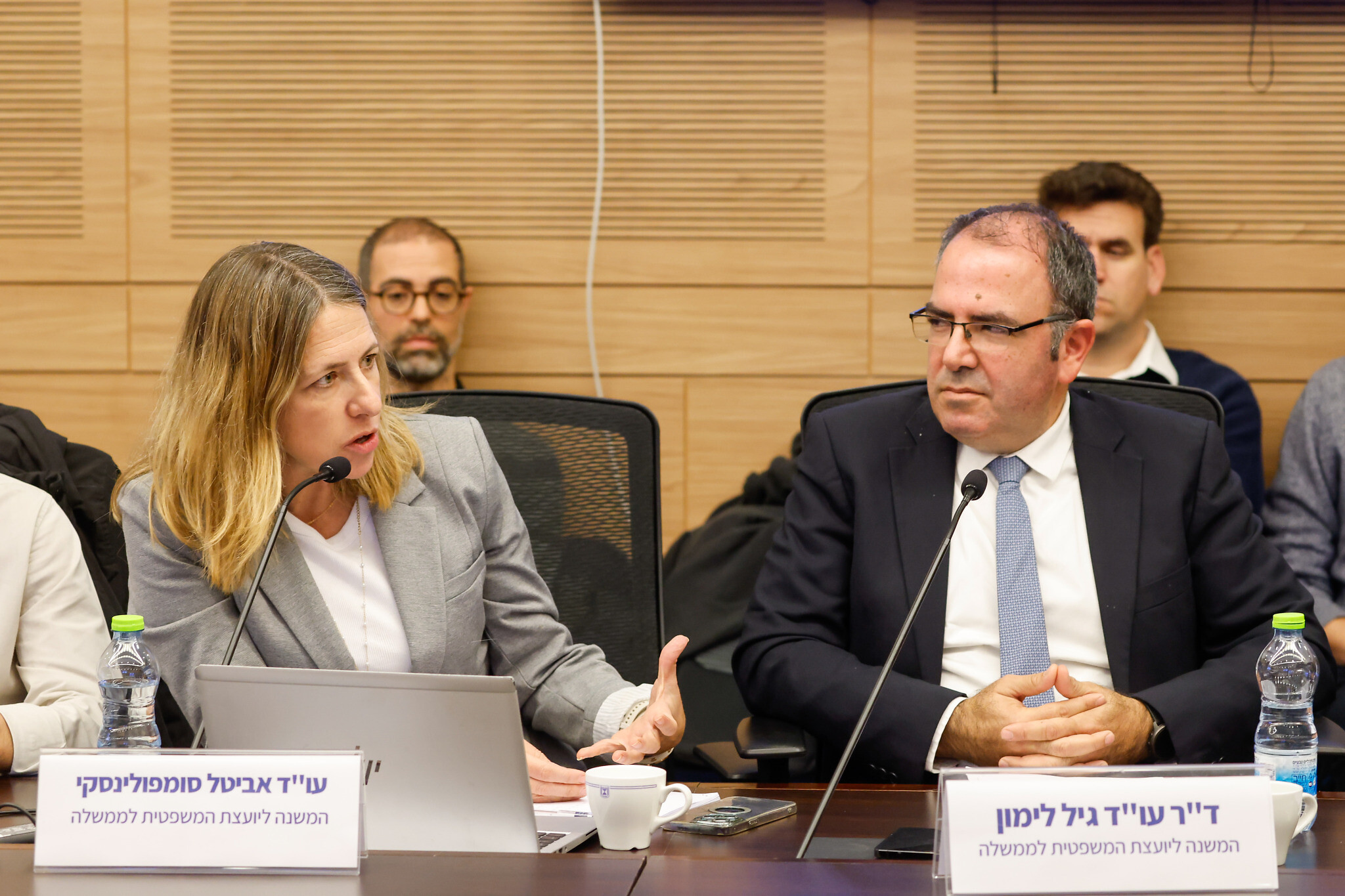
Deputy Attorneys General Avital Sompolinsky (left) and Gil Limon (right) attend a meeting of the Knesset Foreign Affairs and Defense Committee, December 28, 2025. (Noam Moskowitz, Office of the Knesset Spokesperson)
Coalition MKs who have come out against the bill have reportedly been contacted by members of Netanyahu’s circle, who have hinted at potential consequences should they continue to speak out against the legislation.
Recent IDF efforts to strengthen enforcement against draft-evaders have led to repeated protests by Haredi groups, who have blocked major intersections and clashed with police on multiple occasions.
“Instead of a general, uniform, and equal obligation of service, which today applies to the entire population obligated to perform military service, including members of the ultra-Orthodox community of conscription age, the proposal grants a sweeping right to members of the group to receive repeated service deferrals until the age of exemption,” Limon told the committee on Sunday.
According to Limon, the bill would lead to “the restoration of economic benefits for yeshiva students” while undermining efforts to enforce conscription and “severely harms equality, does not serve a proper purpose,” and fails to “meet constitutional proportionality tests.”
If passed into law, the bill would effectively reset the status of yeshiva students who ignored call-up orders over the past year, while yeshivas would immediately receive half of their pre-ruling funding, easing economic and legal pressure on the community.
It stipulates that 8,160 conscripts be drafted by June 2027, which it says constitutes the first year of recruitment. The number drops to 6,840 the next year, before rising to 7,920 and 8,500 the next two years.
By year five, in 2031, the number will be set as at least 50 percent of the annual eligible cohort of recruits. After that, the defense minister will be empowered, with the Foreign Affairs and Defense Committee’s approval, to set an annual minimum threshold no lower than that of the fifth year.
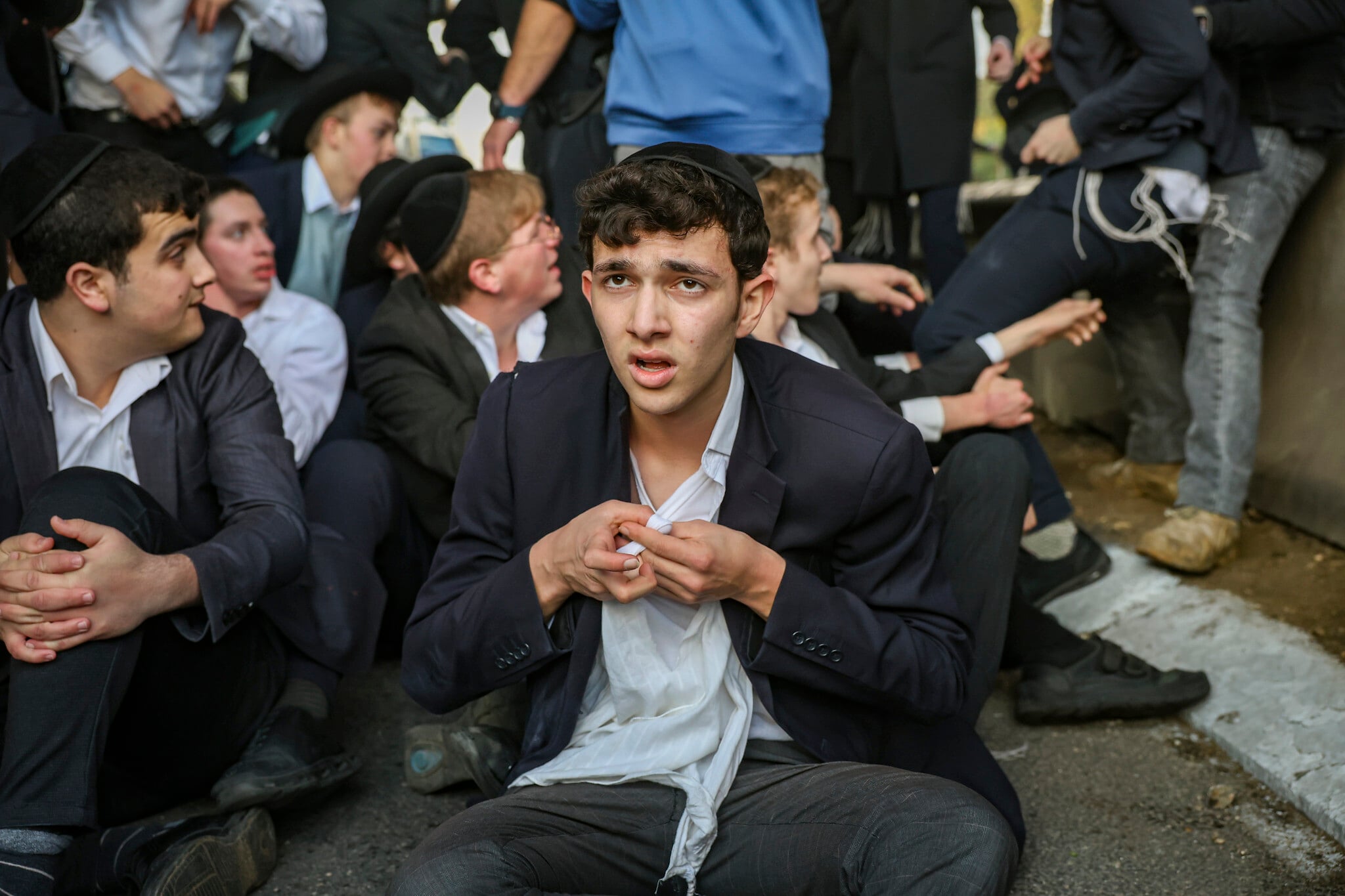
Ultra-Orthodox men seen during a protest blocking Route 4 in opposition to the jailing of seminary students who refused to comply with an army conscription order, near Bnei Brak, December 28, 2025. (David Cohen/Flash90)
The numbers include both military recruits and those serving in non-military security services, such as the Shin Bet or Mossad, capped at 10 percent of the total. In addition, the community will only be expected to meet a percentage of the target, which will rise from 75% to 90% over the first four years.
Sanctions will ramp up if enlistment targets are not met, in a bid to encourage more yeshiva students to put down books and pick up guns, something that Deputy Attorney General Avital Sompolinsky described as problematic, questioning the legality of imposing “what is effectively a personal sanction on an individual, even though that individual has no duty to enlist… because he is exempt from conscription.”
The legislation, as written, sets out targets rather than using a quota system in which a designated number of Haredim are allowed to learn full-time, while the rest are required to serve, with the legal obligation of enlistment falling on each person as an individual rather than as a member of a group.
Committee legal advisor Miri Frenkel Shor also pointed out difficulties with the bill, which she has previously criticized as falling short on equality and security.
In a pair of legal opinions shared with members of the committee ahead of Sunday’s discussion, she argued that current enlistment targets were not sufficient to reduce inequality between Haredim and non-Haredim and that the targets should include set numbers of recruits to be sent to combat and combat-support roles within the IDF.

Cabinet Secretary Yossi Fuchs is seen outside a court hearing on petitions against the firing of Shin Bet chief Ronen Bar at the Supreme Court in Jerusalem, April 8, 2025. (Yonatan Sindel/Flash90)
The current wording of the bill, in which the enlistment target will be set as at least 50% of the annual eligible cohort of recruits by 2031, does not go far enough, considering the large number of eligible Haredim aged 18-26.
Moreover, she argued that the targets were effectively lower than stated in the bill because of the requirement that only a specified percentage of the recruitment goals be reached in order to stave off additional sanctions, and that lawmakers should consider raising the minimum threshold for meeting targets.
The current version of the bill, written by committee chairman Boaz Bismuth, has come under harsh criticism from Attorney General Gali Baharav-Miara, the Finance Ministry, and the Bank of Israel.
Pushing back against criticism of the bill, Cabinet Secretary Yossi Fuchs accused Baharav-Miara of blocking the Defense Ministry’s legal adviser from attending committee meetings, calling it an “abuse of power.”
“Both the former legal adviser to the Defense Ministry and the current one do not see a problem with this law, and therefore their position is different, which is precisely why they are not being allowed to participate,” he claimed.
A spokesperson for the Attorney General’s Office did not immediately respond to a request for comment.