In the vast expanse of the ocean, it’s rare to catch glimpses of how different species interact. Yet among the most captivating encounters are those between whales and dolphins — two of the sea’s most intelligent creatures. A new global study has compiled hundreds of such moments, revealing a surprisingly rich and playful social bond between them.
Each year, thousands of humpback whales migrate along Australia’s coastline, and increasingly, dolphins have been spotted joining their journey. According to a study published in Discover Animals, these cross-species interactions aren’t isolated at all — they’re happening frequently across the world’s oceans.
When whales and dolphins meet
One of the earliest recorded cases dates back to 2004, when researchers in Hawaii observed a humpback whale gently lifting a Tursiops dolphin onto its head — an act once thought to be rare and possibly nurturing.
Today, with drone footage and countless videos shared online, scientists are seeing much more. Some interactions appear playful, others cooperative, and a few even border on harassment — but all suggest an unexpected depth of communication between these marine mammals.
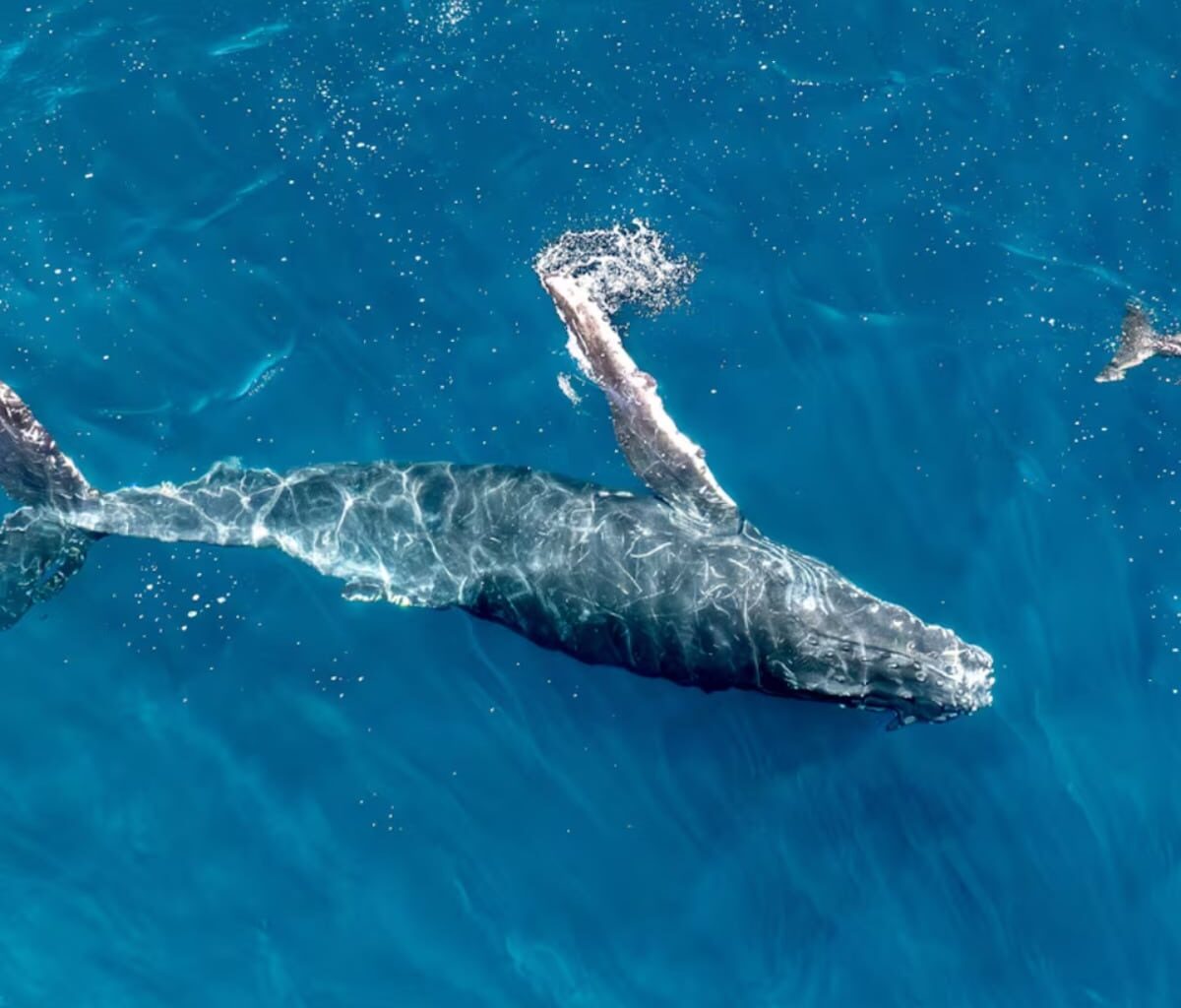
Numerous whales and dolphins have been observed together in recent years. © Jaimen Hudson
A whale’s-eye view of the ocean
Researchers analyzed 199 recorded interactions involving 19 species of whales and dolphins, gathered over two decades across 17 countries. They relied heavily on social media videos from platforms like Facebook, YouTube, and Instagram, alongside footage shared by citizen scientists.
Each clip was examined to confirm the species and categorize their behavior. Two particularly revealing recordings came from cameras mounted directly on humpbacks, offering a rare underwater whale’s-eye view of how these encounters unfold.
Behaviors ranged from rolling and rubbing to fin slapping and bow riding, with dolphins most often swimming near the whales’ heads. In fact, that accounted for 80% of all dolphin positions observed.
Playfulness over conflict
Contrary to earlier assumptions, these meetings weren’t rare — or hostile. Dolphins typically initiated contact, darting around whales, touching them, or swimming in synchronized patterns.
In many cases, the whales responded with what looked like play — rolling, exposing their bellies, or turning toward their smaller companions. Signs of aggression were uncommon, making up only 5% of observed behavior. Overall, more than one-third of the interactions were clearly positive or playful.
Footage from the whale-mounted cameras showed dolphins trailing humpbacks not only at the surface but all the way to the seabed, maintaining eye contact and even nudging their heads — a strong sign of deliberate social behavior.
Close encounter between whales and dolphins © The Conversation
A window into marine intelligence
These findings expand our understanding of how socially complex marine mammals truly are. Dolphins may seek whales for stimulation or companionship, while some whales — particularly humpbacks — seem to reciprocate, willingly engaging in friendly exchanges.
The observed playfulness, cooperation, and communication reflect remarkable emotional and cognitive sophistication. It’s a reminder that the social worlds of these species might be richer and more intertwined than we ever imagined.
Technology played a key role here: drones and citizen-shared videos provided fresh data that traditional research could easily have missed. Despite the limits of online footage — uneven quality, location bias, and equipment variation — it has opened an entirely new window into marine life.
Whales and dolphins don’t just share the ocean — they seem to share a friendship. Future studies combining acoustic data and long-term monitoring could help decode the true meaning of these joyful, mysterious encounters.
Republished from The Conversation.