
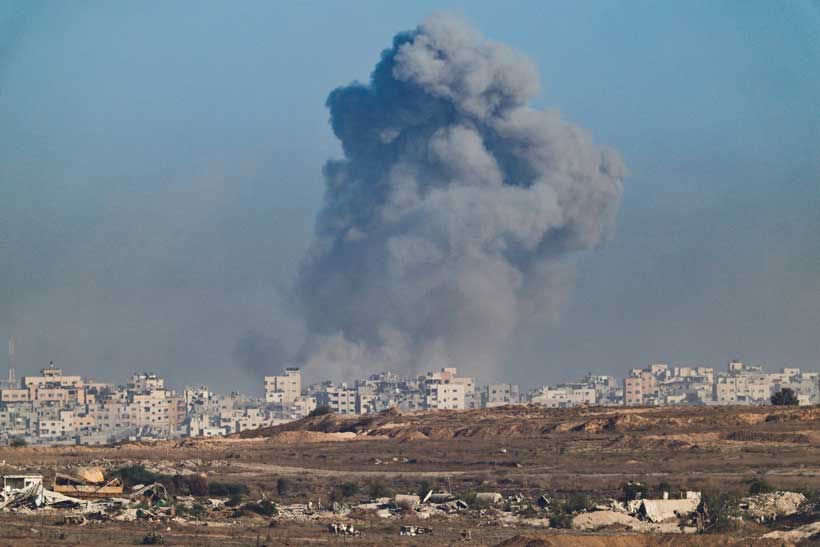
In the weeks leading up to the October 10 ceasefire, Israel widely deployed a previously unconventional weapon in Gaza: M113 Armoured Personnel Carriers repurposed to carry between 1 and 3 tons of explosives. Reuters analysis of satellite imagery, drone footage, and interviews with residents, Israeli sources, and military experts found that these APC-based bombs, alongside airstrikes and armour-plated bulldozers, demolished swathes of buildings in Gaza City.
The attacks focused on densely populated neighbourhoods such as Tel-al-Hawa and Sabra, previously bustling with homes, businesses, schools, and mosques. One notable example is Hesham Mohammad Badawi’s five-storey home, which, along with 41 family members’ residences, was destroyed in a single APC explosion in September.
Military experts estimate the explosive yield of a loaded APC could approach that of Israel’s largest airborne bombs, such as the 2,000-pound Mark 84, making the vehicles highly destructive in urban areas.
Why It Matters
The use of APCs as multi-ton bombs is highly unusual and highlights the challenges of urban warfare in Gaza. Analysts, legal scholars, and the U.N. Human Rights Office have raised concerns that detonating such large explosives in densely populated areas may violate humanitarian law, particularly principles of proportionality and protection of civilian infrastructure.
Reuters identified approximately 650 buildings destroyed in Tel-al-Hawa, Sabra, and surrounding areas between September 1 and October 11. The scale of destruction displaced tens of thousands of residents, exacerbating an already dire humanitarian situation.
The reporting also underscores how military necessity, technological adaptation, and resource shortages (such as U.S. restrictions on Mark-84 bombs and Caterpillar bulldozers) can reshape tactics in conflict, often with profound civilian consequences.
Israeli military and government, responsible for planning and executing the operations.
Gaza residents, who faced displacement, loss of homes, and destruction of infrastructure.
Humanitarian and human rights organisations, including the U.N. and local NGOs, monitoring potential violations of international law.
U.S. government and military suppliers, whose export restrictions or pauses (Mark-84 bombs, D9 bulldozers) influenced Israel’s choice of weaponry.
International legal experts, analyzing whether these tactics comply with humanitarian and war laws.
What’s Next
The use of APCs as improvised bombs may influence future urban combat in Gaza and other conflicts, as militaries adapt to operational constraints and weapon shortages.
For residents, the recovery process is expected to be long, with tens of thousands remaining displaced and entire neighborhoods in ruins. International scrutiny will likely continue, as human rights organisations evaluate whether Israel’s tactics violated the laws of war.
Future military operations in Gaza could see increased reliance on unconventional tactics, particularly if supply of traditional munitions remains restricted or the urban combat environment becomes more complex.
Personal Analysis
The deployment of APC-based bombs in Gaza represents a stark example of how operational necessity, logistical constraints, and strategic considerations can intersect to create disproportionate effects on civilians. While Israel argues the measures were required to neutralize Hamas tunnels and booby traps, the scale of destruction and the proximity to densely populated areas suggest a high risk of civilian harm.
From a military perspective, the innovation reflects adaptability: when conventional demolition equipment like Caterpillar D9s or Mark-84 bombs was limited, repurposing armored vehicles allowed Israel to maintain operational momentum. However, from a humanitarian and legal standpoint, the tactic raises critical questions about proportionality and distinction, central tenets of international humanitarian law.
The story also illustrates how conflicts are increasingly influenced by supply chain dynamics in this case, U.S. restrictions and equipment shortages forcing militaries to improvise. For Gaza’s civilians, this combination of tactical innovation and urban density created unprecedented devastation, highlighting the human cost of adapting conventional warfare to complex urban environments.
With information from Reuters.