
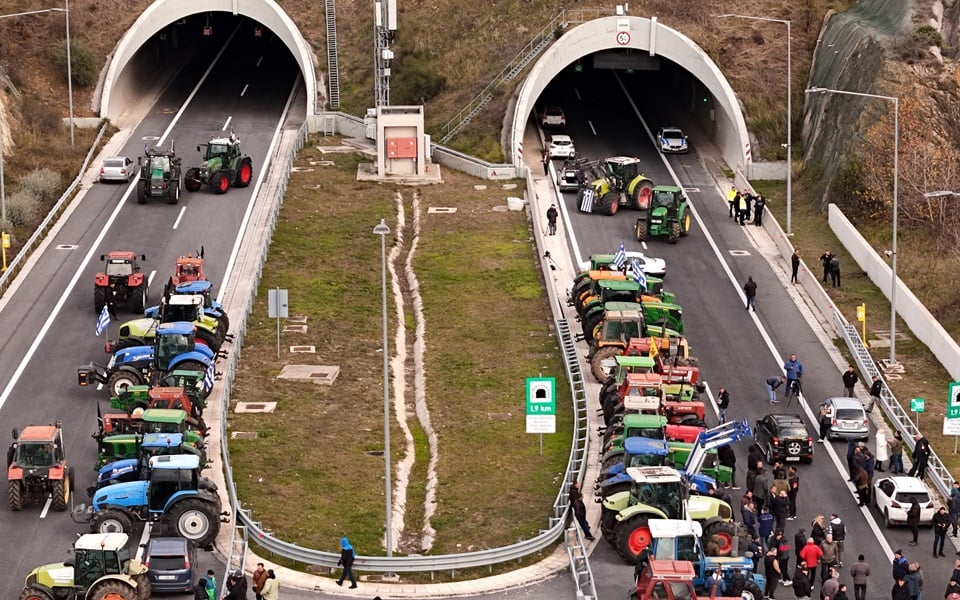
The supply chain in Greece has been dealt a significant blow by the farmer blockades that will have been going on a full month on Tuesday. The flow of goods from the north to the south and vice versa has been severely affected, while imports to Greece are stalled at the Greek-Bulgarian border, as Bulgarian truck drivers refuse to enter the country for fear of getting trapped on the highways and multinational companies are seeking Greek drivers instead.
The cost of goods transportation and distribution has risen between 10% and 25% compared to before November 30, and supermarkets warn that this will sooner or later be passed on to the final consumer.
Although there have been no shortages on supermarket shelves so far, there are significant delays in raw materials getting to factories and goods to retail stores. Road routes that under normal circumstances, such as Thessaloniki-Athens, last approximately 6.5 hours, now take up to 11.
An indication of the pressure on the market is that fares for the basic Athens-Thessaloniki route, which normally run around 600 euros, are now approaching €700. For the supermarket sector, this translates into an additional cost of around €100,000 to €200,000 per month, a burden that can currently be absorbed.
Most businesses are now covering the loss, but market executives warn that this cannot continue indefinitely. If the situation continues, it cannot be ruled out that the increased cost will eventually be passed on to the consumer, amid an expanding climate of business uncertainty.
On the other hand, the impact on mountain tourism destinations over the Christmas long weekend was smaller than feared.
It was mainly Thessaly, in particular Magnesia and Trikala, that suffered the worst losses from the farmer blockades last weekend, while destinations in Epirus and the Peloponnese emerged relatively unscathed, according to what local hoteliers tell Kathimerini. Northern Greece endured only a minor impact.