
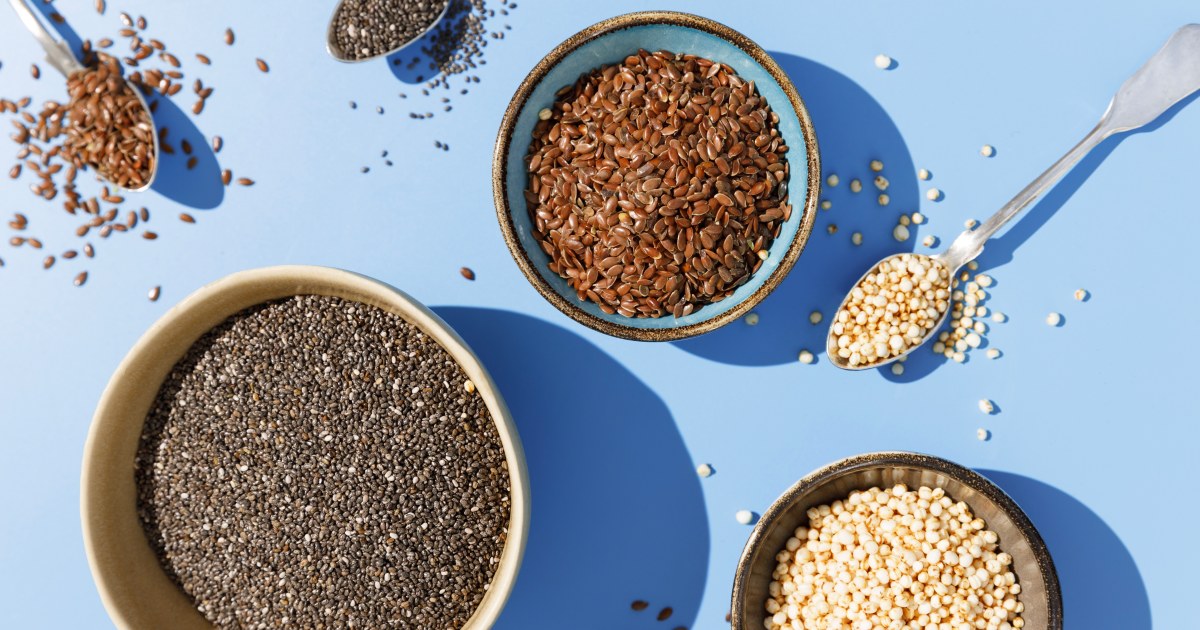
Seeds are the perfect crunchy, salty topping for yogurt, salads and smoothies. And they’re packed with health benefits, including omega-3s for your heart.
While all seeds contain some of these heart-healthy fatty acids, there are a few that stand out as omega-3 superstars. Seeds also contain plenty of essential vitamins and minerals, as well as nutrients that support gut health and may fight inflammation.
So, no matter which seeds you reach for, you’ll find a snack that boosts your overall health. But when you’re looking for omega-3s specifically, there are few specific seeds to select, says Natalie Rizzo, registered dietitian and TODAY nutrition editor.
Healthy Fats in Seeds
While many of us have been taught to fear fat in food, it’s not all bad, dietitians say. In particular, the polyunsaturated fats found in seeds, nuts, legumes and fish have properties that can actually boost health.
Omega-3 fatty acids are one type of polyunsaturated fat that get a lot of attention — for good reason, Rizzo says.
There are three categories of omega-3s found in food, and plant foods (including seeds and nuts) are only really rich in one of them: alpha-linolenic acid (ALA). This compound has been linked to markers of better cardiovascular health, including improved cholesterol levels and blood pressure.
For the other two types of omega-3s, eicosapentaenoic acid (EPA) and docosahexaenoic acid (DHA), you’ll need to add fish or other marine foods to your plate. The omega-3s in these foods are more linked to brain health while ALAs are thought to support heart health, Rizzo explains.
Additionally, some seeds that contain omega-3s also provide omega-6 fatty acids — and a few actually contain more omega-6s than omega-3s. Pumpkin seeds and sunflower seeds both fall into this category, Rizzo explains.
Both omega-3s and omega-6 are considered essential fatty acids because our bodies can’t produce them on their own. But we generally get enough omega-6s in our diets in the U.S. without trying too hard.
Unfounded concerns about omega-6s have been fueling recent fears that seed oils are toxic or cause inflammation, Rizzo says. But you don’t actually need to avoid them, as TODAY.com explained previously.
And seeds that are higher in omega-6s are also rich in other helpful nutrients that make them worth seeking out. Pumpkin seeds, for instance, are an incredible source of plant-based protein, fiber and magnesium. And sunflower seeds are packed with folate and vitamin E.
No. 1 Seed With the Most Omega-3sChia Seeds
The top seed for omega-3s is chia seeds, Rizzo says. A single ounce of chia seeds, which is about 2 tablespoons, provides a little over 5 grams of ALAs.
Chia seeds are also known for being quite rich in fiber, a nutrient that most of us don’t get enough of in our diets. That same serving of chia seeds will net you 10 grams of fiber — about 40% of the daily recommended amount for women. You’ll also get 6 grams of protein and some calcium to support healthy bones.
If you’re not quite sure how to get a whole 2 tablespoons of chia seeds in your diet, try chia seed pudding. Chia seeds naturally swell and create a soft, pudding-like gel when soaked in liquid, which also makes them easier to eat in larger quantities.
Other Seeds Packed With Omega-3sFlaxseeds
In second place, flaxseeds are also a great source of omega-3s, Rizzo says. Just 1 tablespoon of these little seeds contains about 2.4 grams of ALAs.
You’ll also find an antioxidant and anti-inflammatory compound called lignans in flaxseeds, which further adds to their heart-healthy benefits. And, like chia seeds, they also provide some protein and gut-healthy fiber.
Hemp Seeds
Also called hemp hearts, a 3-tablespoon serving of these tiny seeds contains about 3 grams of ALA omega-3 fatty acids. This serving will also net you about 10 grams of plant-based protein, half of your daily magnesium requirement and many other nutrients.