
(Credits: Far Out / Alamy)
Thu 1 January 2026 8:00, UK
“What else should I be?” Kurt Cobain asks, in the opening line of ‘All Apologies’, Nirvana’s final single before his passing in 1994.
The lyrics had been ruminating in Cobain’s mind for years, having initially written ‘All Apologies’ on a 4-track in his shared apartment with Dave Grohl in Olympia, Washington, in 1990. “I remember hearing it and thinking, ‘God, this guy has such a beautiful sense of melody, I can’t believe he’s screaming all the time,’” Grohl once recalled to Harp magazine.
Indeed, ‘All Apologies’ was a sonic change for Cobain, shifting from the sludged guitars and belting screams he was accustomed to. But the lyrical content stayed true to Cobain’s vulnerability. His manager, Danny Goldberg, wrote in his memoir that Cobain played The Beatles’ ‘Norwegian Wood’ on repeat for hours while he wrote the song, and its contemplative tone shows in the way that Cobain chose to communicate with a quieter, ethereal voice.
Wanting to contrast the more polished production that Butch Vig adopted while producing Nirvana’s Nevermind, Cobain favoured producer Steve Albini’s approach, which was to record the band in a stripped-back, raw format. This mirrored Cobain’s songwriting, as he wanted to expand into various realms of songwriting that he had not previously explored. The outcome, In Utero, would be Nirvana’s most personal work yet, and, despite Cobain claiming that its lyrics were “very impersonal”, the allusions to his inner turmoil were undeniable, amplified by the abrasive production.
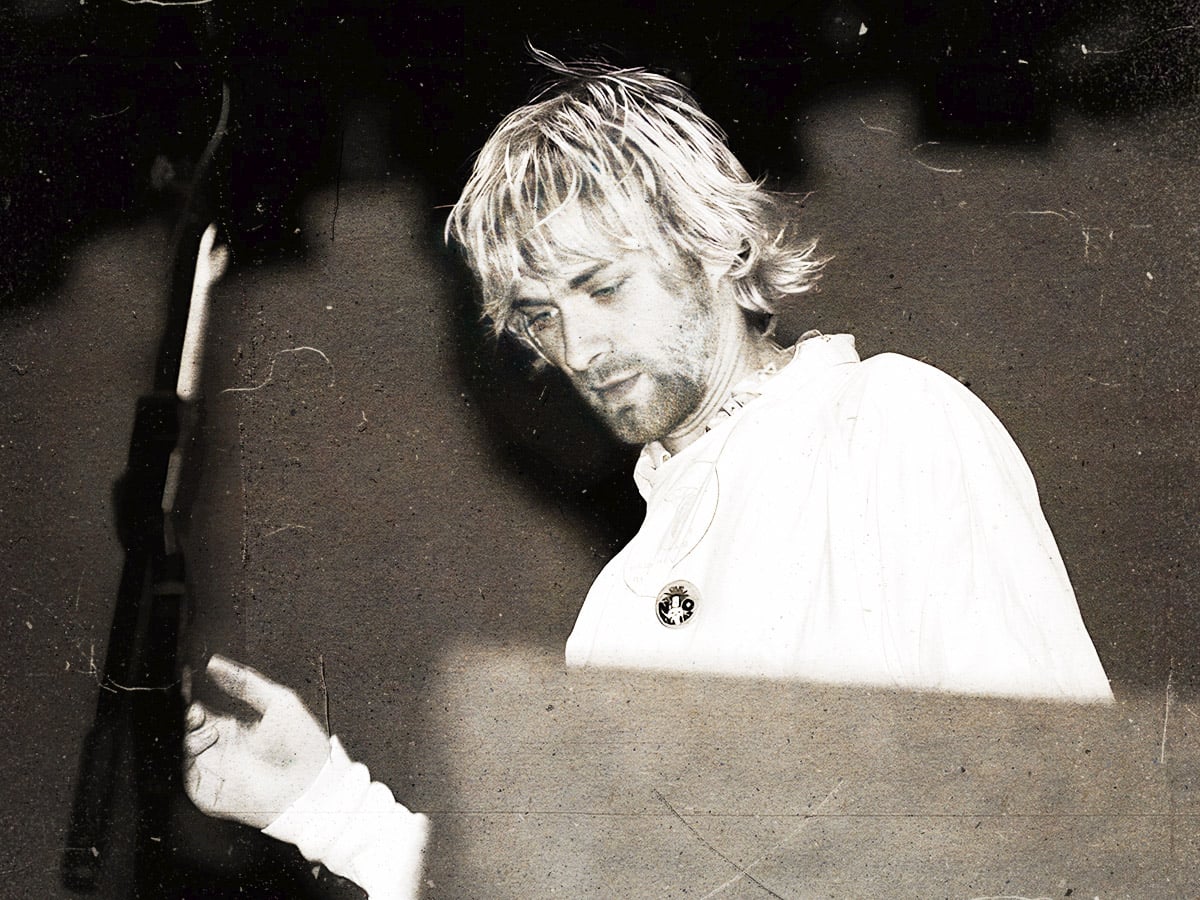
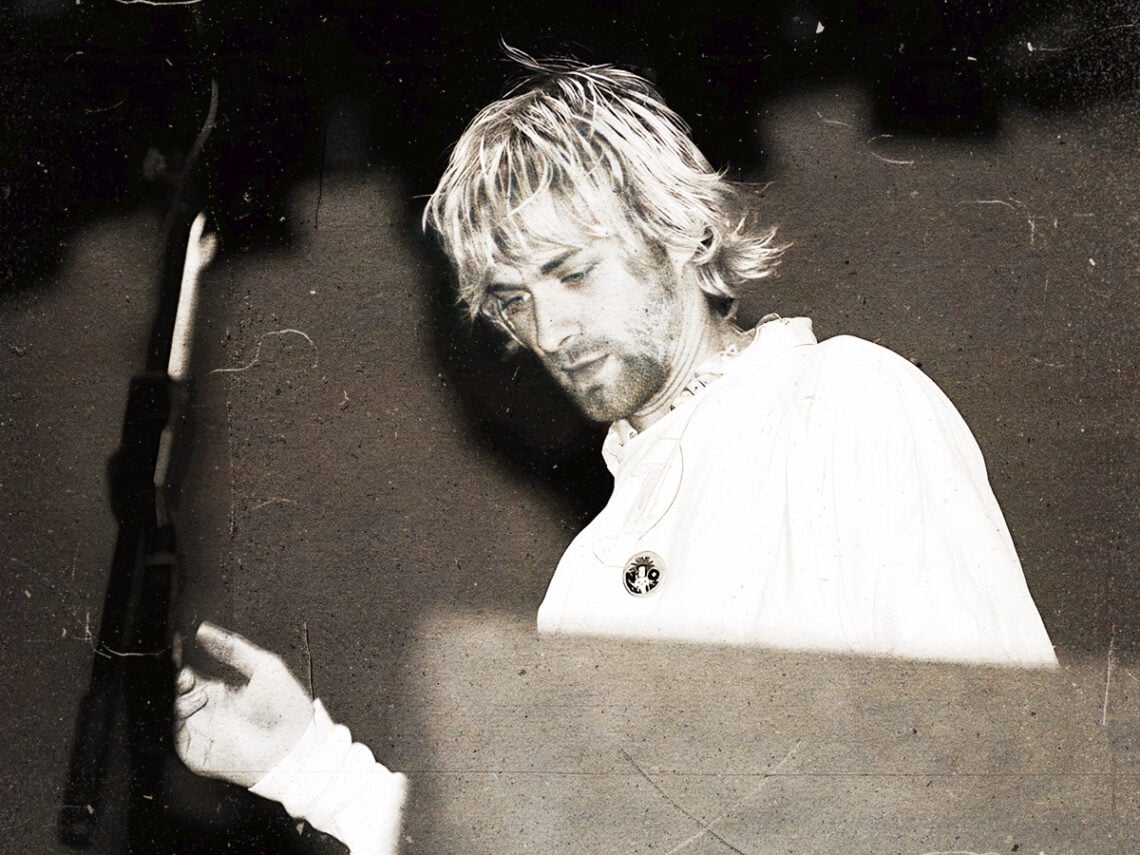
 Kurt Cobain performing with Nirvana in the 1990s. (Credits: Far Out / Alamy)
Nirvana’s label, David Geffen Company, and their management were displeased with In Utero’s final output, placing the blame on Albini, forcing the eventual compromise of remixing versions of ‘All Apologies’ and ‘Heart-Shaped Box’ with producer Scott Litt, known for his work with REM. Still, Nirvana stood by In Utero and, even when Cobain second-guessed their approach, the songs continued to resonate.
“I can’t help myself,” he told biographer Michael Azerrad in the book Come As You Are: The Story of Nirvana. “I’m just putting out a record I would like to listen to at home.”
Across the songs that comprise In Utero, Cobain considers his sprawling thoughts on his afflictions: fame, self-image, control, addiction and more. ‘All Apologies’ continues to tackle his conflicting emotions. “What else could I say? Everyone is gay,” he posits, as if daring to provoke before countering it with humility, singing, “What else could I write? I don’t have the right”. Cobain continues to spiral in his own mind, contemplating the shame and discomfort that envelop him, yearning for an escape.
“I wish I was like you, easily amused,” Cobain admits, before he laments, “Everything is my fault,” promising to take the blame for every wrongdoing that continues to follow him. The choruses offer a reprieve for Cobain as he sings, “In the sun, I feel as one,” with a dramatic clash of instruments that breaks through the sadness.
During Nirvana’s performance at the Reading Festival on August 30th, 1992, Cobain dedicated ‘All Apologies’ to his wife, Courtney Love, and their daughter, Frances Bean. “I like to think the song is for them,” he told Azerrad, “but the words don’t really fit in relation to us… the feeling does, but not the lyrics,” describing the song’s tone as “peaceful, happy, comfort – just happy happiness”.
With gorgeous cello from Kera Schaley, a friend of Albini’s, ‘All Apologies’ swells with sentimentality, turning the song into a welcome contrast to others on the album that were founded on aggression. In a similar way to ‘Dumb’, ‘All Apologies’ has a lighter tone that, even with its solemn lyrics, reverberates with a sense of comfort. The haunting final chant of “All in all is all we are” fades into a shaky cry.
Related Topics