
The European Space Agency’s Proba-3 mission is using two spacecraft flying in ultra-precise formation to create artificial solar eclipses in space, offering long, uninterrupted views of one of the Sun’s most mysterious regions.
Since beginning opFor the first time in history, scientists can observe the Sun’s inner corona regularly, without waiting for the Moon. For the first time in history, scientists can observe the Sun’s inner corona regularly, without waiting for the Moon.
Natural eclipses provided the only chance to see this elusive part of the Sun, but only for a few minutes, and only when the Moon cooperated. With Proba-3, scientists no longer rely on rare celestial alignments. Instead, they now have a reliable, orbit-based tool to monitor the Sun’s outer atmosphere in fine detail, opening the door to faster, more consistent solar research.
Creating Artificial Eclipses With Extreme Precision
The Proba-3 mission operates with two separate satellites that fly together in perfect alignment. One spacecraft carries the ASPIICS coronagraph, while the other acts as a sunshade, blocking the Sun’s light to simulate a total eclipse. These spacecraft maintain their positions to within millimeter precision, holding alignment for several hours at a time without intervention from ground control.
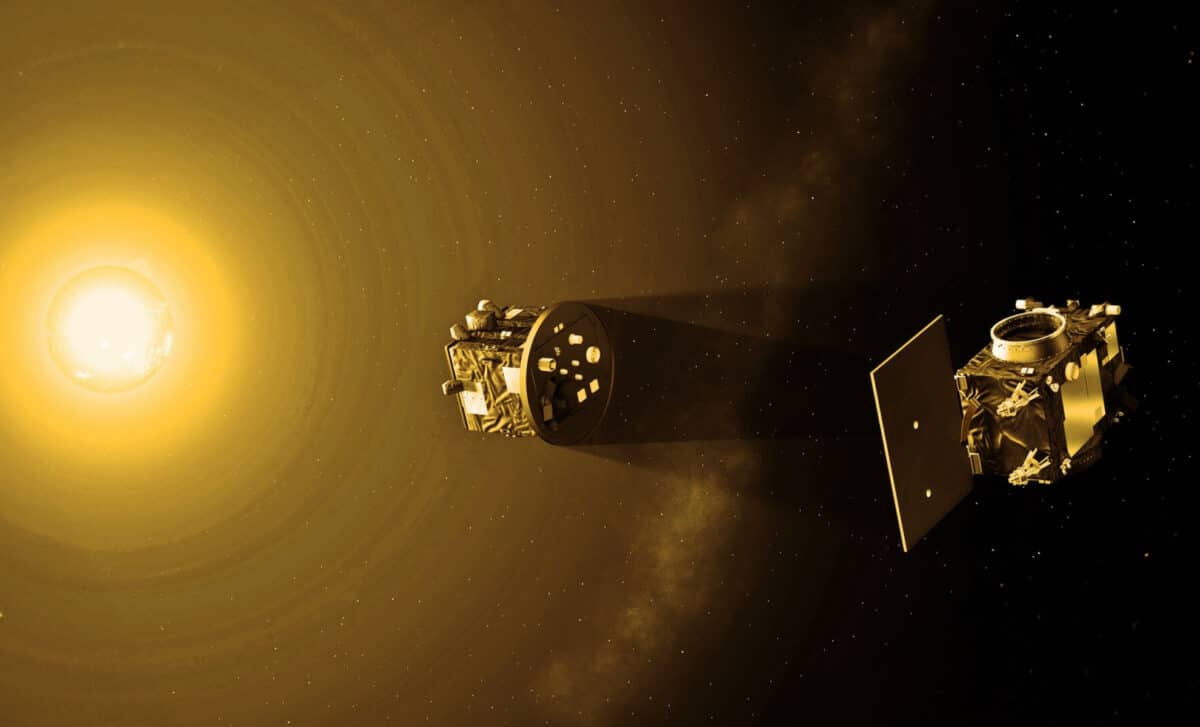 Proba-3. Precise formation flying to observe the Sun’s corona – © ESA
The mission launched on December 5, 2024, and six weeks later, the spacecraft separated in orbit. By March, they successfully performed their first autonomous formation flight. In April, they began achieving their main objective: keeping the perfect formation needed to block the Sun and expose the corona for sustained observation. This level of precision flying has never before been demonstrated in space.
According to mission manager Damien Galano, the system is already delivering on its promise. Thanks to the onboard technologies that guide formation flying, the satellites can now generate an eclipse once every orbit, which takes 19 hours and 40 minutes, and maintain it for up to six hours. That gives researchers steady, high-quality access to the inner corona, something they previously only glimpsed in fragments.
Observing The Invisible Zone Of The Inner Corona
The inner corona is the area just above the Sun’s visible surface. It plays a key role in solar wind acceleration and is also the region where coronal mass ejections (CMEs) often begin. These massive eruptions of charged particles can interfere with satellites, radio communications, and power grids on Earth.
Before Proba-3, scientists could observe the Sun’s surface and the far outer corona with instruments in space, but not the inner region in between. On Earth, total eclipses only provided brief glimpses, rare and geographically limited. That left the most critical region of solar activity largely uncharted.
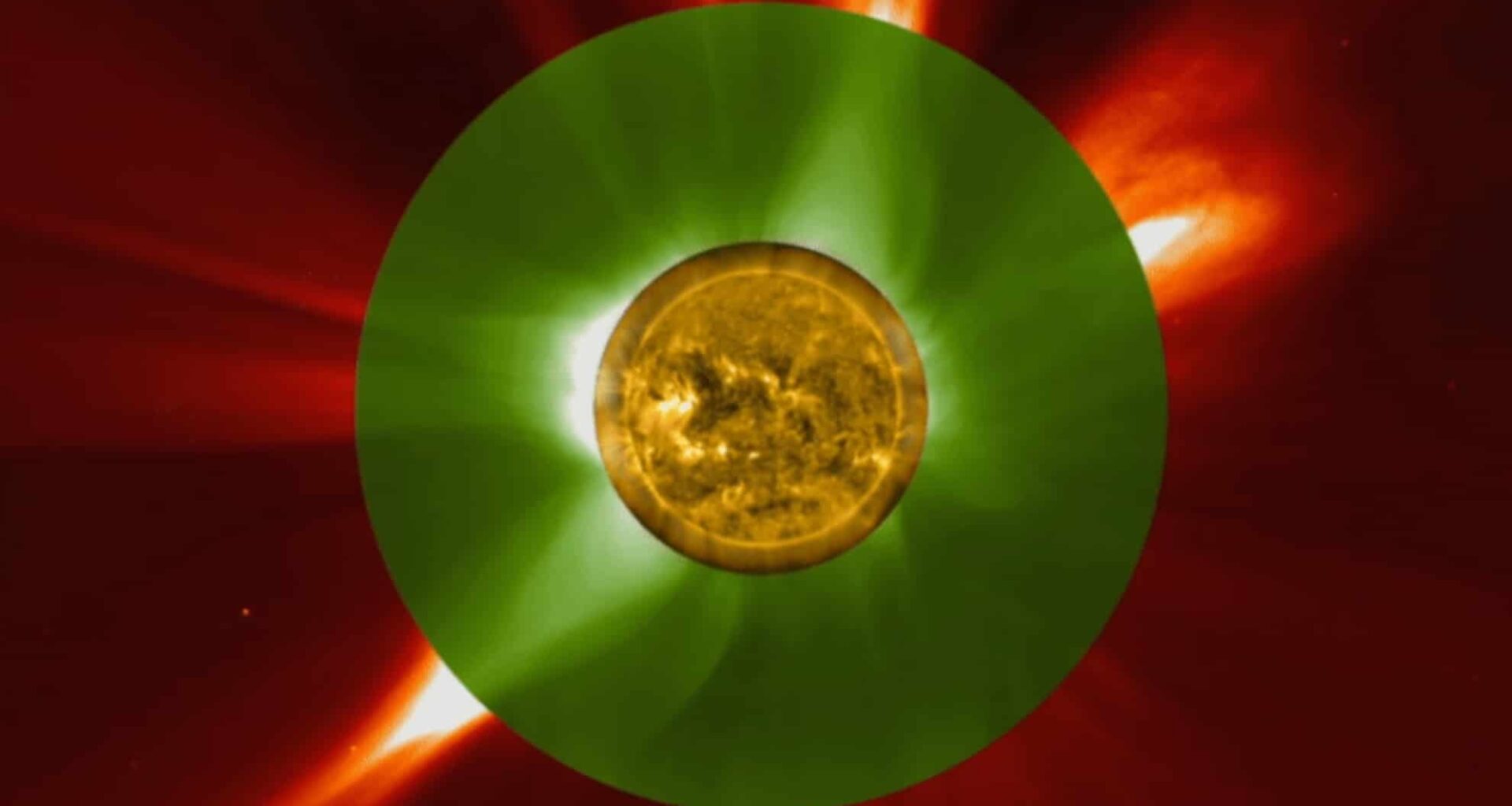
According to Earth.com, the mission has already changed that. In one notable sequence from July 16, data from three ESA missions, Proba-2, Proba-3, and SOHO, were combined to create a full view of a CME. The Sun’s surface and low corona were shown in yellow, the outer corona in red, and the once-hidden inner corona in green.
“You can see the CME forming at the edge of the solar disc, captured by Proba-2,” said Andrei Zhukov, principal investigator for the ASPIICS coronagraph. “It extends into the inner coronal region, which is now visible to us thanks to Proba-3, before reaching the high corona observed by SOHO.” This combination revealed, for the first time, the complete development of a solar eruption from its origin outward.
Regular Solar Monitoring Redefines Space Weather Research
Artificial eclipses not only offer access to new solar regions, they also bring frequency and stability. While natural total eclipses occur only once or twice a year and last just a few minutes, Proba-3 delivers near-daily eclipses, each lasting for hours. Weather and location are no longer limiting factors.
“Our artificial eclipse images are comparable with those taken during a natural eclipse,” said Zhukov. “The difference is that we can create our eclipse once every orbit.” This makes solar observation more predictable, frequent, and productive.
In just 50 orbits, Proba-3 has provided around 250 hours of eclipse observation time. According to Proba-3 project scientist Joe Zender, this is equivalent to the data collected during 6,000 total eclipse campaigns on Earth. The ability to conduct planned, repeated observations is helping researchers build a continuous record of how the corona behaves over time.