
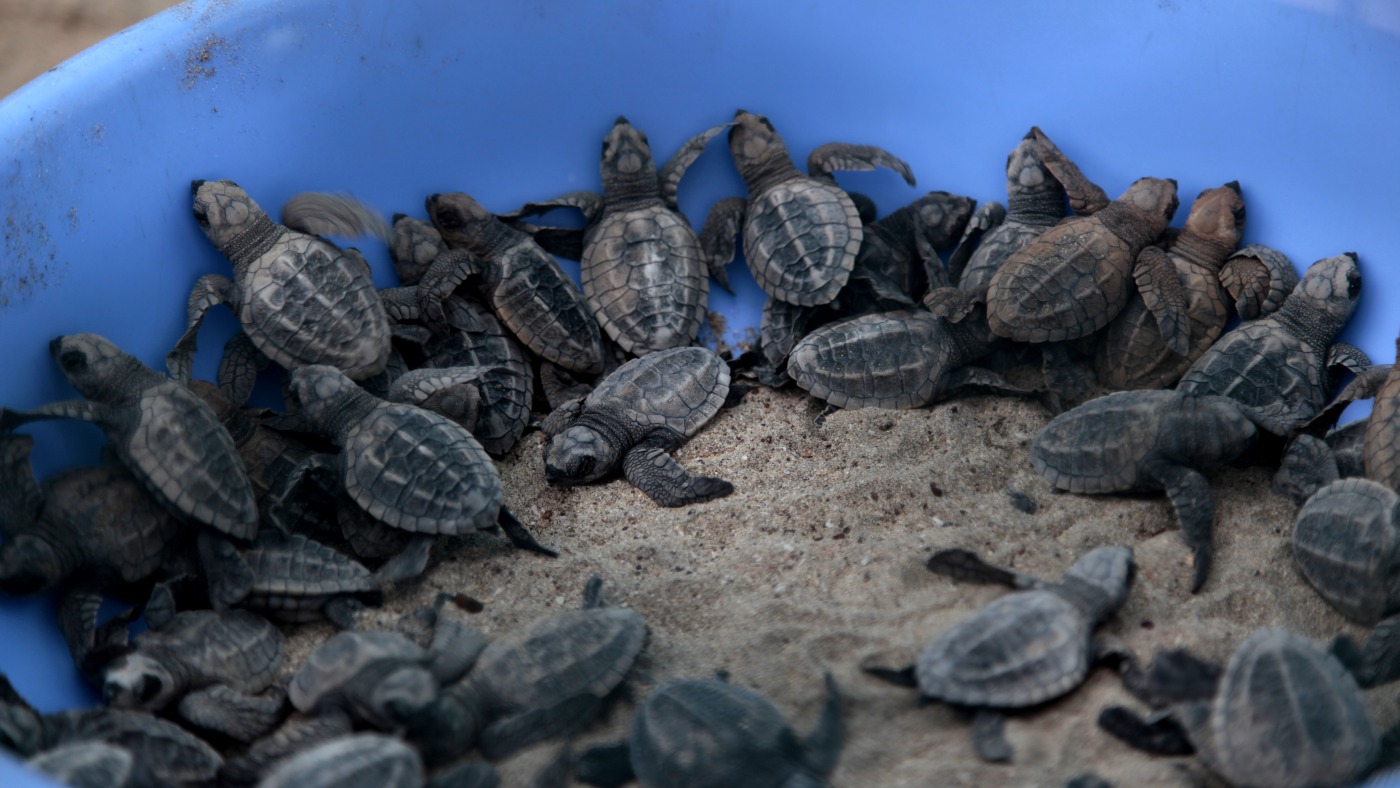
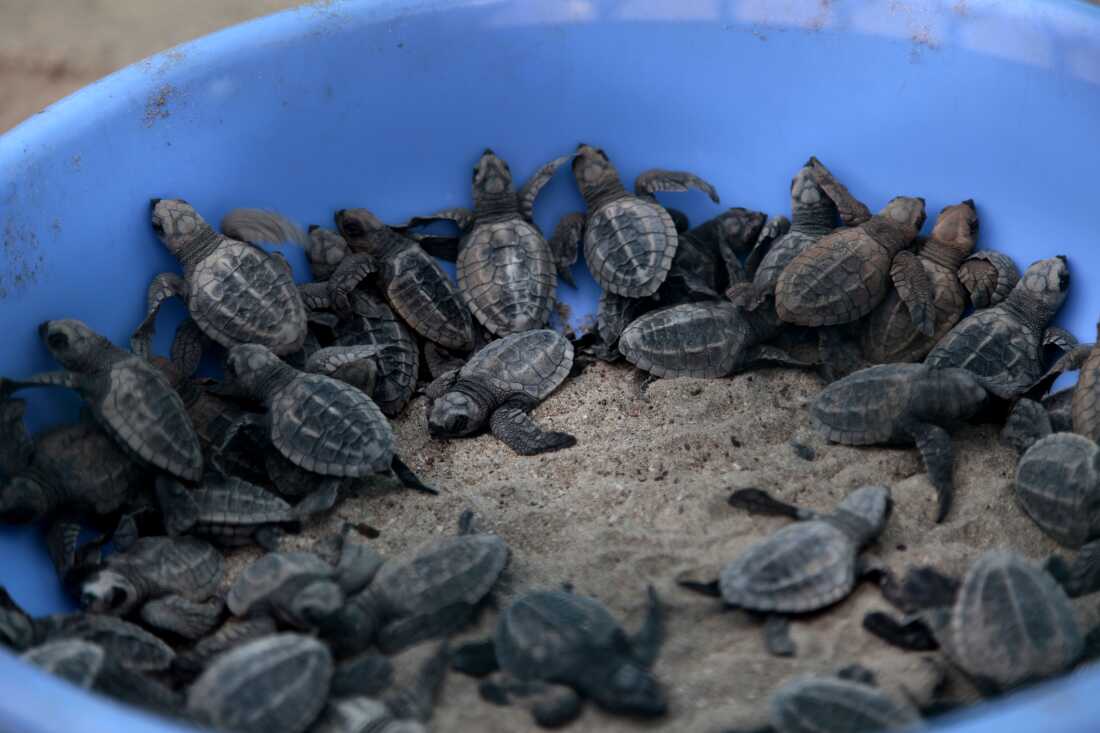
Olive Ridley hatchlings are placed in a bucket after they were collected at a hatchery by volunteers. Volunteers collect turtle eggs that have been hatched into nests — holes in the sand that female Olive Ridley sea turtles dig with their flippers. They’re gathered to prevent them being eaten by predators, including dogs, seagulls and poachers. The state-run and operated turtle hatchery is one of several that dot the western Indian shoreline — part patchwork efforts that have helped boost numbers of threatened Olive Ridley turtles after conservationists feared their populations would collapse in earlier decades amid industrial-scale slaughter for meat and leather, egg poaching, coastal developments on their nesting sites and their entanglement in fishing nets. Image by Diaa Hadid. April 2025, Guhagar India.

Olive Ridley hatchlings are placed in a bucket after they were collected at a hatchery by volunteers.

Diaa Hadid/NPR

hide caption

toggle caption

Diaa Hadid/NPR

As we look back at our international reporters’ most memorable stories of the last year we revisit the story of the olive ridley turtle in India.  Their population has rebounded after years of efforts to stem their decline.  We go to a turtle festival on India’s coast and hear tourists cheer on turtle hatchlings as they head to the ocean.