
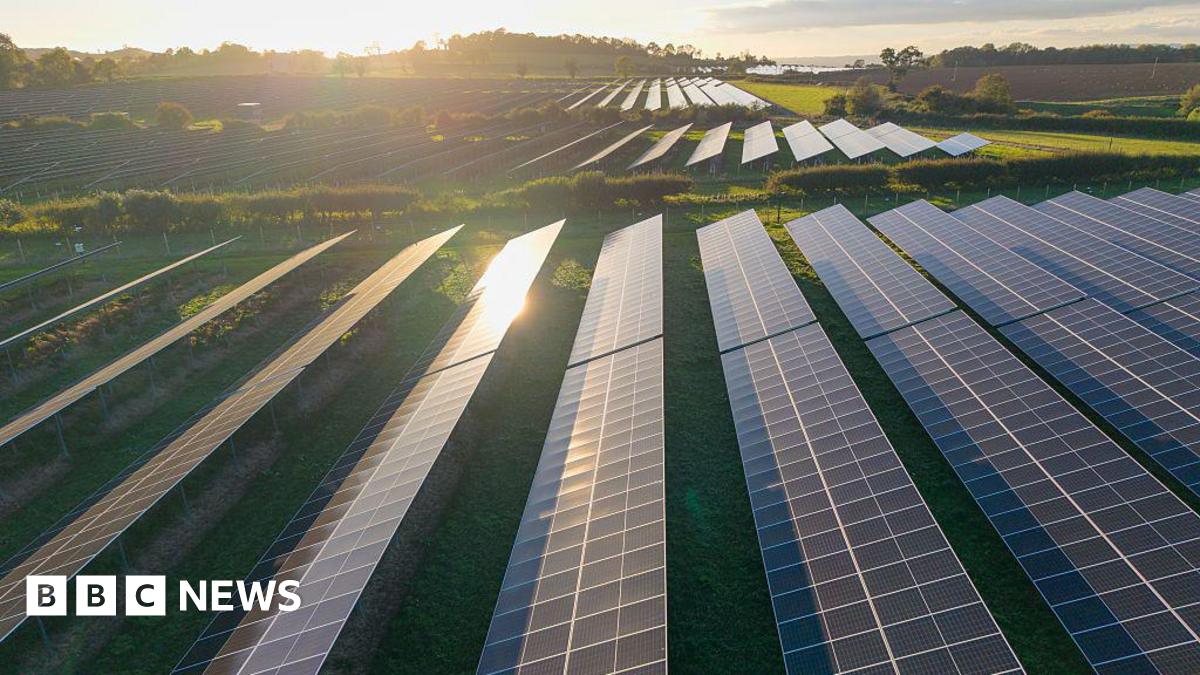
The government has defined its “clean power” target as 95% of all electricity generated in Britain coming from renewables and nuclear energy by 2030.
In 2024 clean sources produced almost three-quarters of total electricity generation for the year, according to government figures.
These numbers differ from Neso data, which includes imports as well as some gas generation not covered by the government’s clean power definition.
Government figures for 2025 will not be released until later this year – but the amount of gas still in the electricity mix shows there is much to be done.
“There’s still a significant number of periods in the year where the sun’s not shining, the wind’s not blowing, demand is high […] and that’s where the system is sort of forced to rely on gas-fired power to turn up and meet demand,” said Mr Menon.
He added that there were solutions to this challenge. They include technologies like batteries – to store renewable electricity to use when it is less sunny and windy – as well as other low-carbon sources like nuclear, which can provide dependable output.
One of the other struggles in meeting the clean power target is the need to upgrade the electricity grid, partly to connect new renewables and move their electricity around the country.
Sometimes the grid cannot cope with all of the renewable electricity that could be generated, leading to wind farms being paid to reduce their output.
Grid upgrades should help to reduce the problem but upgrades add to costs in the short term.
That could offset some of the savings from some of the cheapest renewables which are starting to displace gas power, according to Prof Grubb.
But he said he still expected bills to start to come down in the coming years – partly due to those renewables, but also assuming gas prices fall from their recent high levels.
In response to the renewables data, Energy Secretary Ed Miliband said: “After years of delay and underinvestment, this government is keeping its promise to take back control of Britain’s energy with clean homegrown power.”
This would “protect households against volatile fossil fuel markets”, he added.
But shadow energy secretary Claire Coutinho called on the government to ditch its clean power target, arguing it was raising energy bills.
“Britain is generating more renewable power than ever before, but people should know about the extra costs that come along with it,” she said.