
Key Takeaways:
Photography no longer requires manipulation to influence perception. Framing, access, sequencing, and aesthetic choice are sufficient to guide judgment while preserving the appearance of neutrality.
The same visual mechanics that govern Gaza imagery are now plainly visible inside elite Western media, where access and editorial intent quietly determine meaning.
When restraint disappears, photography stops documenting reality and begins adjudicating it, teaching audiences what to think before they are invited to understand.
Photography has always carried power, but it once carried restraint alongside it. The great traditions of reportage understood that the camera could reveal without prosecuting, that proximity demanded responsibility, and that access imposed ethical limits. Today, that discipline is eroding. Across conflict zones and Western editorial platforms alike, photography is increasingly presented not as a means of seeing, but as a means of deciding. Images arrive framed as truth while quietly instructing the viewer how to judge, long before context or complexity is allowed to enter the frame.
Vanity Fair’s White House Spread
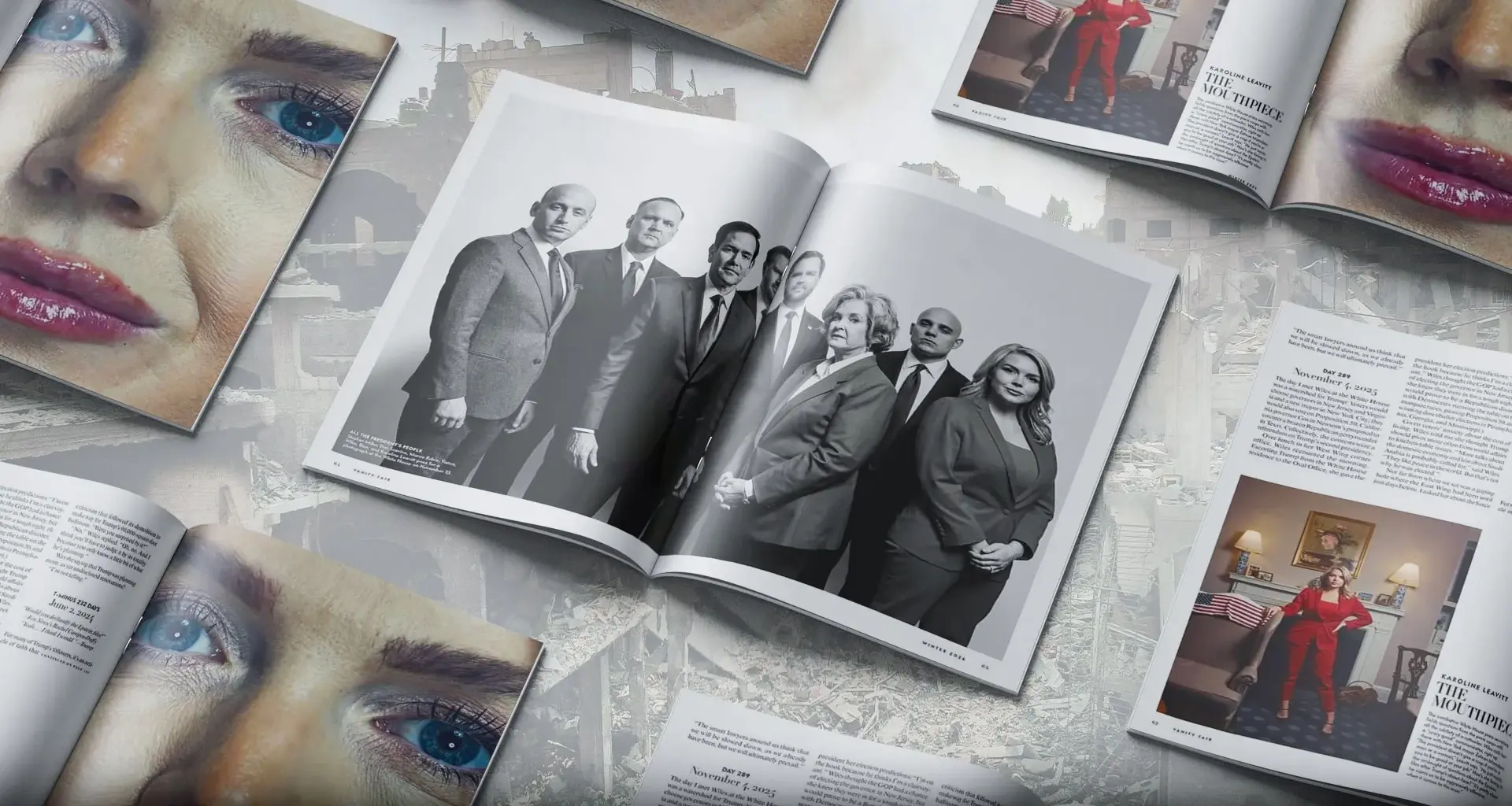
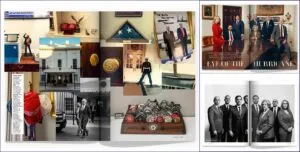
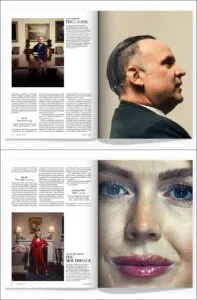
The recent Vanity Fair portrait series of senior figures in the Trump administration offers a clear case study in how contemporary editorial photography now operates. Defended as unfiltered and explicitly unretouched, the images nonetheless rely on a consistent visual grammar. Extreme proximity, flattened lighting, static posture, isolating composition, and careful sequencing work together to produce meaning. These are not technical accidents. They are editorial decisions.
The Vanity Fair portraits illustrate how photography can exert influence without altering a single pixel. Shot without digital retouching and defended as honest, the images still depend on deliberate aesthetic choices that guide interpretation. Access to power is rare. How that access is exercised matters. Photography does not need manipulation to persuade. Selection alone is enough.
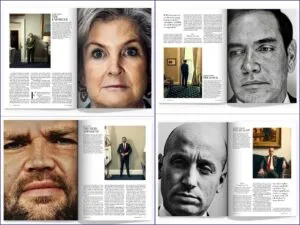
This is not an argument about whether the subjects deserve criticism, nor a claim that photography must flatter. It is a reminder that harshness is not synonymous with honesty. A skilled photographer can make a full room appear empty, an exhausted face appear diminished, or a moment appear definitive, without falsifying anything. When those choices are applied consistently in one political direction and not another, the images cease to function as observation. They become judgment rendered visually.
This visual adjudication is not an isolated phenomenon of the portrait studio. It is the domestic expression of a methodology long refined in international reporting. The leap from the controlled lighting of a magazine shoot to the chaotic framing of a conflict zone is shorter than it appears. In both arenas, the power lies in the omission of the alternative, the editorial decision to present a specific, curated perspective as the singular, unvarnished reality. By examining these mechanisms in the familiar context of Western political portraiture, we can better identify how the same visual logic has governed the documentation of the Gaza conflict throughout this series.
This matters because the same mechanics have defined Gaza coverage. Images presented as neutral documentation often emerge from environments shaped by access control, expectation, and narrative reward. Photographs persuade before they inform, not because they are fabricated, but because they are incomplete by design. The viewer is guided toward moral conclusion first, understanding second.
The risk is not confined to any single conflict or magazine. It is systemic. When access is paired with ideological certainty, photography stops asking questions and starts delivering verdicts, all while insisting it is merely showing what is there.
Personal Context
I write this not as a distant observer of the craft, but as someone who has worked within it at the highest professional level. Over four decades as a photojournalist, I have photographed world leaders, presidents, prime ministers, royalty, and heads of state, often in precisely the same controlled environments now under discussion. I have operated under access constraints, editorial pressure, security oversight, and narrative expectation.
That experience is why this moment matters. The issue is not whether a photograph is retouched, flattering, or critical. It is whether the photographer recognizes the responsibility that comes with rare access, and whether editorial institutions still distinguish between observation and judgment. When that distinction collapses, photography no longer documents power. It exercises it.
Understanding Gaza Imagery
This article builds on six previous investigations into how Gaza imagery is framed, distributed, and rewarded, widening the lens to show that the same visual logic now operates comfortably within Western elite media. The problem is not photography itself. It is the quiet abandonment of restraint.
If audiences are to remain visually literate, they must learn to ask not only what an image shows, but how and why it shows it this way, and what alternatives were excluded in the process. Until that discipline returns, photography will continue to shape belief before understanding, and power will continue to hide behind the claim that it is merely being observed.
Liked this article? Follow HonestReporting on Twitter, Facebook, Instagram and TikTok to see even more posts and videos debunking news bias and smears, as well as other content explaining what’s really going on in Israel and the region. Get updates direct to your phone. Join our WhatsApp and Telegram channels!