

Published
02/01/2026 às 14:12
Stretching 33 km into the sea and holding a world record, the seawall that changed the coast of South Korea created new land, altered tides, and sparked an environmental war over the loss of wetlands.
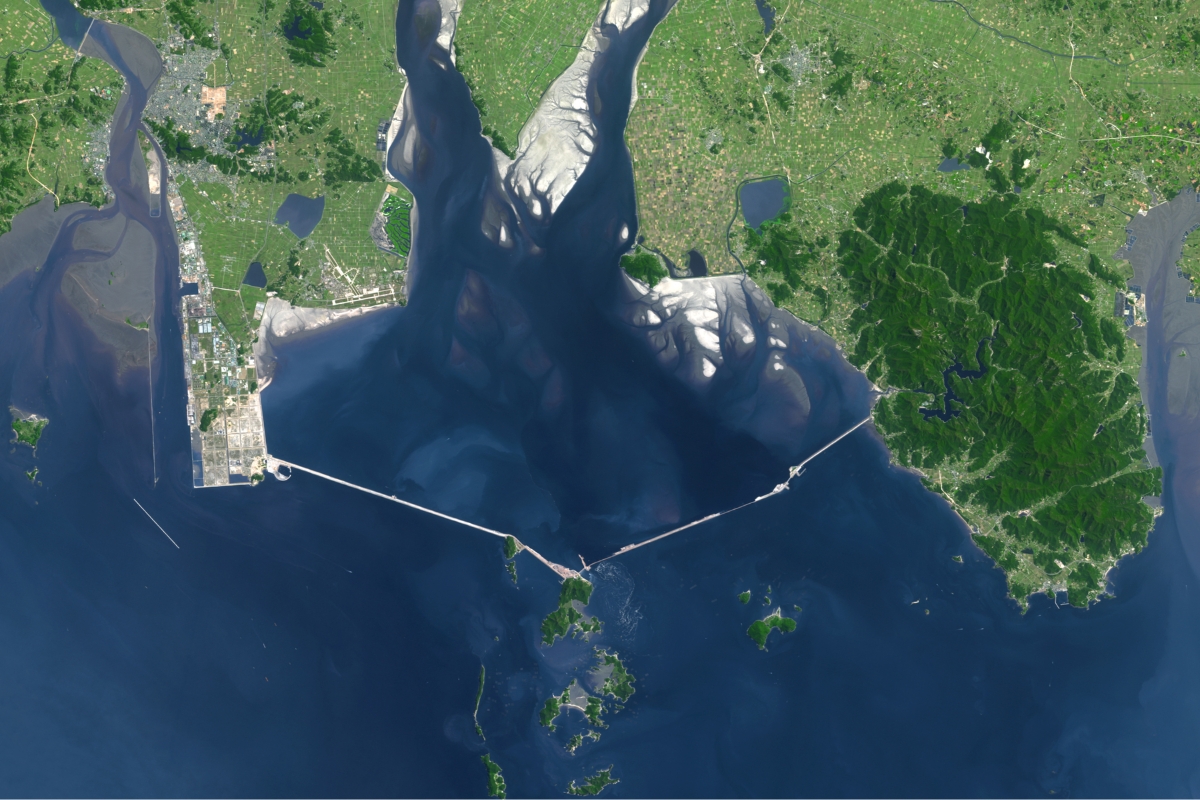
South Korea built a sea wall with 33,9 km and permanently altered the country’s coastline. The structure was named… Saemangeum Seawall and it became a global landmark due to its size and the impact it generated.
The barrier was installed on the southwest coast and separated the Yellow Sea From a vast area previously dominated by tides, estuaries, and natural mudflats, the change allowed for control of the water and the creation of new lands.
At the same time, the project began to attract environmental criticism. The transformation directly affected wetlands, considered fundamental for coastal biodiversity.
— ARTICLE CONTINUES BELOW —
What happened and why did it attract attention?
A Saemangeum Seawall It entered the international records as the world’s longest continuous sea wall with 33,9 km extension. The official opening took place in April 27th 2010.
The structure’s size is impressive because it surpasses entire urban crossings, yet it was built in a marine environment, subject to tides, currents, and sediment.
The project not only closed off a bay, but it redefined the relationship between land and sea throughout the region, creating a new artificial coastal system.
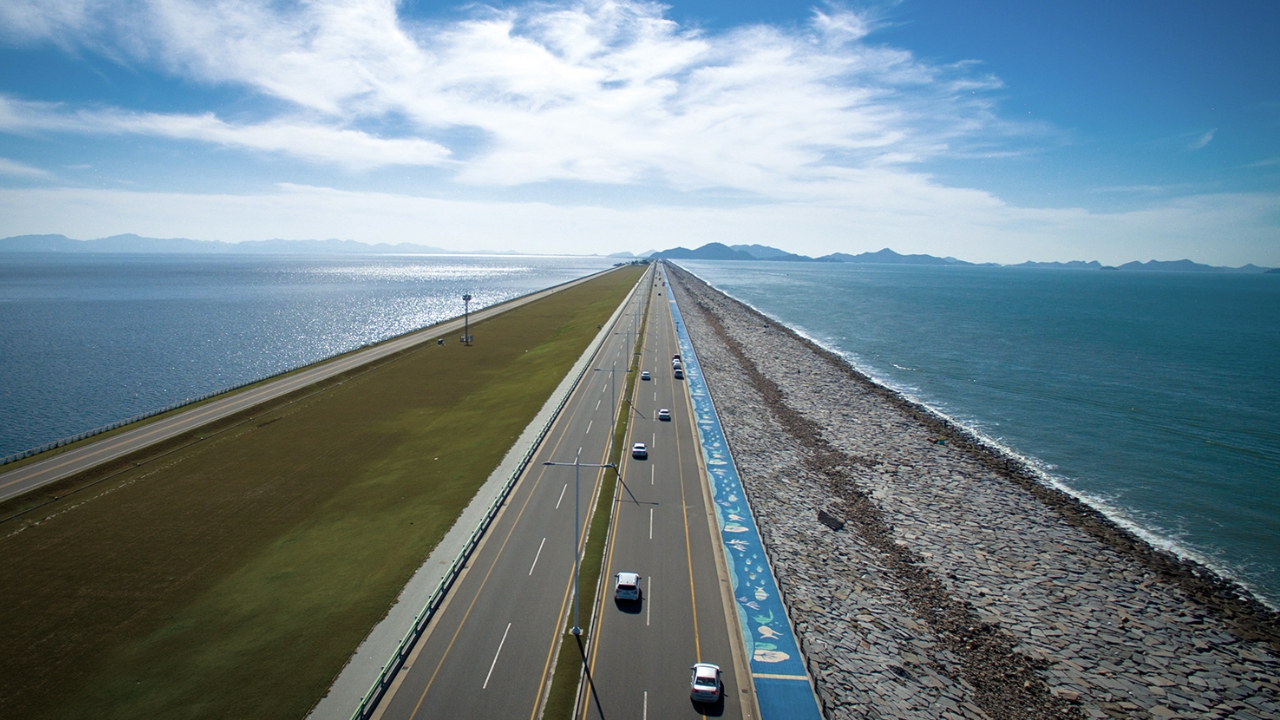 A Saemangeum Seawall It is the world’s longest sea wall, offering a unique view along the road, as well as a camping area for families. © Saemangeum Development and Investment Agency
Where is the artwork located and which region was transformed?
The wall is located in the province of Jeollabuk do, connecting nearby areas of Gunsan, Gimme e Buan, in the southwest of the Korean peninsula.
Before construction, the site housed extensive mudflats and coastal wetlandsThese environments functioned as transition zones between fresh and salt water, exhibiting high ecological productivity.
With the area closed off, natural circulation was interrupted. The region became dependent on hydraulic control, altering sediments, salinity, and environmental dynamics.
How long did it take and how much did it cost to build?
The construction of the Saemangeum Seawall It began in the early decade. 1990 and it took almost 20 years until the official opening in 2010.
The cost directly associated with the barrier is described as almost 2 trillion won, a value that covers the maritime structure itself.
When considering the complete land reclamation and area development project, known as Saemangeum ProjectThe total investment disclosed amounts to 22,2 trillion won.
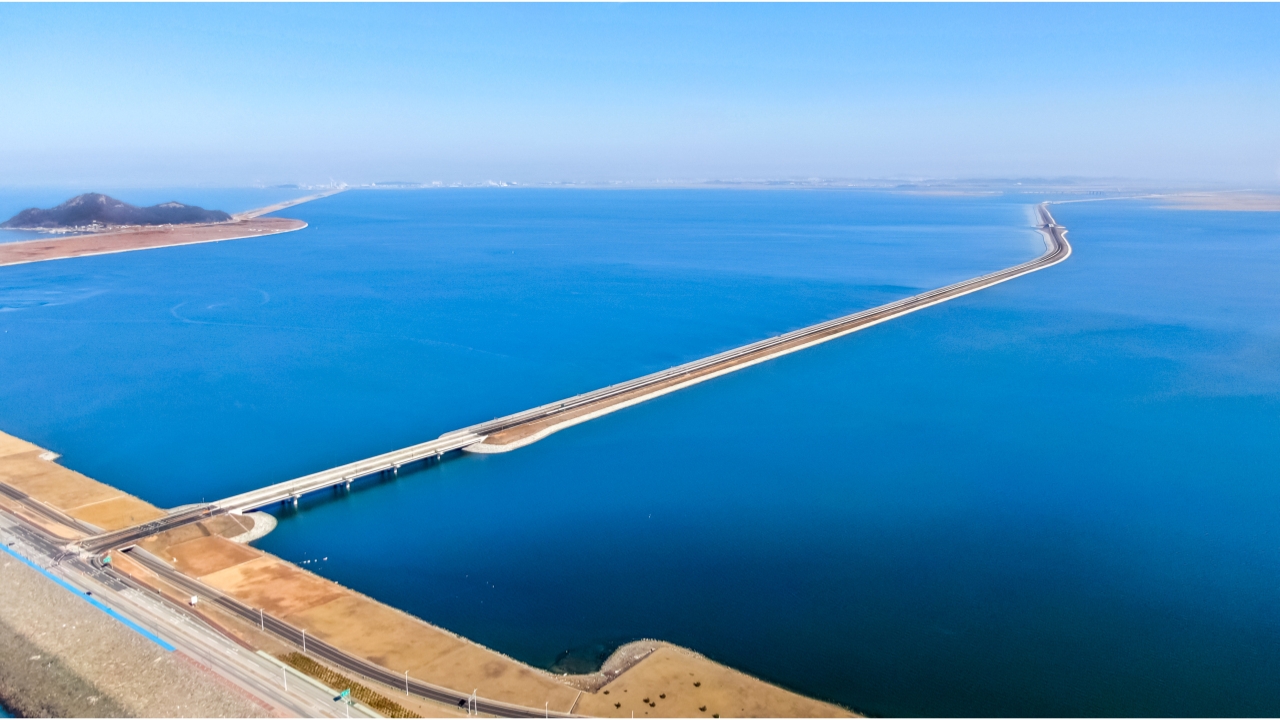
The environmental impact and the dispute over wetlands.
The main environmental consequence was a drastic reduction in wetlandsThese environments supported biodiversity, migratory bird routes, and natural water filtration cycles.
The loss of these spaces altered the presence of fauna and the local ecological balance. Environments previously renewed by tides began to function as more closed systems.
This transformation has fueled an ongoing dispute between economic development and environmental preservation, making the project one of the most debated cases in the country.
Why the Saemangeum Seawall has become a permanent environmental case study.
A Saemangeum Seawall It ceased to be merely a record-breaking project and began to be treated as a long-term experiment. The change in the circulation of water and sediments continues to generate effects years after its inauguration.
The project has become an international benchmark for evaluating the limits of large coastal projects. The case shows how interventions of this scale can create territorial gains, but also environmental losses that are difficult to reverse.
The seawall remains a concrete example of how engineering decisions can reshape entire ecosystems and influence future coastal development policies.
South Korea built a wall of 33,9 km which redefined the coastline, enabled a mega-territorial project, and opened a lasting environmental debate. The impact of Saemangeum Seawall It remains visible both in the landscape and in discussions about preservation.